Breaking: 3 Shocking Developments as Trump Halts Clayton DNI Hearing, GOP Rift Deepens
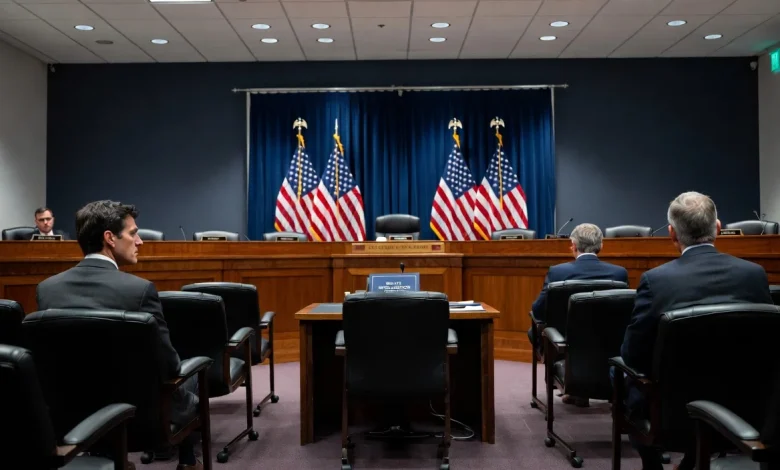
Table of Contents
Trump, directing domestic legislative strategies from the sidelines of the Group of Seven (G7) summit in France, has delivered a stunning blow to Senate Republican leadership by ordering an immediate halt to the confirmation process of Jay Clayton, his nominee for Director of National Intelligence (DNI). This unexpected intervention, delivered via an early morning social media decree, did not merely postpone a high-stakes afternoon hearing; it completely upended Majority Leader John Thune’s legislative strategy and threw the Senate GOP caucus into a state of profound confusion and frustration.
The delay has far-reaching consequences for U.S. national security, as it halts critical efforts to renew a recently expired warrantless surveillance program under Section 702 of the Foreign Intelligence Surveillance Act (FISA). By conditioning Jay Clayton’s confirmation hearing on the passage of a sweeping voter identification and election bill—a measure that has repeatedly failed to gather enough support in Congress—the president has effectively taken his own nominee hostage to secure a legislative victory. This move has laid bare the deep, fragile fault lines between the executive branch and congressional Republicans, leaving key figures like Thune and Senate Intelligence Committee Chairman Tom Cotton to pick up the pieces of a derailed agenda.
The G7 Directive: Trump Derails Senate Timelines From France
From the picturesque coast of France where world leaders gathered for the annual Group of Seven summit, the president issued an ultimatum that sent shockwaves across the Atlantic. Utilizing his preferred social media platform, he declared, ‘we are cancelling the Senate Hearing RE: DNI today’. Although a sitting president does not possess the unilateral constitutional authority to cancel congressional hearings, the political reality of his influence over the Republican party made the directive absolute.
Initially, Senate Intelligence Committee Chairman Tom Cotton sought to assert the independence of the upper chamber. Cotton publicly declared that the committee would proceed with the hearing as scheduled unless the president officially withdrew Clayton’s nomination or directed him not to appear. However, the political weight of the White House prevailed. The president officially directed Jay Clayton not to attend the hearing, forcing a disappointed Cotton to announce that the proceedings were ‘unfortunately postponed’. This high-profile cancellation has left Capitol Hill in disbelief, showcasing how easily the executive branch can disrupt the legislative calendar even while conducting diplomacy on the world stage.
The Jay Clayton Nomination: From Fast-Track to Limbo
The nomination of Jay Clayton—the current U.S. Attorney for the Southern District of New York and former Chairman of the Securities and Exchange Commission (SEC)—was widely seen as a highly competent, stabilizing choice. Clayton’s previous experience running the SEC and his extensive corporate legal background made him a candidate capable of securing broad bipartisan support, a rarity in modern confirmation battles. Top Democrats on the Senate Intelligence Committee, including Vice Chair Mark Warner, had indicated a willingness to support Clayton’s swift confirmation in a bid to restore steady leadership to the nation’s intelligence apparatus.
The rush to confirm Clayton was not merely about filling a vacancy; it was a calculated attempt by Senate Republican leaders to break a dangerous gridlock. By placing a conventional, well-respected figure at the helm of the Office of the Director of National Intelligence (ODNI), John Thune and Tom Cotton hoped to unlock crucial Democratic votes to reauthorize the expired FISA surveillance programs. Instead, Clayton’s nomination now sits in legislative limbo, leaving the intelligence community without a permanent director during a highly volatile global landscape.
Who is Jay Clayton and Why is His Nomination Critical?
Jay Clayton is a veteran of public service with deep ties to both the financial and legal sectors. Having served as SEC Chairman during the president’s first term, he navigated complex global issues such as Brexit, corporate cybersecurity, and the emergence of digital assets. Since April 2025, Clayton has served as the federal prosecutor in Manhattan, overseeing high-stakes national security and financial fraud investigations, including the indictment of foreign adversaries. His reputation as a pragmatist made him the ideal candidate to rebuild trust between the White House and the intelligence community.
Confirming Clayton is critical because of the void left by outgoing DNI Tulsi Gabbard, who announced her resignation due to personal family matters. In the absence of a permanent, confirmed director, the interim leadership of the nation’s 18 intelligence agencies falls to acting figures. This vacuum of permanent authority raises significant concerns among national security experts, especially as foreign threats continue to mount across Europe, Asia, and the Middle East.
The Surveillance Law Standoff: Reauthorization Under Threat
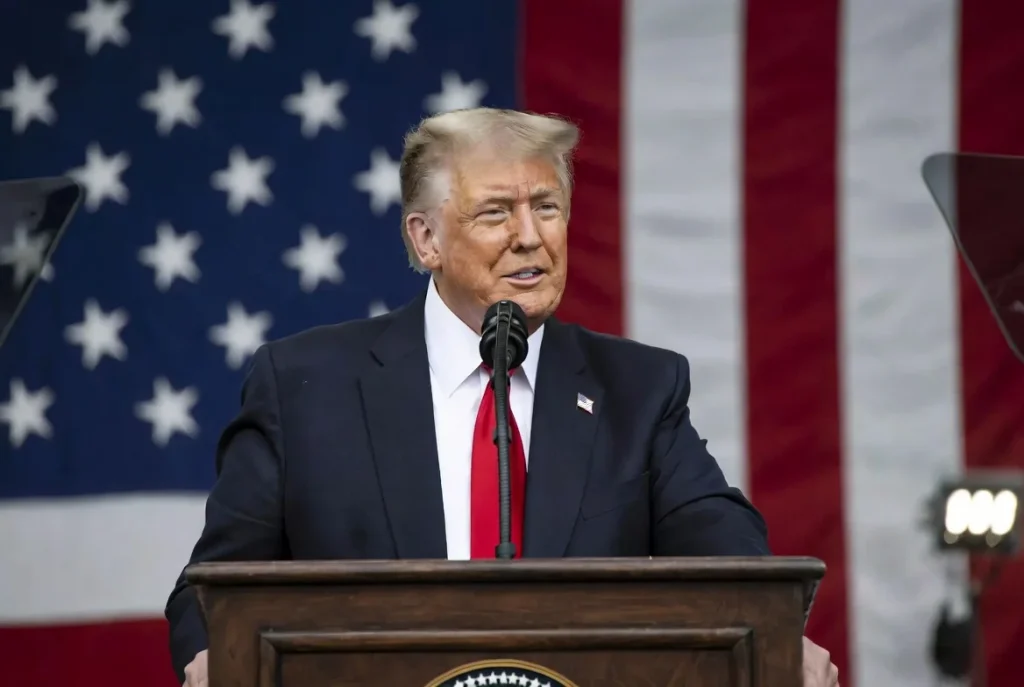
At the heart of this dramatic confrontation is the future of Section 702 of the Foreign Intelligence Surveillance Act (FISA). This critical surveillance law, which allows U.S. spy agencies to collect communications of non-citizens outside the United States without a warrant, expired last week. The expiration was the direct result of a mounting congressional rebellion over the president’s decision to appoint FHFA Director Bill Pulte as the acting DNI following Gabbard’s departure.
Pulte, a prominent real estate investor and loyalist with zero background in intelligence, faced immediate and fierce pushback from both Democrats and moderate Republicans. Opponents argued that putting a housing finance official in charge of the nation’s most sensitive intelligence operations was an unacceptable risk. In protest, Democrats and a handful of key Republicans refused to grant a short-term extension of the FISA surveillance powers, leading to the program’s lapse. The president’s latest maneuver to block Clayton’s hearing ensures that Bill Pulte will indeed assume the role of acting DNI when Gabbard departs on Friday, prolonging a security impasse that has alarmed the defense establishment.
The Expired Spying Program and National Security Risks
The expiration of FISA Section 702 has left U.S. intelligence agencies partially blind in their efforts to monitor foreign adversaries, track international terrorist cells, and combat cyberattacks. Intelligence officials have repeatedly warned that the lapse of these authorities creates immediate vulnerabilities that hostile state actors could exploit. This style of unilateral decision-making mirrors other disruptive foreign policy maneuvers, such as the geopolitical waves created when Trump weighs an Iran deal, forcing allies to constantly adapt to sudden shifts in American strategy.
Furthermore, without Section 702, the FBI and CIA are restricted from utilizing fast-track databases to screen communication streams, forcing them to rely on slower, warrant-based processes that are ill-suited for rapid-onset crises. As national security agencies face intense scrutiny and legal battles—ranging from local security crises to high-stakes federal court cases like the one involving a Trump assassination suspect—the lack of a permanent DNI director leaves a critical void at the top of the country’s defense apparatus.
Inside the Republican Rift: Thune vs. Trump
This latest incident has brought the fragile relationship between the president and Senate Majority Leader John Thune to a near-breaking point. Thune, who succeeded long-time leader Mitch McConnell, has spent his first months in leadership trying to balance the demands of the MAGA base with the traditional legislative responsibilities of the Senate GOP. The sudden cancellation of Clayton’s hearing completely blindsided Thune, who had carefully choreographed a deal to fast-track the nomination in exchange for a bipartisan FISA reauthorization.
When reporters on Capitol Hill asked Thune why the president would pull the rug out from under his own party’s Senate leadership, Thune replied with a stark, two-word answer: ‘Good question.’ The brief response underscored a growing sense of exasperation among Senate leaders who feel they are being treated as adversaries rather than partners. The GOP’s internal alignments remain highly volatile, especially in light of high-profile races like when Greene won the Michigan Senate seat, which altered the caucus’s ideological center and made the task of maintaining party discipline increasingly difficult for leadership.
Senator Lisa Murkowski’s Warning on the Shifting Pages
The sentiment of confusion and growing resentment is not isolated to leadership. Senator Lisa Murkowski, R-Alaska, offered a poignant metaphor when asked if the White House and Senate Republicans were operating on completely different pages. ‘It may not be so much a different page, but he’s turning it ahead without telling us about it,’ Murkowski observed. Her comment highlights a persistent complaint within the Senate GOP caucus: the president repeatedly shifts the goalposts on major policy issues without consulting or warning his legislative allies.
By making unachievable demands and forcing Republican senators into politically fraught positions, the executive branch is actively undermining its own legislative agenda. Instead of focusing on passing tax reforms, judicial confirmations, or energy bills, Senate Republicans are forced to spend valuable political capital defending executive maneuvers that many privately view as counterproductive. This dynamic is causing severe friction as senators face primary threats from the president’s populist allies if they fail to fall in line with every sudden policy pivot.
The Failed Election Bill: Trump’s Non-Negotiable Demand
The legislative hostage in this standoff is a sweeping election reform bill that centers on strict federal voter identification requirements. The bill, which has been championed by the populist wing of the Republican party, has already failed repeatedly to gain traction in the Senate. Because of the filibuster’s 60-vote threshold, any comprehensive election law change requires bipartisan cooperation—something that is virtually non-existent for a highly controversial voter ID measure.
By tying the national security surveillance program and the DNI nomination to this failed bill, the president is demanding a legislative outcome that is mathematically impossible under current Senate rules. Democrats, currently navigating their own internal ideological struggles over the Sanders mantle and the hard-left’s future, look on with strategic satisfaction as the Republican majority battles its own executive branch. Moderate Republicans are similarly unwilling to shut down government surveillance operations in pursuit of an election bill that has no viable path to passage, creating an absolute legislative deadlock.
Strategic Overview of Legislative and Nomination Conflicts
To understand the depth of this political crisis, it is helpful to look at how the priorities of the White House diverge from those of Senate Republican leadership. The table below outlines the primary areas of contention, the respective strategies, and the current operational status of these initiatives.
| Priority Issue | Executive Branch Priorities | Senate Republican Leadership Strategy | Current Status & Obstacles |
|---|---|---|---|
| DNI Confirmation | Delay Jay Clayton; keep loyalist Bill Pulte as acting chief. | Fast-track Jay Clayton to restore professional intelligence leadership. | Hearing postponed; Pulte set to take over as acting director. |
| FISA Section 702 | Withhold reauthorization as leverage for domestic election reform. | Reauthorize immediately to protect national security interests. | Expired; intelligence gathering capacities severely restricted. |
| Election Reform Bill | Demand sweeping voter ID laws as a non-negotiable prerequisite. | Acknowledge lack of votes; focus on passable bipartisan security measures. | Failed repeatedly; lacks the 60-vote threshold to bypass filibuster. |
| Party Unity | Use primary challenges to enforce absolute loyalty to populist demands. | Protect incumbent senators and maintain a functional legislative majority. | Deepening internal rift; strategic communications completely broken. |
The Long-Term Impact on Trump’s Legislative Agenda
The long-term consequences of this public confrontation extend far beyond a delayed hearing or an expired intelligence program. By continually blindsiding his own party, the president risks permanently damaging the trust required to pass major legislation. Major legislative packages, from defense spending to infrastructure, rely on close coordination and mutual respect between the White House and leadership on Capitol Hill. According to national security and surveillance policy reporting, this breach could make future negotiations over critical national defense authorizations incredibly difficult.
If Senate Republicans begin to view the president’s directives as erratic and politically dangerous, they may start asserting their constitutional independence more aggressively. The Senate has historically prided itself on being a cooling saucer for populist passions, and senators like Lisa Murkowski, Susan Collins, and Todd Young may increasingly form coalitions with moderate Democrats to bypass the White House altogether. As the battle over the DNI and FISA reauthorization continues to unfold, the true cost of this executive-legislative rift will be measured in the functionality of the American government and the security of the nation.