Graham Platner Leads Susan Collins in Epic Maine Senate Race
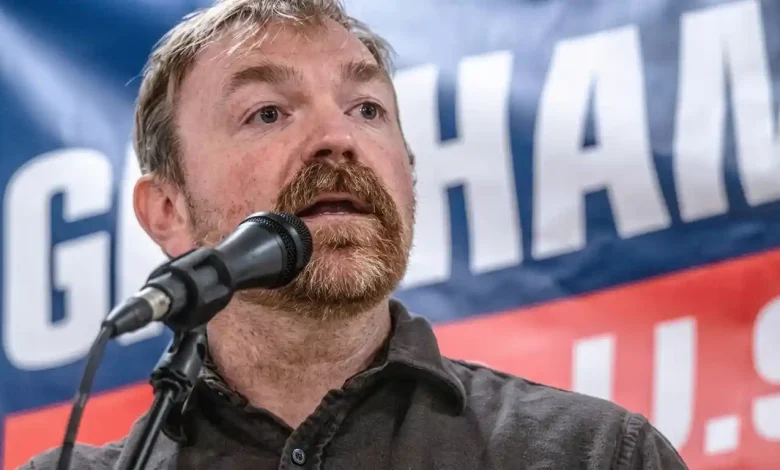
Table of Contents
Graham Platner, the Democratic challenger for Maine’s high-stakes U.S. Senate seat, has positioned himself as a steadfast champion of the working class. However, an in-depth look at recent polling data reveals a fascinating paradox: the very voters he claims to represent are not the ones driving his competitive numbers. Instead, a deeply polarized electorate has divided along educational lines, leaving Platner in a dead heat with veteran Republican Senator Susan Collins. Collins, who has represented the Pine Tree State in Washington for thirty years, faces one of the most serious electoral challenges of her storied career. Despite this, her enduring support among non-college-educated voters remains a formidable firewall. As the late-June 2026 polls indicate a race within the margin of error, both campaigns are fighting to define who truly speaks for the working people of Maine.
The Maine Senate Seat and the Balance of Power
With control of the United States Senate hanging in a delicate balance, every seat has nationalized implications. Maine has historically been a ticket-splitting state, famous for its independent streak and moderate political tradition. But as national polarization intensifies, the state’s Senate race has transformed into a high-stakes proxy war between national progressive and conservative coalitions. Similar to how other states have experienced a crowded race lacks a clear front-runner during intense primary seasons, the general election matchup between Platner and Collins is exceptionally tight, with neither candidate able to secure a definitive comfort zone. For Democrats, defeating Collins is a primary objective that has eluded them for decades. For Republicans, defending her seat is vital to maintaining or reclaiming a majority in the upper chamber.
Deciphering the Latest Polls: A Dead Heat in Maine
Two major polls released in late June 2026 have painted a picture of an incredibly tight contest. A New York Times/Portland Press Herald/Siena poll of 608 likely Maine voters found Platner leading Collins 49% to 47%. Because this two-point lead is well within the survey’s margin of error, the race is statistically tied. This poll, widely recognized for its rigorous methodology, sent shockwaves through the political landscape by showing the incumbent trailing, even if marginally.
Conversely, a Fox News survey of registered voters showed Collins maintaining a narrow lead, putting her up 50% to 47% over Platner. This three-point margin is also well within the margin of error, confirming that neither candidate has established a clear, indisputable advantage. These conflicting yet closely aligned surveys highlight a highly mobilized electorate where every single percentage point will be heavily contested in the final months of the campaign. To keep track of the evolving race, many analysts rely on localized tracking systems and reporting from the Portland Press Herald to gauge regional voter sentiment.
The Education Divide: A Working-Class Paradox
The most striking revelation from the crosstabs of both the NYT/Siena and Fox News surveys is the dramatic educational divide. While Platner has built his entire campaign narrative around being a ‘working-class champion’—focusing on labor rights, healthcare access, and economic inequality—he is struggling to win over the core working-class demographic. Non-college-educated voters are overwhelmingly backing Susan Collins.
According to the NYT/Siena crosstabs, Collins is crushing Platner among voters without a college degree by a staggering margin of 58% to 37%. This 21-point deficit for Platner is a significant hurdle. It demonstrates that his populist economic messaging is not successfully penetrating the cultural and political identity of Maine’s blue-collar workforce. Instead, college-educated voters in urban and suburban centers like Portland and Bangor are the ones fueling Platner’s surge, viewing him as a vehicle for progressive change and national balance. This disconnect reflects a broader national trend where the battle for the party’s ideological direction has increasingly alienated traditional working-class voters who once formed the backbone of the Democratic coalition.
Historical Context: Susan Collins’ 2020 Victory Over Sara Gideon
To understand why these numbers are so alarming for Democrats and so reassuring for Republicans, one must look back at the 2020 Senate race. In that cycle, Democrat Sara Gideon was widely favored in the polls to unseat Collins. Many public surveys showed Gideon consistently ahead, leading to hundreds of millions of dollars in national donations flooding into the state. Yet, when the ballots were counted, Collins secured a decisive victory, defeating Gideon 51% to 42%.
The key to Collins’ blowout victory in 2020 was her performance among non-college-educated voters. Exit polls from that election revealed that Collins won non-college-educated voters by 57% to 35%—an almost identical margin to her current 58% to 37% lead over Platner. By maintaining this exact demographic coalition, Collins has kept herself viable in a state that has otherwise leaned increasingly Democratic in presidential and gubernatorial elections. For Platner to avoid Gideon’s fate, he must find a way to break through Collins’ working-class firewall, a task that has proven incredibly difficult for modern Democratic strategists.
Electoral Comparison: 2020 Results vs. 2026 Polling
Let us look closely at the data comparing the historic 2020 exit poll figures with the late-June 2026 Siena polling data. This comparison highlights how remarkably stable Collins’ working-class support has remained, even as the overall top-line numbers shift.
| Demographic / Election Metrics | 2020 Exit Polls (Collins vs. Gideon) | Late-June 2026 Siena Poll (Collins vs. Platner) |
|---|---|---|
| Overall Head-to-Head Margin | Collins won 51% to 42% (+9) | Platner leads 49% to 47% (+2) |
| Support Among Non-College Graduates | Collins won 57% to 35% (+22) | Collins leads 58% to 37% (+21) |
| Support Among College Graduates | Gideon won (Majority support) | Platner leads (Significantly elevated) |
| Electoral System | Plurality / RCV Process | Ranked-Choice Voting Active |
As the data demonstrates, Collins’ support among non-college-educated voters is nearly identical to her 2020 performance. The primary difference keeping Platner within striking distance is his elevated support among college-educated voters, which has consolidated more efficiently than it did for Gideon in the final weeks of the 2020 campaign.
Campaign Strategies and Messaging: The Blue-Collar Narrative
The struggle to win over working-class voters has forced Platner’s campaign to re-evaluate its messaging. Platner has focused heavily on local labor disputes, supporting unionization efforts in Maine’s paper mills, shipyards, and healthcare facilities. He has regularly appeared on picket lines, emphasizing his humble origins and criticizing Collins for her votes on national tax packages that favored corporations.
However, Collins has successfully countered this narrative by leaning into her brand as a pragmatic, independent champion for Maine. Over her three decades in office, Collins has secured billions of dollars in federal funding for local infrastructure, the Bath Iron Works shipyard, and the state’s vital lobster and timber industries. For many rural, working-class Mainers, her concrete record of delivering tangible federal benefits outweighs Platner’s progressive populist rhetoric. Furthermore, Collins’ campaign has painted Platner as an out-of-touch progressive whose policies could harm local industries through increased regulation. This ideological tension is a recurring theme in modern politics, echoing the ongoing debates over Democratic election postmortems, which continually point out the party’s struggle to connect with rural and non-college-educated communities across the country.
The Urban-Rural Split and the Reality of the ‘Two Maines’
The educational divide in this race is closely mirrored by a geographic split, often referred to locally as the ‘Two Maines.’ The First Congressional District (CD1), which encompasses the southern, coastal, and more urbanized parts of the state, is highly educated, economically prosperous, and heavily Democratic. This is where Platner is running up massive margins, utilizing high voter turnaround among college graduates to stay competitive.
In contrast, the Second Congressional District (CD2) is vast, rural, and economically challenged. It has a much lower percentage of college-educated residents and has trended strongly conservative over the past decade, twice voting for Donald Trump. In CD2, Collins’ long-standing relationships with local business owners, town selectmen, and working-class families give her a significant structural advantage. For Platner to pull off an upset, he does not need to win CD2 outright, but he must reduce Collins’ margins there. If Collins continues to win rural, non-college voters by twenty-plus percentage points, Platner’s path to victory becomes mathematically impossible, regardless of how high his margins are in Portland and Cumberland County.
The Role of Independent Voters and Ranked-Choice Voting
Maine was the first state to adopt ranked-choice voting (RCV) for federal elections, a system that adds a unique layer of complexity to the Senate race. Under RCV, if no candidate secures more than 50% of the first-preference votes, the race goes to an instant-runoff process where lower-tier candidates are eliminated and their supporters’ second-choice votes are redistributed. Independent and third-party candidates often pull a crucial portion of the electorate, making second-choice designations decisive.
In this highly polarized climate, independent voters—who make up a large portion of Maine’s registered electorate—hold the key. Collins has traditionally appealed to these moderate independents, but her votes on key judicial nominations have alienated some. Platner must convince these independent voters not only to support him but to rank him first, preventing Collins from crossing the 50% threshold on the first ballot. The mechanical nature of RCV means that negative campaigning can sometimes backfire, forcing both candidates to balance aggressive contrasts with appeals to their opponent’s base for second-choice votes.
Fundraising, Out-of-State Donations, and the Ground Game
Another critical factor in this Senate race is the massive influx of campaign capital. Because the balance of power in Washington is at stake, donors from across the country are pouring millions into both campaigns. Platner’s campaign has relied heavily on small-dollar grassroots donations, utilizing national progressive networks to build a robust war chest. This financial support has allowed him to launch aggressive television and digital advertising campaigns statewide.
Meanwhile, Collins benefits from a formidable fundraising network of her own, backed by both traditional Republican donors and political action committees. However, in a state like Maine, television ads alone do not win elections; the ground game—knocking on doors, attending local town halls, and showing up at county fairs—is paramount. The campaign that executes the most effective local outreach in the final weeks will have a distinct advantage in mobilizing their respective coalitions.
National Implications of the Maine Senate Seat
As November approaches, the national spotlight on Maine will only intensify. The outcome of this race will not only decide who represents Maine but will also dictate the legislative feasibility of the next presidential administration’s agenda. If Platner succeeds, it will signal a breakthrough for progressive populism in rural states and solidify a Democratic path to a Senate majority. If Collins wins yet again, she will cement her legacy as one of the most resilient political figures in modern American history, proving that personal brand and localized constituent service can still triumph over national partisan waves.