Barry Moore Wins Alabama GOP Senate Runoff: 5 Key Facts About Tuberville’s Successor
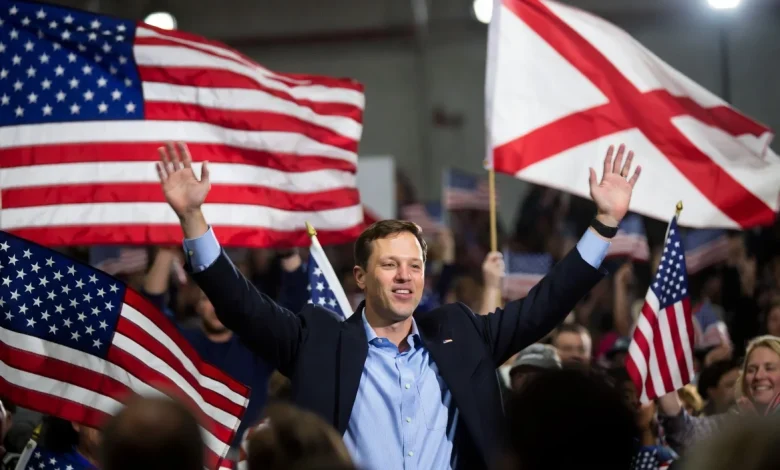
Barry Moore, the three-term U.S. Congressman representing Alabama’s 2nd district, has secured the Republican nomination for the state’s highly sought-after open U.S. Senate seat. In a highly anticipated and fiercely contested runoff election on Tuesday, June 16, 2026, Moore handily defeated former Navy SEAL and political newcomer Jared Hudson. This victory cements Moore’s status as the overwhelming favorite to win the general election this November in the deeply conservative state of Alabama. He is poised to succeed outgoing Senator Tommy Tuberville, who vacated the seat to launch a campaign for the Alabama governor’s mansion.
The race between Moore and Hudson represents a classic modern Republican primary battle, pitting a well-known, Trump-backed legislative veteran against an anti-establishment outsider seeking to break into the political arena. With the backing of Donald Trump and the political apparatus of the House Freedom Caucus, Moore managed to build on his primary lead and secure a decisive victory in the runoff. As Alabama prepares for the general election, this primary serves as a key indicator of the political currents shaping the Republican Party nationally and within the Deep South.
Barry Moore Defeats Jared Hudson: The Final Election Results
The Republican runoff on June 16, 2026, concluded with Barry Moore earning a decisive victory over Jared Hudson. Unofficial returns on election night showed Moore capturing approximately 56% to 58% of the total vote share, while Hudson finished with roughly 42% to 44%. The margin of victory reflected Moore’s deep roots in the state and his strong performance in his home congressional district.
Addressing his supporters at an election night watch party in Enterprise, Alabama, Moore expressed deep gratitude to his family, his campaign team, and his base of voters. He immediately emphasized his close alignment with Donald Trump as a key driver for his legislative goals. “We look forward to working with Senator Britt and Governor Tuberville, because the greatest days of Alabama are ahead of us,” Moore told the cheering crowd. “When I call Trump, he takes my calls, and we can work together with the senators, that delegation and certainly the president of the United States to make sure that Alabama has an opportunity to bring the jobs back here that we need.”
Vote Share and Key Statistics
To understand the dynamics of the race, it is helpful to examine the shift in voter sentiment between the initial primary on May 19, 2026, and the subsequent runoff on June 16. In the crowded May primary, neither candidate was able to secure the 50% majority required to win the nomination outright, prompting the head-to-head runoff. The initial May 19 primary demonstrated how a crowded race lacks clear front-runner amidst heated all-party primary debates, forcing the top two candidates into a high-intensity runoff campaign.
| Candidate | Primary Vote Share (May 19) | Runoff Vote Share (June 16) | Key Endorsements & Backing |
|---|---|---|---|
| Barry Moore | ~39% | ~56% – 58% (Winner) | President Donald Trump, Club for Growth, House Freedom Caucus |
| Jared Hudson | ~26% | ~42% – 44% | Grassroots Outsider Groups, Local Conservative Coalitions |
| Steve Marshall | ~25% | N/A (Eliminated) | Alabama Attorney General, Institutional Endorsements |
Hudson had secured his spot in the runoff by narrowly edging out Alabama Attorney General Steve Marshall in the May primary, signaling strong appetite among some voters for a political outsider. However, Moore’s established name recognition and formidable fundraising operation ultimately proved too difficult for the challenger to overcome in the final weeks of the campaign.
The Influence of President Trump’s Endorsement
Donald Trump’s endorsement has long been considered the most valuable currency in Republican primary politics, particularly in Alabama. Trump officially endorsed Barry Moore in January, signaling to the conservative electorate that Moore was his preferred candidate to carry the “America First” banner in the Senate. Trump’s public praise for Moore was unequivocal: “Barry Moore has my complete and total endorsement. He’s the best America First candidate you can imagine,” the former president declared during the campaign.
For Moore, the endorsement was more than just a badge of honor; it was a core pillar of his campaign strategy. In a state where Trump won by overwhelming margins in successive presidential elections, aligning closely with the former president is often the single most effective way to secure conservative votes. Moore’s victory reinforces Trump’s formidable influence over Republican nominating contests, demonstrating that despite occasional setbacks in other states, his endorsement remains a powerful force in deep-red territory.
Power of the “America First” Stamp of Approval
The strategic value of the Trump endorsement became even more critical because both candidates attempted to position themselves as the true champion of the “America First” movement. Jared Hudson campaigned aggressively as an outsider, promising to be “a warrior for President Trump’s ‘America First’ agenda” in Washington. Hudson argued that career politicians had diluted the movement’s goals and that sending a combat veteran and political outsider was the only way to achieve real change.
However, Moore’s long-standing, public loyalty to Trump since his early 2016 campaign gave the congressman a level of credibility that Hudson could not easily match. Moore was one of the earliest elected officials in Alabama to back Trump’s initial bid for the presidency, a fact that Moore frequently highlighted on the stump. By securing the official endorsement, Moore effectively monopolized the “America First” brand, leaving Hudson to fight an uphill battle to convince voters that the endorsed candidate was not the genuine article.
Campaign Strategies and Political Backgrounds
The campaign between Barry Moore and Jared Hudson highlighted contrasting theories of political change and distinct professional backgrounds. Moore, a business owner and veteran of the Alabama state legislature, has spent years navigating both state and federal legislative bodies. First elected to Congress in 2020, Moore built a reputation as an uncompromising conservative who was comfortable working within legislative coalitions to push policy goals.
Hudson, by contrast, relied on his background as a former Navy SEAL and tactical trainer to present himself as a political outsider. According to Jared Hudson’s profile on Ballotpedia, his platform emphasized systemic reform, border security, and a complete disruption of the federal bureaucracy. He framed the race as a choice between a “career politician” and a “warrior” who would actively fight the Washington establishment. “If you want the same thing over and over again, elect a career politician,” Hudson said during a candidate forum. “If you want different results… send a warrior to Washington.”
Barry Moore’s Freedom Caucus Alignment
As a member of the House Freedom Caucus, Barry Moore has consistently aligned himself with the most conservative faction of the Republican Party in the House of Representatives. This alignment helped him counter Hudson’s outsider narrative by demonstrating that he has been on the front lines of conservative battles against the Democratic administration and moderate Republicans alike.
Moore’s legislative record includes strong opposition to federal spending bills, advocacy for stringent border security measures, and efforts to reduce the size of the federal government. By positioning his Freedom Caucus membership as proof of his willingness to fight the establishment from within, Moore was able to satisfy voters who wanted an aggressive conservative representation without sacrificing the benefits of legislative experience. This primary battle aligns with broader national shifts that we often examine during presidential election postmortems, where factional divides within both major parties dictate the party’s future direction.
Jared Hudson’s Anti-Establishment “Warrior” Pitch
Jared Hudson’s campaign strategy was built on a direct, populist appeal to grassroots voters who feel alienated by the political process. He attempted to capitalize on the frustration that many conservative voters feel toward the legislative gridlock and compromises of Washington. Hudson’s “warrior” pitch was designed to appeal to those who believe that only individuals with military or real-world experience outside of politics have the resolve necessary to dismantle the “deep state”.
While this message resonated strongly with a significant portion of the primary electorate—enabling Hudson to outperform expectations and beat out the state’s attorney general for the runoff spot—it ultimately fell short against Moore’s organized campaign. Hudson’s lack of existing political networks and lower fundraising totals compared to Moore’s established donor base created structural hurdles that the political newcomer could not overcome in a statewide race.
Brutal Runoff and Controversy Over Military Service Records
The three-week period leading up to the June 16 runoff was characterized by a sharp rise in negative campaigning, which both candidates described as exceptionally intense. One of the primary flashpoints of the final stretch involved heated public debates over military service records and candidate integrity. Outside political action committees (PACs), including the Club for Growth-affiliated Alabama Freedom Fund, poured significant resources into the state to run attack ads targeting Hudson.
Moore himself acknowledged the toll the campaign took, referring to the final weeks as “brutal” as he faced scrutiny and counter-accusations. Following his defeat, Hudson released a statement conceding the race and reflecting on the intensity of the fight. “Every time I look at my beautiful family, I’m reminded that tough battles are always worth fighting,” Hudson said. “This battle did not go our way, but there will be more.” The sharp tone of the race highlighted the deep divisions that can occur even when candidates share highly similar policy platforms.
The Broader Alabama Political Landscape: Tuberville’s Shift
The race for this Senate seat was set in motion when Senator Tommy Tuberville announced that he would not seek re-election to the Senate in order to run for Governor of Alabama. Tuberville, a former college football coach who easily won the Republican nomination for governor last month, has been a dominant figure in Alabama politics. His decision to leave Washington opened up a rare vacancy in the state’s Senate delegation, triggering a major political reshuffling.
With Tuberville running for governor and Katie Britt serving as the state’s junior senator, Moore’s victory in the GOP primary positions him to join a highly conservative federal delegation. Moore’s legislative experience in the House is seen by his supporters as an asset that will allow him to hit the ground running in the Senate, working closely with Britt and other southern conservatives.
General Election Preview: Barry Moore vs. Everett Wess
With the Republican nomination decided, Barry Moore now turns his attention to the general election in November 2026. In the general election, Moore will face Democrat Everett Wess, a prominent attorney who secured the Democratic nomination on Tuesday night. Wess won the Democratic runoff with approximately 56% of the vote, defeating civil rights advocate Dakarai Larriett.
While Republicans celebrated this critical victory in the deep-south, other contests—such as when Greene wins Michigan Senate seat—have highlighted different tactical battlegrounds across the nation. In Alabama, however, the political math heavily favors the Republican nominee. Alabama has not elected a Democrat to the U.S. Senate since Doug Jones’s historic special election victory in 2017, an outcome that occurred under highly unusual political circumstances. Given the partisan lean of the state, Moore is widely expected to win the general election and succeed Tuberville in Washington.
Analyzing the Democratic Nominee’s Path
Everett Wess has indicated that his general election campaign will focus heavily on economic issues, specifically targeting the struggles that working-class Alabamians face due to the rising cost of living. By centering his message on kitchen-table issues like healthcare accessibility, inflation, and local job creation, Wess hopes to appeal to moderate and independent voters who may be fatigued by the intense partisan battles within the Republican Party.
Despite Wess’s focus on economic relief, the structural advantages of the Republican Party in Alabama present a monumental challenge for any Democratic candidate. Moore’s campaign is already urging Republican voters not to become complacent in the lead-up to November. With the national political environment remaining highly polarized, Moore’s team plans to maintain a robust campaign presence to ensure strong voter turnout and secure a decisive victory in the fall.