Pakistan Confirms Dialogue With Iran, US Meeting Pending
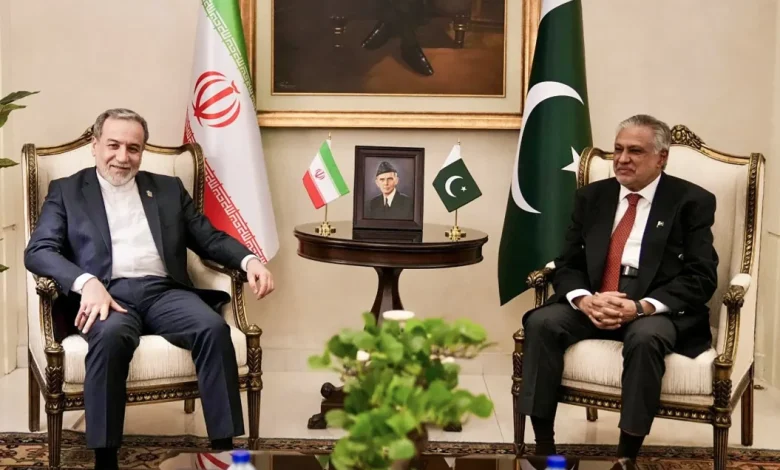
Pakistan remains at the absolute center of an intricate and highly sensitive geopolitical balancing act. A senior official recently confirmed that robust and ongoing communications are currently taking place between Islamabad and Tehran. Specifically, the dialogue involves direct engagement with Iran’s Foreign Minister Abbas Araghchi, a veteran diplomat deeply familiar with the nuances of international negotiation. However, while these regional discussions advance, the highly anticipated direct meeting with the United States delegation has not yet been finalized. This critical delay leaves the international community watching closely, as the diplomatic maneuvering in Islamabad could determine the trajectory of security across the Middle East, South Asia, and the broader global landscape. The stakes have never been higher, as regional actors and international superpowers alike attempt to avert a catastrophic breakdown in relations.
Overview of the Diplomatic Standoff
The current diplomatic standoff represents a culmination of decades of strategic mistrust, compounded by rapid developments in regional security frameworks. Islamabad finds itself acting as a crucial interlocutor between two fundamentally opposed geopolitical forces: the Islamic Republic of Iran and the United States. For policymakers, understanding the intricacies of this mediation effort is paramount. On one side, Tehran is attempting to break free from suffocating economic containment while maintaining its ideological and strategic depth in the region. On the other side, Washington is determined to enforce its non-proliferation and containment policies without igniting an unwinnable regional conflagration. In this precarious environment, the diplomatic machinery of Pakistan is operating at maximum capacity, striving to find common ground or, at the very least, a temporary de-escalation mechanism that satisfies both capitals. The lack of a finalized meeting schedule with American delegates underscores the immense friction still present in these preliminary backchannel communications.
The Role of Al Arabiya’s Report
The revelation of these behind-the-scenes maneuvers was first brought to broader international attention by Al Arabiya, a major news network that cited a high-ranking Pakistani official. According to the exclusive report, the official underscored that while progress is being made on the Iranian front, the American equation remains heavily stalled. This public disclosure serves multiple purposes. First, it subtly signals to Washington that Tehran is willing to engage, placing the burden of the next move squarely on the United States. Second, it highlights Islamabad’s indispensable role as a neutral arbiter capable of bridging vast ideological divides. The deliberate leak to a prominent Gulf-based media outlet also implies that regional stakeholders—particularly Saudi Arabia and the UAE—are being kept implicitly informed of the shifting dynamics, ensuring that no broad regional alliances are caught off guard by sudden breakthroughs or catastrophic breakdowns in the communication channels.
Ongoing Dialogue with Abbas Araghchi
Engagement with Iran’s Foreign Minister Abbas Araghchi is progressing with a notable degree of intensity. Araghchi, who has extensive experience dealing with Western powers dating back to the formulation of the Joint Comprehensive Plan of Action (JCPOA), is utilizing every diplomatic tool at his disposal. Reports indicate that the discussions with Pakistani officials revolve not only around the immediate de-escalation of border tensions but also around establishing a framework for indirect negotiations with the West. Iran’s diplomatic strategy relies heavily on maintaining an appearance of willingness to negotiate, thereby isolating hardliners in Washington who advocate for pure deterrence or military intervention. By keeping the dialogue open and highly active with Islamabad, Araghchi is successfully demonstrating that Iran remains a rational actor on the international stage, fully capable of conducting pragmatic diplomacy even while under immense external pressure and internal economic strain.
Historical Context of Islamabad-Tehran Relations
To fully grasp the magnitude of the current dialogue, one must delve into the deep historical context of the relationship between Islamabad and Tehran. The two nations share a massive, historically porous border that has been the site of both extensive cross-border trade and sporadic security incidents. Over the decades, their relationship has oscillated between deep cooperation and tense suspicion, often dictated by external alliances. Pakistan’s strategic imperative is to avoid being dragged into a proxy war, a priority that has only grown more urgent in recent years. Analysts often point to past diplomatic endeavors to contextualize today’s crisis, including a comprehensive look at how details failed U.S.-Iran deal efforts have historically imploded due to a lack of synchronized communication. By acting as a mediator now, Pakistan is attempting to rewrite a historical narrative of failed interventions, positioning itself as a stabilizing anchor in an otherwise highly volatile region characterized by shifting allegiances and sudden policy reversals.
The U.S. Delegation and Unfinalized Meetings
Despite the forward momentum with Tehran, the conspicuous absence of a finalized meeting with the United States delegation remains the central hurdle to any meaningful resolution. American diplomats are notoriously cautious when engaging in indirect talks with Iran, particularly in an environment where domestic political considerations in Washington heavily influence foreign policy decisions. The U.S. State Department is likely demanding strict preconditions before committing to a formal summit or even an informal sit-down mediated by Pakistani officials. These preconditions historically involve assurances regarding regional security, the halting of proxy aggressions, and verifiable pauses in nuclear enrichment activities. Until these assurances are provided in a manner deemed credible by the American intelligence community, the delegation will continue to delay, leaving the diplomatic process in a frustrating state of limbo that exacerbates regional anxieties and market volatilities.
Washington’s Strategic Hesitation
Washington’s strategic hesitation is not merely a bureaucratic delay; it is a calculated geopolitical posture. The United States understands that rushing into negotiations without ironclad guarantees could project weakness and alienate crucial allies in the Middle East, particularly Israel and the Gulf states. Furthermore, the broader strategic landscape is incredibly complicated, with various external factors constantly threatening to derail progress. For instance, shifting dynamics in the Levant often spill over into Gulf diplomacy, where aggressive stances can suddenly change the diplomatic math, much like when regional conflict torpedoes U.S.-Iran peace talks. The American delegation must weigh the potential benefits of a de-escalation agreement against the immense political risks of being perceived as capitulating to Iranian demands. Consequently, the strategy appears to be one of maximum pressure combined with cautious, heavily mediated backchannel listening, a tactic designed to extract maximum concessions before ever stepping foot into a formal negotiating room.
| Diplomatic Actor | Primary Strategic Objective | Current Diplomatic Status | Key Leverage Point in Negotiations |
|---|---|---|---|
| Pakistan | Regional stability and successful mediation | Active Intermediary / Host | Geographic proximity and strict neutrality |
| Islamic Republic of Iran | Sanctions relief and regime security | Direct talks with Islamabad advancing | Influence over the Strait of Hormuz |
| United States | Containment, deterrence, and non-proliferation | Meeting Unfinalized / Pending Preconditions | Global financial and military dominance |
Implications for the Gulf and the Strait of Hormuz
The failure or success of these Pakistan-mediated talks carries profound implications for the broader Gulf region, particularly concerning the critical chokepoint of the Strait of Hormuz. Any escalation resulting from a collapse in diplomacy would immediately threaten the safe passage of global energy supplies. Iran has repeatedly demonstrated its capability to disrupt maritime traffic, a tactic used to remind the world of its strategic leverage. Gulf nations, observing these talks closely, recognize that their own economic prosperity is inextricably linked to the outcome. The stark contrast between the economic trajectories of the region highlights the stakes; observers frequently note the disparity between the 47 years of revolution vs Gulf prosperity. A diplomatic breakthrough would secure continued economic growth for the Arabian Peninsula, whereas a breakdown could plunge the entire region into a devastating cycle of retaliatory strikes, naval blockades, and catastrophic economic contraction.
Undersea Cables and Global Security Threats
Beyond traditional maritime security and energy markets, a modern and equally terrifying vulnerability has emerged in the strategic calculus surrounding the Strait of Hormuz: the network of undersea internet cables. These fiber-optic lifelines are the backbone of the global digital economy, facilitating trillions of dollars in daily financial transactions and fundamental communications. Security analysts have increasingly warned that in a high-intensity conflict scenario, these infrastructure assets could become primary targets. An intentional severance in this vital corridor would yield unprecedented global disruption. Experts calculate that such coordinated cuts risk 97% of global web traffic routed through the region, paralyzing financial markets and crippling international logistics. The mere threat of this unconventional warfare tactic adds immense pressure on all negotiating parties to find a diplomatic off-ramp, elevating the Pakistan-mediated dialogue from a regional dispute to a matter of absolute global economic security.
Evaluating the Geopolitical Fallout
Evaluating the geopolitical fallout of these unfinalized meetings requires a panoramic view of the changing world order. If the United States ultimately declines to participate in the dialogue, it may force Iran to pivot even more aggressively toward Eastern powers, solidifying an anti-Western bloc that complicates global governance for decades. Conversely, if Pakistan successfully orchestrates a breakthrough, it will significantly elevate Islamabad’s prestige and influence on the world stage, proving that middle powers are increasingly essential to global stability in an era of multipolar competition. The diplomatic dance currently underway is a litmus test for the viability of regional mediation in resolving conflicts that have traditionally been dominated by superpower intervention. The longer the U.S. delays, the more time alternative geopolitical frameworks have to assert themselves, potentially marginalizing Western influence in a strategically vital theater.
The BRICS and Global South Dynamics
The hesitation of traditional Western powers has not gone unnoticed by the emerging economies of the Global South, particularly the BRICS coalition. While BRICS nations advocate for a multipolar world order, their internal divisions often hinder a unified response to major geopolitical crises. However, the ongoing standoff with Iran serves as a crucial stress test for this coalition. Some member states may view the situation as an opportunity to assert diplomatic independence, while others remain cautious to avoid secondary sanctions from Washington. The noticeable BRICS silence on Iran crisis highlights the complex internal dynamics and fractures within the Global South, revealing that while there is a shared desire to challenge Western hegemony, there is little consensus on how to actively manage high-stakes international security disputes. This vacuum further underscores the necessity of Pakistan’s localized, pragmatic mediation efforts.
Future Trajectory of Pakistan-Mediated Talks
Looking ahead, the future trajectory of these Pakistan-mediated talks remains highly uncertain but deeply consequential. The immediate coming weeks will be critical as Islamabad attempts to coax a definitive commitment from the American delegation while simultaneously keeping Abbas Araghchi and the Iranian leadership engaged at the table. Success will require an extraordinary level of diplomatic finesse, likely involving phased confidence-building measures rather than an immediate, comprehensive grand bargain. Small concessions, such as unfreezing targeted assets in exchange for verifiable pauses in aggressive regional postures, could serve as the foundation for broader dialogue. Ultimately, the fact that dialogue with Iran is ongoing is a testament to the enduring necessity of diplomacy in the face of overwhelming odds. Whether the U.S. delegation will eventually step into the room remains the defining question, one whose answer will resonate through the corridors of power from Washington to Tehran, and profoundly shape the future architecture of global security.