Lebanon Demands Ceasefire at Washington Talks: Rejects Iran
Lebanon is heading into today’s high-stakes Washington talks with one immediate and non-negotiable demand: a comprehensive ceasefire must be established before any broader geopolitical negotiations can begin. As the Middle East faces yet another critical juncture in 2026, the Lebanese delegation has arrived in the U.S. capital carrying a mandate that represents a significant departure from previous diplomatic engagements. Its ambassador and top diplomats are pushing for a radical framework that directly trades an Israeli military withdrawal from Lebanese territory in exchange for the complete disarmament of Hezbollah. Most notably, a Lebanese official issued the most telling and definitive line of the summit: “We do not want Iran to negotiate on our behalf.” This statement marks a watershed moment in the region’s contemporary history, signaling a desperate and sovereign attempt by the nation to reclaim its autonomy from proxy warfare.
The Strategic Shift: Demanding an Immediate Ceasefire
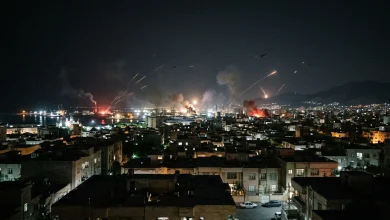
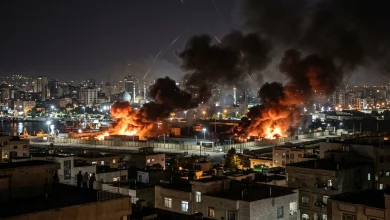
For the government in Beirut, the absolute prerequisite for any sustained diplomatic dialogue is the silencing of the guns. The civilian toll, the infrastructural devastation, and the daily reality of aerial bombardments and border skirmishes have rendered the country effectively paralyzed. The delegation’s insistence on an immediate ceasefire is not merely a negotiating tactic; it is an existential necessity. Without a halt to the violence, Lebanese officials argue that any discussions regarding long-term structural changes, demilitarization, or border demarcations are entirely futile. The Washington talks are viewed as the last viable off-ramp to prevent a total collapse of the state apparatus, which is already buckling under the immense weight of the conflict.
The insistence on stopping the fighting before addressing the geopolitical root causes demonstrates a pragmatic approach. By front-loading the ceasefire, the government hopes to secure essential humanitarian relief and demonstrate to its battered population that the state is still capable of delivering basic security. This sequence—ceasefire first, negotiations second—is designed to lock international stakeholders into a binding commitment to peace before tackling the infinitely more complex issues of militia disarmament and territorial sovereignty.
Rejecting Iranian Surrogacy: A Bold Declaration of Independence
The quote, “We do not want Iran to negotiate on our behalf,” reverberated through the halls of Washington before the meetings even officially commenced. For decades, the Lebanese political landscape has been heavily influenced, if not outright dictated, by the geopolitical ambitions of Tehran, primarily facilitated through its proxy, Hezbollah. This explicit rejection of Iranian diplomatic surrogacy is a monumental shift. It underscores a growing domestic consensus—spanning across various sectarian lines, including Maronite Christians, Sunni Muslims, and an increasing segment of the Shia population—that the nation’s interests have been wholly subordinated to a foreign agenda.
By publicly divorcing their diplomatic strategy from Tehran’s regional ambitions, Lebanese officials are attempting to reposition their nation as an independent actor on the global stage. This move is calculated to win favor with Western powers and Gulf nations, who have long demanded that Beirut curtail Iranian influence. This sentiment heavily aligns with broader regional security dialogues, such as the growing concerns over Iranian aggression and regional instability that have dominated recent summits. The repudiation of Iran is a clear signal to Washington that the legitimate state authorities are ready to reassert their sovereignty, provided they receive the necessary international backing.
The Disarmament Framework: Hezbollah and Israeli Withdrawal
At the core of the proposed diplomatic framework is a monumental and highly controversial trade-off: the verifiable withdrawal of Israeli forces from all contested Lebanese territories in exchange for the disarmament of Hezbollah. This proposal aims to address the primary security concerns of both states simultaneously. For Beirut, achieving a complete Israeli withdrawal eliminates the historical pretext Hezbollah has used to justify its existence as a heavily armed “resistance” force independent of the national army.
For Israel, the disarmament of Hezbollah—or at the very least, its withdrawal north of the Litani River and the dismantling of its heavy missile infrastructure—is an absolute prerequisite for border security. The framework being presented in Washington is designed to empower the Lebanese Armed Forces (LAF) to take sole control of the southern border regions. This ambitious plan follows recent severe military operations that have degraded militia capabilities, potentially creating a unique window of opportunity to enforce a new security reality.
| Stakeholder | Primary Demand | Stance on Hezbollah | Geopolitical Goal |
|---|---|---|---|
| Lebanese Government | Immediate Ceasefire | Gradual disarmament and integration into state forces | Reclaim national sovereignty from foreign proxies |
| Israel | Border Security | Complete demilitarization south of the Litani River | Eliminate northern border threats entirely |
| Iran (Proxy Stance) | Maintain regional influence | Preserve as primary deterrent against Israel | Use Lebanese territory as leverage in broader negotiations |
| United States | De-escalation | Support Lebanese Armed Forces (LAF) to replace militia | Stabilize the Middle East and limit Iranian power projection |
Historical Context: The Shadow of UN Resolution 1701
To understand the magnitude of the current proposal, one must look back at United Nations Security Council Resolution 1701, which ended the 2006 Lebanon War. The resolution mandated the disarmament of all armed groups in the country and stipulated that only the LAF and UNIFIL (the UN peacekeeping force) could possess weapons south of the Litani River. For nearly two decades, Resolution 1701 has been a documented failure, violated continuously as Hezbollah amassed a formidable arsenal of precision-guided munitions and entrenched itself along the Blue Line.
The current framework being pushed by the ambassador in Washington is essentially an attempt to operationalize Resolution 1701 with actual enforcement mechanisms. The delegation argues that the geopolitical conditions of 2026—characterized by a severely weakened economy, intense domestic backlash against the militia, and unprecedented military pressure—create the first genuine opportunity since 2006 to implement the resolution’s core mandates.
The Washington Factor: U.S. Mediation in the Crisis
The United States plays the indispensable role of primary mediator in this crisis. Washington’s leverage over both Israel (through military aid and diplomatic cover) and the broader international financial institutions makes it the only actor capable of brokering and guaranteeing such an expansive framework. U.S. diplomats are reportedly cautiously optimistic but highly skeptical of the feasibility of disarming Hezbollah peacefully.
The Biden-Harris or successive administration’s approach in 2026 involves utilizing a combination of “carrots and sticks.” The carrots include massive international financial bailouts to rebuild the shattered Lebanese economy, spearheaded by the IMF and World Bank, conditional on profound structural and security reforms. The sticks involve continued isolation and potential sanctions on political entities that obstruct the peace process.
Diplomatic Pressure Points and Global Alliances
In the broader context of global diplomacy, the talks in Washington are not happening in a vacuum. Various global organizations, including the Council on Foreign Relations, have emphasized the necessity of a unified international front. The interplay between U.S. mediation, French historical influence in the Levant, and Gulf state financial power creates a multi-layered diplomatic pressure cooker. The delegation is attempting to harness this international consensus to force a domestic resolution that marginalizes radical factions.
Economic Ramifications of the Prolonged Conflict
Beyond the immediate military and geopolitical concerns, the drive for a ceasefire is deeply rooted in the nation’s catastrophic economic reality. Since the financial collapse of 2019, the local currency has lost over 95% of its value, wiping out the life savings of the middle class and plunging the vast majority of the population into poverty. The ongoing war has only exacerbated this crisis, destroying the crucial agricultural sector in the south and completely obliterating the tourism industry, which historically served as a vital source of foreign currency.
The framework proposed in Washington implicitly ties security to economic salvation. The ambassador has made it clear that disarming Hezbollah and securing the borders are the prerequisites for unlocking the billions of dollars in international aid required to rebuild the nation. This economic desperation acts as a powerful catalyst, forcing political factions that previously tolerated the militia’s autonomy to prioritize state survival over proxy allegiances.
Energy Security and Maritime Borders
Another critical component of the Washington talks is the long-term stabilization of the maritime borders and the exploitation of offshore natural gas reserves. Previous U.S.-brokered maritime agreements provided a glimmer of hope for energy independence and economic revitalization. However, the constant threat of cross-border conflict has deterred international energy companies from investing heavily in exploration and extraction. A permanent ceasefire and the removal of armed non-state actors from the border are essential to creating a secure environment for these vital energy projects to proceed.
Regional Dynamics: The Changing Middle Eastern Landscape
The Lebanese initiative is heavily influenced by the shifting tectonic plates of Middle Eastern diplomacy. The normalization agreements between Israel and several Arab states, alongside the broader European and Western diplomatic outreach across the Middle East, have isolated the traditional “Axis of Resistance.” Nations in the region are increasingly prioritizing economic integration, technological advancement, and stability over perpetual ideological warfare.
By rejecting Iranian mediation, Beirut is attempting to realign itself with the moderate Arab bloc. This strategic pivot is necessary to restore the historical financial lifelines from Riyadh, Abu Dhabi, and Doha, which were severed due to Hezbollah’s overwhelming dominance in domestic politics. The outcome of the Washington talks will likely feature prominently in upcoming international summits shaping the geopolitical discourse throughout 2026.
Can Hezbollah Actually Be Disarmed?
The most daunting question hovering over the Washington negotiations is the practical implementation of the disarmament framework. Hezbollah is not merely a militia; it is a deeply entrenched political party with significant parliamentary representation, a vast social services network, and a military apparatus that rivals or exceeds the capabilities of the national army. Disarming such an entity by decree is historically unprecedented.
The delegation’s strategy relies on a multi-phased approach. It begins with the cessation of hostilities and the immediate withdrawal of militia fighters from the southern borders, replaced by heavily reinforced units of the Lebanese Armed Forces supported by the international community. The subsequent phases involve integrating the militia’s less ideological components into the state security apparatus and establishing a strict embargo on the resupply of advanced weaponry via Syria. The ultimate success of this framework depends entirely on the willingness of the international community to provide unwavering military, economic, and diplomatic support to the state, effectively outcompeting the proxy networks that have thrived in the power vacuum for so long. The true test of these Washington talks will be whether the words spoken in diplomatic suites can manifest as sovereign reality on the ground.