KAAN Fighter Jet: Turkey Challenges Israel’s F-35 Advantage
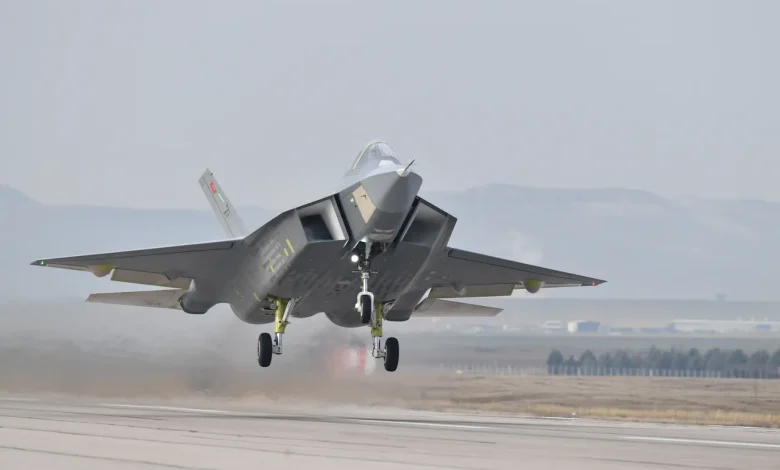
KAAN, Turkey’s indigenous fifth-generation fighter jet, is rapidly advancing toward active service, signaling a monumental shift in the Middle Eastern military landscape. Scheduled to enter the active inventory of the Turkish Air Force between 2028 and 2030, this twin-engine air superiority fighter is not merely a testament to Turkey’s burgeoning defense-industrial complex; it is a direct strategic counterweight to the technological supremacy long held by Israel through its fleet of American-made F-35 Lightning II aircraft. As the Middle East continues to experience profound geopolitical transformations, the successful deployment of this state-of-the-art aircraft threatens to narrow the long-standing air power disparity and reshape the balance of military force across the region by the end of the decade.
The Rise of Turkey’s Aviation Industry
For decades, the Turkish Air Force relied heavily on foreign procurement, operating one of the largest fleets of F-16 Fighting Falcons in the world outside the United States. However, the trajectory of Turkish military aviation fundamentally altered following diplomatic rifts and the subsequent imposition of CAATSA (Countering America’s Adversaries Through Sanctions Act) sanctions, which ultimately culminated in Turkey’s ejection from the F-35 Joint Strike Fighter program. Rather than accepting a degraded air combat capability, Ankara accelerated its National Combat Aircraft (MMU) project, spearheaded by Turkish Aerospace Industries (TAI). This ambitious pivot has galvanized the entire Turkish defense sector, forcing rapid advancements in composite materials, avionics, radar technology, and aerodynamics.
From Procurement to Indigenous Production
The transition from a procurement-based military to an indigenous production powerhouse is fraught with extreme engineering challenges. Developing a fifth-generation fighter requires mastering radar cross-section (RCS) reduction, internal weapons bays, diverterless supersonic inlets, and complex sensor fusion algorithms. TAI, working in conjunction with defense electronics giant ASELSAN, has made staggering progress. ASELSAN is currently developing a highly sophisticated Active Electronically Scanned Array (AESA) radar system based on gallium nitride (GaN) technology, intended to provide the aircraft with unparalleled situational awareness. This push toward self-reliance is not happening in a vacuum; it echoes the massive defense spending seen across the region, where regional defense contractors and war economies are increasingly dictating national strategic postures. By investing billions into domestic aerospace infrastructure, Turkey is establishing a sovereign supply chain immune to Western embargoes.
KAAN vs. F-35: A Technical Comparison
Understanding the implications of this new aircraft requires a direct comparative analysis with the region’s current apex predator, the F-35I Adir operated by the Israeli Air Force. While the F-35 is a single-engine, multi-role strike fighter with unparalleled stealth and data-linking capabilities, the Turkish platform is designed primarily as an air superiority fighter with secondary ground-attack capabilities, featuring a twin-engine configuration that offers higher survivability and potentially greater speed and payload capacity.
| Specification | KAAN (Turkey) | F-35A / F-35I Adir (Israel) |
|---|---|---|
| Generation | 5th Generation | 5th Generation |
| Primary Role | Air Superiority / Multi-role | Multi-role Strike Fighter |
| Engines | 2 x F110-GE-129 (Interim), Indigenous later | 1 x Pratt & Whitney F135-PW-100 |
| Top Speed | Mach 1.8+ (Target) | Mach 1.6 |
| Stealth Capability | Very Low Observable (VLO) | Very Low Observable (VLO) |
| Maximum Takeoff Weight | Approx. 60,000 lbs | 70,000 lbs |
| Service Entry | Expected 2028 – 2030 | Currently Active |
Stealth Capabilities and Sensor Fusion
Stealth is the defining characteristic of fifth-generation warfare. The Turkish design utilizes a faceted airframe, internal weapons carriage, and radar-absorbent materials (RAM) to minimize its signature on enemy radar screens. However, true fifth-generation capability extends beyond stealth into the realm of sensor fusion. The F-35 excels at synthesizing data from multiple distributed sensors to provide the pilot with a cohesive, god’s-eye view of the battlespace. Turkish defense engineers are racing to replicate this capability, utilizing domestic mission computers and data links. If successful, the aircraft will not only be difficult to detect but will also be able to orchestrate complex attacks using indigenous air-to-air missiles like the Gökdoğan and Bozdoğan, potentially neutralizing the technological edge currently enjoyed by Israel.
Israel’s Strategic Dilemma
Since its founding, Israel’s defense doctrine has been predicated on maintaining a Qualitative Military Edge (QME) over any combination of regional adversaries. This concept, codified into United States law, ensures that Israel receives the most advanced American military hardware available. For years, the acquisition of the F-35I Adir guaranteed absolute air dominance in the Middle East. However, the emergence of a highly capable, indigenously produced fifth-generation fighter in a powerful regional neighbor fundamentally complicates Israel’s strategic calculations. While Turkey and Israel are not actively at war, their diplomatic relationship has been highly volatile. The introduction of an advanced airframe into the Turkish Air Force means Israel can no longer assume unimpeded freedom of operation in the broader Mediterranean and Middle Eastern airspace. This dynamic is unfolding against a backdrop of wider Israeli security concerns, as evidenced by Israel’s broader military maneuvers on its northern borders, highlighting a military spread thin across multiple high-tech threat vectors.
Retaining Qualitative Military Edge (QME)
To retain its QME in the face of this new challenge, Israel is likely to accelerate its own modernization programs. The Israeli Air Force is constantly upgrading the electronic warfare and cyber capabilities of its F-35I fleet, integrating bespoke Israeli systems into the American airframe. Furthermore, Israel is heavily investing in advanced unmanned aerial systems (UAS) and “loyal wingman” drones designed to fly alongside manned fighters, acting as force multipliers. The race is no longer just about the kinematic performance of the jets, but about artificial intelligence, electronic attack capabilities, and autonomous swarming tactics. Israel’s defense establishment knows that the skies of 2030 will be significantly more contested, forcing a rapid evolution in aerial warfare doctrine.
Shifting the Middle East Air Power Balance
The Middle East is home to some of the most advanced and heavily armed air forces on the planet. For years, the hierarchy of air power was clearly delineated, with Israel at the absolute pinnacle, followed by wealthy Gulf states operating advanced 4.5-generation Western fighters like the F-15QA, Eurofighter Typhoon, and Dassault Rafale. Turkey’s entry into the exclusive club of nations capable of manufacturing fifth-generation fighters disrupts this established order. The balance of power is inextricably linked to regional stability, a fragile concept frequently tested by shifting regional diplomacy and peace negotiations. A heavily armed, technologically independent Turkey altering the balance could prompt a new arms race, pushing Arab states to seek their own fifth-generation solutions, potentially looking toward Chinese platforms like the J-31 or Russian alternatives if Western markets remain closed to them.
Geopolitical Implications of Multipolar Skies
Air power is a direct extension of geopolitical influence. By shedding its reliance on the United States for advanced fighter aircraft, Turkey gains immense strategic autonomy. Ankara will be able to deploy its forces without the constraints of end-user agreements or the fear of crippling spare parts embargoes. This independence allows Turkey to project power more assertively in the Eastern Mediterranean, the Aegean, North Africa, and the Caucasus. The ability to field a sovereign fifth-generation fighter elevates Turkey from a regional power to a major geopolitical pole, capable of challenging established hegemonies and pursuing its national interests with a potent, undeniable hard-power asset. The psychological impact on the region cannot be understated; witnessing a Middle Eastern nation organically develop top-tier aerospace technology shatters the monopoly long held by the US, Russia, and China.
Export Potential and Strategic Partnerships
The financial burden of developing a clean-sheet fifth-generation fighter is astronomical, often running into tens of billions of dollars. To offset these prohibitive costs and achieve economies of scale, Turkey is actively seeking international partners for the project. Nations like Pakistan and Azerbaijan have expressed profound interest in participating in the development and eventual procurement of the aircraft. This export potential not only makes the program financially viable but also solidifies Turkey’s role as an alternative defense supplier to nations unable or unwilling to purchase from the US or Russia. Exporting such advanced technology naturally comes with complex regional security dynamics, closely mirroring the intricacies of ongoing disarmament pushes and arms control dialogues throughout the volatile region. By arming allied nations with fifth-generation capabilities, Turkey effectively builds a coalition of technologically interoperable air forces, further amplifying its strategic depth and regional clout.
The Future Fleet of 2030
As the decade draws to a close, the skies over the Middle East will look markedly different. The proliferation of stealth technology, advanced AESA radars, and hyper-connected battle networks will redefine how conflicts are deterred and fought. Turkey’s relentless pursuit of aerospace independence with its flagship fighter project is the catalyst for this transformation. While Israel’s F-35 will undoubtedly remain a formidable and lethal platform, the era of its uncontested regional supremacy is steadily drawing to a close. For a comprehensive look at global defense aerospace trends and ongoing procurement programs, readers can consult resources like Janes Defence News. The ultimate success of the Turkish program will depend on overcoming remaining technical hurdles, specifically the development of an indigenous turbofan engine to replace the interim American powerplants. However, the momentum is undeniable. The successful fielding of this aircraft between 2028 and 2030 will stand as a watershed moment in military history, proving that the pinnacle of aerial warfare technology is no longer the exclusive domain of the global superpowers, and forever altering the strategic calculations of every nation in the Middle East.