Iran War Economy: Wall Street, AI, and Defense Win Big
Iran and the rapidly escalating geopolitical conflicts radiating from the Middle East have undeniably cast a long, dark shadow over the global macroeconomic landscape. While the world economy takes a severe hit from disrupted supply chains, soaring commodity prices, and paralyzed trade routes, a parallel narrative of unprecedented financial prosperity is quietly unfolding across specific sectors. The traditional wisdom that war destroys wealth is being fiercely challenged in 2026. Instead of universal economic contraction, we are witnessing a massive transfer of capital. The International Monetary Fund has slashed global growth forecasts, and developing economies are getting brutally crushed by the sheer weight of inflationary pressures. However, in the high-stakes arenas of Wall Street, decentralized prediction markets, the global defense-industrial complex, artificial intelligence, and renewable energy, corporations are having the time of their lives. This comprehensive analysis delves into the paradoxical reality of the modern wartime economy, exploring exactly who is winning, how they are capitalizing on chaos, and what this massive accumulation of wealth means for the future of global industry.
The Paradox of Global Conflict and Financial Boom
To understand the current economic divergence, one must examine the mechanics of disaster capitalism and opportunistic growth. Geopolitical shockwaves naturally induce panic among retail investors and traditional consumer-facing industries. However, for institutions that trade on volatility, provide national security infrastructure, or promise technological supremacy, conflict acts as a potent catalyst. The prolonged tensions involving global superpowers have fundamentally rewired global priorities. Nations are no longer prioritizing free-trade expansion; instead, they are prioritizing sovereign security, energy independence, and technological dominance. This sudden, violent shift in global priorities has directed trillions of dollars into a handful of hyper-specialized sectors, creating staggering corporate wealth while the baseline global economy sputters.
Wall Street Capitalizes on Market Volatility
Market volatility is the absolute lifeblood of institutional trading desks. While retail portfolios suffer during erratic market swings, Wall Street banks thrive on the sheer volume of trades, the widening of spreads, and the massive fees generated from panicked portfolio restructuring. The Q1 2026 earnings reports from major financial institutions have shattered historical records. JP Morgan posted an astonishing $16.5 billion in first-quarter earnings, a figure that defies the gravity of a slowing global economy. This massive haul was largely driven by their fixed-income trading desks and global market divisions, which successfully navigated and monetized the frantic fluctuations in currency and commodity markets.
The prosperity is not isolated to a single bank. Morgan Stanley has reported a 29% increase in earnings, heavily bolstered by their wealth management and institutional securities divisions. As ultra-high-net-worth individuals and corporate treasuries rushed to hedge against Middle Eastern instability, Morgan Stanley collected premium fees for their advisory and executing services. Similarly, Goldman Sachs saw its profits surge by 19%, riding a wave of increased trading commissions and strategic repositioning in the commodities sector. When uncertainty reigns supreme, liquidity becomes a premium product, and Wall Street is currently the most profitable liquidity provider on the planet.
Prediction Markets Skyrocket: The Polymarket Phenomenon
While traditional finance reaps the rewards of volatility, a new breed of financial technology is capitalizing directly on the uncertainty of the war itself. Decentralized prediction markets have transformed from niche cryptographic experiments into mainstream financial juggernauts. Polymarket, a leading decentralized information market platform, is currently generating over $1 million a day in fees by allowing users from across the globe to bet on specific geopolitical and war-related outcomes. Users are placing millions of dollars on questions ranging from the timeline of peace treaties to the specific movements of military assets.
This explosive growth is deeply intertwined with the broader crypto market today, as digital assets provide the frictionless rails for these global wagers. At its current trajectory, Polymarket is on track to collect $342 million in fees this year alone. This represents a paradigm shift in how society interacts with global news. Rather than passively consuming reports of conflict, capital allocators and retail speculators are actively pricing the probability of geopolitical events, turning the fog of war into a highly liquid, highly profitable speculative market.
The Aerospace and Defense Sector Surge
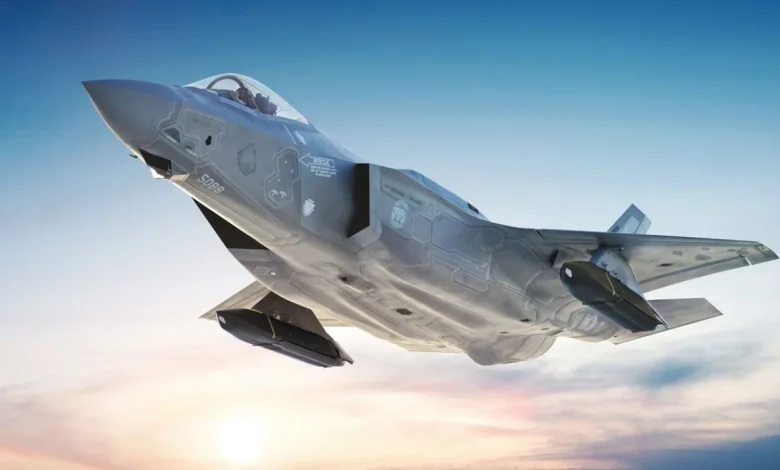
It is an unavoidable truth that defense contractors are the most direct beneficiaries of international conflict. However, the scale of the 2026 defense boom is historically unprecedented. The global aerospace and defense index has surged by an incredible 32% year-on-year. This is not merely a short-term spike based on immediate ammunition replenishment; it is a structural repricing of the defense sector based on long-term national security commitments. The realization that conventional, large-scale warfare is a tangible reality in the 21st century has shattered decades of complacency.
Global Military Budgets Hit Unprecedented Highs
Currently, more than half the world’s nations have significantly raised their military budgets. Governments in Europe, Asia, and the Americas are frantically attempting to modernize their forces, stockpile precision-guided munitions, and develop next-generation counter-drone technologies. This global rearmament is driving multi-billion dollar, multi-year contracts into the order books of defense giants. The urgency is palpable, especially as geopolitical alliances shift, evidenced by situations where Europe builds a NATO alternative to ensure its own sovereign security independently of fluctuating US foreign policy. Every new defense framework, every border reinforcement, and every naval deployment translates directly into sustained, predictable revenue for the aerospace and defense industry.
Artificial Intelligence and Semiconductor Dominance
If defense is the physical shield of the modern state, Artificial Intelligence is its central nervous system. Surprisingly to some, the economic shockwaves of the war have not slowed down the aggressive expansion of the AI sector. In fact, they have accelerated it. The military and intelligence applications of artificial general intelligence, autonomous systems, and predictive modeling have elevated AI from a commercial tech product to a critical element of national security infrastructure.
TSMC Profits and the Imminent Tech IPOs
The foundation of this AI boom rests entirely on advanced semiconductor manufacturing. Taiwan Semiconductor Manufacturing Company (TSMC), the world’s leading foundry, recently posted a staggering $18 billion in Q1 profits, marking a 58% increase. This massive jump underscores the world’s insatiable demand for the advanced GPUs required to train frontier AI models. Despite the geopolitical risks inherent in the region, the flow of capital toward computational power remains entirely unobstructed.
Furthermore, the software layer of the AI revolution is preparing for a massive liquidity event. Both Anthropic and OpenAI are planning to go public this year. The market appetite for these offerings is ravenous, driven by the belief that AI will define the next century of economic and military supremacy. The race for technological dominance, highlighted by the upcoming AI supremacy battles, ensures that capital will continue to flood into Silicon Valley regardless of the broader macroeconomic climate.
Renewable Energy: Accelerating the Clean Energy Transition
The conflict has starkly exposed the profound vulnerabilities associated with relying on imported fossil fuels from volatile regions. With three major global energy shocks occurring in just one decade, governments have finally decoupled their climate goals from pure environmentalism, reframing renewable energy as a non-negotiable matter of national and economic security.
Asian Governments Pivot From Fossil Fuels
The global clean energy index is currently up a remarkable 71% year-on-year. This explosive growth is largely driven by Asian governments racing to cut their dependence on foreign fossil fuels. When shipping lanes are threatened, as seen in the recent Strait of Hormuz developments, nations heavily reliant on imported liquefied natural gas and crude oil face instant economic paralysis. To combat this, massive sovereign wealth is being deployed to build domestic solar grids, offshore wind farms, and next-generation nuclear facilities. The transition to clean energy is no longer a slow, subsidized green initiative; it is an aggressive, well-funded race for energy sovereignty that is generating massive returns for companies positioned across the renewable supply chain.
| Sector | Key Entity / Index | Q1 2026 Performance Metric | Primary Economic Catalyst |
|---|---|---|---|
| Banking & Finance | JP Morgan | $16.5bn Q1 Earnings | High Trading Volume & Market Volatility |
| Banking & Finance | Morgan Stanley | +29% Earnings Growth | Institutional Equities & Wealth Management |
| Prediction Markets | Polymarket | $1m/day fees ($342m projected) | Geopolitical Forecasting & Betting |
| Defense | Aerospace & Defense Index | +32% YoY Growth | Global Military Budget Expansions |
| Technology / AI | TSMC | $18bn Q1 Profit (+58%) | Uninterrupted AI Compute & GPU Demand |
| Renewable Energy | Clean Energy Index | +71% YoY Growth | Fossil Fuel Independence & Sovereign Energy |
The Global Economic Divide: IMF Forecasts and Developing Nations
While the statistics above paint a picture of extraordinary corporate wealth generation, they must be contextualized against the profound suffering experienced by the broader global economy. The International Monetary Fund (IMF) has recently issued severe warnings and officially cut its global growth forecasts. The macroeconomic reality for entities outside the spheres of high finance, defense, AI, and renewable energy is undeniably grim.
Developing economies are currently bearing the brunt of this global bifurcation. Nations that rely heavily on imported staples, such as grain and agricultural fertilizers, are being completely crushed by surging commodity prices resulting from disrupted Black Sea and Middle Eastern trade routes. Inflation in these emerging markets is devastating local purchasing power, leading to political instability and potential sovereign debt crises. The high interest rates mandated by central banks in developed nations to curb their own wartime inflation have simultaneously strengthened the US dollar, making it incredibly expensive for developing nations to service their dollar-denominated debts.
Ultimately, the current landscape reveals a brutal truth about global economics during periods of sustained conflict: someone always wins. The wealth does not evaporate; it merely relocates. As the war continues to exert its massive gravitational pull on global affairs, the divide between the booming sectors of defense, Wall Street, and technology, and the struggling realities of developing economies and consumer markets, will only continue to widen. Investors and policymakers alike are now navigating a fractured world where unprecedented prosperity and severe economic hardship exist side by side, driven by the relentless machinery of geopolitical conflict.