Russia Backs Iran: UN Envoy Defends Hormuz Control
Russia has drastically escalated the diplomatic rhetoric at the United Nations, publicly defending the Islamic Republic of Iran’s asserted right to control and restrict navigation through the highly contested Strait of Hormuz. In a fiery address to the UN Security Council, the Russian Ambassador fundamentally challenged Western interpretations of maritime law by arguing that a coastal state facing direct military attacks possesses the sovereign right to limit naval and commercial passage within its territorial waters to guarantee its national security. Going far beyond a mere defense of Tehran’s strategic blockade capabilities, the Russian envoy launched a blistering verbal assault on the United States and its European allies. By directly comparing Western financial, intelligence, and logistical support for Ukrainian strikes on Russian commercial trade vessels in the Black Sea to the historical crime of piracy, the ambassador effectively accused NATO nations of raising a skull and crossbones over international waters. This profound diplomatic confrontation marks a critical inflection point in global geopolitics, merging the localized crises of the Middle East and Eastern Europe into a single, overarching narrative of anti-Western maritime resistance. The implications of this coordinated rhetorical and diplomatic offensive stretch far beyond the chambers of the United Nations, signaling a unified legal and military strategy between Moscow and Tehran that threatens to fundamentally rewrite the rules governing the world’s most vital economic chokepoints.
The Diplomatic Standoff at the UN Security Council
During an emergency session convened to address the escalating volatility in global shipping lanes, the Russian delegation seized the initiative to articulate a controversial but meticulously structured legal defense of Iranian actions. The Russian UN Ambassador declared unequivocally that in times of war, a coastal state that is under attack may limit navigation in its territorial waters for the purpose of security. This statement effectively provides vital diplomatic cover for Iran’s ongoing efforts to restrict access to the Strait of Hormuz, a maritime chokepoint through which approximately one-fifth of the world’s daily oil consumption passes. By framing Iran as a nation under attack and characterizing its restrictions on navigation as defensive security measures rather than acts of unprovoked aggression, Moscow is systematically attempting to dismantle the legal justifications historically utilized by Western naval coalitions to maintain forward deployments in the Persian Gulf. The strategic calculus behind this declaration is unmistakably clear: the Kremlin is utilizing its permanent veto power and prominent diplomatic platform at the UN Security Council not merely to shield Iran from international sanctions, but to aggressively challenge the foundational principles of the US-led rules-based international order. This diplomatic maneuvering underscores a rapidly deepening alliance that views Western naval supremacy as an existential threat requiring a coordinated, multi-theater geopolitical response.
Analyzing the Legal Precedents of Maritime Control
To fully comprehend the magnitude of the Russian Ambassador’s argument, one must delve into the intricate and often ambiguous framework of international maritime law. The foundational text governing global waters is the United Nations Convention on the Law of the Sea (UNCLOS), a comprehensive international treaty that establishes binding guidelines for businesses, environmental protections, and the management of marine natural resources. Under UNCLOS provisions, coastal states are granted a territorial sea extending up to 12 nautical miles from their baselines. Within this specific zone, foreign vessels generally enjoy the right of innocent passage, provided their transit is continuous, expeditious, and not prejudicial to the peace, good order, or security of the coastal state. However, the Russian diplomatic argument heavily relies on Article 25 of UNCLOS, which stipulates that a coastal state may, without discrimination among foreign ships, suspend temporarily in specified areas of its territorial sea the innocent passage of foreign ships if such suspension is strictly essential for the protection of its security. The complexity arises from the unique geographic status of the Strait of Hormuz itself. Because the navigable deep-water channels of the strait fall directly within the overlapping territorial waters of Iran and Oman, the legal regime governing it is highly contested. While Western nations forcefully assert the unalienable right of transit passage—which cannot be suspended under any circumstances—Iran, which has signed but never fully ratified UNCLOS, maintains that it is only bound by customary international law regarding innocent passage. Russia’s vocal support for the Iranian legal interpretation provides Tehran with a powerful diplomatic shield, arguing that the continuous threat of military strikes from hostile coalition forces justifies emergency security protocols, up to and including the outright suspension of commercial navigation.
The Skull and Crossbones Allegation Against the West
The most incendiary aspect of the Russian UN Ambassador’s address was the dramatic comparison of Western geopolitical strategy to maritime piracy. Pivoting abruptly from the Persian Gulf to the highly volatile Black Sea theater, the envoy explicitly condemned the United States and NATO for supplying Ukraine with advanced weaponry, satellite intelligence, and real-time strategic targeting data utilized to execute strikes against Russian commercial trade vessels and energy infrastructure. By stating that Western nations have effectively raised a skull and crossbones, the envoy is attempting to legally and morally equate state-sponsored military assistance with hostis humani generis—the common enemies of all mankind. Piracy, under strict international legal definitions, refers to illegal acts of violence, detention, or depredation committed for private ends by the crew or passengers of a private ship on the high seas. However, Moscow’s rhetorical strategy deliberately seeks to blur the lines between asymmetric naval warfare and international terrorism. The ambassador detailed multiple instances where Ukrainian uncrewed surface vessels (USVs), allegedly guided by NATO AWACS aircraft and Global Hawk reconnaissance drones, struck Russian oil tankers and civilian grain carriers far from active combat zones. In the carefully constructed Russian narrative, the Western powers are not noble defenders of the freedom of navigation, but rather rogue state actors sponsoring maritime piracy to systematically cripple Russian economic lifelines. This potent metaphor serves a crucial dual purpose: it aims to galvanize anti-Western sentiment among unaligned, developing nations in the Global South while simultaneously providing a reciprocal, pseudo-legal justification for Russia and Iran to target Western commercial interests globally in retaliation.
Economic Implications of the Strait of Hormuz
The diplomatic theater playing out at the United Nations carries immediate, tangible, and devastating consequences for the interconnected global economy. The Strait of Hormuz serves as the central cardiovascular artery of global energy markets, and any credible political or military threat to its unimpeded accessibility sends massive shockwaves through international supply chains. The explicit Russian endorsement of Iran’s asserted right to control the strait has already exacerbated existing market anxieties, creating a highly volatile environment for commodities traders and shipping magnates. This geopolitical friction is not purely theoretical; its real-world impact is catastrophic. For instance, the mere anticipation of restricted maritime access recently contributed to a massive 11% surge in EU natural gas futures, crippling European industrial manufacturing output and drastically inflating domestic energy bills ahead of the winter season. Furthermore, Lloyd’s of London and other major marine insurers have skyrocketed war-risk premiums for vessels transiting the region. Beyond hydrocarbons and liquefied natural gas (LNG), the disruption of Middle Eastern shipping routes profoundly impacts global agricultural stability. The Persian Gulf is a major transit route for vital agricultural inputs, and the ongoing geopolitical instability resulting in a fertilizer blockade drives global food crisis dynamics, disproportionately affecting developing nations reliant on affordable imports to maintain foundational food security. By directly linking their strategic defense of Hormuz to broader anti-Western grievances, the Russian and Iranian governments are effectively weaponizing the vulnerabilities of the global economy.
Expanding the Geopolitical Axis
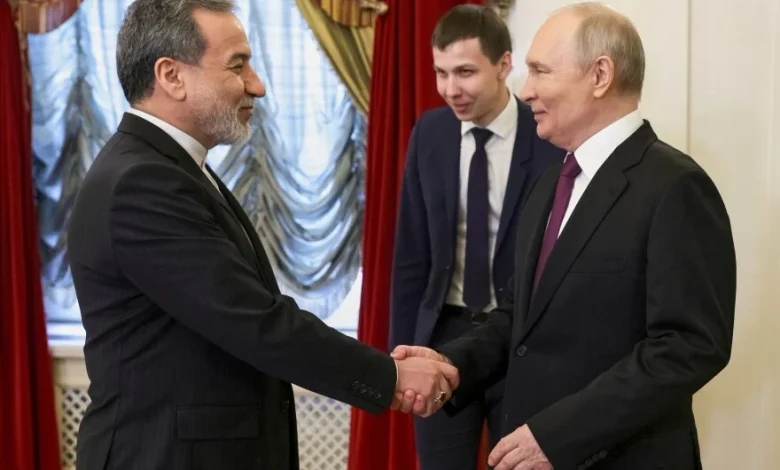
This unified diplomatic front represents the culmination of a rapidly accelerating strategic partnership between Moscow and Tehran. Faced with overlapping regimes of crippling Western economic sanctions and a shared ideological hostility toward United States global hegemony, Russia and Iran have fully transitioned from marriages of geopolitical convenience to a formalized, highly integrated axis of resistance. This alliance is currently characterized by unprecedented levels of military technology transfer, deep intelligence sharing, and joint macroeconomic planning aimed at circumventing the US dollar in international trade. The rhetorical defense offered by the Russian envoy at the UN is merely the visible, public-facing manifestation of deep, behind-the-scenes military and diplomatic coordination. High-level engagements between the two capitals have become routine, reinforcing a unified strategic doctrine across multiple operational theaters. A prime example of this deepening coordination occurred when Abbas Araghchi meets Putin in St. Petersburg, resulting in sweeping bilateral agreements that synchronize their naval strategies across the Caspian Sea, the Persian Gulf, and the Eastern Mediterranean basin. This expanding geopolitical axis is fundamentally altering the balance of power across the Eurasian landmass.
A Coordinated Strategy Against Western Hegemony
The synergy between Russian and Iranian foreign policy is heavily reliant on a coordinated strategy to dismantle Western military overmatch and economic dominance. By simultaneously challenging the established rules of engagement in the Black Sea and the Strait of Hormuz, the two nations are intentionally stretching Western naval resources to their absolute breaking point. Iran’s aggressive regional posture is increasingly emboldened by Russian diplomatic cover. As Tehran publicly threatens new military blows against perceived regional adversaries and coalition vessels, it does so with the absolute confidence that Moscow will promptly veto any punitive resolutions or sanction packages presented at the UN Security Council. This strategy is precisely designed to expose the operational limitations of Western power projection. If the United States and its European coalition partners are unable to guarantee the safety of commercial shipping in both the Middle East and Eastern Europe simultaneously, the foundational premise of the globalized economic system—unimpeded maritime trade—rapidly collapses.
| Maritime Chokepoint / Zone | Controlling / Claiming State | Legal Justification Cited | Global Economic Impact |
|---|---|---|---|
| Strait of Hormuz | Islamic Republic of Iran | National security defense during wartime attacks (UNCLOS Art. 25) | Extreme volatility in energy markets, skyrocketing marine insurance, fertilizer shortages |
| Black Sea Transit Routes | Russian Federation | Defense against state-sponsored piracy and uncrewed surface vessel (USV) strikes | Disruption of global grain exports, targeting of commercial shipping, regional supply chain failure |
Western Response and International Backlash
The Russian ambassador’s highly provocative remarks naturally drew immediate and harsh condemnation from Western diplomats, who dismissed the legal arguments as a gross distortion of international law and a highly dangerous escalation of global tensions. Representatives from the United States, the United Kingdom, and France rapidly issued unified counter-statements, emphatically rejecting the notion that support for a sovereign nation defending itself against an illegal military invasion equates to piracy. Western legal scholars pointed out the glaring inherent hypocrisy in Russia invoking the legal protections of UNCLOS while simultaneously violating the territorial integrity of its immediate neighbors. Furthermore, the US State Department and the Pentagon reiterated their ironclad commitment to Freedom of Navigation Operations (FONOPs) in the Persian Gulf, vowing that the Strait of Hormuz will firmly remain open to international commerce regardless of Iranian decrees or Russian diplomatic maneuvers. However, the intense diplomatic backlash also inadvertently revealed growing fractures within the broader international community.
The Future of Global Chokepoints
As the political dust settles on this explosive Security Council session, the long-term structural implications for global maritime security remain profoundly troubling. The dangerous precedent set by Russia’s explicit, public endorsement of a coastal state’s right to unilaterally close international straits under the guise of wartime security threatens to unravel decades of carefully established maritime norms. If the Strait of Hormuz can be legally barricaded based on unilateral declarations of national security, similar justifications will inevitably be applied by other state actors to other critical global chokepoints, such as the Bab el-Mandeb Strait, the Malacca Strait, and the Suez Canal. The global economy, which has been ruthlessly optimized for just-in-time delivery and frictionless oceanic transport, is structurally incapable of absorbing the widespread proliferation of sovereign maritime blockades. As state and well-armed non-state actors increasingly recognize the massive asymmetric geopolitical power generated by threatening narrow, vital waterways, the world is rapidly entering an era defined by constant naval friction, soaring insurance costs, and economic hostage-taking. The skull and crossbones metaphor, while clearly intended to vilify the West, ultimately reflects a much darker global reality: the golden era of uncontested, secure global shipping has effectively ended, replaced by a highly contested geopolitical environment where the rules of the sea are dictated exclusively by the nations willing to exert the most kinetic force.