Beirut Disarmament: MPs Push to Remove All Armed Groups
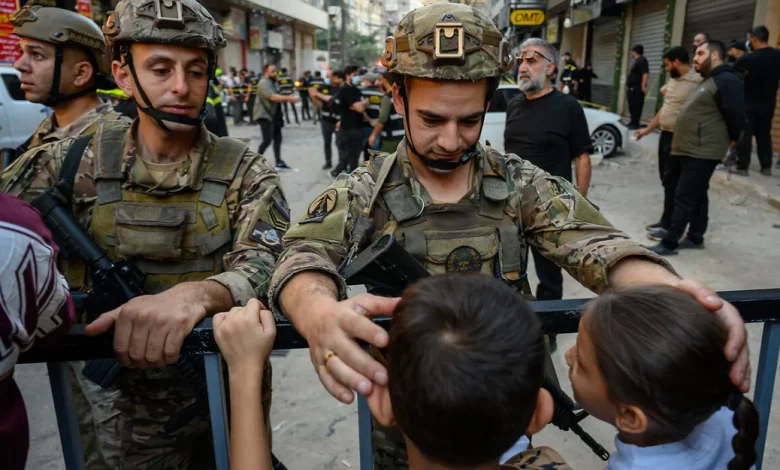
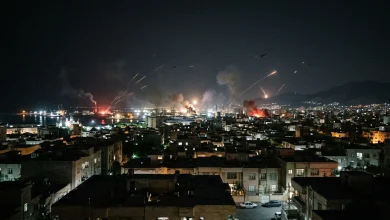
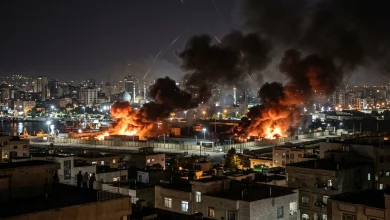
Beirut stands at the precipice of a monumental transformation as a coalition of determined Members of Parliament advocates for an unprecedented measure: the complete removal of all armed groups from the Lebanese capital, including the heavily armed Hezbollah organization. For decades, the presence of non-state militias and autonomous armed factions has severely undermined the state’s monopoly on violence, leading to profound security dilemmas and economic instability across the nation. The recent push by Beirut MPs signifies a critical paradigm shift in domestic politics, fueled by an exhausted public that desperately desires normalization and sovereignty. The drive follows a highly publicized gathering that captured the attention of international observers and domestic stakeholders alike, aiming to redefine the future of Lebanon by reclaiming its capital from the grip of sectarian militias.
Historic Push for a Weapon-Free Capital
The campaign to rid the city of unregulated weaponry is not entirely new, but its current manifestation carries unprecedented political weight and unity among disparate political blocs. In the aftermath of numerous conflicts, economic catastrophes, and social upheavals, a significant portion of the Lebanese electorate has signaled that genuine recovery is impossible as long as the state shares its authority with heavily armed political parties. By pushing to demilitarize the capital, lawmakers are directly challenging a long-standing status quo that has permitted various factions, most notably Hezbollah, to operate robust security apparatuses outside state control. This historic push is championed by a diverse coalition of lawmakers who argue that true national defense and internal security can only be managed by official state institutions, specifically the Lebanese Armed Forces and the Internal Security Forces.
The Beirut Free of Weapons Conference
The legislative momentum was heavily catalyzed by the landmark Beirut Free of Weapons conference, a gathering that brought together politicians, security experts, civil society leaders, and international diplomats. During this intensive summit, speakers meticulously detailed the devastating socioeconomic and political costs of allowing armed groups to maintain strongholds within civilian neighborhoods. The conference produced a comprehensive white paper outlining specific legal and security frameworks necessary to transition the city from a heavily militarized zone to a civilian-led metropolis. Participants emphasized that previous attempts at disarmament failed because they lacked a cohesive national strategy and broad-based political backing. However, the current initiative leverages the profound exhaustion of the Lebanese populace to generate an undeniable mandate for change, framing demilitarization not as a partisan attack, but as an existential necessity for the survival of the republic.
Meeting with President Aoun: A Pivotal Moment
Following the successful conclusion of the conference, a high-level delegation of MPs formally met with President Michel Aoun to present their findings and propose a strict disarmament timeline. During this critical encounter, President Aoun characterized the prevailing ceasefire as a pivotal moment in Lebanon’s arduous path toward genuine stability. This endorsement from the executive branch represents a significant breakthrough, as past presidential administrations have often equivocated on the issue of Hezbollah’s arms to maintain delicate government coalitions. Aoun’s rhetoric suggests a growing realization within the highest levels of the Lebanese state that international financial rescue packages and diplomatic rehabilitation are intrinsically linked to internal security reforms. The delegation provided the President with a detailed roadmap that requires the full mobilization of state security forces to assume complete control over all neighborhoods, effectively invalidating the so-called security squares previously managed by party-affiliated militias.
Strategic Focus on Law Enforcement
Central to the disarmament proposal is a massive strategic expansion of official law enforcement capabilities. The plan calls for increased funding, specialized training, and broader jurisdictional authority for the Lebanese Armed Forces and the Internal Security Forces to conduct operations within previously impenetrable neighborhoods. Lawmakers recognize that merely passing legislation banning weapons is insufficient without a robust, highly capable enforcement mechanism that commands the respect of the population. The strategic focus involves deploying modernized surveillance systems, establishing rapid response units, and implementing community policing models designed to bridge the trust gap between the state and historically marginalized communities. This emphasis on official law enforcement aims to reassure citizens that their security will not be compromised in the absence of local militias, thereby neutralizing one of the primary arguments used by armed groups to justify their existence.
Hezbollah’s Position and Political Ramifications
The inclusion of Hezbollah in the disarmament mandate makes this initiative exponentially more complex and politically volatile. Historically, Hezbollah has fiercely defended its vast arsenal, citing the continuous threat from Israel and the necessity of maintaining a robust deterrence infrastructure. The organization’s military wing, including the highly trained operatives involved when Hezbollah Radwan forces halt IDF operations, operates with a high degree of autonomy. Convincing Hezbollah to voluntarily relinquish its physical presence and weapon caches within the capital will require immense diplomatic finesse, potential security guarantees, and potentially the integration of some defensive strategies into the official national defense strategy. The political ramifications are profound, as Hezbollah’s domestic power is closely tied to its military capabilities. The push by Beirut MPs forces the organization into a challenging position: either comply and risk diminishing its internal leverage, or refuse and face massive domestic backlash and further international isolation.
Disarming Non-State Actors
While Hezbollah dominates the conversation, the initiative aims to neutralize all non-state actors operating within the capital’s municipal boundaries. This includes various political party bodyguards, neighborhood protection gangs, and heavily armed factions operating within specific enclaves. The comprehensive nature of the proposed disarmament ensures that the state does not appear to be targeting one specific sect or political entity, but rather applying the rule of law uniformly across all demographics. Addressing the broader ecosystem of non-state actors is essential for creating a genuinely secure environment. The state must dismantle the complex web of patronage and protection rackets that have proliferated in the absence of strong centralized authority, ensuring that no group retains the capacity to intimidate rivals or citizens through force of arms.
| Disarmament Phase | Primary Objective | Timeline | Key Actors Involved |
|---|---|---|---|
| Phase 1: Assessment | Mapping weapon caches and unauthorized security zones | Weeks 1-4 | Lebanese Armed Forces (LAF), Intelligence Directorate |
| Phase 2: Voluntary Surrender | Offering amnesty for handing over heavy and medium weapons | Weeks 5-12 | Internal Security Forces (ISF), Local Municipalities |
| Phase 3: Active Enforcement | Conducting military sweeps to confiscate illegal arsenals | Weeks 13-24 | Special Forces, Judicial Authorities |
| Phase 4: Ongoing Auditing | Maintaining continuous monitoring and preventing rearmament | Continuous | Parliamentary Oversight Committees, Civil Defense |
Economic and Social Impacts of Disarmament
The economic and social implications of achieving a weapon-free capital cannot be overstated. Lebanon’s economy has been devastated by a combination of financial mismanagement and the chilling effect that internal instability has on foreign direct investment. Investors consistently cite the lack of state sovereignty and the unpredictable nature of armed factions as primary deterrents to capital injection. By definitively removing these threats, the government hopes to signal a return to normalcy, potentially unlocking billions of dollars in international aid, revitalizing the crucial tourism sector, and stimulating a dormant real estate market. Socially, demilitarization promises to drastically reduce rates of violent crime, eliminate the culture of impunity that protects politically connected offenders, and foster a more cohesive national identity unburdened by the constant threat of localized sectarian violence.
Rebuilding Trust in Lebanese Institutions
The disarmament process is fundamentally about rebuilding the deeply fractured trust between the Lebanese populace and their governing institutions. For generations, citizens have relied on sectarian leaders and local militias for security and social services, bypassing the state entirely. This paradigm has deliberately weakened the central government. The successful execution of this ambitious plan would serve as a powerful testament to the state’s viability and commitment to its citizens. This domestic effort closely mirrors broader diplomatic strategies, such as the recent historic break in Washington talks, where Lebanese officials have sought to reassert state primacy on the global stage. Restoring institutional trust is the bedrock upon which all other economic and structural reforms must be built, making this security initiative the linchpin of Lebanon’s overall recovery strategy.
Regional Context and Geopolitical Shifts
The domestic push for disarmament is unfolding against a backdrop of rapidly shifting regional geopolitics. The Middle East is currently navigating a complex web of realignments, proxy conflicts, and fragile diplomatic overtures. The internal dynamics of Lebanon are inherently tied to these broader currents. For instance, the ongoing tensions between regional powers heavily influence the viability of any domestic disarmament plan. As factions navigate international pressures, events where Israel torpedoes U.S.-Iran peace frameworks inevitably send shockwaves through Lebanese politics, forcing domestic actors to recalibrate their security postures. The capital’s demilitarization must therefore be carefully managed to avoid creating security vacuums that could be exploited by external adversaries, ensuring that the strengthening of the Lebanese state does not inadvertently trigger wider regional hostilities.
International Support for Lebanese Sovereignty
The initiative has garnered substantial, albeit cautious, support from the international community, which has long conditioned comprehensive financial bailouts on tangible structural and security reforms. Global institutions and foreign governments view the assertion of state sovereignty over the capital as a non-negotiable prerequisite for long-term engagement. This support provides critical leverage for the lawmakers driving the initiative. Furthermore, the Lebanese government has demonstrated an increasing willingness to establish independent diplomatic boundaries, clearly refusing intertwined dialogue with Netanyahu to maintain focus on domestic sovereignty without compromising national dignity. International backing, including logistical support for the Lebanese Armed Forces, intelligence sharing, and diplomatic cover, will be absolutely essential for overcoming the inevitable resistance from entrenched armed groups.
The Path Forward for a Stable Lebanon
As the legislative framework for the disarmament moves through parliamentary committees, the path forward remains fraught with significant political and logistical hurdles. The transition from a conceptually popular idea to a practically implemented reality requires unwavering political courage, sustained public pressure, and meticulous strategic planning. The ultimate success of this endeavor will depend on the state’s ability to provide credible alternatives to the security and social welfare structures currently managed by non-state actors. To explore comprehensive analyses on international conflict resolution frameworks that might apply to this transition, experts frequently refer to resources provided by the International Crisis Group, which monitors such volatile power shifts globally. Lebanon’s future stability hinges entirely on this defining moment and the courage of its leaders.
Legislative Challenges and Enforcement Strategies
The immediate upcoming phase involves drafting watertight legislation that eliminates any legal ambiguities regarding the possession and display of weapons within the metropolitan area. Lawmakers face immense challenges in navigating a parliament still divided along deep sectarian lines, where every legislative clause is fiercely negotiated. Effective enforcement strategies will require a delicate balance between decisive military action and careful community engagement to prevent localized clashes from spiraling into broader civil unrest. The government must establish robust oversight mechanisms, empower an independent judiciary to prosecute violations without political interference, and maintain absolute transparency throughout the demilitarization phases. If the Beirut MPs can successfully shepherd this initiative from its current nascent stage to full execution, they will have fundamentally rewritten the trajectory of the Lebanese Republic, ushering in an era defined by the rule of law rather than the rule of the gun.