Dena Karari Freed 2026: U.S.-Iran Dual Citizen Departs After 19 Months
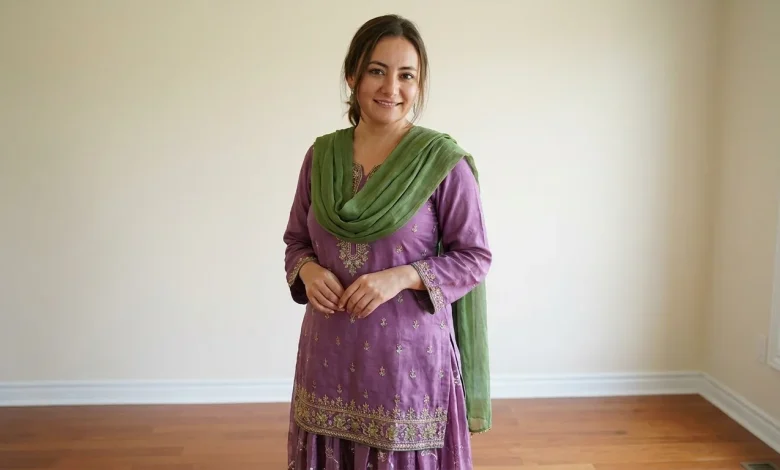
Table of Contents
Dena Karari, a California-based technology professional, has departed Iran after a grueling 19-month ordeal characterized by administrative coercion and baseless espionage accusations. Her successful departure represents a major diplomatic development amid heightened tension between Washington and Tehran. Late Wednesday, her legal representative, prominent human rights attorney Jared Genser, announced via social media that Karari is now free, safe, and traveling back to the United States. Her release was also officially recognized by President Donald Trump in a post on Truth Social, where he described her liberation as a gesture of goodwill by Iranian authorities. For over a year and a half, Karari had been caught in a complex geopolitical web, unable to return to her family and professional obligations in California. The resolution of her case highlights the critical importance of strategic diplomatic backchannels and persistent legal advocacy in securing the safety of dual nationals trapped abroad.
Explaining the Iranian “Coercive Exit Ban”
Iranian judicial and intelligence agencies frequently utilize a legal mechanism known as an exit ban, which serves as a highly effective tool of administrative coercion. Unlike high-profile detentions where individuals are immediately locked away in specialized penitentiaries, an exit ban allows the state to restrict a person’s freedom of movement without the international scrutiny that accompanies formal imprisonment. In December 2024, Karari traveled to Shiraz, Iran, to visit family members. Upon attempting to return to the United States, she was stopped by authorities, and her American and Iranian passports were confiscated. She was placed under an exit ban, effectively turning the entire country of Iran into her prison. Although she was not held behind bars, her everyday existence was characterized by constant surveillance, restricted travel, and legal uncertainty. Her attorney noted that while she resided with relatives, she was repeatedly subjected to intense and psychological interrogations by Iran’s Ministry of Intelligence. These sessions occurred without legal counsel, leaving her vulnerable to intense state pressure. While her coercive exit ban was technically set to expire in April, Iranian officials refused to clear her travel restrictions or return her documents, extending her legal limbo for months. This strategy allowed Tehran to maintain leverage without the formal diplomatic fallout of a high-profile prison sentencing.
The Children of Mehr Foundation Controversy
The primary pretext for Karari’s detention revolved around her involvement with the Children of Mehr Foundation, a U.S.-registered non-profit organization. The foundation operates with explicit authorization from the U.S. Treasury Department’s Office of Foreign Assets Control (OFAC), ensuring compliance with all existing sanctions regimes. Its mission is strictly humanitarian, focusing on delivering children’s books, literacy resources, and educational support to impoverished and marginalized youth inside Iran. Despite the organization’s fully transparent and legal operations, the Iranian Intelligence Ministry accused Karari of utilizing the foundation as a cover for espionage and collaborating with a hostile state. Genser repeatedly condemned these allegations as completely bogus, emphasizing that providing educational literature to children does not constitute a national security threat. The targeting of humanitarian actors highlights a systemic issue where dual nationals involved in civil society or philanthropy are viewed with deep suspicion by the Iranian state. As geopolitics and local policies collide, dual nationals frequently find themselves caught in administrative crossfires. To understand similar patterns of executive action, one can study Trump’s broader administrative plans, which often touch upon national security and international humanitarian policies.
The Turning Point: July 8 Medical Emergency
The psychological and physical toll of her prolonged administrative captivity took a devastating turn when Karari suffered a major heart attack on July 8. According to sources close to the family, the medical emergency occurred suddenly, highlighting the severe health risks associated with prolonged state-sponsored harassment and restricted freedom. For over 19 months, the constant threat of formal arrest, combined with isolation from her immediate family in California, eroded her physical health. The heart attack served as a critical turning point for her legal team and U.S. negotiators, who recognized that her continued detention under such precarious health conditions could lead to a tragic outcome. A fatal medical incident while in Iranian custody would have triggered severe international condemnation and permanently closed any nascent diplomatic openings between the two nations. This humanitarian emergency accelerated the negotiations, prompting both sides to find an immediate resolution before her health deteriorated further.
Behind-the-Scenes Diplomatic Maneuvers
Securing Karari’s release required a highly coordinated diplomatic effort involving multiple levels of the U.S. government and dedicated private legal counsel. According to sources familiar with the matter, the U.S. State Department had compiled a prioritized list of American citizens detained or trapped in Iran, which was handed directly to Steve Witkoff, the U.S. special envoy leading diplomatic engagement with Tehran. Witkoff’s team utilized active backchannels to convey the extreme urgency of Karari’s medical situation following her heart attack. Jared Genser’s legal team also maintained continuous public pressure, ensuring that her case remained in the spotlight without compromising delicate negotiations. The strategic coordination between public advocacy and quiet diplomacy proved essential in breaking the bureaucratic gridlock in Tehran. This direct administrative intervention reflects a broader pattern of unconventional governance, which is also evident in other policy domains where we observe Trump sidestepping traditional policy limits to bypass slow-moving traditional protocols and achieve rapid diplomatic or economic outcomes.
Trump’s Statement and the Geopolitical Backdrop
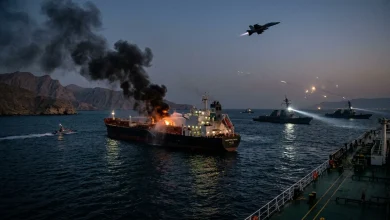
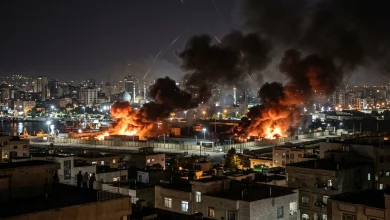
President Donald Trump formally announced the breakthrough via a statement on Truth Social, identifying the departing individual as a U.S. citizen who had been trapped since late 2024. Trump wrote that the individual was “safely outside of Iran, and in good condition,” expressing the administration’s appreciation for what he labeled a “gesture of Goodwill” by Iran. This public statement was highly strategic, as it aimed to maintain an active diplomatic dialogue during a period of intense regional conflict. The release of Karari occurred alongside significant military friction in the Middle East. U.S. military forces have engaged in repeated exchanges with Iranian-backed groups, conducting targeted strikes on military infrastructure, while Tehran-linked militias have targeted coalition bases. This ongoing cycle of escalation is discussed in detail in our analysis of how the Iran-US conflict escalates as Trump warns of severe repercussions for continued military provocations. Concurrently, strict financial measures, including the Iran naval blockade and U.S. port bans, have heavily constrained Iran’s maritime trade, adding immense economic pressure on Tehran. In this highly charged environment, the release of a dual citizen functions as a tactical diplomatic pressure valve, allowing Iran to signal a willingness to negotiate on specific humanitarian issues while maintaining a hardline stance on broader regional defense matters.
Comparison of Iranian Detention Practices
The Iranian judicial system employs diverse methods to restrict the freedom of foreign and dual nationals. Understanding the differences between these legal mechanisms is essential for foreign policy experts and legal teams. The following table contrasts the exit ban experienced by Karari with the formal imprisonment suffered by other detainees.
| Detention Aspect | Coercive Exit Ban (e.g., Dena Karari) | Formal Imprisonment (e.g., Reza Valizadeh) |
|---|---|---|
| Physical Custody | Not held in prison; confined to the country but resides in private quarters. | Confined directly inside high-security correctional facilities. |
| Formal Sanctions / Charges | Usually none; kept in legal limbo with arbitrary passport confiscation. | Formally prosecuted and sentenced under national security statutes. |
| Interrogation Protocol | Summoned repeatedly to Ministry of Intelligence offices for questioning. | Continuous in-prison interrogations, often under harsh custody protocols. |
| State Department Designation | Varies; supported via active consular and envoy channels. | Frequently designated as “Wrongfully Detained” under the Levinson Act. |
The Ongoing Crisis of Other American Hostages
Despite the successful return of Karari, several other American citizens remain trapped within Iran’s complex judicial system. The U.S. State Department maintains a rigorous process for designating individuals as wrongfully detained, which mobilizes specialized federal resources to secure their release. Currently, individuals such as Kamran Hekmati and journalist Reza Valizadeh hold this formal designation. Valizadeh, an Iranian-American journalist, is currently held in Evin Prison, where he faces severe psychological and physical challenges. A smuggled audio recording recently obtained by journalists featured Valizadeh making an emotional plea for his release, exposing the harsh conditions of his confinement. The vast difference between an exit ban and formal prison confinement highlights the arbitrary enforcement of national security laws in Iran. Legal experts emphasize that navigating these complex high-stakes negotiations requires continuous bilateral engagement and pressure. The breaking development of how Iran releases detained American Dena Karari provides a potential roadmap for these ongoing efforts, showing that targeted diplomatic intervention can successfully resolve even the most stubborn consular cases.
Future Outlook for U.S.-Iran Relations
The successful resolution of Karari’s case demonstrates that limited consular agreements remain possible even during periods of intense geopolitical instability. However, analysts warn against interpreting this release as a sign of a broader diplomatic breakthrough. Tehran’s decision to allow Karari to depart was likely influenced by her deteriorating health and a strategic desire to ease immediate Western diplomatic pressure. The U.S. administration’s current approach combines assertive regional deterrence with highly targeted backchannel diplomacy, a combination characteristic of many of Trump political strategies. Moving forward, the international community will continue to monitor the status of the remaining American detainees in Iran. Human rights organizations emphasize that as long as dual nationals are utilized as diplomatic leverage, the risk of traveling to Iran remains extraordinarily high. Whether the successful resolution of Karari’s ordeal will lead to further humanitarian releases or nuclear negotiations remains to be seen, but it provides a critical, lifesaving outcome for a family that had been divided for over a year and a half.