Iran-US conflict escalates as Islamabad MoU is suspended 2026
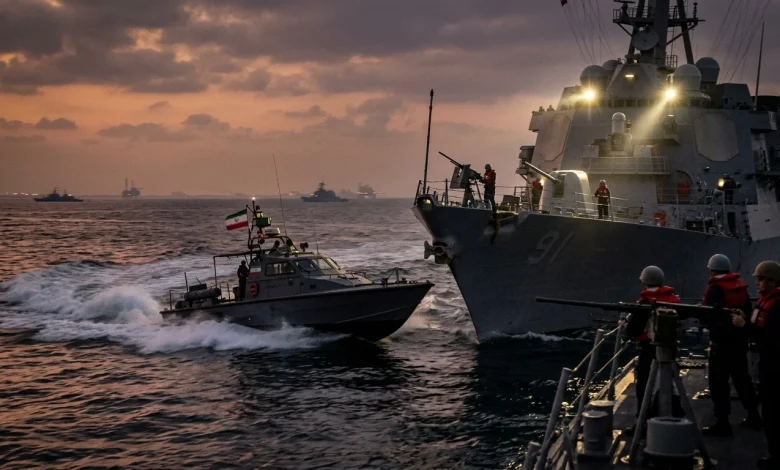
Table of Contents
Iran-US conflict has taken a dramatic and highly volatile turn for the worse as the Islamabad Memorandum of Understanding (MoU)—which was brokered last month to curb escalating hostilities—has officially collapsed. In what marks one of the most perilous security breakdowns in modern Middle Eastern history, Tehran announced on Saturday that it has suspended all commitments under the Pakistan-mediated peace agreement. The formal declaration came on the heels of unrelenting U.S. military strikes that have battered Iranian tactical positions, coastal defense systems, and vital civilian infrastructure. As the Iran war escalates, the prospects for an immediate diplomatic breakthrough have shattered, plunging the Persian Gulf into a full-scale kinetic confrontation with severe global ramifications.
The collapse of the ceasefire is not merely a regional diplomatic setback; it represents a comprehensive failure of the bilateral channels established in Islamabad. According to official statements from Tehran, the United States has systematically undermined and violated the core tenets of the 14-point framework agreement, forcing Iranian negotiators to abandon their side of the bargain. With the Strait of Hormuz once again locked in a fierce naval confrontation, both nations have traded devastating strikes, bringing the regional security architecture to the brink of total collapse.
The Collapse of the Islamabad MoU: Diplomatic Breakdown
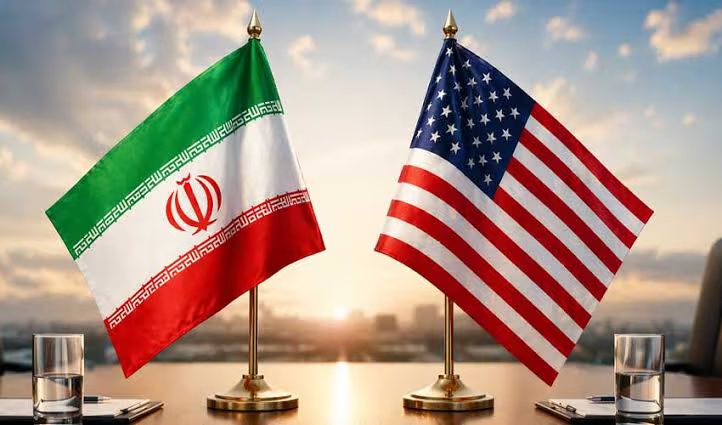
The Islamabad Memorandum of Understanding was celebrated in June 2026 as a major diplomatic triumph, designed to halt months of direct military exchanges that began in late February. Brokered through intense Pakistani and Chinese mediation, the interim agreement aimed to establish a 60-day window for comprehensive peace talks, a phased lifting of the naval blockades, and the reopening of key trade lanes. However, the fragile peace quickly unraveled due to conflicting interpretations regarding maritime transit rights in the Strait of Hormuz.
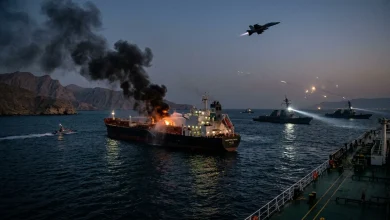
While Tehran argued that only “approved” and inspected commercial vessels should navigate the vital strait under its sovereign oversight, Washington insisted on maintaining unhindered, international transit rights for all merchant shipping. The dispute quickly boiled over into active skirmishes. When Iranian forces targeted vessels using unauthorized routes, the United States military responded with forceful countermeasures. This localized friction rapidly escalated, rendering the Islamabad MoU virtually non-existent as diplomatic channels went silent and combat operations resumed with unprecedented ferocity.
Behind Kazem Gharibabadi’s Official Announcement
Iran’s official posture shifted from warning to active suspension on Saturday, when Deputy Foreign Minister Kazem Gharibabadi stated that the agreement is no longer being implemented. Speaking to state-aligned media, Gharibabadi declared, “The US has violated and suspended all its commitments within the framework of the Islamabad MoU.” He further explained that Iran has, in kind, ceased its adherence to the agreement’s terms, noting that the political and military leadership is now entirely “busy defending the country” rather than pursuing diplomatic compliance.
Gharibabadi, who also heads Iran’s technical negotiating team, emphasized that Tehran could no longer tolerate unilateral adherence to a treaty that Washington has continuously ignored. The Iranian leadership pointed to the renewed naval blockade and targeted bombings of critical logistics routes as clear proof that the United States is focused on military subjugation rather than a negotiated settlement. This definitive stance signals that the regional conflict has entered a deeply unpredictable and dangerous phase, where neither side is bound by any legal or diplomatic constraints.
Counting the Casualties: Death Toll and Humanitarian Damage in Iran
As the conflict entered its most lethal phase this month, the humanitarian toll inside Iran has risen exponentially. On Saturday, Iran’s Health Ministry released a harrowing report detailing the extensive human cost of the ongoing campaign. According to official figures, since July 6, at least 50 people have been killed and over 500 have been injured in strikes launched by the United States. The casualties include both military personnel from the Islamic Revolutionary Guard Corps (IRGC) and civilians caught in the crossfire of high-impact missile strikes.
The rapid rise in fatalities comes as a shock to local communities, marking a swift return to the high-intensity combat of early 2026. Tehran reports multiple deaths on a near-daily basis as residents face the constant threat of incoming cruise missiles and precision aerial bombings. Hospitals in the southern coastal provinces of Hormozgan and Khuzestan are reportedly operating at maximum capacity, struggling to treat hundreds of patients suffering from severe shrapnel wounds, burns, and trauma associated with the heavy bombardment of urban and suburban areas.
Critical Infrastructure Targeted: The Desalination Plant Crisis
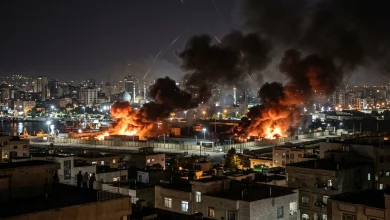
Beyond the direct human casualties, the tactical focus of the U.S. military has increasingly shifted toward dual-use civil-military infrastructure, resulting in severe humanitarian distress. In the southern coastal regions, a critical water desalination plant was heavily damaged during recent airstrikes, immediately cutting off freshwater access to over 10,000 residents in arid coastal settlements. The disruption has triggered a localized public health emergency, forcing municipal authorities to ration bottled water and search for alternative logistical routes to transport clean water from internal provinces.
The targeting of civil infrastructure has drawn sharp condemnation from humanitarian organizations, who warn that the destruction of water treatment facilities constitutes a violation of international humanitarian law. Iranian officials have accused the U.S. of deliberately attempting to break the civilian population’s resolve by weaponizing basic resources. At the same time, the disruption of local utilities has worsened the regional situation, as Iranian exam cancellations and the suspension of public services spread across several southern provinces, showing how deeply the war is disrupting civilian life.
Chronology of the Airstrikes: The Seventh Night of US Operations
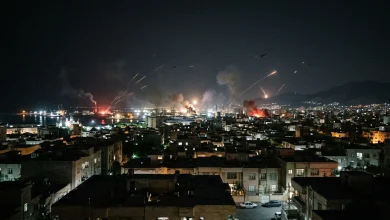
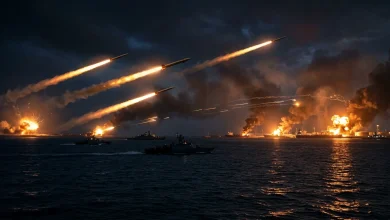
The relentless nature of the U.S. military campaign is evident in its operational tempo. On Saturday night, U.S. Central Command (CENTCOM) executed its seventh night of US military raids, deploying a formidable array of long-range bombers, carrier-based fighter jets, and sea-launched Tomahawk cruise missiles. The operations are designed to systematically dismantle Iran’s coastal defense network, surveillance capabilities, and offensive drone facilities along the Persian Gulf coastline.
The strikes have targeted several strategic locations, including Sirik in the Hormozgan province, Qeshm Island, and tactical military positions near Shadegan in Khuzestan. By conducting consecutive nightly raids, the United States seeks to prevent the IRGC from reorganizing its coastal defenses or deploying anti-ship missile batteries. Many of the targets are located within rugged mountain valleys, where the IRGC has historically tunneled deep underground to safeguard its state-of-the-art ballistic missile arsenals, leading to massive, earth-shaking explosions visible from miles away.
CENTCOM Strategic Objectives in the Strait of Hormuz
From an operational standpoint, CENTCOM’s strategic objectives are focused on securing the Strait of Hormuz and punishing the Iranian military for recent attacks on U.S. personnel. By targeting IRGC maritime command centers and coastal radar installations, the U.S. aims to ensure that international oil tankers can transit the strait without the threat of interdiction. The campaign intensified dramatically after the U.S. reimposes port bans and naval blockades on Iranian shipping, which Tehran viewed as an act of economic warfare.
In addition to securing trade lanes, the airstrikes serve as direct retaliation. Recent IRGC missile attacks on a U.S. military outpost in Jordan resulted in the deaths of two American service members, with another reported missing. In response, U.S. Defense Secretary Pete Hegseth declared that the military would “swiftly punish” the perpetrators, utilizing heavy precision munitions to degrade the IRGC’s operational capacity. Consequently, airstrikes hit Bushehr and other critical nodes, demonstrating Washington’s resolve to dismantle Iran’s strategic depth.
Retaliation and Regional Escalation in the Gulf States
Iran has not remained passive under the weight of the American air campaign. Following the seventh night of strikes, Tehran immediately activated its “Axis of Resistance” network and launched a massive counter-offensive. Utilizing its extensive arsenal of precision-guided ballistic missiles and swarms of attack drones, the IRGC targeted several U.S.-allied Gulf states, bringing the regional proxy war into a direct, high-intensity conflict that threatens neighboring economies.
This retaliatory wave has targeted critical facilities across the Gulf Cooperation Council (GCC) states, specifically hitting oil infrastructure and logistics hubs in Kuwait, Bahrain, and security positions in Jordan. The rapid expansion of the combat zone indicates that Tehran is determined to make the regional hosting of U.S. military assets as costly as possible for its neighbors. By striking deep into allied territories, Iran is attempting to force GCC leadership to pressure Washington into a ceasefire, warning that no nation hosting American bases will remain safe from retribution.
Drone and Missile Salvos Target Allied Infrastructures
The tactical execution of Iran’s retaliatory strikes has caused widespread disruption. In Kuwait, a major water desalination plant was reportedly hit by an Iranian drone, mirroring the destruction of Iran’s own water facilities and demonstrating a symmetric retaliation strategy. Plumes of black smoke and fire were captured by satellite imagery over oil-rich regions, prompting immediate emergency response efforts and sparking panic among local populations who fear a total breakdown of municipal services.
The strikes on Jordan have been particularly devastating, resulting in direct American casualties and elevating the political pressure on the White House. With combat operations now active across Iraq, Syria, Jordan, and the Persian Gulf, the risk of a miscalculation leading to a wider, multi-theater war is at an all-time high. Regional states like the United Arab Emirates have issued stern warnings overnight, urging both Washington and Tehran to pull back from the brink before the entire Middle East is engulfed in an uncontrollable conflagration.
Geopolitical Impacts and Global Trade Chokepoints
The geopolitical shockwaves of the collapsed Islamabad MoU are reverberating far beyond the borders of the Middle East. As the primary transit route for approximately 20% of the world’s petroleum liquids, the Strait of Hormuz is a vital economic artery. The return of intense naval warfare and the threat of sea mines have brought commercial transit to a virtual standstill, forcing global shipping conglomerates to divert vessels around the Cape of Good Hope, a costly detour that adds weeks to transit times.
As the international community grapples with this escalating crisis, parallel conflicts continue to stretch global resources thin. The strategic distraction of the Middle East is occurring at a time when Eastern Europe remains highly unstable; for instance, a recent escalation where Kyiv under massive Russian attack resulted in major civilian losses, highlighting the intense, multi-polar pressures currently facing Western defense alliances. With the United States military heavily committed to two separate, high-intensity strategic theaters, global diplomatic efforts are struggling to find traction.
The Economic Fallouts of a Prolonged Naval Conflict
The economic consequences of a closed Strait of Hormuz are immediate and severe. Brent crude prices surged toward $88 a barrel following the collapse of the MoU, with energy analysts warning that a prolonged conflict could easily push oil prices past the $100 mark. This sudden energy shock threatens to reignite global inflationary pressures, complicating the monetary policies of major economies that are already facing domestic slowdowns. For example, at a time when China’s economy slows, any further disruption to global energy supplies could severely hamper industrial manufacturing and international trade networks.
Furthermore, Yemen’s Houthis have threatened to shut down the Bab al-Mandeb strait in solidarity with Tehran, a move that would block access to the Suez Canal and paralyze trade between Asia and Europe. The dual threat to these primary maritime chokepoints has prompted urgent diplomatic interventions from regional powers. The foreign ministers of Pakistan and China have issued a joint call for an immediate return to dialogue, urging both the United States and Iran to respect the foundational principles of the Islamabad MoU and de-escalate before the global economy suffers an irreversible shock.
Comparative Analysis: The Islamabad MoU vs. Active Escalation
To understand the depth of the current crisis, it is helpful to compare the diplomatic goals set out in the Islamabad MoU with the actual operational reality on the ground as of July 2026.
| Agreement Parameter | Islamabad MoU Framework (June 2026) | Operational Reality (July 2026) |
|---|---|---|
| Ceasefire Status | Immediate and mutual cessation of all military hostilities. | Completely shattered; 8 consecutive nights of U.S. airstrikes. |
| Strait of Hormuz | Open transit for commercial vessels under mutual security guarantees. | De facto blockade reinstated; frequent missile and drone strikes on shipping. |
| Targeting Restrictions | Strict prohibition of strikes on critical civilian infrastructure. | Desalination plants and key bridges targeted, cutting utilities to thousands. |
| Casualty Thresholds | Phased military de-escalation to prevent loss of life. | Over 50 Iranians killed; 16 U.S. military fatalities since the war’s start. |
| Diplomatic Path | 60-day negotiation window to achieve a final peace settlement. | Agreement declared “suspended” by Iran; diplomatic dialogue frozen. |
The stark contrast outlined in the table highlights the rapid decay of diplomacy when military actions outpace political negotiations. While the Islamabad MoU offered a brief glimmer of hope, the fundamental disagreement over maritime sovereignty and the subsequent cycle of retaliatory violence have effectively buried the agreement, leaving the region to prepare for an extended and highly destructive military campaign.