Iran Strait of Hormuz Crisis: A 24-Hour Reversal Explained
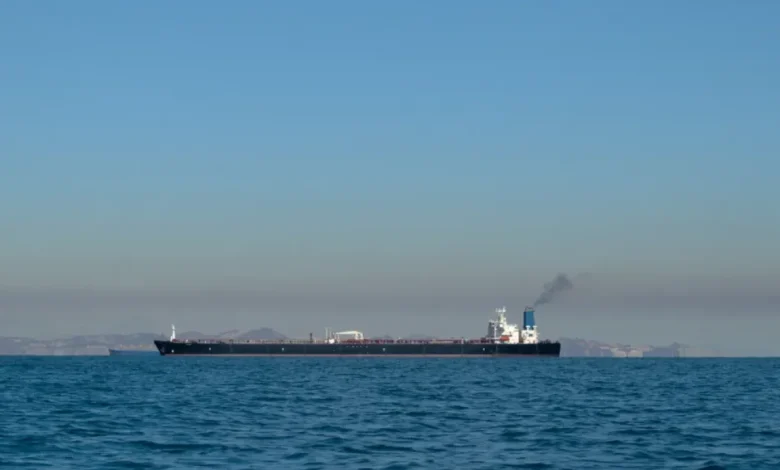
Iran reopens the Strait of Hormuz, then less than a day later, closes it again. Welcome to negotiating with Iran, where policy comes in multiple personalities and none of them RSVP to the same meeting. One minute, the diplomats are out there sounding like reasonable adults: trade can flow, tensions can cool, let us all act like this is not a chokepoint for a fifth of the world’s oil. The next minute, someone else in Tehran grabs a microphone and basically says, nice shipping lane you have got there, it would be a shame if something happened to it. And the ships? They are still checking in with the Islamic Revolutionary Guard Corps (IRGC) like it is air traffic control with a grudge. This bizarre sequence of events has once again thrown global energy markets into absolute chaos, forcing diplomats, economists, and military strategists to ask a fundamental question: who is actually running the show in Tehran? To understand this deeply erratic behavior, we must peel back the layers of a regime that operates less like a cohesive national government and more like a fiercely competitive coalition of competing ideological factions.
The 24-Hour Reversal: What Happened
The sequence of events over the past 24 hours defies traditional diplomatic logic. It began with an official statement from the civilian foreign ministry in Tehran, broadcasted across state media and international wires, declaring that the maritime borders within the Strait of Hormuz were fully open for international commercial transit. Diplomatic channels buzzed with cautious optimism. Western capitals breathed a sigh of relief, assuming that weeks of behind-the-scenes negotiations had finally yielded a breakthrough. Commercial shipping companies immediately began rerouting their massive crude carriers back through the Persian Gulf, anticipating a return to normal operations and a stabilization of maritime insurance premiums. However, this window of de-escalation lasted mere hours. Before the first convoy of tankers could even clear the narrowest point of the strait, heavily armed fast-attack craft belonging to the IRGC Navy swarmed the shipping lanes. Warning shots were fired across the bows of commercial vessels, radar systems were aggressively painted by Iranian coastal defense batteries, and maritime radios crackled with direct threats from IRGC commanders demanding immediate course reversals. Just like that, the world’s most critical oil chokepoint was slammed shut again, directly contradicting the explicit promises made by the civilian government just hours prior.
Timeline of the Hormuz Disruption
To fully grasp the absurdity of this geopolitical whiplash, one must look at the exact timeline. At 08:00 hours local time, the Iranian Foreign Minister held a press conference assuring the safe passage of all non-combatant vessels. By 14:00 hours, major shipping conglomerates began issuing orders to their fleets to resume Gulf transits. At 18:30 hours, reports began surfacing of unidentified drones shadowing merchant vessels. By 22:00 hours, the IRGC had fully deployed its asymmetric naval assets, effectively establishing a maritime blockade and establishing a de facto closure of the strait. This rapid timeline completely obliterated any trust built during recent backchannel diplomacy and US-Iran talks, leaving international negotiators bewildered and deeply frustrated. The sheer speed of the reversal suggests that this was not a measured change in policy, but a deliberate counter-maneuver by hardline elements seeking to sabotage the diplomatic efforts of their civilian counterparts.
The Illusion of a Unified Government
The West keeps pretending Iran is a normal country with a clear chain of command: you negotiate with the foreign ministry, they run it up the flagpole, decisions get made, and the matter is settled. Except the political apparatus in Tehran is not built like that at all. It is built like a chaotic group chat where half the members have administrative privileges and the other half are completely ignoring the thread until they suddenly drop a metaphorical bomb and derail everything. At the very apex of this structure, you have the Supreme Leader, the final boss of Iranian politics, from whom there are no appeals. Beneath him exists a convoluted web of overlapping authorities. You have the civilian government, including the president and the foreign minister, who are the individuals primarily responsible for projecting an image of rationality to the international community. These are the officials who speak fluent diplomatic English, wear western-style suits (sans ties), and continuously express a willingness to engage in dialogue. Then you have the parliament, which is occasionally helpful to the civilian administration but is often loud, deeply conservative, and prone to passing aggressive resolutions that complicate international agreements.
Diplomats vs. The IRGC
And then, crucially, you have the IRGC. The Islamic Revolutionary Guard Corps is not merely a branch of the military; it is an ideological army, a vast corporate conglomerate, and a shadow government all rolled into one. They are the ones with the heavily armed fast boats, the ballistic missiles, the extensive drone fleets, and the unparalleled ability to turn a peaceful negotiation into a severe navigation hazard in about five minutes flat. Guess which group actually controls the physical waters of the Strait of Hormuz? Exactly. The IRGC Navy is specifically tasked with coastal defense and operations in the Persian Gulf, while the regular Iranian Navy operates primarily in the Gulf of Oman and beyond. So when diplomats sit across from their Iranian counterparts in Vienna, Geneva, or Muscat and hear the phrase ‘the strait is open,’ the actual real-world value of that statement is functionally zero unless the IRGC leadership has signed off on it. The civilian diplomats essentially act as public relations managers for a military apparatus they do not control and cannot reliably influence. This deep structural divide makes long-term agreements nearly impossible to enforce, as the hardliners possess absolute veto power through the application of immediate, localized violence.
| Power Center | Core Function & Ideology | Influence on Strait of Hormuz | Diplomatic Stance |
|---|---|---|---|
| Supreme Leader | Absolute religious & political authority. | Ultimate veto power over all maritime & military actions. | Highly skeptical of the West; prioritizes regime survival. |
| Civilian Government | Day-to-day administration & foreign relations. | Negligible physical control; issues public statements. | Favors sanctions relief, economic engagement, and dialogue. |
| IRGC (Military) | Ideological defense of the revolution; asymmetric warfare. | Direct physical control via fast-attack craft and coastal missiles. | Aggressive, anti-Western, favors brinkmanship and escalation. |
| Parliament (Majlis) | Legislative oversight and domestic political theater. | Indirect influence through funding and legal frameworks. | Dominated by hardliners demanding aggressive foreign policy. |
Brinkmanship or Fragmentation?
There are generally two ways for international intelligence agencies and geopolitical analysts to read what just happened in the strategic waters of the Persian Gulf. Option one dictates that this is a textbook example of classic Iranian brinkmanship. In this scenario, the entire 24-hour reversal was a highly coordinated, intentional act authorized directly by the Supreme Leader. The overarching goal of such a maneuver is multifaceted: keep global oil markets incredibly nervous, maintain a high degree of geopolitical leverage, keep the United States and its regional allies constantly guessing, and systematically squeeze out diplomatic concessions without ever fully committing to anything long-term. By demonstrating the ability to turn the global economic tap on and off at will, Tehran proves its immense asymmetric power. If this is the case, the civilian diplomats and the IRGC commanders are playing an elaborate, globally devastating game of ‘good cop, bad cop.’
Analyzing Tehran’s Strategic Playbook
Option two offers a much more concerning reality: the regime is not fully in sync, and the political fragmentation is genuine. In this interpretation, the civilian diplomats are earnestly trying to de-escalate tensions in order to secure desperately needed economic relief for a population suffering under crushing international sanctions. However, the hardliners, particularly the powerful commanders within the IRGC, are deeply opposed to any normalization of relations with the West. They view any diplomatic concession as a dangerous sign of weakness that threatens the ideological core of the 1979 revolution. When push comes to shove in Iranian politics, the faction equipped with the guns, the loitering munitions, and the heavily armed speedboats tends to win the internal arguments. The IRGC actively sabotages the foreign ministry to ensure that the civilian government cannot claim a diplomatic victory, thereby maintaining the military’s dominant position within the domestic power hierarchy.
Impact on Global Oil Markets
Regardless of whether this is a case of calculated brinkmanship or systemic fragmentation, there is a massive problem for the global economy. The immediate economic fallout from a closed Strait of Hormuz cannot be overstated. Roughly 20% of the world’s global oil consumption passes through this narrow waterway, serving as the critical artery for crude shipments destined for major economies in Asia, Europe, and beyond. Even a temporary closure creates a massive logistical backlog, driving up shipping insurance rates to unsustainable levels and causing immediate panic in commodity exchanges. As analysts monitor the situation, recent developments surrounding the Iran oil ambassador outlining supply amid the strait crisis reveal a desperate attempt by Tehran to reassure its largest buyers in the East, even as its military forces physically block the transit routes. The fundamental disconnect between economic necessity and military aggression is severely damaging Iran’s reputation as a reliable energy partner, pushing nations like India and China to aggressively seek alternative energy sources.
Rising Tensions and Pricing Volatility
The market reaction to the 24-hour reopening and closing was violent. Brent Crude and West Texas Intermediate (WTI) both saw massive intraday swings, effectively punishing any energy intensive industries relying on stable forecasting. This extreme volatility is precisely why oil prices expose a 20-year market gap as spot hits $145, a devastating blow to central banks currently attempting to combat deeply entrenched inflation. If the IRGC continues to treat the Strait of Hormuz as its own personal toll booth, the risk premiums attached to Middle Eastern oil will become permanent fixtures of the global economy. The International Energy Agency (IEA) has consistently warned that prolonged disruptions in the Persian Gulf could trigger a global recession, as alternative supply routes and strategic petroleum reserves are vastly insufficient to replace the volume of oil that transits the Strait of Hormuz daily.
The Futility of Traditional Strategies
This ongoing crisis exposes the sheer futility of traditional Western diplomatic strategies when applied to the Islamic Republic. If the situation is one of calculated brinkmanship, then the United States and European allies are actively being played. They are expending tremendous diplomatic capital, offering sanctions relief, and unfreezing billions of dollars in assets in exchange for promises that Tehran has absolutely no intention of keeping. The regime simply pockets the concessions, waits for a strategic opportunity, and resumes its aggressive posturing in the Gulf. Conversely, if the issue is deep internal fragmentation, then the diplomatic landscape is arguably even more bleak. The United States is spending countless hours sitting at tables in luxurious European hotels, intensely negotiating with people who fundamentally lack the authority to deliver on anything they promise. It does not matter what a civilian foreign minister signs on a piece of paper if the IRGC base commander on Qeshm Island decides to launch a barrage of anti-ship missiles the following morning.
When the Negotiators Cannot Deliver
This dynamic forces a critical reevaluation of how the international community approaches Tehran. You cannot secure a maritime chokepoint through a gentleman’s agreement with a diplomat who is actively despised by his own military apparatus. The recent Strait of Hormuz diplomatic developments highlight the desperate attempts to bring external pressure, specifically from China, to bear on the IRGC. Because the IRGC relies heavily on illicit trade and black-market arms networks, leveraging their primary financial and military benefactors might be the only viable mechanism for enforcing compliance. Direct negotiation with the civilian government has proven to be an exercise in absolute futility, a diplomatic theater designed to distract the world while the hardliners consolidate power and perfect their asymmetric naval tactics.
Navigating the Future of the Gulf
Ultimately, the 24-hour reopening and closing of the Strait of Hormuz is a stark reminder of the fragile nature of global commerce in the 21st century. It underscores the danger of allowing a single, highly unpredictable regime to possess a geographical stranglehold over the lifeblood of the global economy. Moving forward, the international community must pivot away from the delusion of traditional state-to-state diplomacy when dealing with Iran. Until the structural reality of the IRGC’s dominance is directly addressed, any promise regarding the freedom of navigation in the Persian Gulf is inherently worthless. The real question for Washington, London, and Beijing is no longer what the Iranian diplomats are willing to concede, but rather how to build a robust, multilateral security architecture that completely neutralizes the threat posed by the guys with the speedboats. Only through undeniable maritime deterrence and devastating economic consequences specifically targeted at the military establishment can the world ensure that the Strait of Hormuz remains a conduit for global prosperity, rather than a weapon of geopolitical extortion.