Backchannel Diplomacy: US-Iran Talks Signal 60-Day Deal
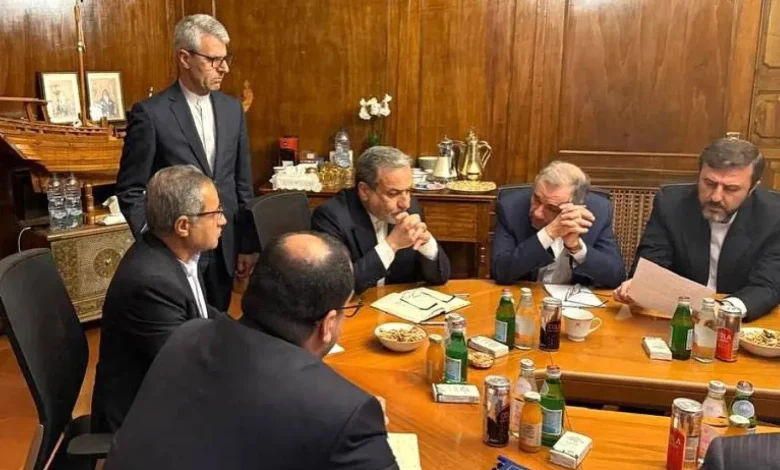
Backchannel diplomatic initiatives have successfully paved the way for an unprecedented stabilization effort between the United States and the Islamic Republic of Iran. After months of heightened rhetoric, indirect messaging, and proxy posturing across the Middle East, officials intimately involved with the mediation process are reporting genuine, substantive progress. According to multiple diplomatic sources, the two geopolitical adversaries have reached an agreement in principle on several core issues that have historically derailed peace efforts. A memorandum of understanding (MOU) is now slated to be signed at their next covert meeting. This critical document will establish the binding framework required to finalize a broader, comprehensive deal within an ambitious 60-day window. While the overarching political consensus has been achieved, the focus now shifts entirely to the complex technical details. These technicalities include the sequencing of sanctions relief, the establishment of rigorous nuclear monitoring mechanisms, and the verification of regional de-escalation protocols. As global markets and regional stakeholders watch closely, this emerging diplomatic breakthrough represents the most significant de-escalation in U.S.-Iran relations in over a decade, signaling a monumental shift in international relations.
Backchannel Breakthrough: The Road to the 60-Day Deal
The journey to this pivotal moment has been fraught with near-misses, strategic miscalculations, and escalating regional tensions. The reliance on indirect communication lines was born out of absolute necessity, as domestic political constraints in both Washington and Tehran made public, bilateral negotiations politically toxic. Key regional allies and neutral intermediaries played an indispensable role in maintaining these fragile communication lines. The process accelerated significantly when Pakistani military leadership actively brokering the U.S.-Iran truce stepped in to guarantee security assurances for both parties. This mediation fundamentally altered the trajectory of the talks, moving them from grievance-airing sessions to highly structured, goal-oriented negotiations. The decision to aim for a 60-day finalization window reflects a shared urgency. Both administrations recognize that a protracted negotiation period opens the door to internal hardliner opposition and external sabotage attempts. By front-loading the political consensus and leaving only technical modalities for the final stretch, negotiators have effectively boxed out spoilers who thrive on diplomatic ambiguity. The momentum is undeniable, but the road ahead requires extraordinary precision and unwavering political will from the highest echelons of both governments.
Memorandum of Understanding: The Next Crucial Step
The anticipated signing of the memorandum of understanding at the next bilateral rendezvous marks a definitive transition from informal dialogue to documented commitments. Unlike a formal treaty, which would necessitate navigating a deeply polarized U.S. Senate, an MOU functions as an executive-level agreement that outlines mutual expectations and actionable steps without the immediate burden of legislative ratification. This legal maneuver is essential for maintaining momentum. The MOU will explicitly define the reciprocal actions required during the 60-day finalization phase. For the United States, this likely involves issuing waivers for frozen Iranian assets held in third-party international accounts, signaling tangible economic goodwill. For Iran, the MOU demands immediate, verifiable halts to certain advanced uranium enrichment activities and a moratorium on proxy attacks against U.S. assets in Iraq and Syria. The document serves as a diplomatic escrow, ensuring that neither side makes irreversible concessions without guaranteed, synchronized reciprocity. Drafting this document requires meticulous attention to legal terminology, as ambiguities in past agreements have historically led to conflicting interpretations and eventual breakdowns in trust.
Resolving Technical Details: What Remains on the Table?
With the political agreement secured in principle, teams of specialized experts are now tasked with translating broad diplomatic goals into enforceable, verifiable technical realities. This phase is arguably the most perilous, as the devil is historically in the details of U.S.-Iran negotiations. The technical discussions are primarily focused on the mechanics of sanctions relief and the parameters of nuclear oversight. Iranian negotiators are demanding legally binding guarantees that economic relief will translate into actual banking access, rather than mere paper waivers that international financial institutions remain too fearful to process. The U.S. delegation, conversely, requires unhindered access for International Atomic Energy Agency (IAEA) inspectors to previously restricted sites. The success of this technical phase heavily relies on external mediation. Reports indicate that Pakistan successfully mediates critical U.S.-Iran negotiations by proposing technical compromises regarding the sequencing of these steps. By establishing a phased, day-by-day implementation matrix, the technical teams aim to eliminate the paralyzing ‘who goes first’ dilemma that has stalled previous diplomatic endeavors.
Geopolitical Implications of a Stabilized Middle East
A comprehensive agreement between the United States and Iran would send seismic shockwaves throughout the global geopolitical landscape. The immediate effect would be a significant recalibration of power dynamics in the Middle East. For years, the regional security architecture has been defined by the binary opposition between Iranian-aligned factions and U.S.-backed coalitions. A negotiated truce threatens to upend this entrenched paradigm. Furthermore, this diplomatic progress directly challenges the expanding influence of China and Russia in the Persian Gulf. Both nations have capitalized on U.S.-Iran hostility to position themselves as indispensable economic and security partners to Tehran. A U.S.-Iran detente would introduce strategic competition, offering Tehran alternative economic lifelines and reducing its reliance on Eastern powers. According to various international geopolitical analysts, this shift could force a broader realignment within the BRICS economic bloc and alter the trajectory of global energy supply chains. The stabilization of the Persian Gulf also fundamentally alters the strategic calculus for global maritime security, securing one of the world’s most vital economic arteries.
Economic Fallout: Markets React to Potential Truce
The global economic implications of an impending U.S.-Iran deal are already beginning to materialize in international markets. The most immediate and profound impact is being witnessed in the energy sector. The prospect of millions of barrels of sanctioned Iranian crude oil legally re-entering the global market has stabilized Brent crude prices, offering a much-needed reprieve to inflationary pressures in Western economies. Furthermore, the reduction in geopolitical risk premiums associated with the Strait of Hormuz—through which approximately a fifth of the world’s oil consumption passes—has calmed speculative trading. Beyond energy, the unlocking of frozen Iranian assets and the potential reopening of Iranian markets to selective international trade present massive opportunities for multinational corporations, albeit heavily regulated ones. However, the economic relief for Iran will likely be phased and contingent upon continuous compliance. The U.S. Treasury Department is expected to maintain strict oversight mechanisms to ensure that unfrozen funds are utilized strictly for humanitarian goods, medicine, and non-sanctioned civilian infrastructure, preventing the capital from financing regional militant proxies.
Proposed Timeline for the US-Iran Agreement
To fully grasp the magnitude and the structured approach of this diplomatic breakthrough, it is essential to review the proposed implementation matrix. The following table outlines the expected timeline leading up to the comprehensive 60-day agreement.
| Phase | Estimated Timeframe | Diplomatic Action Item | Primary Responsible Party |
|---|---|---|---|
| 1 | Days 1-7 | Signing of the formal Memorandum of Understanding (MOU). | U.S. and Iranian Delegations |
| 2 | Days 8-20 | Initial unfreezing of humanitarian assets and partial IAEA access. | U.S. Treasury / Iranian Atomic Energy Org |
| 3 | Days 21-40 | Finalizing technical banking protocols and verifiable enrichment caps. | Technical Committees |
| 4 | Days 41-55 | Drafting of the final comprehensive agreement text and legal review. | Joint Legal Counsel |
| 5 | Day 60 | Official declaration of the comprehensive broader deal. | State Departments / Ministries |
Regional Responses: Allies and Adversaries Weigh In
The impending U.S.-Iran agreement has elicited a complex spectrum of reactions from regional capitals. In Riyadh, the response is characterized by cautious optimism tempered with lingering skepticism. Having recently restored diplomatic ties with Tehran, Saudi Arabia views a U.S.-Iran de-escalation as complementary to its own Vision 2030 economic goals, which require regional stability to attract foreign investment. Conversely, the reaction in Jerusalem has been markedly antagonistic. Israeli leadership views any accommodation of Iran’s nuclear infrastructure as an existential threat, arguing that financial relief will invariably embolden Iranian aggression on Israel’s borders. The U.S. administration is currently engaged in intensive parallel diplomacy to reassure its traditional allies in the Gulf and the Levant. This involves offering enhanced security guarantees, advanced defense systems, and intelligence-sharing agreements to offset the perceived risks of a re-integrated Iran. Managing these allied anxieties is just as critical to the success of the 60-day deal as the negotiations with Tehran itself.
Nuclear Concessions and Long-Term Peace Frameworks
At the very core of these backchannel talks lies the intractable issue of Iran’s nuclear capabilities. The breakthrough was largely facilitated by significant concessions regarding uranium enrichment levels. Diplomatic leaks suggest that Iran weighs abandoning its high-level uranium enrichment program for peace, agreeing to dilute its stockpiles of 60-percent enriched uranium down to civilian-grade levels. In exchange, the United States has agreed to refrain from triggering ‘snapback’ sanctions at the United Nations Security Council. These nuclear concessions are designed to permanently extend Iran’s ‘breakout time’—the time required to produce enough fissile material for a nuclear weapon—to a mutually acceptable duration. Furthermore, the framework establishes a continuous dialogue mechanism to address non-nuclear issues, such as ballistic missile development and regional security architectures, in subsequent phases. This phased approach represents a mature diplomatic strategy: securing an immediate halt to the most dangerous escalation points while building the institutional trust required to tackle deeper, systemic regional conflicts in the future.
The Next 60 Days: A Precarious Diplomatic Dance
As the countdown to the 60-day deadline commences, both nations are embarking on a precarious diplomatic dance. The agreed-in-principle framework is a monumental achievement, but it remains incredibly fragile. Spoilers on both sides—ranging from hardline political factions in Tehran to hawkish lawmakers in Washington—will undoubtedly attempt to derail the process through legislative maneuvers, inflammatory rhetoric, or provocative actions in the regional theater. The resilience of this backchannel breakthrough will be severely tested in the coming weeks. Success will require the negotiating teams to remain insulated from public political theater while ruthlessly executing the technical milestones outlined in the memorandum of understanding. If the United States and Iran can successfully navigate this 60-day window, they will not only avert a catastrophic regional conflict but also establish a new blueprint for conflict resolution in the 21st century. The world is watching, and the stakes for global peace and economic stability have never been higher.