Cuba sends 5,000 fighters to Russia: Trump warns of action
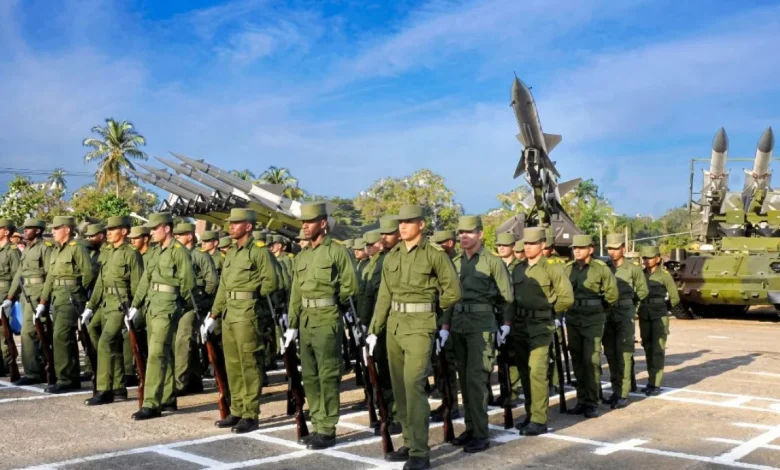
Cuba stands at the absolute center of a rapidly escalating global crisis, as the Trump administration officially notified Congress this week that up to 5,000 Cuban fighters have deployed to back Russia in the ongoing Ukraine war. This staggering revelation fundamentally alters the geopolitical landscape of the Western Hemisphere and introduces a volatile new variable into the Eastern European theater. By supplying thousands of combatants to the Russian military apparatus, the island nation has transformed itself from a passive observer of the conflict into a direct belligerent, making Cuban nationals one of the largest demographics of foreign fighters currently operating on the Russian side.
Cuba’s Unprecedented Fighter Escalation in Ukraine
The sheer scale of the deployment is a stark indicator of the deepening military and economic nexus between Havana and Moscow. For decades, the Cuban regime has utilized medical diplomacy and covert intelligence cooperation as its primary methods of international engagement. However, the mass export of kinetic military manpower represents an unprecedented escalation. According to classified briefings delivered to congressional leaders, these 5,000 individuals are not merely logistical support staff but are actively engaged in frontline combat operations, trench warfare, and mechanized infantry assaults across eastern Ukraine.
Intelligence analysts point out that this deployment serves dual purposes for the financially strapped Cuban regime. First, it acts as a bizarre form of remittance generation, with Russian military salaries drastically outpacing whatever meager income can be earned within Cuba’s collapsing socialist economy. Second, it serves to cement a strategic lifeline from the Kremlin, trading blood for essential commodities, debt forgiveness, and political backing on the global stage. The White House, however, views this arrangement as a direct threat to international security and a brazen violation of diplomatic norms.
The State Department Assessment of Havana’s Complicity
The United States Department of State has carefully calibrated its language regarding the official nature of this troop movement, stopping just short of declaring that the Cuban government officially conscripted and deployed these fighters. Instead, diplomatic cables and official statements assert that the regime “knowingly tolerated, enabled, or selectively facilitated the flow” of these combatants.
Murky Judicial Claims and Institutional Opacity
Washington has aggressively pushed back against any notion that the Cuban government is an innocent bystander in this massive exodus of fighting-age males. The State Department argues that in a heavily surveilled, authoritarian state like Cuba—where the domestic security apparatus monitors almost all citizen movements—it is logistically impossible for 5,000 military-capable men to travel to a foreign war zone without explicit state complicity. The facilitation likely involved fast-tracked passport issuances, coordinated flights from Varadero to Moscow, and state-sanctioned recruitment networks operating openly within the country.
The Human Trafficking Defense Fallacy
In a desperate bid to deflect international outrage and preempt devastating secondary sanctions, Havana recently announced that it had dismantled a human trafficking ring responsible for coercing its citizens into the Russian military, claiming to have prosecuted 40 individuals. The Trump administration, however, has vehemently dismissed these assertions. U.S. officials highlight that the Cuban judicial system is notoriously murky, lacking independence and transparency, making it impossible for international observers to verify the legitimacy of these trials. The prevailing consensus in Washington is that these prosecutions are a mere smokescreen—a theatrical sacrifice of low-level fixers designed to provide the regime with plausible deniability while the state-sponsored pipeline of mercenaries continues to flow unabated.
Demographics of Foreign Fighters in Russia’s Ranks
To contextualize the magnitude of Havana’s involvement, it is essential to look at the broader composition of foreign mercenaries and volunteers fighting for the Russian Federation. The influx of 5,000 Cubans dramatically shifts the demographics of these auxiliary forces.
| Country of Origin | Estimated Fighter Count | Primary Combat Role | Recruitment Method |
|---|---|---|---|
| Cuba | 5,000 | Frontline Infantry, Trench Assaults | State-Facilitated / Economic Coercion |
| Syria | 2,500 | Urban Combat, Logistics | Militia Coordination |
| Nepal | 1,200 | Support Infantry, Guard Duties | Private Mercenary Contracts |
| Central African Republic | 800 | Paramilitary Operations | Wagner Group Remnants |
| Somalia | 400 | Auxiliary Support | Economic Mercenarism |
As the table above demonstrates, the Cuban contingent dwarfs other foreign groups, underscoring the deep structural integration between the Cuban state apparatus and the Russian Ministry of Defense. This volume of fighters provides a critical manpower injection for Russian forces suffering from high attrition rates.
U.S. Retaliation: Oil Blockades and Economic Asphyxiation
The United States has not limited its response to diplomatic condemnations. In a move that mirrors historical flashpoints, the Trump administration has effectively enacted a naval and financial blockade on oil shipments destined for Cuba. By threatening catastrophic secondary sanctions on global shipping companies and insurers, the U.S. has paralyzed Havana’s ability to import the crude oil necessary to keep its power grid operational.
This aggressive posture has plunged the island into darkness, with rolling blackouts lasting up to 20 hours a day in major cities. The objective is clear: maximize domestic pressure on the regime by weaponizing its energy vulnerabilities. Analysts have drawn parallels to previous geopolitical strategies, noting that while Trump’s Iran posturing often relied on similar economic strangulation tactics, the geographic proximity of Cuba makes the enforcement of this blockade significantly more immediate and devastating.
Targeting Díaz-Canel: The Push for Regime Change
Behind the scenes, the rhetoric from the Oval Office and the Pentagon has shifted from containment to active regime change. President Miguel Díaz-Canel is facing the most severe existential threat to the communist government since the fall of the Soviet Union. The administration is openly working to push Díaz-Canel out of power, leveraging the immense discontent caused by the energy crisis, food shortages, and the controversial export of Cuban youth to a foreign meatgrinder.
Intelligence operations are reportedly amplifying dissent within the island, hoping that the combination of severe economic deprivation and the outrage over the Ukrainian deployment will fracture the military and security elite. The calculation is that the top brass, fearing total systemic collapse, might eventually turn on Díaz-Canel to salvage their own positions, creating an opening for a transitional government more amenable to Washington’s interests.
Trump’s Ultimatum: Turning Sights on Havana
Perhaps the most chilling development in this unfolding saga came just two days ago when President Trump issued a stark, public ultimatum. During a heated rally, he explicitly linked the ongoing Middle Eastern conflicts to the crisis in the Caribbean, stating verbatim: “We may stop by Cuba after we’re finished with Iran.”
Post-Iran Military Strategy and the Caribbean Theatre
This off-the-cuff remark has sent shockwaves through international diplomatic circles. It suggests a sequencing of American military and geopolitical priorities that places Havana squarely in the crosshairs. While the global focus has been fixated on the looming threat of a trillion-dollar Iran war, the administration is quietly preparing contingencies for the Western Hemisphere. The implication is that once the primary objectives in the Persian Gulf are secured, the full weight of American coercive diplomacy—and potentially military force—will pivot 90 miles south of Florida.
Military strategists argue that a “stop by Cuba” would not necessarily entail a full-scale amphibious invasion, which carries immense political risk. Instead, it likely points to an escalation of the current blockade into a full maritime quarantine, aggressive cyber warfare targeting the regime’s command and control structures, and kinetic strikes against specific military installations identified as logistical hubs for Russian cooperation.
Geopolitical Implications for 2026 and Beyond
The entanglement of Cuba in the European theater represents a dangerous globalization of regional conflicts. By aligning so closely with Moscow, Havana has effectively forced the United States to treat it not merely as a localized nuisance, but as a forward operating asset of a hostile superpower. This reality drastically alters the strategic calculus in Washington.
Furthermore, this dynamic is causing deep fractures within international organizations. The BRICS silence on the Iran crisis is now being mirrored by a profound reluctance among Global South nations to defend Cuba’s actions in Ukraine. Traditional allies of Havana are finding it increasingly difficult to justify the export of mercenaries to fight an aggressive war on European soil, isolating Díaz-Canel diplomatically precisely when he needs international solidarity the most.
Domestically, the Trump administration’s aggressive stance on Cuba serves multiple purposes. Beyond punishing Havana for its alignment with Moscow, it shores up crucial political support in key swing states like Florida. However, this multi-front hawkishness carries immense risks. Overextending American economic and military leverage simultaneously against Iran, Russia, and Cuba could accelerate a coalition collapse ahead of the 2026 midterms if the domestic population tires of perpetual brinkmanship and the resulting economic fallout.
In conclusion, the revelation that 5,000 Cuban nationals are fighting in Russian trenches is a watershed moment in modern geopolitics. It shatters the illusion of containment and proves that authoritarian regimes are increasingly willing to pool their human and material resources to challenge the U.S.-led order. As the oil blockade tightens its grip on the island and Washington openly plots the downfall of Díaz-Canel, the Caribbean is once again becoming a primary flashpoint for superpower confrontation. With the administration vowing to turn its full attention to Havana “after Iran,” the coming months will determine whether the Cuban regime can survive its most perilous gamble, or if it will collapse under the weight of its own geopolitical overreach.