Jan Fada: 25 Million Iranians Register for Martyrdom Campaign
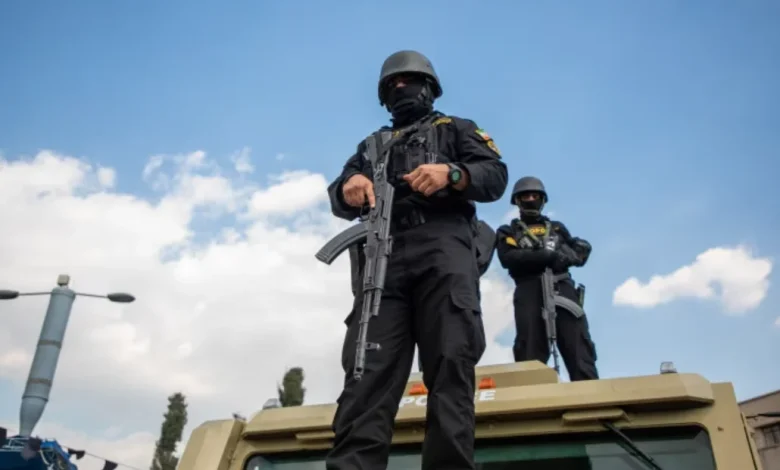
Jan Fada is more than just a phrase; it has evolved into the cornerstone of an unprecedented nationalistic campaign in Iran that has reportedly garnered over 25 million registrations. As geopolitical tensions boil over and rumors of a U.S. ground invasion loom heavily over the Middle East, the Iranian government has orchestrated a massive display of civilian solidarity. The phrase loosely translates to “I sacrifice my life,” and by launching the “Jan Fada, For Iran” initiative, state officials are sending a clear, quantifiable message of deterrence to Western adversaries. This is not a military draft, and it carries no formal conscription orders or legal bindings. Yet, the staggering numbers highlight a significant psychological operation designed to project unbreakable domestic unity. In a region where military posturing is a daily occurrence, the mobilization of a civilian populace through digital means represents a profound shift in how nations signal their readiness for total war.
The Origins of the Jan Fada Campaign
The origins of this massive civilian mobilization effort can be traced back to escalating rhetoric between Tehran and Washington, coupled with heightened military movements in the Persian Gulf. Recognizing the need to project absolute national resolve without immediately resorting to kinetic military escalation, Iranian leadership conceptualized the Jan Fada campaign as a hybrid tool of psychological warfare and domestic cohesion. Unlike the traditional military maneuvers that characterize the Iranian Revolutionary Guard Corps (IRGC) operations, this initiative was specifically designed to be civilian-centric, creating a narrative that the entire nation, not just its armed forces, stands ready to defend the homeland against foreign aggression.
Mass SMS and State TV Mobilization
To execute a campaign of this magnitude, the state utilized its absolute control over national telecommunications. The primary vector for the Jan Fada campaign was an aggressive, nationwide mass SMS broadcast. Virtually every registered mobile phone in the country received a direct message urging citizens to pledge their lives for the defense of Iran. This digital push was heavily supplemented by round-the-clock coverage on state television networks. Highly produced commercials, featuring historical Persian motifs blended with modern nationalist imagery, dominated the airwaves. Anchors and government spokespersons consistently reiterated that signing up was the ultimate expression of patriotism. The synchronization between the digital SMS blast and the emotive television broadcasts created an unavoidable echo chamber, ensuring that the campaign reached the deepest rural provinces and the busiest urban centers simultaneously.
Nationalistic Messaging Over Religious Rhetoric
A crucial analytical point regarding the Jan Fada campaign is its deliberate shift in thematic focus. In decades past, particularly during the bloody Iran-Iraq War of the 1980s, state mobilization relied almost exclusively on religious martyrdom and sectarian duty. However, “Jan Fada, For Iran” prominently features the phrase “For Iran” (Baraye Iran), prioritizing deep-seated Persian nationalism over strict Islamic rhetoric. This strategic pivot is intended to cast a much wider net, appealing to secular Iranians, the youth, and those who may be fundamentally dissatisfied with the clerical establishment but remain fiercely protective of their country’s territorial integrity. By framing the potential U.S. conflict as an existential threat to the Iranian civilization rather than just the Islamic Republic, the government successfully inflated the registration numbers to record highs.
How the Registration Process Works
The success of the 25 million registrations lies largely in the incredibly low barrier to entry. The system was designed to remove any bureaucratic friction that typically accompanies military or governmental pledges. Citizens simply needed to reply to the initial SMS or visit a dedicated state portal to input three basic pieces of information: their full name, their active phone number, and their province of residence. There were no background checks, no physical or psychological evaluations, and no requirements to visit a military recruitment center. The simplicity of the process ensured that individuals could register in a matter of seconds, transforming a potentially complex logistical nightmare into a frictionless digital poll of nationalistic sentiment.
Not a Military Draft: The Symbolic Commitment
It is vital to distinguish the Jan Fada campaign from formal military conscription. Participating in the campaign carries zero legal obligation to take up arms, attend boot camp, or report to the frontline. It is purely a symbolic commitment. A mandatory draft under the current economic and social climate in Iran could easily backfire, potentially sparking widespread draft evasion or even civil unrest. By making the pledge completely voluntary and legally non-binding, the Iranian government eliminated the risk of domestic blowback while still reaping the immense propaganda benefits of a highly populated “volunteer” list. This allows the state to project an image of an infinitely deep reserve of willing martyrs to the international community.
| Feature | Jan Fada Campaign | Traditional Military Draft |
|---|---|---|
| Commitment Level | Purely symbolic and psychological | Legally binding and mandatory |
| Registration Data | Name, Phone Number, Province only | Extensive medical, legal, and background data |
| Demographics Targeted | All citizens (including the elderly and children) | Able-bodied adults (typically males aged 18-35) |
| Consequence of Refusal | None (officially), potential social pressure | Imprisonment, fines, or military tribunal |
| Primary Objective | Propaganda, national unity, and deterrence | Actual combat deployment and troop generation |
Geopolitical Context: Rising Fears of U.S. Ground Invasion
The massive surge in Jan Fada registrations cannot be understood outside the context of the severe deterioration of Middle Eastern security. Fears of a U.S. ground invasion have reached their highest point in over a decade. Washington’s shifting strategic posture, combined with unpredictable regional escalations, has created a palpable sense of paranoia in Tehran. The narrative of an impending Western attack has been utilized by Iranian hardliners to unify a fractured populace. Analysts point out that preparations for a massive conflict are not just rhetoric; they involve complex economic and military calculus. For instance, discussions surrounding a trillion-dollar war cost forecast illustrate the catastrophic financial and human scale such an invasion would entail, giving the Iranian state ample ammunition to convince its populace that the threat is existential and imminent.
Deterrence Through Numbers and Psychological Warfare
At the highest strategic levels, the Jan Fada campaign is a meticulously crafted tool of psychological warfare aimed directly at Pentagon planners. By officially registering 25 million citizens as “ready to die,” Iran is invoking the doctrine of absolute asymmetric warfare. The message to the United States and its regional allies is explicit: an invasion of Iran will not just involve fighting the formal military or the IRGC, but subduing a hostile, deeply entrenched population of tens of millions willing to wage a generational insurgency. This concept of a “nation in arms” is designed to complicate enemy war gaming, making the projected human and political cost of a ground invasion completely unpalatable to Western democratic societies.
Analyzing the 25 Million Figure and Demographic Breakdown
While the figure of 25 million is heavily touted by state media, independent verification remains practically impossible. Analysts suggest that the number likely includes members of the Basij paramilitary forces, government employees, and military personnel who were heavily pressured or mandatorily enrolled in the initiative. Furthermore, there are reports that some registrations may have been automated through existing state databases. However, even if the absolute number is inflated, the logistical capability to generate and process millions of affirmations remains a significant feat. Understanding the power dynamics behind this mobilization requires looking at the internal IRGC power shifts, which dictate how civilian resources are managed and leveraged during times of acute national crisis.
The demographic breakdown, according to leaked provincial data, shows heavily skewed participation. Border provinces that have historically suffered the most during foreign conflicts, such as Khuzestan and Kermanshah, reported the highest per-capita registration rates. This indicates that the fear of a border invasion resonates deeply with communities that still bear the physical and psychological scars of the 1980s. Conversely, urban centers like Tehran and Isfahan saw significant numbers driven not just by fear, but by highly coordinated state institutional pressure, where school administrators and public sector bosses strongly “encouraged” mass sign-ups among their subordinates.
International Reactions and Security Implications
The global response to the Jan Fada campaign has been a mixture of skepticism, concern, and intense intelligence gathering. Western defense analysts view the 25 million figure largely as domestic propaganda, yet they acknowledge the chilling effect such massive civilian mobilization exercises can have on regional stability. Neighboring states are watching closely, interpreting the campaign as a sign that Iran is preparing to adopt an incredibly aggressive defensive posture that could easily spill across its borders. Iran’s aggressive posturing isn’t limited to internal campaigns either; recent declarations have shown a willingness to externalize threats, such as when the IRGC declared Western institutions as potential targets amid the broader Middle East crisis. For ongoing tracking of these complex geopolitical developments, observers often rely on global Middle East conflict coverage to gauge how Iranian state actions ripple through the international community.
The Strategic Future of Iranian Civilian Mobilization
As the Jan Fada campaign continues to dominate the domestic narrative in Iran, its long-term strategic implications are profound. The government has successfully battle-tested a digital infrastructure capable of instantly reaching and rallying tens of millions of citizens. This capability transcends the immediate fear of a U.S. ground invasion; it provides the regime with a powerful mechanism for rapid social mobilization in future crises, whether they be natural disasters, domestic uprisings, or prolonged foreign conflicts. The normalization of pledging one’s life via text message indicates a bizarre yet highly effective merger of modern technology with ancient concepts of martial duty. Ultimately, the 25 million registered names stand as a monumental, digitally recorded firewall that Iran hopes will keep the specter of foreign military intervention permanently at bay.