China Economic Cracks Exposed By Iran War Commodity Shocks
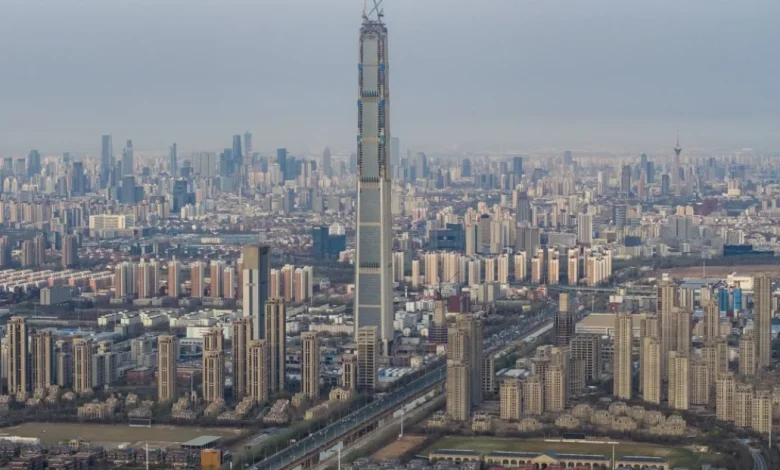
China: The Economic Fortress That Showed Its Cracks
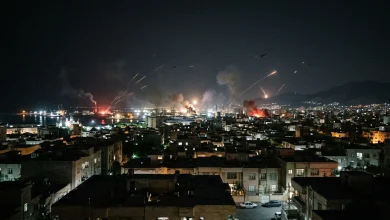
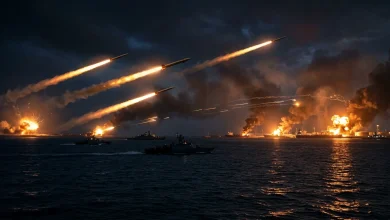
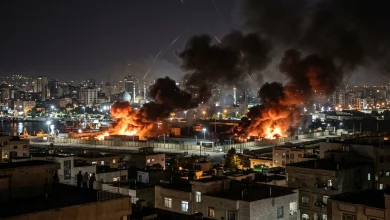
For the past decade, the central government has prioritized the ‘Dual Circulation’ strategy, aiming to bolster domestic consumption while maintaining export dominance. The explicit goal was to build a resilient economic fortress capable of withstanding Western sanctions or regional geopolitical shocks. Yet, the rapid escalation of the conflict in Iran bypassed these defenses entirely. It targeted the very arteries of global commerce that feed the nation’s colossal manufacturing engine. As logistics lines became paralyzed, the fragility of just-in-time manufacturing and heavily centralized resource imports became glaringly obvious. The notion of total self-reliance has proven to be a dangerous fallacy when tested against the chaotic realities of real-world warfare in a critical energy and commodity hub.
The Shocking Commodity Surges: Polyethylene, Carbon Fibre, and Helium
The immediate fallout from the conflict manifested in severe price shocks across critical raw materials. Polyethylene, the ubiquitous plastic polymer fundamental to everything from consumer packaging to vital construction materials, saw its prices double within a staggering six-week window. This dramatic increase has squeezed margins for thousands of downstream manufacturers, threatening an inflationary wave across retail goods globally. Simultaneously, carbon fibre, a cornerstone material for advanced aerospace, military hardware, and next-generation electric vehicles, surged by 20%. The disruption in petrochemical feedstocks, largely sourced from the destabilized Middle Eastern region, created a brutal bottleneck.
| Commodity | Pre-War Index Price | Current Price Increase | Primary Industry Impacted | Strategic Vulnerability Level |
|---|---|---|---|---|
| Polyethylene | Baseline (100) | + 100% (Doubled) | Packaging, Construction, Consumer Goods | High |
| Carbon Fibre | Baseline (100) | + 20% | Aerospace, Military, Electric Vehicles (EVs) | Severe |
| Helium (Tech-Grade) | Baseline (100) | + 110% | Semiconductor Manufacturing, AI Hardware | Critical |
| Crude Oil / LNG | Baseline (100) | + 45% | Energy Grid, Transportation, Heavy Industry | Critical |
Helium Prices and the Threat to the Semiconductor Industry
Perhaps the most alarming and immediate crisis triggered by the conflict is the 110% explosion in the price of tech-grade Helium. This rare gas is the literal lifeblood of the semiconductor industry, essential for cooling superconducting magnets and maintaining inert environments during the highly sensitive lithography process used to manufacture advanced microchips. With domestic technology champions already battling Western export controls on high-end chipmaking equipment, the sudden scarcity of Helium represents an existential threat to the nation’s silicon ambitions. Semiconductor foundries cannot operate without a steady, immense supply of this gas. The shock to Helium supply chains illustrates perfectly how the war threatens markets far beyond the immediate blast radius, effectively stalling the artificial intelligence and advanced computing sectors that are meant to drive the next wave of economic growth.
Former Beijing Planning Officials Sound the Alarm Over Wishful Thinking
The severity of the situation has broken through the usual walls of state-sponsored economic optimism. A highly respected former top Beijing planning official recently took the unprecedented step of publicly urging the government to abandon its ‘wishful thinking’ and prepare for the worst. In a tightly controlled political environment, such stark public warnings indicate a profound level of internal anxiety. The official pointed out that stockpiles, no matter how vast, are finite, and that the current strategy of absorbing cost increases is financially unsustainable in a prolonged conflict scenario.
Transitioning from Economic Optimism to National Security Readiness
This public rebuke represents a massive shift from pure economic management to stark national security readiness. The realization is setting in that the war did not create the nation’s supply chain vulnerabilities; it merely made them impossible to ignore. For years, experts warned about the over-reliance on a few critical geographic chokepoints and volatile supplier nations. Now, the government is being forced to pivot from peacetime growth metrics to wartime survival economics, a transition that requires brutal honesty about the limitations of their current industrial model.
The Energy Pivot: Xi Jinping Fast-Tracks Renewables and Nuclear Power
In direct response to the paralyzing effect of Middle Eastern instability, President Xi Jinping has mandated an aggressive acceleration of the country’s energy transition. While the state was already a global leader in renewable energy installations, the current crisis has shifted the timeline from an environmental goal to an urgent national security imperative. Solar and wind projects that were slated for completion by 2030 are being fast-tracked for operational status within the next 24 months. Furthermore, the approval process for next-generation nuclear reactors, including advanced thorium-based systems, has been completely overhauled to bypass bureaucratic delays.
Escaping Middle Eastern Energy Dependence
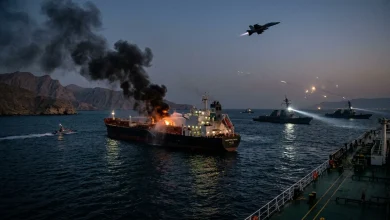
The overarching goal of this accelerated pivot is to drastically reduce, if not eliminate, dependence on Middle Eastern energy imports. The vulnerability of seaborne energy shipments was starkly highlighted recently when logistics through the Strait of Hormuz became dangerously unpredictable. A prime example of this extreme maritime tension was seen when a Japanese LNG tanker crossed the Strait of Hormuz only after an agonizing 35-day delay. The central government realizes that its massive industrial base cannot survive if its energy umbilical cord can be severed by regional actors or foreign navies in the Persian Gulf. By blanketing the western deserts with solar panels and lining the coast with nuclear reactors, Beijing is desperately attempting to domesticate its energy supply before the next geopolitical shock occurs.
Global Ramifications of a Strained Chinese Supply Chain
The domestic crisis facing the world’s factory floor will not stay contained within its borders. As the costs of production skyrocket due to exorbitant commodity and energy prices, global inflation is all but guaranteed to surge. International companies heavily reliant on Asian manufacturing hubs are scrambling to locate alternative suppliers, only to find that the entire global supply chain ecosystem is intertwined with the same vulnerabilities. The instability is heavily influencing global financial flows, prompting severe reactions across foreign exchange platforms. Observers noted that geopolitical anxiety is reshaping the fiscal landscape, similar to how market sentiment plummeted as news sinks currency markets amid shifting ceasefire hopes and trade disruptions. According to comprehensive data tracked by the World Bank Commodity Markets, the volatility index for industrial metals and petrochemicals has reached levels not seen since the peak of the 1970s oil shocks.
How Regional Conflicts Broker New Geo-Economic Realities
The broader implications are clear: regional conflicts now possess the power to paralyze the global economy instantly. Beijing’s previous attempts to act as a stabilizing mediator, such as when it helped broker agreements to end regional conflicts in Central and South Asia, are now being severely tested. The Middle East’s complexities have proven highly resistant to simple diplomatic overtures, forcing massive states to rely on hard economic decoupling rather than soft diplomatic influence. The era of frictionless globalization has violently ended, replaced by an era of economic fortification and severe supply chain redundancies.
Conclusion: A New Era of Strategic Autonomy Amidst Global Turmoil
China is waking up to a harsh new reality where its economic fortress is only as strong as its weakest logistical link. The staggering spikes in polyethylene, carbon fibre, and crucial semiconductor gases like Helium are blaring sirens indicating systemic fragility. By acknowledging these vulnerabilities, as urged by former planning officials, and aggressively fast-tracking domestic renewables and nuclear energy, Beijing is moving rapidly to patch the cracks in its armor. However, the transition will be painful, expensive, and highly disruptive to global trade. The conflict in Iran did not invent these weaknesses, but it undeniably served as the catalyst that shattered the illusion of endless, secure growth. Moving forward, the global economy must brace for a fundamental restructuring as the world’s largest manufacturing powerhouse pivots definitively from cost-efficiency toward uncompromising strategic autonomy.