Lebanon talks in Washington: A Historic Break from Hezbollah
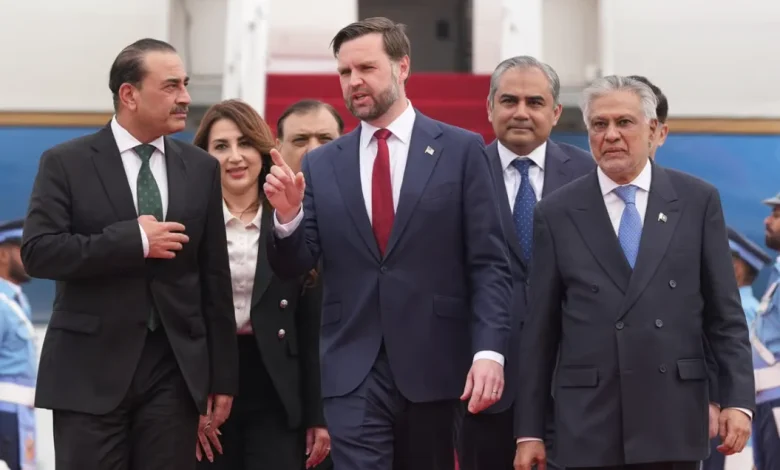
Lebanon talks in Washington have officially redefined the geopolitical landscape of the Middle East, marking a profound and unprecedented shift in how the Mediterranean nation conducts its foreign policy. For decades, the Lebanese government has been largely relegated to the role of a passive observer on the international stage, while Hezbollah, the heavily armed and Iran-backed militant group, operated with impunity as a state within a state. Hezbollah has historically fought wars on Iran’s behalf, engaged in cross-border conflicts with Israel, and dictated the terms of war and peace without any meaningful oversight or authorization from the official state institutions in Beirut. Lebanon’s foreign policy, in essence, was not Lebanese at all; it was engineered, directed, and executed by Tehran. However, this week’s diplomatic engagements in the United States capital have fundamentally shattered that long-standing dynamic. By sending official state representatives to sit directly across from American and Israeli officials, the Lebanese government delivered a resounding and unmistakable message to the world: we speak for Lebanon, not Hezbollah. While these intensive discussions did not immediately yield a formalized ceasefire agreement or a comprehensive peace treaty, immediate resolution was never the primary objective. The true significance of this summit lies in the structural and symbolic separation of the Lebanese state from its proxy overlords. Lebanon is unequivocally signaling its desire to break free from Iran’s strategic orbit, demanding that its national future be decided within its own sovereign institutions rather than in the corridors of power in Tehran.
The Dawn of Independent Diplomacy: Why These Talks Matter
To truly understand the magnitude of these developments, one must look back at the systemic paralysis that has plagued Lebanon since the end of its civil war in 1990. The Taif Agreement was supposed to disarm all militias and restore the absolute authority of the Lebanese state. Instead, Hezbollah was permitted to retain its weapons under the guise of resisting Israeli occupation in the south. Over the subsequent decades, this military exception morphed into a comprehensive political and economic takeover. Hezbollah leveraged its military supremacy to extract political concessions, effectively granting itself veto power over the formation of governments, the election of presidents, and the formulation of foreign policy. The government became a hostage to the militia’s regional agenda, a dynamic that ultimately isolated Lebanon from its traditional Arab allies and the broader international community. The decision to bypass this proxy structure and engage directly in high-level diplomacy in Washington represents the dawn of a new, independent era for Lebanese diplomacy. It is a bold assertion of statehood that seeks to reclaim the monopoly on violence and international relations that is the cornerstone of any sovereign nation.
Breaking Decades of Iranian Proxy Influence
The strategic uncoupling of Beirut from Tehran is perhaps the most consequential outcome of this diplomatic maneuver. Iran’s ‘Axis of Resistance’ relies heavily on its ability to project power through non-state actors across the region, with Hezbollah serving as its most sophisticated and lethal instrument. By stepping forward and asserting its own voice, Lebanon is directly challenging this paradigm. This pivot is not happening in a vacuum; it corresponds with broader regional shifts where nations are increasingly prioritizing their own economic and internal stability over ideological proxy wars. The Lebanese delegation’s willingness to engage without seeking prior authorization from Hezbollah’s headquarters in the southern suburbs of Beirut demonstrates a calculated risk, betting that the international community will support and protect a sovereign Lebanon. This move comes at a time when Tehran is facing its own mounting pressures, dealing with the fallout from the collapse of high-level nuclear negotiations and struggling to maintain its economic footing under crippling sanctions.
Inside the Washington Summit: Key Players and Objectives
The atmosphere surrounding the Washington summit was electric, characterized by a mix of deep skepticism and cautious optimism. The physical presence of Lebanese state officials, including senior diplomats and representatives of the Lebanese Armed Forces (LAF), sitting at the same table as high-ranking American diplomats and Israeli security officials, was a visual testament to the shifting tides. The primary objective of these talks was not to miraculously resolve decades of deeply entrenched conflict overnight. Instead, the focus was on establishing direct, unmediated channels of communication. For years, negotiations regarding the volatile southern border were conducted through complex intermediaries, with Hezbollah hovering menacingly in the background, dictating the red lines. By eliminating the middleman, the Lebanese state is attempting to build confidence with international partners, demonstrating that it has the institutional capacity and the political will to enforce security agreements. This direct engagement is crucial, especially in light of the continuous delays in recent ceasefire negotiations that have kept the region on the brink of an all-out catastrophic war.
The American and Israeli Perspectives
From the vantage point of the United States and Israel, the empowerment of the official Lebanese state is the only viable long-term strategy for securing the northern front. Israel’s primary grievance has consistently been that it is forced to fight a non-state terrorist organization that hides behind civilian infrastructure, while the official government pleads impotence. The Israeli delegation in Washington made it abundantly clear that they require a reliable partner on the other side of the Blue Line—a state entity that can be held accountable under international law. For the United States, facilitating this transition is a diplomatic triumph that aligns perfectly with its broader strategy of stabilizing the Middle East and countering Iranian hegemony. The State Department’s intense focus on bolstering the Lebanese Armed Forces as the sole legitimate defender of the nation is a central pillar of this diplomatic push.
Hezbollah’s Reaction: Rejection and Existential Threat
Hezbollah’s reaction to the Washington summit was swift, vitriolic, and entirely predictable. The group categorically rejected the legitimacy of the talks, launching a fierce media campaign to brand the participating Lebanese officials as traitors capitulating to American and Zionist pressures. However, beneath the aggressive rhetoric lies a profound sense of vulnerability. Hezbollah’s entire ideological foundation and justification for maintaining an independent arsenal is built on the premise that the Lebanese state is inherently too weak and corrupt to defend its own borders. A diplomatic process that successfully mitigates border tensions and elevates the national army completely undermines this narrative. It strips away the ‘resistance’ facade, exposing the group as a mere tool of Iranian foreign policy. This existential panic is particularly acute given the heavy losses the group has sustained during recent clashes involving Hezbollah Radwan forces, which have severely degraded their operational capabilities and eroded their aura of invincibility.
The State Within a State Loses Its Grip
The domestic political landscape in Lebanon is also shifting unfavorably for Hezbollah. The catastrophic economic collapse of 2019, followed by the devastating Beirut port explosion in 2020, annihilated the country’s middle class and plunged the majority of the population into crushing poverty. Hezbollah, despite its vast illicit financial networks, has been unable to shield its own constituency from the economic ruin, leading to unprecedented murmurs of discontent even within its traditional strongholds. The Lebanese public is exhausted by the perpetual state of conflict and the isolation that Hezbollah’s adventurism has brought upon them. The government’s decision to pursue sovereign diplomacy in Washington capitalizes on this massive wave of public frustration, offering a glimmer of hope that a functional, normal state might still be salvageable from the wreckage.
Geopolitical Ramifications for the Broader Middle East
The reverberations of Lebanon’s diplomatic rebellion will be felt far beyond the Levant. If a country as deeply penetrated by Iranian influence as Lebanon can successfully chart an independent course, it provides a dangerous precedent for other nations caught in Tehran’s web, such as Iraq and Syria. The international community is watching closely, recognizing that a sovereign Lebanon could serve as a vital buffer against regional volatility. Furthermore, this development forces a recalibration of military postures across the region. As Iranian influence faces pushback in the Mediterranean, Tehran may attempt to compensate by accelerating strategic military escalations across the region, testing the resolve of the United States and its allies in other theaters to mask its strategic losses in Lebanon.
A Direct Signal to Tehran’s Leadership
The message delivered to Tehran from the negotiation tables in Washington is unambiguous: the era of using sovereign Arab nations as disposable bargaining chips is facing insurmountable resistance. The Iranian leadership must now confront the reality that its massive investments in regional militias yield diminishing political returns when the host populations unequivocally demand statehood, economic survival, and international integration over endless ideological warfare.
Lebanon’s Institutional Rebuilding Process
Stepping out of Hezbollah’s shadow is only the first, albeit most difficult, step. The monumental task ahead involves the total reconstruction of Lebanon’s gutted state institutions. The Lebanese Armed Forces require immediate and massive international funding to establish an undisputed security monopoly. Simultaneously, the caretaker government must implement draconian economic reforms to unlock billions in frozen bailout packages from the International Monetary Fund and other global financial institutions. According to extensive analyses by the Council on Foreign Relations, the success of this transition hinges entirely on the sustained, unwavering support of Western and Arab allies, who must provide the financial and political safety net required to withstand Hezbollah’s inevitable attempts to sabotage the recovery process through intimidation and political gridlock.
Summary: Lebanon’s Diplomatic Evolution
The structural changes initiated by these talks can be best understood by comparing the previous proxy-dominated era with the newly emerging sovereign framework.
| Diplomatic Metric | Era of Proxy Diplomacy (Pre-Talks) | New Sovereign Diplomacy (Post-Talks) |
|---|---|---|
| Primary Negotiator | Hezbollah (via intermediaries) | Official Lebanese Government & LAF |
| Strategic Alignment | Tehran’s Axis of Resistance | Lebanese National Interest |
| International Posture | Isolated, sanctioned, militant-led | Direct engagement with US & Israel |
| Security Guarantor | Hezbollah’s independent arsenal | Lebanese Armed Forces (LAF) |
The Future of Lebanese Sovereignty Without Proxy Wars
In conclusion, the path forward for Lebanon remains fraught with immense peril, but for the first time in modern history, it is a path dictated by Lebanese interests. The talks in Washington have permanently altered the baseline of what is politically acceptable in Beirut. Hezbollah will undoubtedly fight tooth and nail to retain its dominance, utilizing its vast arsenal to threaten internal stability. However, the psychological barrier of engaging directly with historic adversaries to secure national survival has been shattered. Lebanon has signaled to the world that it is ready to rejoin the community of sovereign nations. The coming months will test the resilience of the Lebanese state and the commitment of the international community, but the message from Washington is clear: the era of the proxy is ending, and the era of the state is desperately fighting to be born.