UEFA Demands Answers From FIFA Over Infantino and Deals 2026
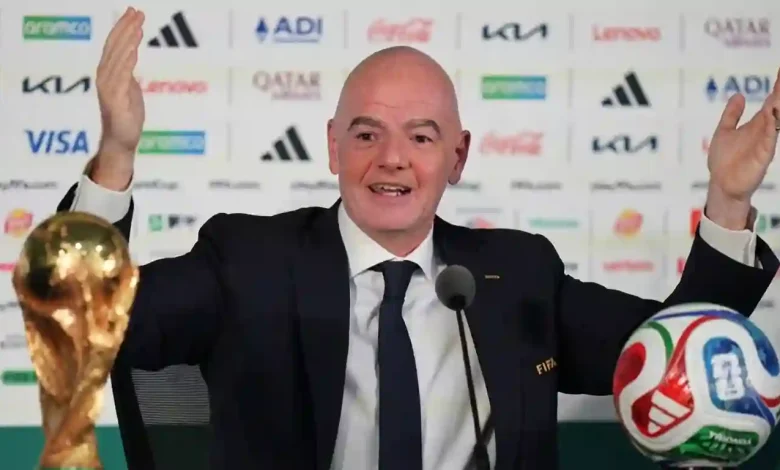
Table of Contents
Executive Summary: The Deepening Rift in Football Governance
UEFA has dramatically intensified its confrontation with FIFA leadership, dispatching a formal letter demanding comprehensive explanations concerning Gianni Infantino’s presidency, institutional decision-making, and commercial maneuvers. Reports emerging from British media indicate that European football’s governing body has set a strict deadline of November 2 for soccer’s world governing body to provide full clarity. At the center of this administrative broadside is the controversial and now-shelved FIFA Forward Enterprise (FFE) initiative, alongside sharp inquiries into the creation of political accolades such as the FIFA Peace Prize. This escalation marks the most direct challenge to Infantino since senior European officials initially rallied to scrutinize his centralized style of leadership, illustrating that the peace between Nyon and Zurich is rapidly eroding.
The dispute is not merely an administrative disagreement; it represents a philosophical battle for the financial soul and democratic balance of world football. For months, undercurrents of dissatisfaction have circulated among national associations across Europe regarding unilateral decision-making by the FIFA executive leadership. Tensions reached unprecedented heights after revelations surfaced regarding clandestine proposals to monetize prestigious international tournaments. With senior leadership at Gianni Infantino under fire from multiple stakeholder coalitions, UEFA’s formal correspondence crystallizes months of simmering grievance into an institutional demand for transparency.
Origins of the Dispute: The FIFA Forward Enterprise Project
UEFA spearheaded immediate opposition when the FIFA Forward Enterprise project was originally conceived and circulated behind closed doors. Under the proposed blueprint, FIFA intended to spin off the commercial, marketing, and broadcast rights of its marquee competitions—most notably the flagship Men’s and Women’s World Cups—into an external, privately backed entity. The model envisioned liquidating a minority stake in this newly created corporate vehicle to external private equity investors in exchange for multi-billion-dollar upfront guarantees. Proponents inside FIFA argued that the capital injection would fund worldwide grassroots development, but European stakeholders interpreted the scheme as a radical expropriation of the game’s core assets.
Critics within the European confederation contended that introducing private equity into the structural administration of international competitions would inevitably prioritize short-term profit realization over sporting merit, athlete welfare, and traditional calendar equilibrium. Had the venture succeeded, private shareholders would have possessed unprecedented influence over scheduling windows, tournament formats, host nation selection processes, and commercial exploitation. The vehement pushback led by Nyon ultimately forced FIFA to walk back the FFE venture, but the lack of consultation and the secretive nature of the preliminary talks left long-lasting damage. Observers noted that widespread European opposition to FIFA policies began hardening specifically around this inflection point, turning administrative skepticism into active hostility.
The FIFA Peace Prize Controversy
UEFA has additionally demanded granular justification for the formal introduction and awarding of the FIFA Peace Prize. The initiative, spearheaded under Infantino’s personal purview, has raised alarm bells across member associations who view it as an unnecessary, politically entangled vanity project that diverges wildly from FIFA’s core mandate as an athletic governing body. European administrators have repeatedly raised concerns that politicizing international football administration compromises the neutral status required to arbitrate global competitions peacefully and transparently.
The creation of political decorations by a sports federation risks entangling soccer in sensitive geopolitical maneuvers, where footballing awards could be wielded to curry favor with sovereign states, state-owned enterprises, or prospective bidding consortia for future international tournaments. In their formal letter, UEFA officials questioned the procedural transparency of how the peace accolade was approved, which committees were consulted, and what statutory provisions empowered the FIFA president to bestow such honors unilaterally. The demand for documentation highlights UEFA’s broader thesis: that governance norms inside FIFA headquarters have been increasingly subordinated to presidential prerogatives without requisite oversight from the FIFA Council.
Governance and Commercialization Concerns
The institutional friction encompasses far wider issues than two isolated initiatives. Underlying the UEFA inquiry is a systemic apprehension regarding corporate governance standards at FIFA. Over recent congresses, European representatives have expressed deep unease over what they describe as a culture of centralization, where critical structural changes—such as calendar adjustments, the expansion of the Club World Cup, and modifications to regulatory compliance systems—are formulated by senior executives with minimal stakeholder input prior to presentation for rubber-stamp approval.
This climate has echoed other high-stakes legal clashes across the continent, where sports bodies have faced judicial scrutiny for exceeding statutory limits. Parallels can be observed in regulatory battles in European football, where independent review bodies and courts are constantly challenging whether governing entities possess unfettered authority over economic regulations. European football administrators argue that FIFA operates under a mandate of global stewardship, not imperial corporate discretion, and that attempting to commercialize competitions through complex private equity mechanisms compromises this core mission.
Comparative Breakdown: UEFA Demands vs. FIFA Governance
To contextualize the conflict between European administrators and FIFA leadership, the following table delineates the primary issues outlined in UEFA’s communication and the institutional responses recorded to date.
| Issue Area | UEFA Position & Demands | FIFA Executive Rationale | Status / Regulatory Impact |
|---|---|---|---|
| FIFA Forward Enterprise (FFE) | Demands full financial disclosures on advisory fees, talks with private equity, and structural risks to competitions. | Intended to maximize global commercial return to fund development initiatives across emerging federations. | Project officially abandoned; residual questions linger over preliminary contracts and expenses. |
| FIFA Peace Prize | Seeks procedural justification, constitutional alignment, and an immediate halt to political awards. | Designed to recognize exceptional geopolitical contributions fostering global harmony through sports diplomacy. | Under intense scrutiny for blurring boundaries between sport administration and statecraft. |
| Calendar Expansion | Demands rigorous workload protection for players and collective bargaining on scheduling windows. | Argues expanding international footprint fosters inclusivity and diversifies global revenue beyond Europe. | Triggers legal complaints from domestic leagues and player unions before European tribunals. |
| Internal Oversight | Requests auditing of executive discretionary funds and restoration of independent checks and balances. | Maintains that governance complies strictly with statutory revisions instituted in post-2016 reforms. | Accelerates high-level departures; creates deepening polarization across confederations. |
Timeline of Escalating Tensions Between Nyon and Zurich
The current confrontation represents the culmination of a multi-year breakdown in institutional diplomacy. Relations initially fractured when FIFA floated biennial World Cup proposals, an idea vehemently rejected by UEFA and South America’s CONMEBOL. Although that initiative collapsed under heavy political resistance, the announcement of the 32-team Club World Cup reignited fierce opposition regarding fixture congestion and commercial cannibalization of domestic and continental tournaments.
Compounding these operational flashpoints has been a noticeable shift in internal personnel. Multiple executive appointments, high-profile resignations, and administrative departures at FIFA have stripped the organization of seasoned diplomats capable of bridging ideological divides between Zurich and the European confederations. Consequently, communications have grown increasingly transactional and adversarial, leading directly to formal legalistic correspondence with strict deadlines rather than informal executive dialogue.
Institutional Impact on Global Football Competitions
The battle for governance reform carries sweeping consequences for the scheduling, staging, and monetization of international tournaments. As FIFA rapidly expands its portfolio of events, European leagues and clubs face an increasingly chaotic fixture calendar that risks physical exhaustion among premier athletes and viewer fatigue among supporters. The friction directly touches on the logistical apparatus required to execute massive, multi-nation competitions, including complex questions surrounding expanded World Cup tournaments across multiple continents.
Furthermore, operational hurdles at major events have highlighted the friction between local organizing bodies and international administrators. From ticketing snafus to complex security parameters—such as incidents involving major tournament operations—the burden of execution rests heavily on local jurisdictions that demand predictability, stability, and transparent governance from global bodies. When executive energy is diverted toward contentious commercial vehicles and political disputes, the integrity of tournament operations inevitably comes under heightened pressure.
The Broader Revolt Against Centralization
UEFA is not acting alone in its demands for reform; its actions reflect an evolving consensus across the European sporting landscape. Domestic league syndicates, player associations represented by FIFPRO, and national federations have allied to challenge FIFA’s perceived overreach. The resistance is symptomatic of a larger structural rethink occurring across the continent, where leagues and federations are actively asserting autonomy against centralized monopolies, reminiscent of debates surrounding modern European sports governance structures.
European stakeholders argue that Infantino’s administration has systematically diluted the voting influence of established footballing hubs by expanding solidarity programs to garner unwavering support among smaller non-European associations. While FIFA frames this policy as essential democratization, UEFA views it as an autocratic patronage system designed to insulate presidential leadership from legitimate accountability. Inconsistencies in regulatory application and issues surrounding global football administration have only added fuel to claims that administrative standards are slipping while commercial ambitions accelerate.
Legal and Regulatory Ramifications for FIFA
The imposition of a November 2 deadline suggests that UEFA is preparing formal legal maneuvers should FIFA’s responses prove evasive or inadequate. Legal scholars suggest several avenues available to the European confederation, ranging from formal complaints to the Court of Arbitration for Sport (CAS) regarding statutory compliance, to petitioning European Union competition regulators regarding abuse of dominant market position.
Under European antitrust jurisprudence, governing bodies that simultaneously regulate an industry while monetizing commercial competitions face strict standards of fairness, non-discrimination, and proportional governance. If UEFA can demonstrate that projects like FIFA Forward Enterprise or unilateral calendar additions infringe upon the commercial viability of domestic and continental competitions without proper objective consultation, FIFA could face severe regulatory sanctions. The legal precedent set by recent European Court of Justice rulings empowers confederations and clubs to resist non-transparent market conduct by monolithic sports governing authorities.
Future Outlook for Infantino’s Mandate
As the November 2 deadline approaches, Gianni Infantino faces what could be the defining political crisis of his tenure. Having secured presidential re-elections with broad support across Africa, Asia, and the Americas, Infantino has long operated with comfortable electoral margins. However, open revolt from UEFA—the confederation that generates the overwhelming majority of global football revenue and provides the premier talent pool for world competitions—poses an existential risk to the operational coherence of the global game.
A failure to satisfy UEFA’s demands could trigger unprecedented countermeasures, including European boycotts of new FIFA tournaments, legal injunctions, or direct calls for statutory dissolution of certain executive committees. The ball now rests firmly in Zurich’s court. Whether FIFA opts for collaborative transparency or retreats into defensive posturing will determine whether international football heads toward a negotiated constitutional settlement or a catastrophic administrative schism that fractures the global sport beyond repair.