Gianni Infantino Under Fire: 5 Stunning Signs of Open Revolt
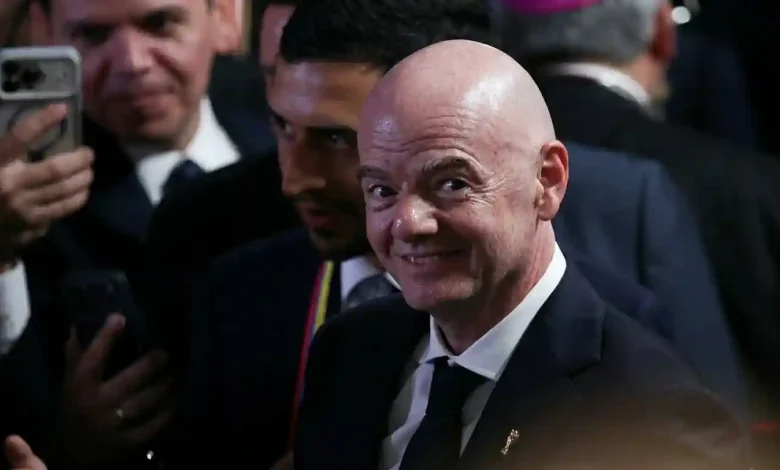
Table of Contents
Gianni Infantino, the president of FIFA, is facing one of the most severe institutional rebellions in the history of global sports governance. In a striking escalation of tensions, three of soccer’s most powerful regional confederations have united in a historic, public condemnation of his leadership. The Union of European Football Associations (UEFA), the Confederation of North, Central America and Caribbean Association Football (CONCACAF), and the Asian Football Confederation (AFC) have co-signed a biting open letter that calls into question the fundamental ethics, transparency, and administrative capabilities of the FIFA president. The rebellion stems from a highly controversial, privately backed commercial plan that has threatened to dismantle the traditional governance structure of the world’s most popular sport.
The joint letter represents an unprecedented coalition. Historically, FIFA presidents have managed to maintain power by playing different continental factions against one another. However, by uniting Europe, Asia, and North America in a singular front, the coalition has isolated Infantino to a degree never before seen in modern soccer politics. The dispute centers not just on the financial structures of FIFA but on the very integrity of the custodianship of the game, bringing global football to the brink of a major organizational split.
The Joint Open Letter Explained
The joint open letter, released on Monday, August 10, 2026, was addressed directly to the global ‘football family’. It lays bare a deep ideological rift between FIFA’s executive leadership and the regional bodies that run the daily operations of the sport across three major continents. Signed by UEFA President Aleksander Čeferin, AFC President Salman Bin Ibrahim Al-Khalifa, CONCACAF President Victor Montagliani, and the three general secretaries of their respective organizations, the letter does not mince words. It accuses the FIFA president of a profound betrayal of his administrative duties.
In the text, the leaders wrote: ‘Football is the world’s greatest shared passion. It belongs to no individual and no institution. It belongs to the players, the fans, the clubs, the member associations and every institution entrusted with safeguarding its future.’ They continued by asserting that ‘it is in that spirit, as confederations representing its members, that we speak collectively today.’ The letter’s most damaging passage targets the core of Infantino’s administrative style, warning that ‘when trust is broken through deception, when an individual places himself above the collective that entrusted him with authority, that duty has been abandoned.’
Summary of Continental Confederation Stances
The unified front presented by UEFA, CONCACAF, and the AFC represents a majority of the financial and competitive weight in global soccer. The table below outlines the leadership of these organizations and their specific positions in this ongoing conflict.
| Confederation | Region Represented | Current President | Key Stance / Action Taken |
|---|---|---|---|
| UEFA | Europe | Aleksander Čeferin | Co-signed the open letter; threatened an absolute boycott of the World Cup; led opposition to the private equity deal. |
| CONCACAF | North & Central America, Caribbean | Victor Montagliani | Co-signed open letter; exploring alternative continental competitions; Montagliani rumored as a potential replacement candidate. |
| AFC | Asia | Salman Bin Ibrahim Al-Khalifa | Co-signed open letter; called for a fully independent investigation into FIFA’s executive decision-making. |
The Aborted Private Equity Deal: What Was the FFE Scheme?
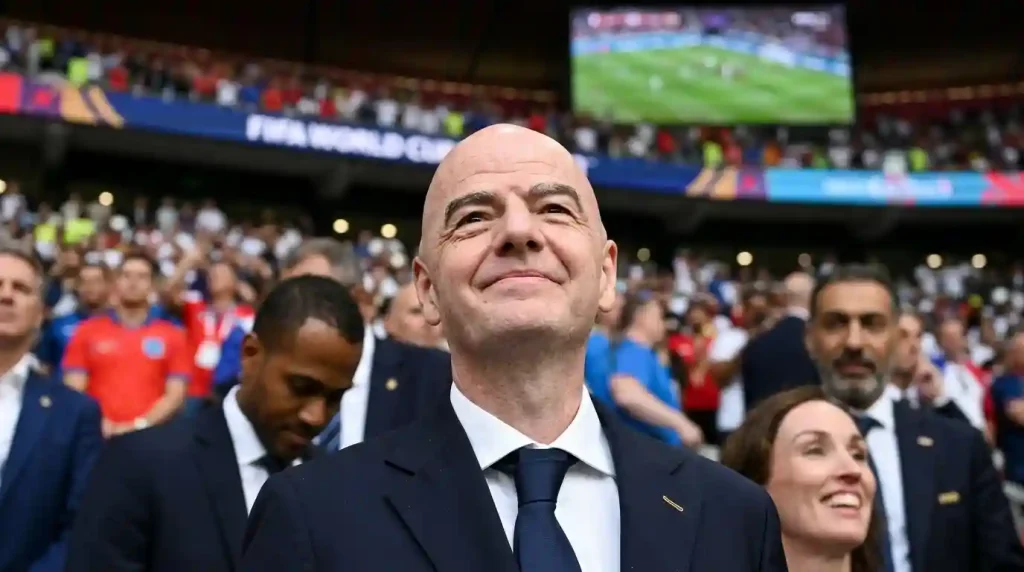
The root cause of this massive institutional crisis is a secretive, highly ambitious commercial scheme named the Football Forward Enterprise (FFE). Under this proposal, Gianni Infantino sought to carve off the commercial and broadcasting rights of future FIFA World Cups—traditionally the organization’s crown jewel and primary source of funding—and sell a 20% to 21% equity stake to private equity investors. The primary investment firm linked to this deal was Thrive Capital, a venture capital firm founded by Joshua Kushner, whose close familial ties to major political figures added another layer of complexity to the deal.
The proposed transaction was valued at approximately $4.2 billion USD (approximately $5.8 billion CAD). Infantino pitched the plan as a necessary modernization effort that would inject massive cash reserves into global development programs. However, the regional confederations argued that the proposal was engineered on an incredibly compressed timeline without meaningful or transparent consultation. They alleged that the plan was rushed toward a hard deadline to prevent member associations from properly auditing its long-term financial consequences. Following a furious backlash, FIFA officially scrapped the plan and issued an apology, but the damage to Infantino’s relationship with the continental governing bodies was already done.
Deception and Breach of Trust: The Leadership Crisis
To understand why the conflict has reached such a boiling point, one must look closely at the language used in the open letter. The regional leaders have argued that Infantino’s actions represent ‘not the conduct of a custodian of the game, but of one who believes the game is answerable to him.’ They characterized his attempt to privatize a portion of the World Cup as a ‘fundamental breach of trust.’
By bypassing the established democratic processes of FIFA’s executive committee, Infantino reportedly alienated his closest vice-presidents. According to sources close to the confederations, the executive decision-making process had become highly centralized, with critical commercial assets being leveraged without collective consent. The confederations contend that FIFA’s leadership must serve the game, rather than command it. They assert that the FFE proposal was designed to limit scrutiny, bypass checks and balances, and establish a private corporate vehicle that would permanently alter how international football is monetized and managed.
Boycott Threats and Breakaway Tournaments
The rebellion is not merely rhetorical; it carries substantial operational threats that could permanently fracture the global game. Before the FFE proposal was officially abandoned, UEFA had already issued a direct threat to boycott the World Cup and other major FIFA competitions. Even after the proposal was shelved and Infantino offered an apology, the threat of a boycott has not been fully retracted. The European governing body, backed strongly by the AFC and CONCACAF, is demanding written, legally binding assurances that no similar private equity sell-offs will ever be proposed in the future.
Furthermore, internal reports suggest that the three rebelling confederations have initiated preliminary discussions regarding the creation of their own independent, breakaway tournaments. Should Gianni Infantino refuse to step down or should FIFA fail to guarantee structural reforms, these bodies are investigating staging high-profile international competitions among themselves. This would allow elite national teams to compete globally without FIFA’s involvement. A World Cup without European, Asian, and North American powerhouses would be commercially unviable and functionally meaningless, presenting FIFA with an existential threat.
Geopolitical Parallels: Global Instability and Institutional Turmoil
This clash inside football occurs against a backdrop of wider global instability. While world markets grapple with economic shockwaves and fluctuating energy sectors, sports networks are also feeling the pinch. Just as international diplomatic bodies deal with a protracted international conflict, global sports organizations must balance their financial ambitions against collective trust. With the broader economic fallout affecting everything from media rights to direct investments, FIFA’s move to privately fund its premier tournament is seen by some as an act of desperation.
Historically, whenever diplomatic alerts are raised globally or structural assets face disruption, the sports world must prepare for financial headwinds. Under Infantino’s administration, there have been massive attempts to reshape the financial map, often mimicking aggressive geopolitical strategies seen in world politics. These maneuvers can generate intense regional financial pressures on smaller member nations. In the same way that maritime choke points create massive global supply chain disruptions, any disruption to the World Cup structure creates panic among leagues. The sport is currently facing severe resource shortages when it comes to keeping clubs and continental tournaments afloat without the financial safety net of FIFA’s revenue-sharing mechanisms. As global dynamics shift, the structural unity of soccer remains as delicate as any international treaty.
Political Alignments and Polarization
The institutional civil war within soccer has also spilled over into the political arena, drawing opinions from state leaders and financial heavyweights. Canadian Prime Minister Mark Carney openly expressed a lack of confidence in Infantino’s leadership, citing the secretive nature of the private equity negotiations and the damage done to institutional integrity. Similarly, the English Football Association (FA) and Norway’s football federation have publicly withdrawn their backing for Infantino’s leadership, with several European associations demanding his immediate resignation.
Conversely, Gianni Infantino has found support from unexpected political quarters outside the direct soccer ecosystem. U.S. President Donald Trump publicly defended the embattled FIFA chief on social media, posting that replacing Infantino would be a ‘terrible mistake.’ Trump praised Infantino’s leadership, particularly regarding his stewardship of upcoming major tournaments, creating a clear geopolitical divide. This political polarization has made the ongoing dispute even more complex, transforming a sports administrative crisis into a highly visible debate about corporate governance and public trust.
The March Election: What Lies Ahead for FIFA?
The open letter is widely viewed by sports analysts as a highly strategic move designed to force Infantino out before the upcoming FIFA presidential elections in March 2027. By framing his conduct as a ‘breach of trust through deception,’ the three confederations have effectively signaled that his position is untenable. Behind the scenes, efforts to unite around a consensus candidate to challenge or replace Infantino have accelerated significantly.
Among the potential front-runners to lead a post-Infantino era is CONCACAF President Victor Montagliani. As a highly respected administrator who has successfully navigated the commercial expansion of North American soccer, Montagliani is seen by many as a unifying figure who could restore trust between FIFA and its regional branches. Other potential candidates, including prominent figures from the AFC, are also reportedly testing the waters. What remains clear is that the status quo has been permanently shattered. The ‘open letter to the football family’ has set in motion a profound transformation, and the future of global soccer governance will be defined by whether its leadership chooses to serve the game or attempt to rule it.