Pete Hegseth Meets Netanyahu in Unannounced Visit on Iran 2026

Table of Contents
Pete Hegseth, the United States Secretary of Defense, arrived in Israel for an unannounced, closed-door bilateral consultation with Israeli Prime Minister Benjamin Netanyahu, according to multiple Israeli officials with direct knowledge of the exchange. The unheralded mission took place amid acute geopolitical instability, marked by sharp exchanges of warnings and heightened military posturing across the Middle East. First revealed through reporting by Axios, the secret encounter signals an urgent push by Washington and Tel Aviv to harmonize operational contingencies, coordinate air defense networks, and solidify tactical deterrence strategies as friction between the United States and Iran threatens to engulf commercial shipping lanes and forward military outposts throughout the Persian Gulf.
Pete Hegseth and Netanyahu Hold High-Stakes Talks
The unpublicized arrival of the defense chief underscores the elevated threat perception shared by defense planners in both capitals. Officials familiar with the discussions indicated that the primary objective centered on operational synchronization regarding regional security threats posed by Tehran and its constellation of allied groups. Both the Pentagon and the Israeli Prime Minister’s Office maintained strict discipline regarding public disclosures, declining immediate comment when pressed on the specific outcomes or security guarantees exchanged during the session. Observers note that unannounced visits by cabinet-level defense leaders historically materialize when rapid military contingencies require high-level authorization, or when clandestine intelligence suggests an imminent escalation cycle that conventional diplomatic cables cannot adequately navigate.
As regional developments intensify, analysts emphasize that iran support for houthis and other paramilitary factions has complicated maritime traffic through southern gateways, forcing defense ministers to reconsider forward deployment models. The direct meeting between Hegseth and Netanyahu establishes a continuous channel between Central Command operational leadership and the Israeli War Cabinet, ensuring minimal friction in command-and-control interoperability should hostilities abruptly accelerate across multiple theaters.
Hegseth :The Deteriorating Regional Security Backdrop
Relations between Washington and Tehran have deteriorated markedly in recent months, marked by aggressive naval maneuvers, localized skirmishes, and targeted electronic warfare. The strategic ambiguity that once defined reciprocal friction has eroded, giving way to overt demonstrations of force. Maritime assets operating throughout peripheral waterways have faced repeated disruptions, escalating the economic cost of global transport and forcing international commercial fleets to seek escorted safe passage.
The broader theater of confrontation now extends from the Gulf of Oman through the Levant. Commercial monitors have tracked intensified naval movements and aerial surveillance sweeps as defense leaders assess the consequences of iran war live ships operating near volatile commercial conduits. This expanded battlespace means that tactical errors or unauthorized skirmishes could rapidly trigger kinetic responses from coalition assets deployed in proximity to sovereign boundaries.
Hegseth :Operational Priorities and Deterrence Planning
At the center of the defense summit was the requirement to calibrate multi-tiered air defense coordination. Israel’s multi-layered umbrella—comprising Iron Dome, David’s Sling, and Arrow missile defense interceptors—relies fundamentally on reciprocal radar sharing, early warning sensors, and space-based tracking managed by allied commands. Hegseth’s portfolio as Pentagon chief involves overseeing theater-wide supply logistics, including precision munitions distribution, interceptor replenishments, and carrier strike group deployment schedules.
Discussions inevitably focused on preemptive operational postures and response protocols to prevent Iranian defensive installations from hardening against potential kinetic interventions. Observers highlight that high-level defense engagements often reflect wider policy deliberations across the executive branch, including debates previously illuminated when jd vance iran war perspectives questioned the scope and depth of open-ended foreign military commitments. Hegseth’s in-person deployment suggests that the current defense posture prioritizes robust operational alignment to dissuade adversarial actions before deterrence collapses.
Hegseth :Diplomatic Realignment and Alliance Coordination
While the talks concentrated on military logistics, the diplomatic ripple effects cannot be overlooked. Arab partners in the region, particularly Gulf states hosting key naval bases and logistics hubs, monitor bilateral US-Israel security alignments closely. Any indication that Washington and Tel Aviv are preparing comprehensive strike packages against Iranian strategic nodes heightens pressure on regional governments to clarify their airspace sovereignty rules and neutral designations.
Tehran has issued recurring warnings to regional neighbors against facilitating strikes on Iranian territory, warning that infrastructure across transit hubs could be considered legitimate retaliatory targets. This atmosphere of brinkmanship continues to mount as iran readies harder defensive positions and disperses mobile launcher batteries across hardened subterranean bunkers, attempting to mitigate the threat posed by coalition precision-guided munitions.
Intelligence Integration and Early-Warning Capabilities
The undisclosed meeting in Israel provided an indispensable forum for synchronizing raw intelligence on Iran’s nuclear acceleration, centrifuge installation rates, and ballistic missile test profiles. Bilateral technical teams regularly exchange forensic findings, but direct ministerial dialogue is vital to confirm whether observed actions cross previously designated strategic thresholds.
Tactical planners require definitive answers regarding regional weapons distribution networks. The flow of advanced long-range drones, cruise missiles, and fiber-optic guided ordnance across proxy corridors demands immediate countermeasure integration. In scenarios where kinetic exchanges erupt, military planners must account for potential iran military response patterns designed to saturate allied radar systems through asymmetric swarm tactics and simultaneous multi-vector missile salvos.
Comparative Assessment of Key Friction Points
To contextualize the multifaceted operational landscape addressed during the bilateral meeting, defense analysts categorize regional points of friction by threat vector, allied readiness, and potential escalation severity.
| Operational Theater | Primary Threat Vector | Allied Defense Mechanism | Strategic Escalation Risk |
|---|---|---|---|
| Persian Gulf & Hormuz | Fast-attack craft, naval mines, anti-ship missiles | Combined maritime task forces, carrier aviation | Severe: Global energy supply disruption |
| Northern Border (Levant) | Precision-guided ballistic missiles, combat UAVs | Integrated Arrow 3, David’s Sling batteries | High: Widespread domestic infrastructure strain |
| Southern Red Sea | Anti-ship ballistic missiles, drone boats | Aegis destroyers, land-based interceptors | High: Long-term commercial shipping rerouting |
| Subterranean Facilities | Hardened nuclear & centrifuge enrichment arrays | Deep-penetration munitions, cyber disruption | Critical: Threshold crossing to open kinetic conflict |
Maritime Disruption and Strategic Chokepoints
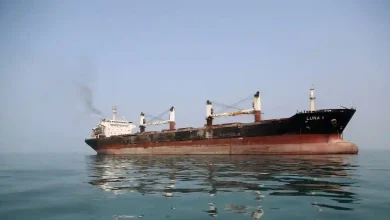
One of the most pressing flashpoints debated during closed consultations involves the vulnerability of commercial shipping corridors. A key consideration for American defense strategy is ensuring freedom of navigation through critical chokepoints where asymmetric naval warfare can inflict immense global macroeconomic damage within hours. Military leaders have examined recent diplomatic initiatives, such as the viability of a multilateral iran ceasefire proposal, while simultaneously preparing defensive formations against naval interdiction.
Any tactical decision affecting naval posture must address operations near the Persian Gulf, where ongoing disputes surrounding the iran strait of hormuz choke point threaten to restrict international tanker movement. Hegseth and Netanyahu likely reviewed tactical plans to maintain round-the-clock naval escort capabilities, augment minesweeping task forces, and deploy directed-energy defensive measures against low-altitude reconnaissance drones.
Domestic Politics in Washington and Jerusalem
The unannounced mission arrives at a sensitive domestic moment for both leaders. In Washington, the administration faces growing pressure from both sides of the aisle concerning the scale of overseas engagements and defense resource expenditures. Defense leaders must demonstrate unyielding support for key strategic allies while assuaging legislative fears of being drawn into an uncontrolled regional war. High-level rhetoric has often paralleled official military warnings, such as when trump warns iran un assemblies about consequences should American personnel face hostile attack.
In Israel, Netanyahu navigates a complex coalition dynamic wherein security performance directly dictates political survival. Demonstrating seamless military cooperation with the Pentagon reassures the Israeli public that deterrence remains intact despite expanding multifront pressures. By hosting Hegseth for direct, non-public deliberations, Netanyahu projects decisive defense leadership without the immediate political scrutiny that typically accompanies formal state visits and televised joint press conferences.
Long-Term Geopolitical Implications
The unannounced nature of Defense Secretary Pete Hegseth’s trip to Israel highlights a regional dynamic defined by heightened operational tempo and diminishing margins for error. While the immediate agenda focused on tactical synchronization and air defense readiness, the broader strategic consequence is the solidification of a joint deterrence architecture designed to project decisive strength toward Tehran. Whether this enhanced military readiness successfully discourages future escalation or accelerates defensive countermeasures from regional adversaries remains the defining security question across the Middle East. Over the coming weeks, movement of coalition naval groups, deployment of rotational air defense squadrons, and intelligence alerts will provide tangible clues as to the operational directives finalized behind closed doors in Tel Aviv.