Curiosity rover Captures Stunning Martian Dawn Over Mount Sharp Crags 2026
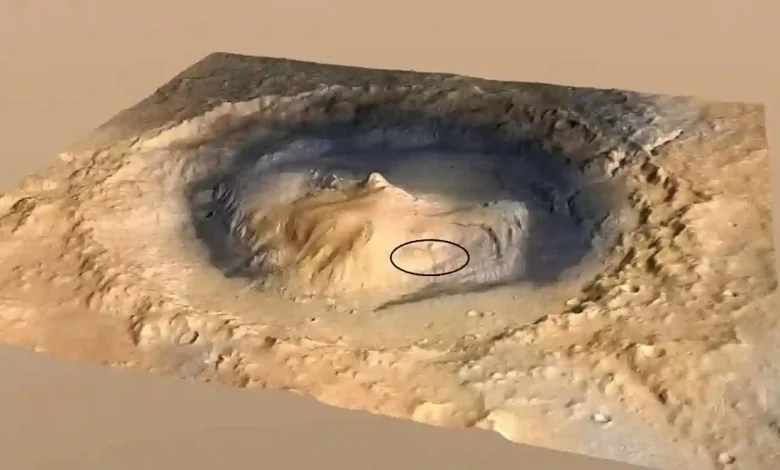
Table of Contents
Curiosity rover operations have reached another poetic and scientific pinnacle on Mars after capturing a stunning, high-definition panorama of daybreak across the jagged crags of Gale Crater. Positioned high along the slopes of Mount Sharp, the car-sized robotic explorer utilized its sophisticated imaging suite to record the quiet transition from freezing Martian night into blazing morning sun. Golden, diffuse rays now illuminate geological formations that took shape billions of years ago during eras when liquid water coursed across the Martian surface. The panoramic scene highlights not merely an evocative extraterrestrial landscape, but a reservoir of critical data regarding planetary evolution, sedimentology, and the atmospheric physics governing Earth’s neighboring world.
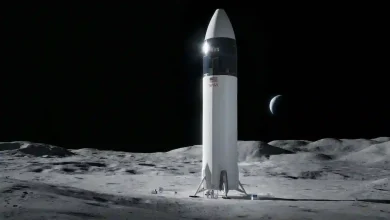
Since touching down inside the sprawling 96-mile-wide basin in August 2012, the six-wheeled mobile laboratory has systematically altered humanity’s understanding of planetary habitability. Operating well beyond its initial two-year prime mission timeline, the nuclear-powered vehicle continues its deliberate ascent up Mount Sharp, also known formally by planetary geologists as Aeolis Mons. Rising three miles into the thin Martian sky, Mount Sharp presents an intact stratigraphic record that reads like an ancient book of planetary history. As aerospace programs accelerate next-generation space exploration through projects like the Artemis III lunar lander, the persistent success of Curiosity demonstrates how robotic systems pave the way for human deep-space operations.
Curiosity rover Illuminates Martian Morning
The dawn image, released by the Jet Propulsion Laboratory (JPL) and NASA, was documented approximately one hour after local sunrise. As low-angle solar rays skimmed past the eastern rim of Gale Crater, long, dramatic shadows stretched across fractured ridges, bedrock expanses, and distant wind-sculpted promontories. On Mars, atmospheric dynamics differ radically from Earth; the ultra-low surface pressure—averaging around 6 millibars—combined with atmospheric suspensions of ultra-fine ferric oxide dust generates an atmospheric scattering effect that produces pale morning skies and uniquely defined shadows.
Planetary scientists reviewing the telemetry noted that early morning imagery provides exceptional contrast, accentuating subtle variations in sedimentary bedding, ripples, and weathering facets that wash out under overhead midday sunlight. These jagged crags, sculpted through billions of years of wind erosion, reveal cross-bedding strata preserved from ancient sand dunes and deltaic silt layers. The low-angle solar illumination effectively acts as an analytical tool, highlighting relief contours across kilometers of terrain that would otherwise escape spectroscopic and photogrammetric classification.
The Technological Precision of Mastcam Optics
The remarkable scene was recorded via the rover’s Mast Camera, or Mastcam, an advanced modular two-camera imaging platform situated on Curiosity’s remote sensing mast roughly two meters above the terrain. Mastcam is engineered with two distinct focal lengths: a 34-millimeter medium-angle lens capable of broad field-of-view landscape capture, and a 100-millimeter telephoto lens designed to resolve fine geologic textures from hundreds of meters away.
Equipped with specialized color filter wheels, Mastcam enables scientists to view the Red Planet in natural color as perceived by human eyes, while also acquiring multi-spectral data that reveals subtle iron mineral signatures such as hematite, goethite, and jarosite. The morning exposure required meticulous radiometric calibration to counter the intense thermal swings experienced by the camera hardware overnight, when ground temperatures routinely plummet below minus 100 degrees Fahrenheit. The clarity of the resultant panoramic frame proves that after more than four thousand Martian sols of relentless operation, the optical systems remain pristine and uncompromised by ubiquitous regional dust storms.
Ascending Mount Sharp: A Vertical Stratigraphic Journey
Mount Sharp is an extraordinary sedimentary mound positioned at the exact center of Gale Crater. Rather than being volcanic in origin, the peak was formed by sequential cycles of sediment deposition within an ancient lacustrine basin, followed by epochs of massive wind erosion that scooped out the surrounding crater moat. Since commencing its climb up the foothills of Mount Sharp in late 2014, the rover has crossed transitions from clay-rich layers formed in benign lake waters to sulfate-bearing minerals that represent an increasingly arid planetary regime.
This upward traverse provides a literal climb through deep geological time. Lower strata contain smectite clays, indicative of stable, neutral-pH water bodies capable of supporting microbial life. As Curiosity navigated higher into fractured crag complexes, it intercepted layers enriched with magnesium sulfate and calcium sulfate veins. The newly photographed crags belong to these upper sulfate-bearing units, reflecting the twilight of Mars’ wet environmental era. While orbital infrastructure such as Amazon LEO satellite swarms expand connectivity back on Earth, interplanetary relays depend on long-lived orbiters above Mars to send these gigabytes of rover imagery across tens of millions of kilometers.
Curiosity Rover Key Mission Milestones
| Milestone / Event | Operational Sol / Date | Target Region | Key Scientific Achievement |
|---|---|---|---|
| Gale Crater Touchdown | Sol 0 (Aug 2012) | Bradbury Landing | Pioneered the Sky Crane landing architecture on Mars. |
| Yellowknife Bay Drilling | Sol 180 (Feb 2013) | Yellowknife Bay | Discovered ancient habitable freshwater lake conditions. |
| Base of Mount Sharp | Sol 750 (Sept 2014) | Pahrump Hills | Began multi-year ascent of central 5-km sedimentary peak. |
| Vera Rubin Ridge Survey | Sol 1800 (Sept 2017) | Hematite Ridge | Uncovered complex iron oxidation and groundwater histories. |
| Clay-Bearing Unit Study | Sol 2300 (Feb 2019) | Glen Torridon | Documented extensive clay layers indicating persistent standing water. |
| Sulfate-Bearing Unit Arrival | Sol 3600 (Oct 2022) | Mount Sharp Slopes | Identified rhythmic bedding signifying ancient seasonal water drying. |
| Martian Dawn Crags Capture | Sol 4100+ (Recent) | Upper Ridge Slopes | Revealed ancient wind-sculpted relief during pristine low-angle sunrise. |
Deciphering Ancient Climates and Aqueous Past
The dawn scene is not merely visual poetry; it encapsulates fundamental questions regarding planetary habitability and climate transitions. Early Mars featured an active hydrological cycle, supported by a thicker greenhouse atmosphere that preserved rivers, deltas, and long-standing lakes. The rugged crags highlighted by the rising sun exhibit distinct sediment laminations that scientists associate with seasonal fluctuations in sediment transport and water availability.
Curiosity’s Sample Analysis at Mars (SAM) instrument suite has repeatedly found complex organic molecules trapped inside these sedimentary layers. While organic molecules are not direct proof of past biological activity—as they can be produced abiotic through meteoritic influx and volcanic activity—their preservation in rocks dating back over 3.5 billion years confirms that biosignatures can survive radiation bombardment over deep time. Similar to modern orbital tracking described in breakthroughs like the orbital computing revolution, automated instrument pipelines allow researchers to analyze spectral bands rapidly across interplanetary links.
The study of these stratigraphic horizons provides clues to why Earth maintained its oceans while Mars transformed into a desiccated, frozen desert. As solar winds stripped the Martian magnetic dynamo and blew away its gaseous envelope, standing bodies of water evaporated, leaving concentrated saline deposits. The sharp ridges captured in the dawn exposure stand as monuments to this transition from a dynamic biosphere-candidate to a world in stasis.
Wind-Carved Crags and Dynamic Aeolian Processes
In the present era, wind is the primary geologic architect sculpting the face of Mars. Aeolian transport moves grains of sand and dust across Gale Crater, eroding exposed rock faces into aerodynamically optimized formations known as yardangs. The crags visible in the background of Curiosity’s morning vista are classic examples of differential wind erosion, where softer sedimentary interbeds have been etched away by saltating sand grains, leaving harder capstones perched aloft.
Understanding this modern aeolian regime is essential for landing future hardware and interpreting ancient sedimentary features. When sand grains hop across the rocky floor during fierce diurnal wind shifts, they polish rock faces and generate fine dust that suspends into the atmosphere. This ongoing dust cycle affects the thermal balance of the entire planet. Advanced materials science, mirroring testing frameworks seen in hyprspace hybrid rocket developments, remains integral to designing rover components that withstand this abrasive, dust-laden environment.
Engineering Longevity: Surviving the Red Planet
Curiosity’s ability to operate for well over a decade on an inhospitable alien surface is a testament to cutting-edge aerospace engineering. Unlike solar-powered rovers such as Spirit and Opportunity, which were vulnerable to seasonal dust accumulation on their photovoltaic arrays, Curiosity relies on a Multi-Mission Radioisotope Thermoelectric Generator (MMRTG). This nuclear power source converts the heat released by the natural radioactive decay of plutonium-238 into a steady flow of electrical energy.
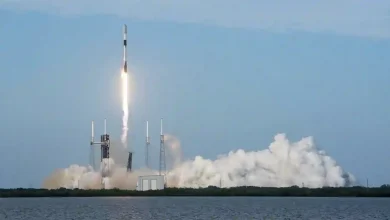
Although the MMRTG’s power output naturally declines over years of continuous use, JPL engineers maximize longevity through power conservation cycles, intelligent path-planning, and careful thermal management. The rover’s aluminum wheels, which suffered unexpected punctures and gash damage from sharp ventifact rocks early in the mission, are now protected by adaptive traction control software that throttles individual wheel speeds across rocky crags. This sustained success mirrors the resilience celebrated across cutting-edge aerospace operations, such as recent milestones achieved by SpaceX Falcon 9 launches and space station deliveries where long-duration reliability defines mission viability.
Maintaining communications across hundreds of millions of kilometers demands pristine coordination. NASA’s Deep Space Network coordinates with orbital spacecraft—including the Mars Reconnaissance Orbiter and MAVEN—to relay observations taken by Curiosity back to ground teams. When technical glitches emerge, mission planners draw upon contingency playbooks reminiscent of orbital recoveries, like the maneuvers detailed in the Swift observatory rescue initiative, verifying sensor suites before resuming mechanical tasks.
Implications for Future Crewed Planetary Science
The dawn panorama captured by Curiosity serves as a vivid reminder that Mars is an active planetary body awaiting eventual human exploration. By documenting the solar cycle, surface radiation, dust lofting, and mineral composition of Gale Crater, the rover generates crucial ground truth data needed to protect future astronauts. The rugged crags shown in the photograph could provide geographical shielding against cosmic rays and micro-meteoroid impacts for future base installations.
In tandem with newer assets like the Perseverance rover scouring Jezero Crater and international launch platforms advancing via Isar Aerospace launches, Curiosity continues to redefine our place in the solar system. Discovering water-altered minerals and persistent organic molecules demonstrates that Earth was not necessarily the sole cradle for prebiotic chemistry during the first billion years of the solar system. Furthermore, collaborative global initiatives, such as the Chang’e 7 lunar mission, underscore how multi-national space exploration is accelerating towards deep-space objectives.
As Curiosity drives further up the crags of Mount Sharp, its science teams anticipate intersecting ever-higher sedimentary benches that record the terminal stages of Gale Crater’s ancient water system. Every drive upward pushes the boundary of autonomous navigation and planetary geology. Each morning sol brings another daybreak to Mars, illuminating a silent desert world that continues to unveil profound chapters of planetary evolution to a solitary, tireless rover.