Artemis III Lunar Landers Face Technical Hurdles Ahead of Summer Launch Window 2026
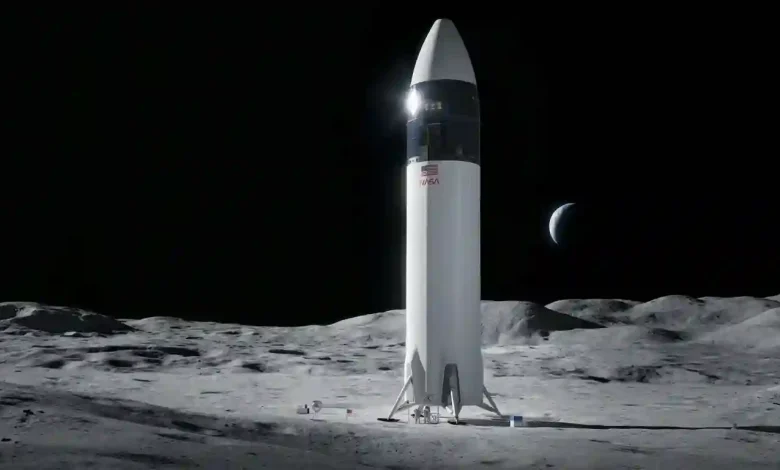
Table of Contents
Artemis III lunar landers remain at the epicenter of NASA’s ambitious campaign to restore human presence on the surface of the Moon. While agency program managers maintain that the landmark mission could theoretically meet its anticipated launch schedule next summer, designated astronauts and engineers acknowledge that unforeseen developmental variables could easily reshape the final timeline. The flight profile marks a monumental shift from previous exploration eras, moving beyond monolithic government designs toward complex commercial architecture. The mission hinges on the concurrent readiness of two radically different landing systems: the Human Landing System (HLS) variant of SpaceX’s Starship and Blue Origin’s Blue Moon lander, alongside the foundational flight hardware of the Space Launch System (SLS) and the Orion spacecraft.
Artemis III Flight Architecture and Launch Window Realities
The mission framework for Artemis III represents the most intricate sequence of crewed spaceflight maneuvers attempted in human history. Unlike the Apollo program, which launched the command module and lunar module simultaneously on a single Saturn V rocket, modern lunar operations rely on distributed launch logistics. The mission profile requires astronauts to launch aboard an Orion capsule boosted by the Space Launch System, navigate into a specialized Near-Rectilinear Halo Orbit (NRHO) around the Moon, dock with a pre-positioned commercial lander, descend to the lunar south pole, and eventually ascend back into orbit to return to Earth.
Ensuring that every element aligns for an on-schedule departure is a formidable engineering challenge. In planning such high-stakes operations, program managers depend heavily on insights gathered during precursor flights, particularly the operational benchmarks achieved through the NASA Artemis II update complete 2026 mission readiness frameworks. If the designated commercial lunar vehicle is not certified and fueled in NRHO well before Orion leaves the launch pad at Kennedy Space Center, the entire flight timeline must be postponed. This dynamic creates zero margin for error in the ground processing, fueling, and sub-orbital qualification phases of the lander architectures.
SpaceX Starship Human Landing System Development Benchmarks
SpaceX was awarded the initial Artemis landing contract under the NextSTEP-2 Appendix H procurement, making Starship HLS the primary vehicle slated to carry the next two Americans to the lunar regolith. Starship HLS differs dramatically from any past spacecraft in size, internal volume, and mechanical configuration. Standing roughly 50 meters tall and powered by dozens of Raptor engines running on liquid methane and liquid oxygen, the lander offers unprecedented cargo and habitable capacity. However, translating high-cadence test flights in South Texas into a dependable deep-space human conveyance involves steep technological hurdles.
Key milestones that SpaceX must complete prior to crew deployment include demonstrating repeated uncrewed orbital insertions, validating the heat shield and reignition parameters, executing a long-duration orbital loiter test, and accomplishing an uncrewed lunar landing demonstration. Historical testing phases have highlighted the volatility of hardware refinement, as illustrated in retrospective examinations such as Starship engine failure investigative reports. Each successful test flight provides valuable telemetry, especially after incidents where the Starship rocket achieves critical orbital velocities, but the certification bar for human-rated landing operations remains exceptionally high.
Blue Origin Blue Moon Architecture and Secondary Redundancy
To avoid single-point programmatic failure and cultivate commercial competition, NASA selected Blue Origin under Appendix P of the Human Landing System program to build a secondary lunar transport system designated as Blue Moon MK2. The Blue Origin-led National Team, featuring key industry partners such as Lockheed Martin, Boeing, and Draper, provides a distinct operational approach utilizing liquid hydrogen and liquid oxygen propulsion. Although initially targeted for subsequent missions like Artemis V, Blue Origin’s developmental trajectory influences overall resource allocation, ground infrastructure scheduling, and risk mitigation models across the Artemis manifest.
The strategic dual-vendor model ensures that if either vehicle experiences substantial regulatory or engineering deadlocks, the broader lunar campaign can pivot without losing decades of momentum. Detailed reviews of lunar lander contracts NASA speeds up moon base initiatives demonstrate how maintaining competing industrial designs prevents stagnation while establishing permanent industrial logistics corridors between Low Earth Orbit (LEO) and cislunar space.
Comparative Analysis: Starship HLS vs. Blue Moon MK2
Evaluating both landing platforms illustrates the diverse design methodologies currently supporting NASA’s lunar exploration goals. Below is a detailed breakdown of core specifications, propulsion choices, and orbital logistics required by each system:
| System Attribute | SpaceX Starship HLS | Blue Origin Blue Moon MK2 |
|---|---|---|
| Propellant Configuration | Liquid Methane / Liquid Oxygen (Methalox) | Liquid Hydrogen / Liquid Oxygen (Hydrolox) |
| Primary Booster System | Super Heavy (Boca Chica / KSC) | New Glenn (Cape Canaveral) |
| Tanker Launches Required per Mission | Estimated 10 to 16 Starship Tankers | Estimated 4 to 6 Transporter Tankers |
| Target Orbit for Refueling | Low Earth Orbit (LEO Depot) | Low Earth Orbit / Cislunar Space |
| Habitable Volume | Over 1,000 cubic meters | Approximately 200–300 cubic meters |
| Surface Descent Strategy | High-thrust landing thrusters mid-hull | Base-mounted BE-7 variable throttle engines |
| Payload Delivery to Lunar Surface | Up to 100 metric tons | 20 to 30 metric tons |
The Complex Challenge of Orbital Cryogenic Fluid Transfer
Neither Starship HLS nor Blue Moon MK2 can reach lunar orbit with sufficient landing reserves without extensive orbital refueling. This operational requirement represents the single greatest technological risk to the Artemis flight manifest. SpaceX must launch an orbital propellant storage depot into Low Earth Orbit, followed in rapid succession by multiple tanker flights to fill the depot with hundreds of tons of sub-cooled methalox. Starship HLS will then dock with this orbital depot, take on the transferred propellant, and ignite its vacuum engines to embark on its Trans-Lunar Injection (TLI) burn.
Transferring cryogenic fluids in a microgravity vacuum presents enormous physical hurdles. Issues such as propellant boil-off, sloshing dynamics, fluid phase separation, and the extreme thermal volatility of space environments require complex ullage propulsion and advanced insulation blankets. Tracking every advancement through comprehensive flight data, such as records compiled during SpaceX Starship launch 2026 mission analysis and updates, allows engineers to model cryogenic behavior more accurately. Until a high-volume propellant transfer test is executed successfully in microgravity, mission planners cannot conclusively certify the landing systems for human occupancy.
Astronaut Assessments: Operational Preparedness Versus Flight Realism
Astronauts selected for the Artemis cadre maintain rigorous training routines while candidly acknowledging the volatility of bleeding-edge aerospace development. In recent discussions with technical reporters, crew members noted that while launching next summer remains on the official schedule, the realities of physical hardware integration dictate that “anything can happen.” This pragmatic view mirrors the ethos established in earlier commercial space programs, where human safety supersedes arbitrary launch dates.
Crew safety assessments depend on flight software validation, cabin life-support certification, and high-altitude egress evaluations. Lessons learned from earlier operations, including operational feedback gathered when the astronaut crew reaches destination orbital complexes, reinforce the non-negotiable nature of vehicle redundancy. In high-stakes orbital regimes, premature launch authorization risks catastrophic failures that could freeze national space policy for decades. The astronaut corps works directly with private contractors in Hawthorne and Kent, conducting simulated descent aborts and manual docking operations to guarantee operational safety prior to pad deployment.
Landing at the Lunar South Pole: Environmental Hazards
The geographic destination of Artemis III adds another layer of operational friction. Unlike the equatorial landing plains explored during Apollo, the lunar south pole presents extreme topographical challenges. Landing zones around the rims of craters like Shackleton and Faustini feature severe terrain slopes, scattered boulder fields, and persistent deep shadows caused by the extremely low solar elevation angle.
These conditions necessitate sophisticated automated hazard detection and avoidance systems (HDA), integrated into the avionics suites of both landers. LiDAR sensors and optical terrain scanners must assess the landing zone in real time during terminal descent, automatically retargeting if an unsafe gradient or boulder field is detected. Furthermore, the lander mechanisms must operate across massive temperature swings, transitioning from sunlit areas exceeding 100 degrees Celsius to permanently shadowed regions that drop below minus 200 degrees Celsius, where water ice deposits are concentrated.
Broader Strategic Stakes for NASA’s Deep Space Exploration
The success of the Artemis lunar vehicles carries profound strategic implications that extend far beyond scientific data collection. The mission serves as the critical proving ground for technologies required for eventual human missions to Mars, testing closed-loop environmental controls, automated docking algorithms, and surface power architectures. Maintaining programmatic velocity is also essential for sustaining international partnerships, particularly within the framework of the global Artemis Accords.
As the commercial space industry assumes greater operational responsibility, establishing reliable public-private execution models is vital. NASA’s transition away from cost-plus contracting toward fixed-price development represents an economic evolution that depends entirely on these landers meeting their technical metrics. Collaborative operational paradigms developed through programs such as the NASA commercial crew initiative have paved the way for this deep-space architecture. Whether the landing occurs next summer or requires additional quarters of hardware maturation, the engineering solutions perfected during this development cycle will define interplanetary exploration for generations to come.
References & Authority Citations: