Starship Flight Test 14: SpaceX Targets First Orbital Launch
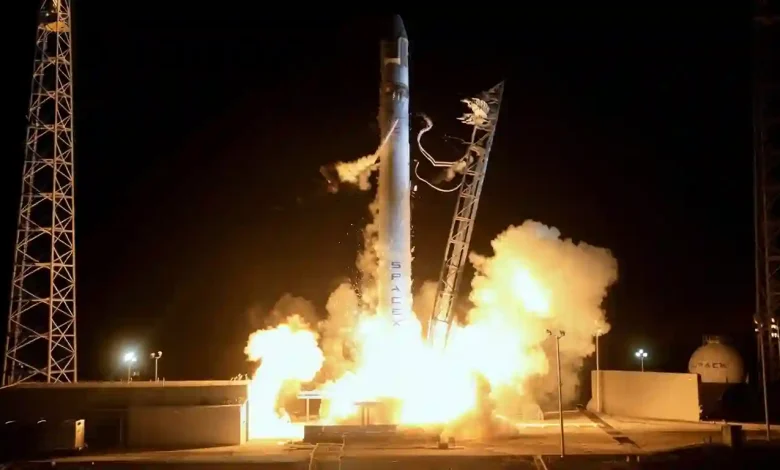
Table of Contents
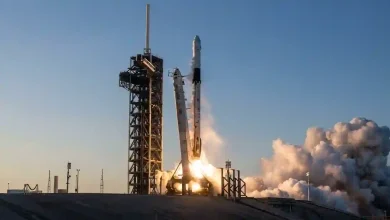
Starship flight test 14 marks a defining milestone in modern aerospace engineering as SpaceX prepares the world’s most powerful launch vehicle for its first complete orbital deployment. Moving beyond the suborbital trajectories of previous developmental flights, this integrated mission is engineered to send both the Super Heavy booster and the Starship second stage into a velocity profile capable of achieving full orbit before conducting targeted reentry maneuvers. Beyond proving the orbital integrity of the stainless-steel spacecraft, the mission introduces critical operational milestones, including the orbital deployment of next-generation Starlink V3 internet satellites.
Mission Overview: The Road to Full Orbital Velocity
The upcoming launch from Starbase, Texas, serves as a high-stakes proving ground for SpaceX’s iterative design methodology. While the previous iteration in July demonstrated high-altitude atmospheric survivability and precision suborbital splashdown sequencing, it deliberately withheld the final orbital insertion burn to mitigate ground-risk factors. For Flight 14, engineers are targeting a velocity threshold exceeding 27,000 kilometers per hour, placing the vehicle in a stable low Earth orbit (LEO).
Achieving orbital parameters is paramount for validating the spacecraft’s onboard avionics, propellant transfer lines, and payload dispatch mechanisms. The launch schedule underscores how rapid manufacturing techniques have shortened the turnaround interval between prototype iterations, reflecting systemic improvements across engine fabrication, structural ring construction, and launch pad refurbishments seen throughout Starbase aerospace infrastructure expansions.
Technical Evolution: From Suborbital Hops to Orbital Mechanics
Transitioning from a suborbital hop to an orbital insertion trajectory alters every thermodynamic and navigational parameter of the mission. When a launch system flies suborbitally, engine cutoff occurs before the orbital periapsis rises above the atmosphere, ensuring an automatic gravity-assisted return even in the event of complete control failure. In contrast, an orbital mission demands precision engine shutdown at exact vector angles, followed by active propellant settlement maneuvers during orbital coast.
SpaceX technicians have outfitted the Starship upper stage with advanced Raptor 3 engines, boasting simplified fluid plumbing, integrated regenerative cooling jackets, and increased thrust. These engines eliminate complex external purge cycles and rely on autogenous pressurization, drawing gaseous methane and oxygen directly from the main tanks to maintain structural stiffness during continuous ascent burns. Such propulsion advancements directly parallel the proven cadence and operational reliability established during long-running Falcon 9 rocket launches.
Starlink V3 Payload: The Next Generation of Orbital Mega-Constellations
Central to Flight 14 is the initial flight deployment test of Starlink Version 3 satellites. These broadband units represent a radical architectural departure from the V2 Mini units currently ferried into orbit by Falcon 9. With larger phased-array antennas, upgraded cellular direct-to-cell capabilities, and substantially increased mass, Starlink V3 requires the full internal cargo bay volume that only Starship can provide.
The deployment test will leverage Starship’s mechanical cargo bay dispenser door, often referred to as the pez-dispenser mechanism. The mechanism must open in the vacuum of space, actuate mechanical pushers to eject the flat-packed satellites sequentially, and reseal tightly to protect internal guidance sensors prior to atmospheric reentry. Successful deployment will validate autonomous orbital logistics and prove that commercial satellite providers can rely on the vehicle for massive multi-payload insertions, transforming commercial satellite communications and satellite network integration worldwide.
Super Heavy Booster Catch and Stage Separation Dynamics
Flight 14 will also test extreme flight regimes for the Super Heavy first-stage booster. Utilizing hot-staging separation—where the upper stage ignites its engines while still mated to the interstage ring of the booster—the vehicle ensures zero loss of momentum during the transition phase. This dynamic creates harsh aerothermal environments, requiring heavy shielding at the top of the booster to survive exhaust impingement from six simultaneous Raptor engines.
Following separation, Super Heavy executes an immediate boostback burn toward South Texas. Ground tracking stations monitor the vehicle’s rapid deceleration as grid fins steer the 71-meter booster toward the Mechazilla launch tower. The catching mechanism, equipped with massive hydraulic chopstick arms, aims to intercept the booster mid-air, a maneuver essential for achieving rapid turnaround times and driving launch costs down toward unprecedented commercial levels.
Flight Profile Comparison: Test 13 vs. Test 14
The operational distinctions between the suborbital demonstration of Flight 13 and the orbital flight profile of Flight 14 highlight the technical leap engineered into the current vehicle stack.
| Mission Metric | Flight 13 (Suborbital Prototyping) | Flight 14 (Orbital Qualification) |
|---|---|---|
| Apogee / Orbit Target | Suborbital trajectory (~230 km peak) | Full orbital insertion (LEO ~250 x 250 km) |
| Second-Stage Velocity | Approx. 26,000 km/h (sub-orbital) | Exceeding 27,500 km/h (orbital orbital velocity) |
| Payload Deployment | Mass simulator / No active release | Active Starlink V3 satellite deployment test |
| In-Space Engine Relight | Simulated vacuum conditions | Operational vacuum relight verification |
| Reentry Heating Profile | Moderate suborbital thermal flux | Extreme orbital reentry thermal heating (>1,400°C) |
| Upper Stage Splashdown Target | Indian Ocean controlled splashdown | Designated open-ocean orbital decay recovery zone |
Thermal Protection System Upgrades for Orbital Reentry
Atmospheric reentry from an orbital path exposes the vehicle to heat flux conditions exponentially higher than those encountered on suborbital arcs. Starship’s belly is armored with tens of thousands of hexagonal ceramic thermal tiles, mechanically fastened over an ablative secondary underlayer. During Flight 14, these tiles will endure temperatures exceeding 1,400 degrees Celsius generated by hypersonic plasma shocks.
SpaceX engineers have redesigned the tile adhesive bonds and added physical seal barriers around moving hinge joints on the forward and aft flaps. The integrity of these flap seals remains critical, as localized plasma seepage could compromise internal hydraulic actuators. Surviving orbital reentry intact will provide empirical aerothermal datasets required for future operational reuse, accelerating the development pace that mirrors ambitious orbital architecture projects like Starfall space operational missions.
Regulatory Pathways and FAA Launch Licensing
Before the massive rocket can ignite its 33 first-stage Raptor engines, SpaceX must satisfy rigorous safety criteria governed by the Federal Aviation Administration (FAA). Orbital trajectories expand the public safety risk footprint, requiring comprehensive environmental reviews, orbital debris mitigation assessments, and designated maritime warning zones across both the Atlantic and Indian Oceans.
Federal regulators scrutinize the autonomous flight termination system (AFTS) to guarantee immediate vehicle destruction should telemetry deviate from calculated safety corridors. The FAA’s modified launch license for Flight 14 explicitly addresses the expanded kinetic envelope of an orbital attempt, ensuring that commercial space operations remain fully integrated with civil aviation and maritime transport corridors, consistent with protocols guiding commercial orbital transit on the International Space Station route networks.
Strategic Implications for Lunar Artemis and Mars Architecture
The ramifications of a successful orbital flight test extend far beyond satellite deployment. NASA relies directly on a modified Starship derivative for the Human Landing System (HLS) program, planned to return astronauts to the lunar surface under the Artemis campaign. Demonstrating repeatable orbital insertion and stage separation gives NASA administrators confidence in the fundamental design architecture supporting commercial human spaceflight programs.
Furthermore, orbital insertion is the non-negotiable prerequisite for long-duration space flight and orbital propellant depot operations. Starship must demonstrate that it can navigate, maintain cryogenic temperatures for liquid methane and oxygen over extended durations, and conduct reliable deorbit burns. This infrastructure forms the backbone of future human transit toward deep-space destinations, providing logistical capabilities that match commercial commitments across SpaceX orbital ISS resupply missions.
As launch crews execute final fueling dry runs and electrical checkouts at Starbase, the aerospace community watches with heightened anticipation. Flight 14 is not merely an engineering test; it is the threshold crossing that separates theoretical deep-space architecture from operational, orbital reality.