Oil :President Donald Trump Suggests Keeping Iran Oil Reserves 2026
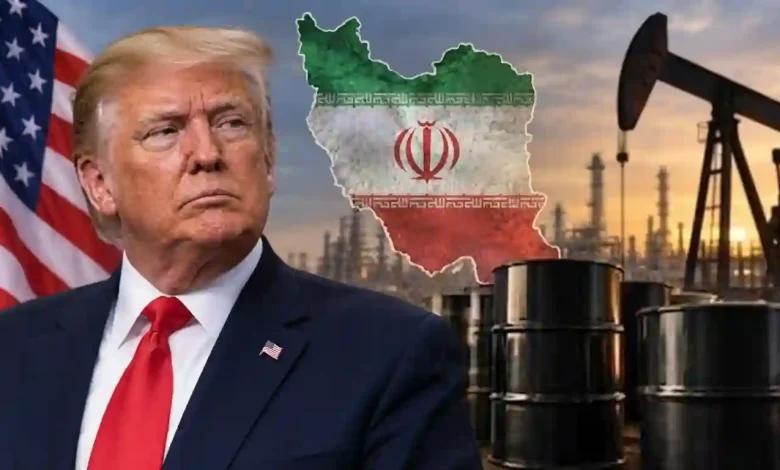
Table of Contents
President Donald Trump has ignited a profound international debate by suggesting that the United States could maintain its military presence in Iran specifically to “keep the oil.” This remark, delivered during a high-profile trip to Ireland where he was meeting officials and watching golf, directly mirrors long-standing debates over American foreign policy priorities and resource extraction. By comparing this strategy to the ongoing U.S. efforts to secure control over approximately one-fifth of Venezuela’s vast petroleum reserves, the administration has signaled a highly mercantilist and transactional approach to international relations.\n\nDuring his remarks, the president reiterated his expectation that the current geopolitical hostilities will draw to a close by the end of this year, hinting at a potential diplomatic breakthrough or military resolution shortly after the upcoming U.S. midterm elections in November. While the statements have been dismissed by critics as unconventional rhetoric, they represent a significant policy posture that challenges traditional international norms regarding territorial sovereignty and resource nationalization.\n\n
Trump’s Geopolitical Strategy: Keeping the Oil
\nThe concept of occupying foreign territory to secure natural resources has long been a recurring theme in the administration’s strategic framing. Critics and allies alike have closely analyzed Trump’s Middle East policies, which have increasingly prioritized tangible, economic returns for American military expenditures overseas. Under this framework, the historic commitment of American blood and treasure in the region must be offset by direct economic access to the strategic resources of the occupied states.\n\nThis “keep the oil” philosophy represents a stark departure from the traditional foreign policy consensus of the post-Cold War era, which typically justified military operations under the banners of democracy promotion, humanitarian intervention, or global counter-terrorism. By explicitly positioning energy security and resource acquisition as primary objectives, the administration seeks to redefine the terms of American global engagement, positioning the U.S. military not as a global policeman, but as an enforcer of national economic interests.\n\n
The Venezuelan Parallel: A Pattern of Resource Control
\nThe parallel drawn with Venezuela is particularly instructive. Venezuela holds some of the largest proven crude oil reserves in the world, and the U.S. has consistently applied intense diplomatic, political, and financial pressure on Caracas. The administration’s open consideration of securing a fifth of Venezuela’s reserves suggests that resource acquisition has evolved from a secondary benefit of geopolitical maneuvering into a core strategic objective.\n\nWhen applying this template to Iran, the implications are vast. Iran possesses approximately 10% of the world’s proven oil reserves and the second-largest natural gas reserves globally. A strategy aimed at holding these resources would require an unprecedented degree of territorial control and would likely face intense resistance not only from local populations but also from major global consumers of Persian Gulf oil, such as China, India, and the European Union.\n\n
Midterm Elections and the Conflict Timeline
\nThe timing of these declarations is inextricably linked to the American domestic political calendar. By suggesting that the conflict could reach its conclusion shortly after the November midterm elections, the president is signaling to both domestic voters and international adversaries that the current strategic posture may shift depending on political outcomes in Washington. Historically, administrations have sought to project strength and resolve ahead of crucial electoral cycles, and the current situation is no exception.\n\nGeopolitical analysts suggest that Trump predicts Iran will eventually face a point of strategic capitulation once the domestic political alignment of the United States is consolidated. The calculation rests on the assumption that post-election political stability in Washington will allow the administration to execute its foreign policy directives with fewer domestic constraints, forcing Tehran to the negotiating table under highly unfavorable terms.\n\n
Diplomatic Backlash and Strategic Realities
\nThe international community has reacted with profound concern to the prospect of a foreign military force permanently occupying sovereign oil fields. This development comes at a time of an escalating Middle East war, where various regional proxies and state actors are already engaged in active skirmishes. Traditional European allies have reiterated their commitment to international law, which strictly prohibits the acquisition of territory or resources through military force.\n\nFurthermore, regional powers such as Russia and China have warned that any attempt to annex or unilaterally control Iranian energy assets would violate the foundational principles of the United Nations Charter. Such actions could dismantle the fragile coalition of states attempting to manage regional crises and lead to a total breakdown of diplomatic channels in the Persian Gulf.\n\n
Economic Ramifications of Resource-Focused Military Actions
\nThe economic logic of military resource control is highly complex. While securing direct access to vast oil reserves theoretically offers long-term energy security, the physical and operational costs of protecting extraction infrastructure in a hostile environment often outweigh the financial gains. Securing pipelines, refineries, and shipping ports requires massive, continuous military deployments.\n\n \n \n \n
\n
\n
\n
\n
\n
\n
\n \n \n
\n
\n
\n
\n
\n
\n \n
\n
\n
\n
\n
\n
\n
\n
| Country | Proven Oil Reserves (Billion Barrels) | Strategic Chokepoints Affected | Primary Export Markets | U.S. Strategic Objective |
|---|---|---|---|---|
| Iran | ~208 | Strait of Hormuz | China, India, East Asia | Denial of Revenue / Direct Control |
| Venezuela | ~303 | Caribbean Sea Routes | North America, Asia | Regime Transition / Resource Access |
\n\n
Any operations in the Persian Gulf inevitably raise the stakes for the Strait of Hormuz conflict, a critical maritime transit corridor through which more than 20% of the world’s petroleum liquids pass. A disruption in this narrow waterway would trigger an immediate spike in global oil prices, potentially leading to a worldwide economic slowdown.
\n\n
Impact on Global Energy Markets and Oil Prices
\nGlobal financial and energy markets remain highly sensitive to geopolitical rhetoric. The suggestion of a long-term U.S. military occupation of Iranian oil fields has injected fresh volatility into crude futures. The prospect of an ongoing Iran war stalemate, punctuated by sudden administrative shifts, prevents long-term capital investments in energy infrastructure, further destabilizing supply lines.\n\nEnergy analysts argue that the mere threat of asset expropriation discourages international energy corporations from engaging in stable market exploration. This atmosphere of uncertainty particularly affects developing economies that are highly dependent on stable energy pricing, creating ripple effects across global supply chains and manufacturing sectors.\n\n
Strategic Analysis: Feasibility of Prolonged Occupation
\nFrom a military standpoint, holding and defending vast geographical areas containing oil infrastructure is an incredibly demanding task. History demonstrates that asymmetric forces can easily target vulnerable pipelines and extraction points, turning a supposedly profitable asset into a severe security liability. The U.S. military would face a protracted military engagement that could drain resources and stretch operational capabilities thin.\n\nMoreover, the domestic political cost in the United States could be substantial. As public tolerance for long-term foreign deployments wanes, maintaining an army of occupation for the explicit purpose of resource extraction would likely spark widespread domestic protests and congressional challenges, potentially undermining the administration’s legislative agenda.\n\n
Sanctions and Financial Leverage
\nTo pave the way for such bold strategic actions, the administration has relied heavily on a comprehensive campaign of economic pressure. By implementing stringent economic sanctions on Iran, the United States has successfully crippled Tehran’s primary revenue streams, reducing its ability to finance regional proxies and defend its domestic infrastructure.\n\nThis aggressive deployment of economic statecraft is designed to force concessions before military options are fully realized. However, the reliance on the U.S. sanctions regime also accelerates the global shift toward alternative payment systems and de-dollarization, as adversarial nations seek ways to bypass American financial jurisdiction entirely. Consequently, while the “keep the oil” doctrine remains a potent rhetorical tool, its long-term implementation faces deep structural, economic, and geopolitical hurdles.\n\n
\n
References
\n