President Donald Trump Predicts Immediate End to Iran War Post-Midterms 2026
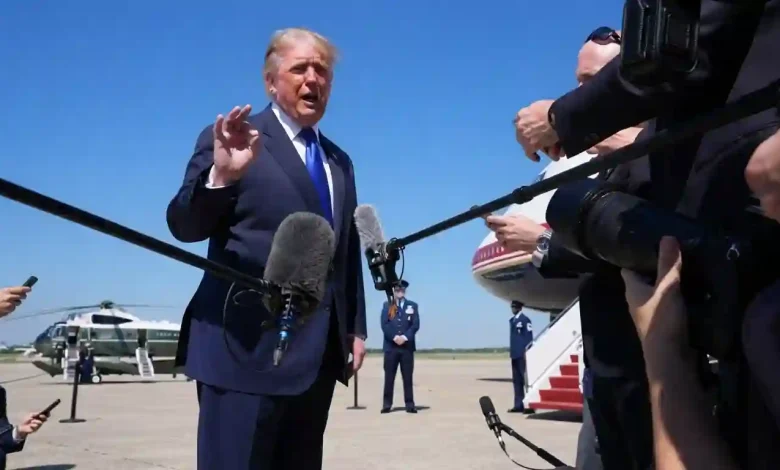
Table of Contents
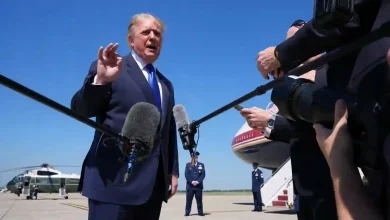
President Donald Trump has sparked a wave of international debate by predicting that the ongoing conflict with Iran will resolve “immediately after” the upcoming U.S. midterm elections in November. Speaking to reporters prior to his departure for the Republican National Convention in Dallas, the President asserted that Tehran is currently engaging in targeted geopolitical maneuvers to influence the election outcome, but will ultimately capitulate under the weight of severe economic sanctions. His remarks present a highly calculated vision of foreign policy where domestic electoral timelines intersect directly with international security dynamics.
The administration’s central argument hinges on the premise that Iran is deliberately prolonging the current geopolitical standoff. According to this perspective, Iranian leadership believes that a change in the congressional balance of power could weaken Washington’s resolve, potentially leading to a softer diplomatic stance or a rollback of unilateral penalties. By framing the conflict through the lens of electoral interference, the administration seeks to unify domestic political support while signaling to global markets that the current policy of containment remains non-negotiable.
However, analysts caution that linking the resolution of an international military and economic standoff directly to a domestic political calendar carries significant strategic risks. The ongoing Iran war stalemate has already disrupted global energy supply chains and heightened anxiety across Middle Eastern financial centers. Suggesting that the conflict will simply evaporate post-election may oversimplify the deep-rooted ideological and strategic divisions that exist between Washington and Tehran.
Deconstructing the Maximum Pressure Economic Doctrine
At the core of the administration’s foreign policy is the systematic deployment of U.S. economic sanctions designed to isolate Iran from the global financial network. This “maximum pressure” campaign aims to restrict Iran’s primary revenue streams—specifically its crude oil exports—and force the Islamic Republic to renegotiate its regional activities and ballistic missile program. The administration believes that the financial toll of these measures has pushed the Iranian economy to the brink of collapse, leaving Tehran with very few long-term alternatives to capitulation.
This economic strategy relies heavily on secondary sanctions, which penalize foreign corporations and third-party states that continue to trade with Iranian entities. By forcing global businesses to choose between operating in the lucrative U.S. market or continuing their commercial relationships with Tehran, Washington has successfully starved the Iranian state of vital foreign capital. Despite resistance from European allies and Asian trade partners, the global financial architecture remains deeply integrated with U.S. clearing houses, giving American regulatory bodies unprecedented leverage.
The Impact of U.S. Economic Sanctions on Tehran
The domestic consequences inside Iran have been severe. High inflation, a rapidly depreciating currency, and widespread supply shortages have characterized daily life in major cities. This domestic instability is a key pillar of Washington’s strategic calculus; the administration anticipates that mounting public discontent will eventually force the Iranian leadership to prioritize internal stability over regional expansionism. However, historical precedents show that authoritarian regimes often react to external economic pressure by consolidating control and intensifying crackdowns on political dissidents, rather than offering diplomatic concessions.
To counter this pressure, Washington has launched a coordinated financial offensive against Iran, targeting not only state institutions but also shell companies and illicit financial networks spanning the Middle East, Europe, and Asia. Despite these measures, some geopolitical experts argue that economic pressure alone cannot resolve deeply entrenched security dilemmas, especially when national sovereignty is perceived to be at risk.
Tehran’s Posture: Defiance or Imminent Collapse?
In response to the administration’s predictions, officials in Tehran have maintained an attitude of strict defiance. Iranian military commanders and political leaders have repeatedly rejected the idea that they are waiting out the U.S. midterm elections, arguing instead that their resistance is a long-term commitment independent of Washington’s internal political shifts. As tensions escalate, Iran vows devastating retaliatory measures against any direct military provocations, highlighting the constant threat of a broader regional conflagration.
This posture of defiance is backed by a sophisticated network of regional proxies and asymmetric warfare capabilities. Tehran has long leveraged its influence in Lebanon, Syria, Iraq, and Yemen to project power across the Middle East, creating multiple leverage points that it can activate in times of crisis. By threatening regional security assets and global maritime corridors, Iran seeks to demonstrate that the costs of a prolonged conflict are not born by Tehran alone, but are distributed globally through rising energy prices and localized instability.
Geopolitical Calculations and Foreign Influence Claims
The U.S. administration’s allegation that Iran is actively trying to influence the midterm elections points to a broader trend of foreign actors leveraging asymmetric cyber operations to sway public opinion. Intelligence reports suggest that Tehran-aligned groups have engaged in disinformation campaigns and cyber operations targeting democratic institutions. By creating a sense of instability, these actors hope to weaken public support for an aggressive foreign policy. However, whether these efforts have the capacity to fundamentally alter the outcome of the midterms remains a subject of intense debate among security experts.
Furthermore, as Iran grows more confident in its diplomatic alternatives—particularly through deepening its economic ties with Russia and China—the effectiveness of western-led isolation may begin to diminish. The creation of alternative financial networks, such as barter systems and non-dollar trade mechanisms, could provide Tehran with a vital lifeline, allowing it to withstand long-term pressure despite the administration’s predictions of an immediate post-election breakthrough.
Comparative Analysis of Diplomatic and Economic Leverages
Understanding the current standoff requires an objective assessment of the strategic tools currently employed by both sides. The table below outlines the primary mechanisms of pressure, their intended goals, and the potential vulnerabilities associated with each policy option.
| Strategy Category | Primary Tool | Stated Objective | Strategic Vulnerability |
|---|---|---|---|
| Economic Isolation | Secondary Sanctions | Block financial clearing, halt oil exports, trigger domestic crisis | Encourages alternative financial networks and non-dollar trade |
| Diplomatic Deterrence | Coalition Building | Isolate Tehran globally, enforce UN resolutions | Lack of consensus among European, Chinese, and Russian partners |
| Asymmetric Defense | Proxy Networks & Cyber | Impose regional security costs, deter direct military action | Risk of unintended escalation and direct retaliatory strikes |
| Domestic Politics | Electoral Posturing | Align foreign policy with voting cycles to secure legislative support | Reduces long-term policy predictability and strategic continuity |
As shown in the comparison, the implementation of strict U.S. sanctions against Iran has successfully compromised Tehran’s economic health, yet it simultaneously incentivizes the creation of alternative global trading blocs. This dynamic could permanently dilute the long-term effectiveness of Western financial instruments, a consequence that may outlast the political horizon of any single electoral cycle.
Strategic Bottlenecks: The Strait of Hormuz and Global Trade
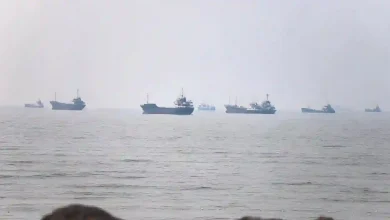
Perhaps the most critical geographic flashpoint in this ongoing dispute is the maritime corridor of the Persian Gulf. Historically, any major escalation between Washington and Tehran has immediately resonated through energy markets due to persistent tensions in the Strait of Hormuz. As a vital transit route for approximately one-fifth of the world’s petroleum liquids, any disruption to shipping in the strait could trigger immediate, severe spikes in global oil prices.
Should military skirmishes or shipping seizures occur, the resulting U.S. economic shockwaves would likely reverberate across international bond and equity markets, complicating domestic economic narratives just as voters head to the polls. This vulnerability underscores the delicate balance the administration must maintain; while maximum pressure is designed to starve Tehran of resources, any miscalculation that leads to an actual closure of maritime trade routes could inflict significant economic pain on Western consumers, undermining the very domestic stability the administration seeks to protect.
The Domestic Political Stakes for the Midterm Elections
The President’s focus on the midterm elections highlights the domestic political stakes of the current foreign policy posture. In any democratic society, prolonged military engagements or economically costly standoffs can become liabilities for the party in power. By assuring the electorate that the confrontation is entering its final stages, the administration seeks to mitigate concerns about potential long-term conflicts. This narrative frames the current economic hardships—such as fluctuating energy prices and market volatility—as necessary, temporary costs associated with achieving a decisive national security victory.
Conversely, political opponents argue that projecting an exact end date based on electoral cycles is a rhetorical strategy rather than a realistic military plan. They suggest that Tehran’s strategic calculations are based on long-term national security interests rather than short-term legislative shifts in Washington. If the post-election period does not bring about the predicted capitulation or negotiation, the administration could face renewed domestic criticism for miscalculating the resilience of the Iranian regime and failing to establish a sustainable path toward diplomatic de-escalation.
Conclusion: What Lies Beyond the November Horizon?
As the November midterms approach, the world will closely monitor whether the President’s predictions of an immediate diplomatic resolution materialize. The intersection of domestic electoral schedules and high-stakes international conflict remains a complex arena where foreign states, economic markets, and domestic voters all influence the ultimate outcome. While the economic pressure on Tehran is undeniably severe, the strategic resilience of the Iranian state, combined with shifting global alliances, suggests that the path to a lasting resolution may require navigating deep-seated geopolitical realities that extend far beyond any single political contest.
References & Authority Citations: