Trump Predicts Immediate End to Iran War Post-Midterms 2026
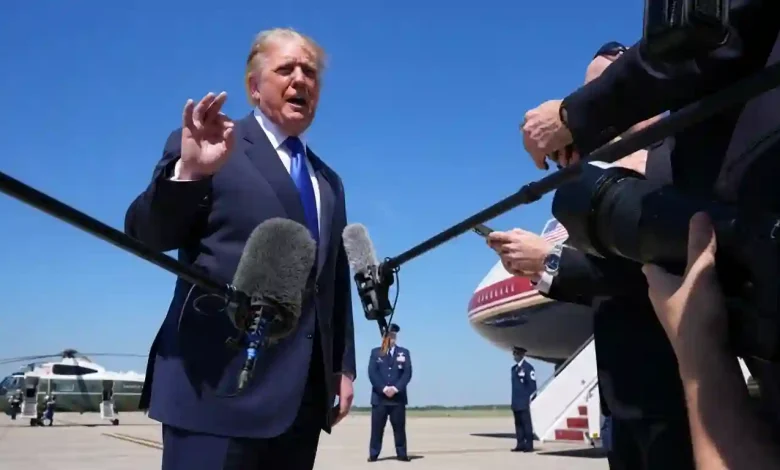
Table of Contents
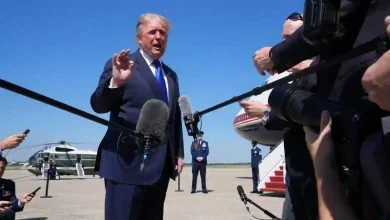
Trump, speaking to reporters before departing for the Republican National Convention in Dallas, predicted that the war with Iran will end “immediately after” the U.S. midterm elections in November. The declaration highlights a complex convergence of domestic electoral politics and aggressive geopolitical maneuvers. According to the administration, Tehran’s current stance is heavily dictated by an attempt to influence the upcoming vote, with the expectation that a shift in the balance of power in Washington could offer relief from Washington’s relentless campaign of maximum economic pressure. The President confidently asserted that the Iranian government is simply incapable of holding out any longer under the current sanctions regime, and that its efforts to stall for time will collapse the moment the midterm results are finalized. This bold timeline has triggered intense debate among foreign policy experts, intelligence analysts, and global market strategists who are closely monitoring the stability of the entire region.
The Core of the November Prediction
To understand the President’s calculus, one must examine the specific timeline he has laid out. “I think war is going to end immediately after the election because they can’t hold out any longer. They’re desperate to try and affect the election,” the President told reporters on Wednesday. By linking the duration of the conflict directly to the domestic political calendar, the administration is framing Tehran’s resistance not as a sustainable military or economic strategy, but as a temporary, desperate holding pattern. The underlying theory posits that Iran is allocating its remaining, heavily depleted reserves to sustain a posture of defiance, hoping that the midterm elections will result in a legislative or political realignment that weakens American resolve.
From the perspective of the White House, the ongoing escalating Middle East war is not an open-ended engagement, but rather a high-stakes standoff with a highly predictable expiration date. By establishing this clear narrative before departing for Dallas, the President sought to reassure both his political base and international allies that the pressure campaign has a functional, near-term endpoint. Critics, however, argue that attributing Iran’s strategic patience entirely to U.S. domestic electoral cycles oversimplifies a deeply entrenched regional struggle. Nonetheless, the administration remains firm in its belief that once the electoral window closes, Tehran will find itself with no remaining options but to capitulate to American terms.
Economic Sanctions and Iranian Resilience
At the heart of the administration’s confidence lies the devastating efficacy of the current sanctions architecture. Over the past several quarters, the United States has systematically tightened the screws on Iran’s primary revenue streams, deploying targeted economic sanctions to choke off oil exports, isolate Iranian financial institutions from the SWIFT network, and penalize foreign entities that engage in trade with Tehran. This systematic isolation has led to runaway inflation within the Islamic Republic, a dramatic devaluation of the rial, and widespread domestic unrest driven by economic hardship.
While critics of the administration’s maximum pressure campaign suggest that economic hardship does not automatically translate into a change in regime behavior, the White House maintains that the sheer scale of the current fiscal crisis makes long-term resistance impossible. Energy analysts note that the global market has had to adapt to these shifts, navigating a persistent international oil supply crisis as Iranian barrels are forcibly kept off the market. The resulting economic strain on Tehran is undeniable, yet the debate persists over whether the regime will choose economic ruin over ideological surrender.
Strategic Geopolitical Maneuvers in the Gulf
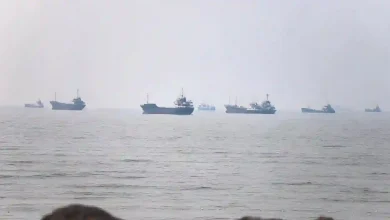
As the economic war rages, the physical manifestation of this conflict remains highly concentrated in vital maritime corridors. The Persian Gulf, particularly the critical Strait of Hormuz passage, serves as a primary choke point where Iranian forces have repeatedly sought to project power and signal their capacity to disrupt global energy security. Any escalation in this waterway risks dragging international naval forces into a direct kinetic engagement, a scenario that both Washington and Tehran have officially sought to avoid but have repeatedly edged closer to.
Military planners emphasize that Tehran’s asymmetric warfare capabilities, including fast-attack naval vessels, drone swarms, and coastal missile batteries, are specifically designed to neutralize the conventional superiority of the U.S. Navy in restricted waters. This tactical leverage is what Iran has used to counter Washington’s economic dominance. However, the U.S. military presence in the region has been steadily reinforced, creating a formidable deterrent that severely limits Tehran’s operational options without triggering an all-out regional conflagration.
The Midterm Election Interference Hypothesis
The assertion that Iran is actively trying to influence the U.S. midterm elections is a critical pillar of the administration’s current rhetoric. Intelligence briefings have periodically highlighted foreign influence campaigns originating from Iranian state-sponsored cyber actors, aimed at sowing discord and undermining public trust in the democratic process. From Tehran’s perspective, a divided government in Washington or a perceived weakening of the President’s domestic mandate could lead to a fragmentation of the unified pressure campaign, potentially opening avenues for diplomatic sanctions relief.
However, many seasoned intelligence analysts offer a more nuanced interpretation. Rather than seeing Iran growing more confident or capable of altering American domestic policy, these experts suggest that Tehran’s actions are defensive maneuvers designed to signal strength to a domestic audience. The regime’s survival strategy is built on showing resilience; any sign of early capitulation before the U.S. elections would be viewed as an internal weakness, potentially fueling further domestic protests and undermining the ruling elite’s grip on power.
Comparing U.S. and Iranian Postures
To better understand the strategic standoff and the contrasting theories of how this conflict will resolve, we can examine the core operational tenets of both nations. The table below outlines the primary strategic objectives, methods of leverage, and projected timelines for both the United States and the Islamic Republic of Iran.
| Strategic Metric | United States Strategy | Iranian Defense Response | Geopolitical Outlook |
|---|---|---|---|
| Primary Objective | Force complete renegotiation of regional security agreements and nuclear terms. | Survive economic isolation and maintain regional proxy networks. | High risk of localized tactical miscalculations. |
| Core Leverage | Global financial hegemony, secondary sanctions, and absolute maritime dominance. | Asymmetric naval warfare, cyber capabilities, and domestic endurance. | Prolonged economic polarization across global energy markets. |
| Electoral Theory | Tehran will collapse economically immediately after the November elections. | Democratic processes will create domestic gridlock in Washington, easing pressure. | Post-election policy continuity will determine ultimate stability. |
| Key Threat Vector | Sustained unilateral sanctions targeting non-compliant third nations. | Disruption of transit corridors and escalation of regional proxy conflicts. | Persistent security protocols required for commercial shipping. |
Escalation vs. Capitulation: Analyzing the Timeline
The core of the current geopolitical debate is whether the President’s post-election timeline is realistic or overly optimistic. Historically, authoritarian regimes under severe economic duress have demonstrated an extraordinary capacity to absorb economic pain, transferring the burden of sanctions directly to the civilian population while maintaining security apparatus funding. This dynamic raises the possibility that instead of a swift diplomatic breakthrough in December, the international community may face an enduring Iran war stalemate that persists far beyond the current electoral cycle.
Furthermore, the rhetorical stance of the Iranian leadership remains unyielding. Recently, several high-ranking Iranian military commanders vowed devastating responses to any direct military actions, reinforcing the narrative that Tehran will not be intimidated by foreign timelines. These public declarations of resistance are intended to project absolute resolve, signaling to the domestic population and regional allies that the Islamic Republic remains capable of countering American hegemony despite the severe fiscal constraints imposed by the sanctions regime.
Regional Coalitions and Global Reactions
The resolution of the U.S.-Iran conflict does not occur in a vacuum; it is deeply intertwined with the strategic interests of other global powers. European allies have historically expressed reservations about the unilateral nature of American sanctions, often seeking to maintain channels of diplomatic engagement with Tehran to preserve regional stability. However, the intensity of the current conflict and the threat of secondary sanctions have effectively forced most European conglomerates to comply with Washington’s restrictions, leaving Iran increasingly isolated from Western markets.
This isolation has accelerated Tehran’s strategic shift toward eastern powers. By deepening economic, military, and diplomatic ties with China and Russia, Iran has sought to establish alternative trade mechanisms to bypass the dollar-dominated global financial system. The effectiveness of stringent U.S. sanctions against Iran is continuously challenged by these covert and overt trade networks, which provide a vital lifeline to the Iranian economy and call into question the absolute inevitability of an immediate post-election collapse.
The Path Forward Beyond November
As the United States moves closer to the November midterms, the validity of the administration’s prediction will soon be put to the test. If the President’s theory holds true, the post-election landscape could witness a rapid diplomatic realignment, with a desperate Tehran returning to the negotiating table under highly unfavorable terms. Such an outcome would validate the strategy of maximum pressure and set a new precedent for how unilateral economic power can be leveraged to achieve sweeping foreign policy objectives without resorting to large-scale military intervention.
Conversely, if the conflict persists past the election without a clear resolution, the administration may need to reevaluate its strategic timeline. An ongoing stalemate would require a sustained, long-term commitment of naval and economic resources, forcing policymakers in Washington to balance their focus on the Middle East with other emerging global challenges. Ultimately, the next few months will decide whether the current conflict is indeed in its final, desperate phase or if it represents a chronic regional challenge that will continue to shape the geopolitical landscape for years to come.