Isar Aerospace Launches Historic Rocket to Orbit from Norway 2026
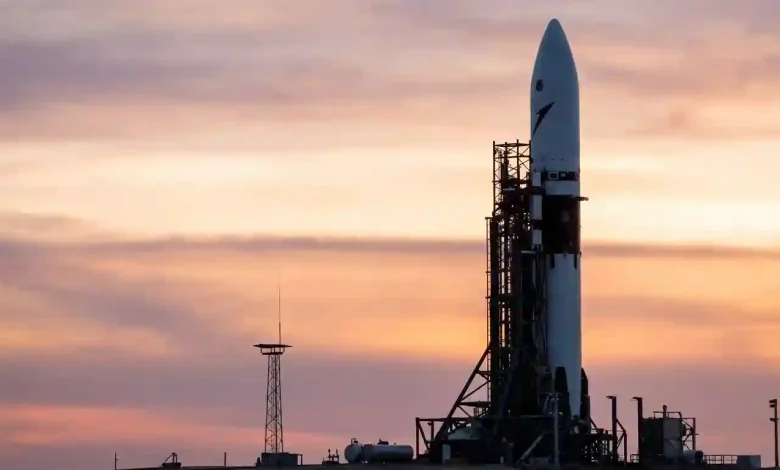
Table of Contents
Isar Aerospace has accomplished a truly historic milestone in European aerospace engineering. On Saturday, September 5, 2026, the German private space startup successfully launched its uncrewed Spectrum rocket from the remote Andøya Spaceport in Arctic Norway. This momentous flight marked the first time a privately developed commercial launch vehicle has successfully reached orbit from continental Western Europe, bridging a significant gap in Europe’s independent orbital access. Historically, European institutions have relied on remote launch sites such as the Guiana Space Centre in Kourou, French Guiana, or external international providers. By achieving orbit from Norway’s Andøya island, Isar Aerospace has demonstrated that high-frequency, responsive spaceflight is now a viable reality on European soil. While other space startup projects have focused on suborbital flight or high-altitude transport ballooning, Isar Aerospace has remained laser-focused on reaching the ultimate milestone of orbital delivery, unlocking a new frontier for European aerospace technology.
Aerospace :Timing and Key Milestones of the Spectrum Mission
The historic launch took place at 10:12 PM local time (20:12 GMT) under clear Arctic skies, as the 28-meter-long (92-foot) Spectrum rocket roared to life. Within less than four minutes, the vehicle surpassed an altitude of 100 kilometers (62 miles), clearing the internationally recognized edge of space and moving seamlessly into the upper atmosphere. The flight profile went according to plan, with the nine Aquila engines powering the first stage through maximum aerodynamic pressure (Max-Q) before cleanly separating. The second stage’s single engine then ignited to carry the payloads into their targeted low Earth orbit. During the final phase of the mission, the ground control team experienced a brief telemetry blackout around ten minutes into the flight as the vehicle exceeded the maximum range of the direct local tracking stations. However, independent orbital data soon confirmed that the uncrewed Spectrum rocket successfully achieved its designated orbit and deployed its five client CubeSats. This flawless operational sequence marked a watershed moment for the Munich-based startup and the broader European NewSpace ecosystem.
Aerospace :Securing Europe’s Sovereign Access to Space
For several years, Europe has struggled to maintain its independent capacity to launch payloads into space. A combination of factors, including the phased retirement of the dependable Ariane 5, delays in the deployment of the Ariane 6, technical setbacks with the Vega-C light-lift rocket, and geopolitical changes that cut off access to Russian Soyuz rockets, left the continent largely dependent on American launch providers like SpaceX. This orbital deficit posed major risks to both commercial enterprises and sovereign national security interests. The successful orbital flight of the Spectrum rocket from Andøya Spaceport changes the strategic landscape dramatically. It offers a proof of concept that Europe can independently orbit lightweight payloads from local soil without overseas reliance. This rapid progression stands as Europe’s direct answer to the massive private launch infrastructure developments occurring across the Atlantic, signaling that European private enterprise is ready to claim its share of the multi-billion-dollar space economy.
Learning from Past Setbacks: The Path to Success
The path to Saturday’s historic achievement was paved with complex challenges and valuable engineering lessons. Founded in 2018 by engineers from the Technical University of Munich (TUM), Isar Aerospace has scaled rapidly, but it has not been immune to the volatility of rocket science. The company’s inaugural test flight, conducted in March 2025, ended prematurely when the first Spectrum rocket suffered an anomaly and crashed back into the Arctic Ocean just 30 seconds after liftoff. Rather than discouraging the team, the setback provided vital physical data that was integrated into the redesign and qualification of the vehicle’s critical systems. Multiple launch attempts scheduled for early 2026 were postponed as engineers worked meticulously to refine engine valves, flight control software, and structural seals. The successful orbital insertion of the second Spectrum rocket, dubbed the ‘Onward and Upward’ mission, serves as a powerful testament to the resilience of the startup’s team and validates the aggressive, iterative engineering approach that characterizes modern private aerospace companies.
Spectrum Technical Specifications and Performance Parameters
The Spectrum rocket is a highly optimized two-stage liquid-propellant launch vehicle designed specifically to meet the high-frequency launch demands of the modern small-satellite market. Standing 28 meters tall and measuring 2 meters in diameter, the launcher utilizes state-of-the-art carbon composite structures to dramatically reduce structural weight while maintaining structural integrity. Spectrum is powered by proprietary Aquila engines, which are designed in-house and feature advanced 3D-printed combustion chambers and high-efficiency turbopumps. Despite the economic pressures of fuel manufacturing, which have been exacerbated by fluctuating energy markets and rising crude oil prices, the propane and liquid oxygen mix used in the Spectrum rocket remains a highly cost-effective propellant option that burns significantly cleaner than traditional rocket grade kerosene. Below is an overview of the key technical and performance parameters of the Spectrum rocket:
| Parameter | Specification / Detail |
|---|---|
| Rocket Name | Spectrum |
| Launch Vehicle Height | 28 meters (approx. 92 feet) |
| Diameter | 2 meters |
| Propellant Type | Propane and Liquid Oxygen (LOX) |
| First Stage Propulsion | 9 Aquila liquid-fueled engines |
| Second Stage Propulsion | 1 vacuum-optimized Aquila engine |
| Payload Capacity to LEO | Up to 1,000 kilograms (1 metric ton) |
| Launch Site | Andøya Spaceport, Norway (69°N latitude) |
| First Flight Attempt | March 2025 (failed shortly after liftoff) |
| Second Flight Success Date | September 5, 2026 (successfully reached orbit) |
Payloads and Experiments on the ‘Onward and Upward’ Mission
Unlike typical inaugural test flights that carry inert dummy masses, Isar Aerospace’s second launch was a fully operational qualification flight carrying active payloads. The Spectrum rocket successfully deployed five distinct CubeSats into low Earth orbit on behalf of commercial and institutional customers. These small satellites are designed for a variety of tasks, including Earth observation, communications, and atmospheric research. In addition to these five customer satellites, the mission carried an in-flight technology experiment designed to monitor high-frequency telemetry, thermal distribution, and structural stress during the flight. By providing a dedicated service for small payloads, the company allows researchers to deploy small-scale constellations without waiting years for auxiliary slots on heavier, state-driven scientific exploration missions. The successful deployment of all payloads confirms that Isar Aerospace is not merely a launch vehicle builder, but a fully operational orbital delivery partner.
Meeting the Growing Demand of the Small Satellite Market
The global space sector is undergoing a massive shift from large, multi-ton geostationary satellites to massive constellations of micro-satellites operating in low Earth orbit. These constellations power everything from global broadband internet and maritime tracking to high-resolution climate monitoring. However, the bottleneck in this industry has always been launch availability. Small satellite operators have traditionally had to ride-share on massive rockets, leaving them at the mercy of the primary payload’s schedule and orbital requirements. Isar Aerospace’s Spectrum offers a tailored, flexible solution, allowing customers to choose their exact launch windows and precise orbital inclinations. This customer-centric model is crucial for commercial viability. Even as venture capital markets experience deep cycles of contraction and broader financial market volatility, the strategic necessity of independent spaceflight capabilities ensures that top-tier aerospace companies remain highly insulated, keeping demand for flexible launchers robust.
Geopolitical and Commercial Implications for Continental Europe
The successful orbital flight from Andøya has intense geopolitical implications within Europe. Historically, European space policy was heavily centralized around French-led initiatives and the Guiana Space Centre. However, several continental European nations—most notably Norway, Sweden, and the United Kingdom—have spent the past decade developing competing infrastructure to host sovereign satellite launches. Norway’s Andøya Spaceport has now secured a massive first-mover advantage, positioning itself as the premier orbital gateway in Europe. This friendly competition is driving rapid legislative reform and policy adjustments. This has prompted numerous industry groups to make robust calls for legislative backing, ensuring that European public sector missions are exclusively booked on European-made launchers. This policy push, coupled with the proven orbital capability of Spectrum, is expected to catalyze a robust regional space industry that can compete on equal footing with American and Asian alternatives.
Expanding Launch Sites and Future Infrastructure
Managing the logistical demands of an orbital launch site above the Arctic Circle is complex, particularly when dealing with unpredictable weather fronts and regional climate challenges that can trigger rapid atmospheric variations. To mitigate these geographical risks, Isar Aerospace is actively diversifying its launch infrastructure. While Andøya Spaceport remains its flagship orbital facility, the company has announced plans to develop and utilize a second launch site in Canada. This dual-hemisphere strategy will allow Isar to offer an even wider range of orbital inclinations, including highly sought-after polar, sun-synchronous, and mid-inclination orbits. Furthermore, it provides the company with weather-related and geopolitical redundancy, ensuring that launch schedules can be maintained even if localized climate events or operational hurdles temporarily disrupt flights in Norway.
Financial Backing and Strategic Collaborations
Developing an orbital-class rocket from scratch requires an astronomical amount of capital, and Isar Aerospace has managed this hurdle through a strategic mix of private venture capital and institutional backing. Just last week, the company secured approximately €200 million in fresh funding from the European Space Agency (ESA) through its highly competitive ‘Boost!’ program. This initiative was specifically created to nurture commercial space transportation systems within Europe and ensure autonomous access to space. The financial injection, combined with previous funding rounds led by prominent European tech investors, brings Isar’s total capital raised to over €500 million, making it one of the best-funded space startups globally. This development is critical at a time when macroeconomic indicators, including fluctuating bond yields and tight monetary policies, have made fundraising for hardware-heavy deep-tech sectors exceptionally demanding.
Navigating the Modern Space Industry Economy
The commercial success of Isar Aerospace’s Spectrum launch system will ultimately depend on its ability to transition from a successful development campaign to high-volume industrial production. Building one rocket that reaches orbit is a monumental engineering feat; building dozens of identical, highly reliable rockets every year is an entirely different operational challenge. Isar Aerospace is already addressing this by investing heavily in automated manufacturing, automated test-stand procedures in Germany, and scalable supply chains. By utilizing advanced 3D printing and standardized carbon composite components, the startup hopes to significantly lower the marginal cost of production, ensuring that its launch prices remain competitive with global heavyweights. For more details on their flight manifests and launch schedule, you can visit the Isar Aerospace official portal. If successful, Isar Aerospace will not only have secured a place in space history but will also have established a highly profitable, self-sustaining commercial enterprise that secures Europe’s place among the stars.