Futures Slip as S&P 500 and Nasdaq Fall Amid US-Iran Escalation

Table of Contents
Futures tied to the S&P 500 and Nasdaq slipped on Tuesday, August 18, 2026, as global financial markets buckled under the weight of severe geopolitical uncertainty. The fragile peace that had briefly quieted the Middle East shattered over the week, driving investors away from risk-heavy equities and toward traditional safe-haven assets. This sharp downward momentum occurred as energy commodities hovered near their highest levels in months and sovereign debt yields spiked to heights not seen in years. The immediate catalyst was the breakdown of peace negotiations between the United States and Iran, a development that re-ignited fears of structural global inflation and long-term energy shortages.
As these developments unfolded during Iran War Day 165, global trade participants quickly reassessed their risk models. The prospect of an open-ended military confrontation in one of the world’s most critical energy-producing corridors has forced a major re-evaluation of corporate earnings forecasts, supply chain integrity, and central bank policy trajectories. Financial market volatility indexes rose sharply, indicating that the relative calm enjoyed during the brief diplomatic window has officially come to an end.
Futures :Geopolitical Collapse: The End of the Temporary Ceasefire
The diplomatic architecture that had temporarily frozen active hostilities collapsed entirely as the week began. A temporary ceasefire agreement, which had been painstakingly negotiated to allow for humanitarian corridors and diplomatic backchannel discussions, officially expired on Monday, August 17, 2026. Efforts to transition this temporary truce into a permanent peace treaty have stalled completely, with both sides accusing each other of bad-faith negotiating tactics and irreconcilable strategic demands.
International mediators had hoped that regional stability could be preserved through a series of structured concessions, but the core security demands of Washington and Tehran proved too polarized to bridge. With the expiration of the deadline, the diplomatic progress made over the summer has evaporated, leaving behind a highly volatile security vacuum that threatens to drag the global economy back into a state of heightened emergency.
Futures :Iran’s Offensive Military Shift
Iran would shift to a ‘fully offensive’ military posture because efforts to negotiate a permanent end to the war with the U.S. have stalled, a senior Iranian official told Reuters. This declaration marks a dangerous departure from the defensive, retaliatory strategy previously maintained by Tehran. The transition to an active offensive doctrine signals that Iranian forces, alongside their highly integrated regional proxies, are preparing to strike critical infrastructure and strategic points without waiting for prior hostile action.
Military analysts warn that this shift could manifest in increased naval aggression and aggressive military maneuvers near the Strait of Hormuz, where Iranian assets have historically sought to exert leverage over global oil transit. By adopting a fully offensive operational framework, Tehran is effectively warning Washington and its regional allies that any assets within striking distance of Iranian missile batteries and drone swarms are now considered active targets, drastically increasing the likelihood of an unintended escalatory spiral.
Futures :The US Stance: No Ceasefire Extensions
Washington, too, has ruled out extending the temporary ceasefire agreement that expired on August 17. The Biden administration, citing repeated violations of the truce by proxy networks and Iran’s continued enrichment of nuclear materials, declared that it would no longer participate in diplomatic gestures that do not result in concrete security guarantees. U.S. officials emphasized that the temporary pause was designed to offer an honorable path toward disarmament, not a shield behind which adversaries could regroup and rearm.
In response to the expiration of the truce, the Pentagon has ordered additional naval combatants to the region. The high-profile movements and deployment of the USS Abraham Lincoln signal a massive show of force designed to deter any immediate offensive actions by Tehran. However, this muscular response has also served to convince Iranian leadership that a military confrontation is inevitable, solidifying their decision to abandon the negotiating table entirely.
Futures :Financial Shockwaves: Stock Futures and Bond Yields
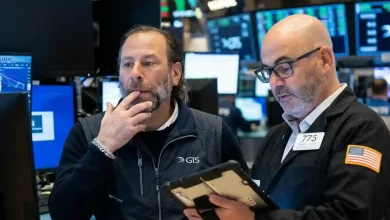
The immediate consequence of this diplomatic breakdown has been a rapid repricing of financial assets across the globe. Stock index futures in New York reacted sharply during overnight trading, with institutional desks liquidating long-equity positions to brace for potential supply chain disruptions and margin-squeezing energy costs. The technology and industrial sectors led the decline, as their capital expenditure plans are highly sensitive to rising energy inputs and fluctuating borrowing costs.
Futures :S&P 500 and Nasdaq Under Pressure
The tech-heavy Nasdaq and the broader S&P 500 experienced significant pre-market selling pressure. Investors are particularly concerned about the impact of persistent geopolitical risk on corporate margins, especially as major investment banks like Goldman Sachs warn that hyper-inflation in supply chains could force corporations to downgrade their forward-looking guidance. Growth stocks, which rely heavily on low-discount rates and stable global supply paths, are bearing the brunt of the capital flight.
The sell-off was compounded by fears that an extended conflict will limit multinational operations in the Middle East and parts of Asia. Companies with exposure to shipping corridors and international logistics hubs have seen their equity valuations trimmed, as risk premiums are adjusted upward to account for the heightened threat of commercial disruption and maritime asset seizures.
Futures :Government Bond Yields Hit Multi-Year Peaks
Simultaneously, sovereign debt markets experienced severe selling pressure, driving government bond yields to multi-year peaks. The yield on the benchmark 10-year U.S. Treasury note surged as investors anticipated that a prolonged geopolitical conflict would keep inflation elevated, forcing central banks to maintain interest rates at highly restrictive levels for the foreseeable future. The sell-off in bonds reflects a growing consensus that the era of returning to low, stable inflation has been indefinitely delayed.
The bond market’s behavior underscores a deep anxiety that the Federal Reserve and other major central banks will have their hands tied. Normally, a geopolitical crisis triggers a flight to safety that drives bond yields down. However, because this specific crisis directly threatens the supply of energy, the resulting inflationary pressure outweighs the traditional safe-haven bid, causing yields to rise alongside commodity prices.
Futures :Energy Markets Re-Ignite Inflationary Concerns
The primary transmission mechanism of this geopolitical crisis into the global economy is the energy market. Because the Middle East remains the undisputed hub of global crude exports, any escalation of military activity instantly raises the risk premium on oil contracts. The sudden transition to a fully offensive military posture by a major regional power has effectively guaranteed that energy markets will remain highly volatile for the foreseeable future.
Futures :Crude Oil Holdings Near Recent Highs
With crude oil holding near recent highs, energy analysts are scrambling to adjust their price targets. Brent crude and West Texas Intermediate (WTI) have both stabilized at elevated levels, reflecting the severe disruption risks associated with regional shipping routes. Traditional consumers are already feeling the pinch as gasoline prices rise globally, reducing consumer discretionary spending power and adding a severe headwinds to economic growth.
Energy traders are pricing in a worst-case scenario where direct exchanges of fire damage oil extraction facilities, refining hubs, or pipeline networks. Under these conditions, with long-term oil prices projected to climb higher, international markets are preparing for a sustained period of stagflationary pressure, characterized by sluggish growth and stubbornly high input costs.
Global Shipping and Supply Chain Bottlenecks
The geopolitical impasse has also severely affected maritime logistics. Commercial vessels operating in the region have been forced to navigate under heightened security protocols, often choosing longer, more expensive routes around the Cape of Good Hope rather than risking passage through volatile shipping lanes. This shift has immediately reduced global shipping capacity and sent freight rates soaring.
Diplomatic attempts to secure safe transit corridors have yielded little success, particularly amid efforts where diplomatic hub Qatar denies capturing hostile vessels or negotiating separate maritime safety guarantees. As cargo delays mount and insurance premiums for shipping containers escalate, the broader manufacturing sector is bracing for parts shortages and production slowdowns reminiscent of previous supply chain crises.
Strategic Defense and Military Posturing
As the geopolitical situation worsens, regional players are taking extensive defensive measures to shield themselves from fallout. Air defense systems throughout the Gulf region have been placed on high alert, and military cooperation among allied states has intensified. The threat of asymmetric warfare, particularly through the deployment of low-cost attack drones and sea-skimming anti-ship missiles, has forced navies operating in the area to adopt aggressive defensive postures.
This militarization of commercial waters has created a highly volatile environment where a single tactical miscalculation could trigger a broader regional conflict. Nearby nations are desperately attempting to manage the fallout, particularly in the regional theater where Oman battles heavy supply disruption and works to keep critical communication lines open between the warring factions. Despite these localized diplomatic efforts, the momentum remains overwhelmingly tilted toward further escalation.
Long-Term Global Economic Outlook
The convergence of falling stock futures, rising bond yields, and elevated energy prices paints a challenging picture for the global economic outlook. Economists warn that if the current military standoff persists or escalates into direct tactical engagements, the global economy could face a synchronized slowdown. Central banks, which had been preparing to ease monetary policy to support slowing growth, find themselves trapped between the need to curb supply-side inflation and the desire to prevent a credit contraction.
Furthermore, corporate investment is expected to slow down as businesses delay capital allocation decisions due to the highly unpredictable security environment. The combination of high borrowing costs, expensive energy, and disrupted shipping lanes creates a hostile environment for long-term planning, suggesting that global GDP growth forecasts will likely be revised downward in the coming quarters.
Summary of Geopolitical and Financial Impacts
The ongoing collapse of diplomatic efforts between the United States and Iran has sent shockwaves through multiple asset classes. To better understand the direct transmission of geopolitical risk to the financial markets, the table below outlines the core shifts observed following the expiration of the August 17 ceasefire.
| Asset Class | Pre-Expiration Trend (Ceasefire Active) | Current Market Reaction (Post-August 17) | Primary Driver & Risk Factor |
|---|---|---|---|
| S&P 500 / Nasdaq Futures | Gradual recovery, low volatility | Sharp decline, rising VIX index | Fears of energy cost inflation, corporate margin compression |
| US 10-Year Treasury Yields | Stable around long-term averages | Spike to multi-year peaks | Inflation expectations rising, central bank rate-cut delay |
| Brent & WTI Crude Oil | Consolidation near moderate levels | Holding near multi-year highs | Threats to Strait of Hormuz, Iranian ‘fully offensive’ posture |
| Global Shipping / Logistics | Normalized freight rates, stable routes | Surging insurance costs, route diversions | Asymmetric maritime threats, naval deployments near commercial lanes |
As markets move forward, the trajectory of these assets will remain tightly bound to military developments on the ground and any potential, though currently unlikely, breakthrough in international diplomacy. For now, capital preservation and inflation-hedging remain the dominant strategies for institutional and retail investors alike.



One Comment