France Records Hottest Summer in History Amid Severe 2026 Wildfires
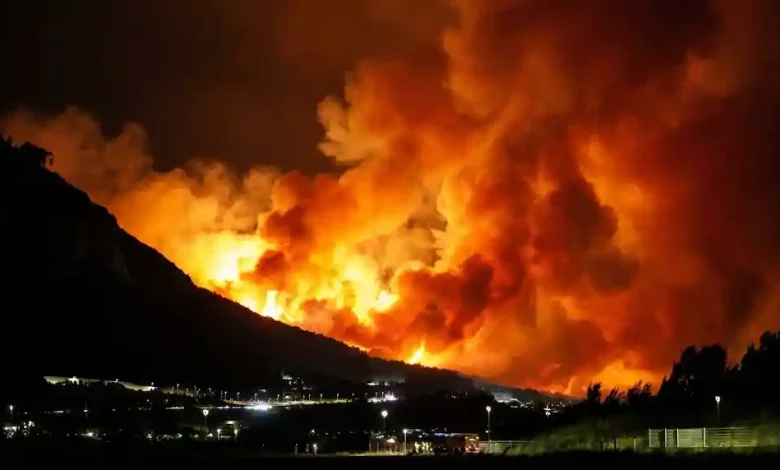
Table of Contents
France has officially recorded its warmest, most extreme meteorological summer on record since systematic data logging began in 1900. This milestone was formally presented on Thursday by Monique Barbut, the Minister of Ecological Transition, who painted a somber picture of the shifting European climate paradigm. The meteorological summer, which spans the months of June, July, and August, was characterized by unprecedented thermal indices, intense regional wildfires, and a historic drought that dried up major river basins across the country. While governments internationally attempt to manage escalating economic shocks, these extreme environmental conditions are adding fresh complexity to global supply chains, mirroring the economic stress seen in escalating fossil fuel dynamics and rising gasoline prices. This historic summer has shocked meteorological agencies and underscored how rapidly anthropogenic climate change is accelerating across the European continent.
Introduction: A Historic Climatological Shift
The climate report, compiled with precision by the national weather agency Météo France, chronicles a season of compounding anomalies. From late May through the end of August, persistent high-pressure systems established a near-permanent atmospheric block over Western Europe, pulling dry, hot air from the Sahara directly into mainland France. This structural warming trend resulted in a season that was not only characterized by individual days of extreme temperature, but by its prolonged and relentless nature. Minister Monique Barbut stressed that the systemic nature of this heatwave has tested the nation’s critical infrastructure, emergency services, and ecological safety nets to their absolute limits.
For decades, climatologists have warned of the long-term consequences of greenhouse gas accumulation, yet the rapid acceleration witnessed in 2026 has surprised even seasoned researchers. The convergence of low soil moisture, deficient winter precipitation, and a lack of cloud cover over consecutive months generated a self-reinforcing heating loop. As the ground dried, solar radiation that would normally evaporate soil moisture instead directly heated the lower atmosphere, propelling temperatures to historical highs.
Climatological Milestones of the Summer of 2026
According to Météo France, the summer of 2026 closed with an average national temperature of 24 degrees Celsius (75.2 degrees Fahrenheit). This metric represents both daytime and nighttime temperatures averaged across the country’s extensive observation network. This average is a staggering 3.6 degrees Celsius (6.5 degrees Fahrenheit) above the historical normal baseline, vastly eclipsing the prior record set during the infamous European heatwave of 2003, which recorded temperatures of 2.7 degrees Celsius (4.9 degrees Fahrenheit) above average.
The severity of the 2026 season was further defined by its duration. While previous heatwaves were marked by brief, intense spikes, this year saw an extraordinary 53 days of heatwave conditions across three distinct and protracted episodes. This completely unprecedented frequency far exceeded the 33 days registered during the previously extreme summer of 2022. Météo France also reported record-breaking ocean temperatures along mainland France and Corsica’s coastlines, illustrating that the thermal storage in adjacent seas is compounding land-based anomalies.
| Summer Season | Average Temp (°C) | Deviation from Baseline | Heatwave Days | Rainfall Deficit (%) |
|---|---|---|---|---|
| 2026 (Historic Record) | 24.0°C (75.2°F) | +3.6°C (+6.5°F) | 53 Days | ~40% Deficit |
| 2022 (Extreme Year) | 22.7°C (72.9°F) | +2.3°C (+4.1°F) | 33 Days | ~25% Deficit |
| 2003 (Previous Benchmark) | 23.1°C (73.6°F) | +2.7°C (+4.9°F) | 16 Days | ~21% Deficit |
| Normal Baseline (1991-2020) | 20.4°C (68.7°F) | 0.0°C | Variable | 0% (Baseline) |
Unprecedented Drought and the Wildfire Crisis
The extreme heat of 2026 did not strike in a vacuum; it was accompanied by an unprecedentedly sudden and severe drought, with Météo France confirming a national rainfall deficit of nearly 40%. This made 2026 the second driest year ever recorded in the country, leaving soil moisture at historic lows and draining key waterways to 20-year depths. In turn, these hyper-arid conditions fueled massive wildfires that devastated regions from the Atlantic coast to normally damp northern zones.
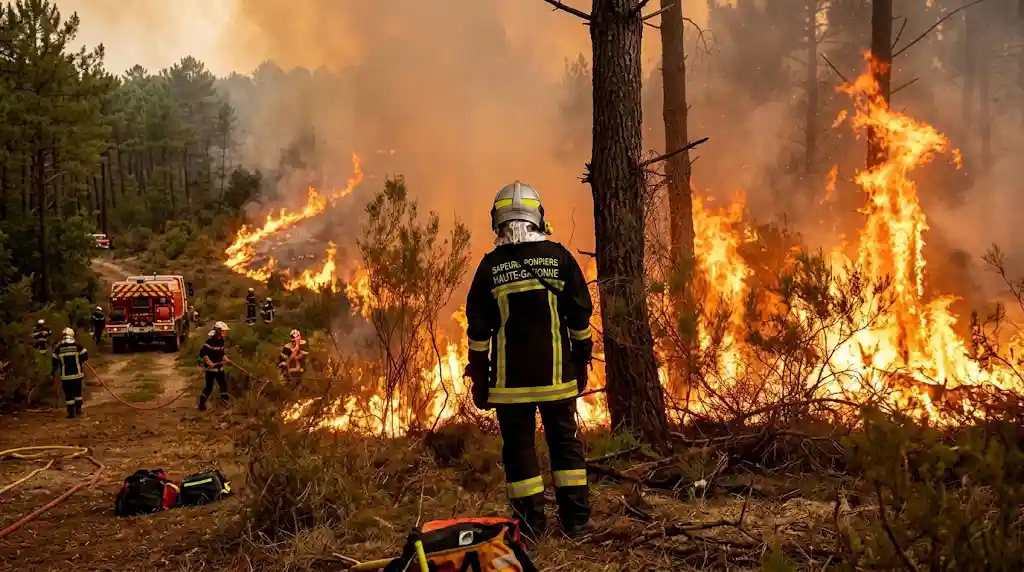
In southwestern France, a historic forest fire devoured vast tracts of pine forests near Bordeaux, ultimately forcing the evacuation of approximately 250,000 residents from their homes. Firefighters faced the unprecedented challenge of tackling blazes in typically wet regions such as Normandy and Brittany, demonstrating that no department is now safe from wildfire risks. The human cost of these operations was severe, with four brave firefighters losing their lives in the line of duty. This displacement of thousands of families places an immediate demand on public safety nets, demonstrating the need for resilient infrastructure similar to critical government policy on child healthcare to support vulnerable families during ecological disasters.
The Continental Context: Europe as the Fastest-Warming Continent
Europe’s rapid warming is no longer a projection for the late 21st century; it is an active reality. Data from the European Union’s Copernicus Climate Change Service highlights that Europe remains the world’s fastest-warming continent, with temperature increases scaling at twice the global average since the 1980s. Throughout the summer of 2026, millions of residents in Italy, Spain, the United Kingdom, and Belgium were subjected to extreme, life-threatening temperatures.
High-pressure systems, often referred to as “heat domes,” locked in scorching air masses from North Africa, turning metropolitan regions across Western and Southern Europe into giant thermal traps. This atmospheric stagnation not only drives up immediate cooling demands but also impacts the broader European energy architecture. These supply challenges must be contextualized within the wider global energy market, where shifting consumption trends frequently interact with fluctuating Brent crude oil prices and complicate long-term transition strategies.
Economic and Agricultural Infrastructure Disruptions
The compounding impacts of extreme heat and drought have sent shockwaves through the French economic and agricultural sectors. Large river basins, including the Loire and the Rhône, saw water levels drop so low that commercial navigation was severely restricted. Critical thermal and nuclear power plants had to curtail electricity generation because cooling waters were too warm to safely discharge back into the environment. Agriculturally, the lack of soil moisture decimated crop yields, threatening the supply of staple foods and livestock feed.
The structural changes in land usability and water distribution are generating profound challenges that evoke international parallels, such as California’s agricultural challenges, where farmers are similarly forced to adapt to severe, long-term water scarcity. To combat these dynamic environmental challenges, researchers and policy planners are increasingly relying on sophisticated meteorological and crop modeling applications. The development of such software is heavily dependent on collaborative, globally accessible platforms and open-source technology frameworks that enable fast, accurate calculations of environmental data.
Public Health Impacts and Extreme Heat Vulnerabilities
The human toll of the 2026 heatwaves has been severe. Across major cities like Paris, where historic, zinc-roofed apartments lack domestic cooling systems, the urban heat island effect resulted in elevated indoor temperatures, leading to thousands of excess deaths, primarily among elderly and isolated demographics. The sudden rise in thermal-related illnesses has put immense strain on the French national health service.
This stress reflects a broader reality where modern medical systems must maintain high flexibility, much like the coordinated global frameworks required when managing infectious disease outbreaks. Furthermore, this shifting environmental risk profile is transforming the financial sector. Insurance companies are recalculating premium models as natural disaster claims skyrocket due to soil subsidence and crop loss, a transition mirroring the modern financial shifts seen in cyber insurance disruptions.
Government Response, Adaptation, and Future Mitigation
During the presentation of the climate assessment near Paris, Minister Monique Barbut posed a vital question to the public and policy leaders: “The summer of 2026 will go down in history. The question we must now ask ourselves is how it will be remembered: as the first in a long series of summers that continue to break records, or as a moment when we rose to the challenge of adaptation and mitigation?”
Following directives from Prime Minister Sébastien Lecornu in late July, Barbut is preparing to unveil a comprehensive suite of initiatives under France’s national climate change adaptation plan. The proposals, scheduled for delivery by the end of September, will outline a five-year funding plan designed to harden urban infrastructure, restore degraded forest landscapes, and transition agricultural zones to drought-resilient crops. On the financial front, the integration of ESG assets is driving capital toward climate adaptation startups, shifting investment behavior even as standard traders manage positions in volatile AI-linked stocks.
Global Scientific Consensuses and the Path Forward
The record-breaking temperatures of 2026 serve as a stark warning from the scientific community. Climatologists agree that without systemic reductions in global greenhouse gas emissions, what was once considered a historic, generational heatwave will inevitably become the standard baseline for European summers. The atmospheric changes witnessed this year in France are part of a global warming trend that demands unified international policy, infrastructural adaptation, and a rapid transition away from carbon-intensive energy sources. As the French government coordinates its multi-billion-euro adaptation strategy, the actions taken in the remaining months of 2026 may well decide how future generations look back on this pivotal ecological turning point.


2 Comments