Ig Nobel Ceremony 2026: Satirical Science Moves to Zurich
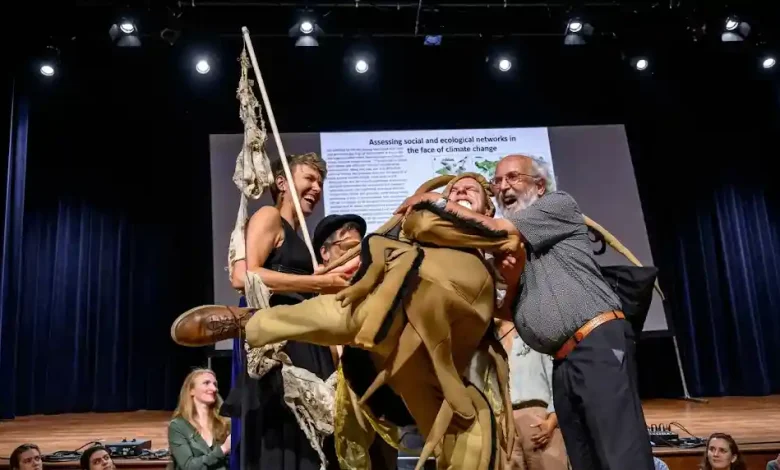
Table of Contents
Ig Nobel awards, the legendary satirical science prizes designed to make people laugh and then think, took a historic leap across the Atlantic on Thursday, September 3, 2026. For the first time in its 36-year history, the Annals of Improbable Research hosted the annual ceremony outside of the United States. Gathering at a packed convention center in Zurich, Switzerland, the event offered a marvelous display of eccentric human curiosity. Just as regulatory bodies grapple with modern innovations like restrictive policies on AI-generated content, the scientific community must also navigate international policy changes, making this relocation a focal point of global academic discussion.
Why the Ceremony Moved to Zurich
The decision to shift the Ig Nobel ceremony to European soil marks the end of an era. For 35 years, the event was proudly held at elite American academic institutions, including Harvard University, the Massachusetts Institute of Technology (MIT), and Boston University. However, organizers were forced to relocate the festivities due to escalating travel and visa concerns. According to Marc Abrahams, the master of ceremonies and editor of the organizing digital magazine, the United States has increasingly become a difficult and unpredictable destination for international visitors. ‘During the past year, it has become unsafe for our guests to visit the country,’ Abrahams noted, pointing to the administrative and political hurdles that foreign academics face when trying to obtain U.S. entry visas.
Zurich stepped in as the perfect substitute, offering a globally accessible, neutral, and highly welcoming environment for some of the world’s most eccentric thinkers. The venue transition was seamless, drawing thousands of enthusiastic spectators who were eager to witness the celebratory, chaotic nature of the event. To ensure the safety and participation of its highly diverse, global attendee pool, organizers plan to rotate future ceremonies among different European cities. For instance, the 2027 Ig Nobel ceremony is already scheduled to take place in the historical Belgian city of Antwerp.
Key Winners and Their Extraordinary Research
This year’s event honored ten distinct research teams, each demonstrating that science does not always have to be solemn to be deeply profound. The awarded studies spanned disciplines ranging from biology and biomechanics to economics and agricultural science.
The Evolutionary History of Kissing
Among the standout winners were Matilda Brindle and Stuart West from the University of Oxford, who collaborated with Catherine F. Talbot of the Florida Institute of Technology. Together, they claimed the Ig Nobel Biomechanics Prize for reconstructive research into the evolutionary history of kissing. Their paper meticulously analyzed ‘non-agonistic interactions involving directed, intraspecific, oral-oral contact with some movement of the lips/mouthparts and no food transfer’ across multiple species.
By studying these tactile contacts in creatures as varied as ants, birds, polar bears, and humans, the team built a fascinating evolutionary map of how physical intimacy evolved. While kissing is often viewed as a uniquely human emotional expression, their research reveals deep biological roots. Understanding these ancestral behaviors of intimacy in the animal kingdom contributes immensely to our understanding of social bonding, reminiscent of the behavioral patterns studied in modern psychology, which often look at social interactions such as mental health support and anxiety therapies. Furthermore, the study could easily find its way into educational digital platforms that aim to introduce young minds to evolutionary biology and animal behavior in an engaging way.
Burying Underwear for Soil Science
In the field of environmental science and agriculture, another research team captured global attention by burying 1,000 pairs of underwear across more than 25 countries. Conducted by scientists at the University of Zurich and the Agroscope research institute, this study utilized organic cotton undergarments to measure the biological vitality of different soils. The methodology was simple yet elegant: the faster the underwear decomposed, the healthier and more active the subterranean ecosystem was. Soil ‘critters’—including microbes, fungi, and earthworms—rely on organic carbon to survive, actively digesting the cotton fibers over a two-month period.
By comparing the rate of fabric decay across diverse geographic regions, the researchers generated invaluable data regarding soil quality, organic farming efficiency, and global biodiversity. Implementing such a large-scale project required sophisticated coordination to manage, much like global logistical systems and market dynamics. While some scientists look upward to plan pioneering cosmological space missions, others prefer to dig into the ground to address the immediate needs of terrestrial agriculture.
Cockroach Milk and Nose-Blowing
The biology and physiology categories featured equally astonishing findings. One team was celebrated for its deep dive into the nutritional profiles of milk derived from the Pacific beetle cockroach (Diploptera punctata). This unique species of cockroach is viviparous, meaning it gives birth to live young and feeds them a liquid dense with protein, fat, and sugar crystals. The resulting ‘milk’ is incredibly nutrient-rich—outperforming cow’s milk by multiple orders of magnitude—though the prospect of commercializing cockroach dairy remains an amusingly tough sell for the public.
Simultaneously, the late Dr. Tokuji Unno was posthumously honored for his meticulous investigation into the physical dynamics and safety of blowing one’s nose. His research analyzed the pressure changes and fluid dynamics of nasal excretion, seeking to find the safest, most sanitary methods to clear nasal passages without causing ear damage or sinus infections. Such physical mechanics are surprisingly critical to understanding respiratory health, much like the precise bio-imaging tools used in advanced diagnostic medical techniques that identify internal bodily functions and anomalies.
Splash-Free Urinal Design
The Physics Prize went to Canadian researcher Kaveeshan Thurairajah and his colleagues at the University of Waterloo, who successfully engineered a splash-free urinal. Using fluid dynamics and high-speed photography, the team studied how liquid droplets scatter upon impacting hard surfaces. They designed a porcelain structure with optimized curvature angles that gracefully guide liquid downward, totally eliminating back-splash.
This design is not merely a triumph for bathroom cleanliness; it also has a notable environmental impact, as splashback-free urinals require significantly less water and chemical cleaning over their lifespans. This physical, biomechanical pursuit mirrors the focus and discipline found in elite athletic training and performance, where every micro-movement is calculated for maximum efficiency and flawless execution.
Unethical Behavior in the Upper Classes
In the field of Economics, a team led by Paul Piff received recognition for gathering compelling empirical evidence that upper-class individuals are significantly more likely to engage in unethical behaviors. Through a series of observational and laboratory experiments, the researchers demonstrated that wealthy individuals are more prone to taking candy designated for children, breaking traffic rules, lying during business negotiations, and cheating to win prizes.
This study caused both laughter and reflection, offering a satirical yet scientifically backed critique of socioeconomic stratification. The research stirred public debates and challenged established societal narratives, disrupting the standard order much like the public reactions to highly controversial professional behaviors in international sports.
The Unique Trophy and Customary Rituals
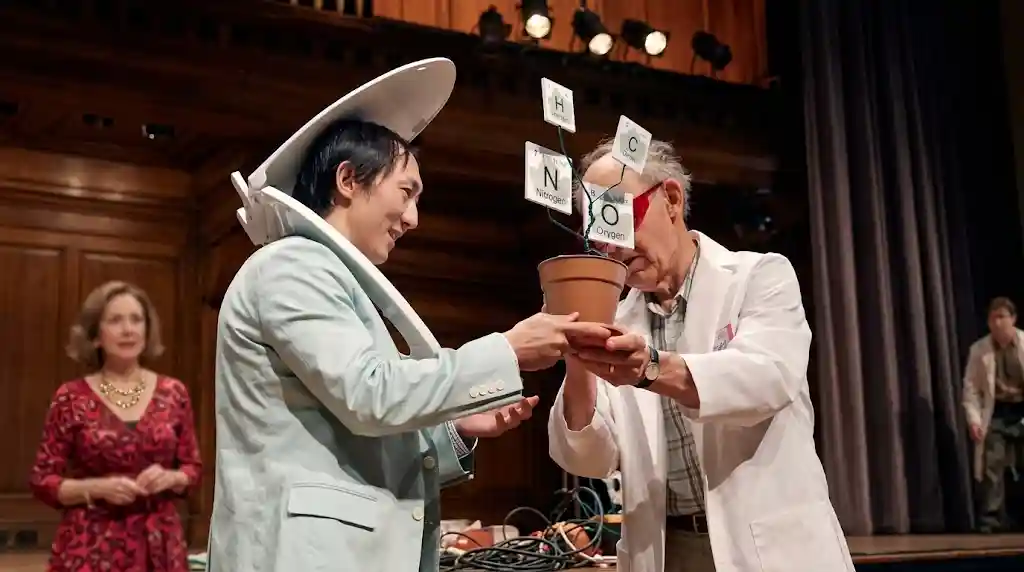
No Ig Nobel ceremony would be complete without its signature elements of structured chaos. In Zurich, the ten honored research teams received a custom-designed trophy that perfectly captured the whimsical spirit of the event: a bizarre physical sculpture resembling a cross between a wild forest mushroom and a human foot. Winners were also awarded a traditional cash prize: a virtually worthless, defunct ten-trillion-dollar Zimbabwean bill.
Audience members fully embraced the European debut, maintaining the decades-old tradition of folding paper airplanes and throwing them en masse toward the stage to kick off the show. Despite the change in geographic location, the lighthearted, intellectual atmosphere remained completely intact, proving that scientific humor is a universal language that transcends national borders.
The Implications of Leaving the US Permanently
The departure of the Ig Nobel Prizes from the United States is a symbolic moment for global academia. It highlights the growing challenges that international scientific collaboration faces in an era of tightening national borders and visa restrictions. By establishing Zurich as its new home—and mapping out a future that alternates between European cultural capitals—the Annals of Improbable Research is ensuring that the spirit of open, global scientific exchange remains unimpeded.
Rather than letting geopolitical borders restrict the diversity of its participants, the organization’s relocation has actually expanded its reach, bringing the joy of bizarre science directly to European audiences who have welcomed the event with open arms.
A Comparative Summary of Notable 2026 Winners
The following table provides an overview of some of the most remarkable and imaginative scientific contributions honored at the 2026 ceremony in Zurich:
| Category | Laureates / Institutions | Research Topic Summary | Key Scientific Insight |
|---|---|---|---|
| Biomechanics | Matilda Brindle, Stuart West (Oxford), Catherine F. Talbot (Florida Tech) | The evolutionary history and physical mechanics of kissing across species. | Intraspecific oral contact serves deep evolutionary bonding purposes beyond humans. |
| Soil Science | University of Zurich & Agroscope | Burying 1,000 pairs of organic cotton underwear in 25+ countries. | Decomposition rates of cotton provide a direct, reliable measure of soil biological activity. |
| Physics | Kaveeshan Thurairajah et al. (University of Waterloo) | Designing a splash-free urinal using fluid dynamics. | Optimized curvature angles eliminate liquid scatter, reducing sanitation costs. |
| Economics | Paul Piff et al. | Investigating unethical behavior patterns across different social classes. | Socioeconomic privilege correlates with a higher likelihood of breaking rules and cheating. |
| Physiology | The late Dr. Tokuji Unno | The mechanical dynamics and physical safety of blowing one’s nose. | Anatomical pressure management prevents complications in nasal and auditory pathways. |
Why Satirical Science Is Critical for Real Progress
At first glance, studying cockroach milk or burying underwear may seem trivial, but the core philosophy of the Ig Nobel Prizes has always been to honor achievements that ‘first make people laugh, then make them think’. Behind every seemingly ridiculous premise lies a rigorous application of the scientific method. By lowering the barrier of entry with humor, these prizes make complex scientific concepts accessible to the general public, sparking curiosity and inspiring the next generation of researchers to look at the world from entirely new, imaginative angles.



One Comment