Suno lawsuit: Jason Isbell Sues AI Over Publicity Rights 2026
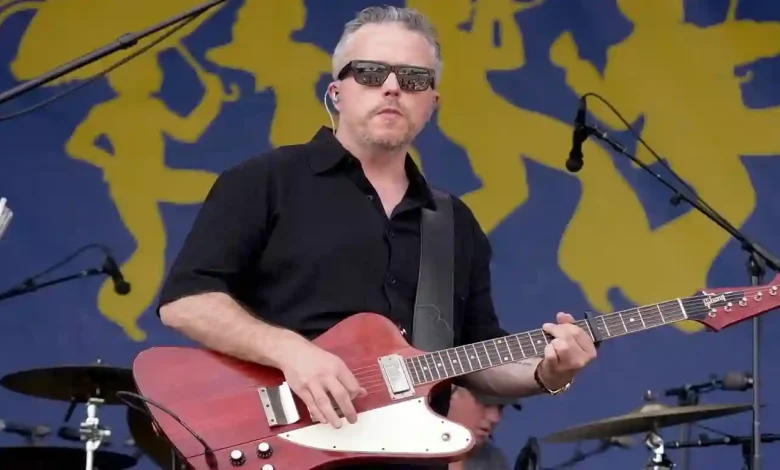
Table of Contents
Suno lawsuit developments have taken a landmark turn in the ongoing struggle between generative artificial intelligence and human creators. On Monday, August 31, 2026, a proposed class-action lawsuit was filed in the U.S. District Court for the District of Massachusetts in Boston, positioning some of America’s most respected independent musicians against Cambridge-based AI developer Suno, Inc. Lead plaintiff and Grammy-winning Americana singer-songwriter Jason Isbell, alongside rock frontman David Lowery of Cracker and Camper Van Beethoven, blues singer-songwriter Guy Forsyth, and jazz saxophonist Eduardo Calle, launched a major legal offensive that moves the battleground of AI litigation in a fundamentally new direction. Rather than limiting their grievances to standard copyright infringement, the artists argue that Suno has systematically misappropriated, ingested, and monetized their personal identities, performance styles, and unique vocal qualities without consent or compensation.
Introduction to the Landmark Legal Clash
This critical litigation, assigned to Magistrate Judge Paul G. Levenson under Case Number 1:26-cv-14005-PGL, presents a radical shift in how intellectual property rights are asserted against generative AI models. Historically, legal pushback against platforms like Suno and Udio has focused almost exclusively on the training datasets, arguing that the companies illegally ingested copyrighted audio files to train their algorithmic systems. This new class-action suit, however, sidelines federal copyright claims in favor of state-level publicity rights, common-law misappropriation, and statutory privacy violations.
The central premise of the complaint is that a musician’s identity is an inalienable, proprietary asset. By compiling a vast database that links real artists’ names directly with their physical and stylistic voice prints, Suno has built a commercial machine designed to extract, package, and sell those identities. This legal challenge arrives during a period of massive economic volatility across multiple sectors, as tech enterprises navigate shifting financial climates, sometimes witnessing rapid value corrections in unrelated markets where gold prices ease and traditional asset classes adjust to changing macroeconomic policies.
The Plaintiffs and Their Allegations
The group of plaintiffs representing the proposed class represents a diverse cross-section of the music community. Jason Isbell is widely recognized for his narrative depth, acoustic precision, and distinct country-folk vocals. David Lowery has spent decades at the forefront of the independent rock scene while simultaneously advocating for artists’ digital rights. Guy Forsyth brings a deep, commanding presence from the Texas blues tradition, and Eduardo Calle is a highly acclaimed woodwind multi-instrumentalist. Together, they claim that Suno has systematically ingested their life’s work to train its generative models, allowing any subscriber to produce high-fidelity imitations on demand.
The plaintiffs emphasize that they are not seeking to monopolize general musical genres or artistic techniques. A human musician learning a riff from an idol is part of a healthy cultural exchange. Instead, they target the commercial exploitation of their names and highly personal vocal characteristics. The lawsuit notes that the liability structure for AI systems is expanding, creating significant cyber insurance disruptions as insurance underwriters attempt to assess the immense legal risks associated with training machine learning models on unauthorized personal biometric data.
Beyond Copyright: Why This Case Focuses on Publicity Rights
While record labels maintain copyright ownership over master recordings, the artists themselves retain their personal publicity rights. The right of publicity prevents the unauthorized commercial exploitation of an individual’s name, likeness, image, or voice. By basing their suit on this doctrine, the plaintiffs bypass the standard “fair use” defenses commonly leveraged by AI developers under federal copyright law.
Suno’s platform does not simply output random acoustic arrangements; it enables users to target specific performers. The complaint contends that Suno built its infrastructure around these human identities. As global policymakers face mounting public pressure, these issues are taking center stage in broader legal arenas, mirroring bilateral and multinational efforts observed during global AI safety discussions that aim to establish concrete ethical standards for machine learning technologies.
The Concept of ‘The Borg Collective’ in AI
In a highly unusual move for a federal court filing, the 84-page complaint opens not with dry legal jargon, but with an essay on “The Borg,” the iconic cybernetic antagonists from the science-fiction franchise Star Trek: The Next Generation. The authors write that “the Borg are one of science fiction’s most terrifying villains, representing the ultimate violation of individual identity and autonomy.” The lawsuit uses this cultural touchstone to describe Suno’s technical framework, asserting that Suno operates like a digital Borg Collective: swallowing the artistic output of human beings, stripping them of their uniqueness, and repurposing their talent into a cold, automated tool for corporate profit.
The complaint asserts that “Jason Isbell’s musical identity does not cease to be his property merely because sophisticated technology is involved.” The systemic absorption of individual careers into a centralized commercial database is viewed by the plaintiffs as the ultimate commodification of human art. This ongoing consolidation of creative tasks into automated pipelines reflects broader economic anxieties, aligning with shifting labor metrics such as macroeconomic shifts like U.S. job growth trends that are continually reshaped by disruptive technological developments.
Retrieval Keys and Vocal Voiceprints
The technological mechanics detailed in the complaint show how Suno allegedly treats artist names as physical “retrieval keys.” When a user types a prompt into the generator, the system does not search for a text string; it references a multi-modal set of physical attributes, vocals, and instruments associated with that specific performer. This allows the generator to craft a holistic experience that closely mimics the target artist.
To illustrate this, the plaintiffs revealed that typing “Jason Isbell” into the system generated an Americana track titled “Paper Bell.” The generated song mimicked Isbell’s signature vocal delivery, acoustic arrangements, and country twang. This extraction of style extends beyond modern acoustic genres to affect historical figures, contemporary pop icons, and even the carefully crafted aesthetic eras of popular artists celebrated globally in modern media.
The Illinois Biometric Information Privacy Act (BIPA) Connection
The legal team behind the class action—led by prominent firms Korein Tillery LLC and Rose Law Partners LLP—has introduced a powerful statutory claim: violating the Illinois Biometric Information Privacy Act (BIPA). Under BIPA, companies are strictly prohibited from collecting, storing, or using an individual’s biometric identifiers, including “voiceprints,” without obtaining prior, written consent.
The lawsuit alleges that the numerical representations Suno calculates during its AI model training are, in fact, voiceprints designed to perfectly replicate unique human vocal tracts. Ironically, while Suno requires its own users to check consent boxes before uploading voice recordings to its platform, it did not seek written consent from the thousands of professional singers whose vocals were ingested to train the model in the first place.
Evading the Guardrails: The Spacing Loophole
Suno has defended its platform by highlighting its safety policies, asserting that it has integrated system-wide filters to block users from inputting direct artist names. However, the lawsuit argues that these defenses are incredibly weak and easily bypassed. Plaintiffs demonstrate that adding simple spaces between the letters of a name completely evades Suno’s text filters.
For instance, inputting the spaced prompt “m i c h a e l j a c k s o n” bypassed all blocks and yielded a pop song titled “Glovebox Moonwalk,” accompanied by an AI-generated graphic featuring the singer’s iconic white glove. This reveals that the underlying system still processes the artist’s identity as a retrieval key. Safeguarding these expressive characteristics is essential for maintaining the integrity of traditional rock music legacies and preserving the cultural equity built by generations of musicians.
Comparing the Suno Legal Fronts
To understand the full scope of the legal landscape surrounding Suno, Inc., it is helpful to contrast the record labels’ federal copyright lawsuits with this newly filed class action focusing on publicity rights and biometric privacy.
| Legal Dimension | Record Label Lawsuits (Sony, UMG, WMG) | Lowery v. Suno, Inc. (Isbell Class Action) |
|---|---|---|
| Primary Legal Claim | Federal copyright infringement under the Copyright Act. | State right of publicity and Illinois BIPA violations. |
| Core Focus | Unauthorized copying and reproduction of master sound recordings. | Unauthorized training, extraction, and exploitation of identity. |
| Ownership of Rights | Usually owned by corporate record labels or publishers. | Retained by the individual performer as a personal asset. |
| Primary Defense | Fair Use under federal intellectual property guidelines. | First Amendment protections and technical guardrails. |
| Key Examples Cited | Ingestion of specific copyrighted audio tracks. | Generation of “Paper Bell” and “Glovebox Moonwalk” via bypassed prompts. |
Suno’s Defense and the Future of AI Music
In response to the litigation, Suno has maintained that the claims are without merit. A spokesperson for the company emphasized that Suno’s technology is developed to help ordinary people create completely original music rather than copy existing performers. Suno asserts that its algorithms generate unique arrangements and that its systems are designed with safeguards to prevent direct plagiarism.
However, the plaintiffs counter that the very existence of bypassed prompts demonstrates that Suno’s business model relies on exploiting the commercial value of established artists. For independent musicians who are currently navigating emerging digital frontiers, the outcome of this case is vital to securing their financial future in an automated marketplace.
Broader Implications for the Creative Industry
The outcome of the Lowery v. Suno class action could redefine the boundaries of identity ownership in the digital age. If the court rules that training an AI model on a singer’s voice constitutes the unauthorized collection of a biometric voiceprint, it could set a major legal precedent, exposing generative AI developers to multi-billion-dollar liabilities.
While the concept of training an algorithm to mimic a human voice print might sound like something highlighted at the unexpected intersections of science and culture, the economic consequences for working artists are profoundly serious. As the legal system catches up with generative technologies, this historic lawsuit in Massachusetts will serve as a critical benchmark for the future of artistic consent, human identity, and creative control.