Nancy Grace Roman Space Telescope: Historic Launch Set for Sunday 2026
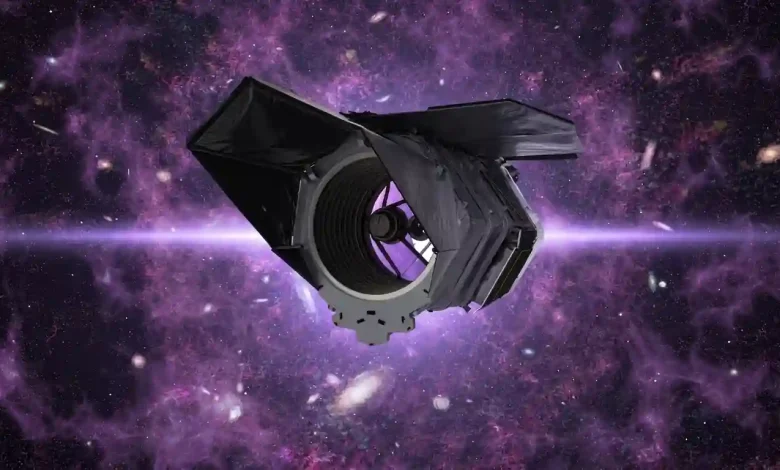
Table of Contents
Nancy Grace Roman Space Telescope is preparing to embark on a historic journey that will redefine our understanding of the cosmos. As NASA readies this next-generation flagship space observatory, the scientific community is buzzing with anticipation. Slated to launch on Sunday, August 30, 2026, from Launch Complex 39A (LC-39A) at the Kennedy Space Center in Florida, the $4.3 billion project is remarkably entering its final launch sequence approximately nine months ahead of its original baseline schedule. Lofted into orbit by a powerful SpaceX Falcon Heavy rocket, this cutting-edge space observatory represents a major technological leap forward, combining a vast field of view with the exquisite clarity of space-based infrared imaging. While robotic exploration closer to home continues to advance, as exemplified by China’s ambitious Chang’e 7 lunar mission, the Roman Space Telescope will turn its highly sensitive eyes to deep space, peering billions of years back in time to address the fundamental architecture of the universe itself.
The acceleration of the launch timeline represents a major triumph for NASA and its contracting partners, who have managed to deliver the spacecraft under budget and ahead of schedule. Such milestones are rare for flagship missions, which historically experience multi-year delays. This efficiency has allowed engineers to complete final integration and testing at the Payload Hazardous Servicing Facility with unprecedented speed, moving the telescope to Launch Complex 39A for its highly anticipated vertical rollout. Ground crews have completed wet dress rehearsals and launch readiness reviews, ensuring that both the spacecraft and its massive SpaceX launcher are in optimal condition for Sunday’s liftoff.
Unraveling Dark Energy and Dark Matter
At the very core of Roman’s scientific mission is an aggressive campaign to map and measure the invisible forces that dominate our universe. For decades, astronomers have struggled to comprehend dark energy, the mysterious, repulsive force driving the accelerated expansion of the cosmos. By conducting massive, deep-sky infrared surveys, Roman will measure the distribution of hundreds of millions of galaxies, tracing how the cosmic web has grown over billions of years. This data will allow physicists to test various theories of gravity at vast, cosmological scales. Theoretical models of dark matter, including those supported by Nobel laureate Dr. Frank Wilczek, will be put to rigorous empirical tests as the telescope observes the subtle gravitational lensing of distant galaxies, which betrays the presence of otherwise invisible dark matter structures.
The cosmological mystery of dark energy remains one of the greatest questions in modern physics. In 1998, astronomers discovered that the universe’s expansion was not slowing down due to gravity, as previously expected, but was instead speeding up. This cosmic acceleration is attributed to dark energy, which makes up roughly 68% of the universe. Dark matter makes up another 27%, leaving only 5% for regular matter (stars, planets, and humans). Roman will use two primary techniques to study these phenomena: weak gravitational lensing and baryon acoustic oscillations. By analyzing how light from distant galaxies is bent by the gravitational fields of intervening dark matter, Roman will construct highly detailed 3D maps of the universe’s mass distribution. Simultaneously, by studying the periodic fluctuations in the density of the visible baryonic matter of the universe, scientists can trace the history of cosmic expansion with unprecedented precision.
The Exoplanet Census: Hunting for New Worlds
In addition to probing the dark universe, the Roman Space Telescope is poised to revolutionize our understanding of planetary systems beyond our solar system. Using an astronomical technique known as gravitational microlensing, Roman will detect thousands of planets that orbit their stars at distances ranging from cold outer regions to warm inner zones. This statistical census will complement the discoveries made by previous missions like Kepler and TESS, filling critical gaps in our knowledge of planetary demographics. While some celestial events, like recent eclipses, drew millions of excited spectators across Spain, Roman’s observations will be captured far beyond Earth’s atmospheric distortion, enabling the detection of rogue planets—worlds that drift through interstellar space without being bound to any parent star.
Gravitational microlensing relies on a rare alignment where the gravity of a foreground star (and any orbiting planets) acts as a natural magnifying glass, bending and brightening the light of a more distant background star. Because this technique does not require detecting the planet’s direct light, it is uniquely suited for finding low-mass planets, including Earth-mass worlds, that are very far from their host stars. Furthermore, Roman features a highly advanced Coronagraph Instrument, a tech-demonstrator designed to block out starlight, allowing astronomers to directly image and analyze the chemical signatures of giant exoplanet atmospheres. This marks a critical step toward future missions that will search for biosignatures on Earth-like worlds, providing the proof of concept needed to isolate faint planetary light from the blinding glare of parent stars.
An Engineering Marvel: Roman vs. Hubble vs. Webb
To understand the sheer scale of Roman’s capabilities, it is helpful to contrast it with NASA’s previous flagship observatories, the Hubble Space Telescope and the James Webb Space Telescope (JWST). While Hubble revolutionized astronomy with its sharp visible and ultraviolet vision, and JWST continues to peer into the deep infrared with unmatched sensitivity, Roman introduces an unprecedented combination of speed and area. It possesses a primary mirror measuring 2.4 meters in diameter—identical in size to Hubble’s—but its Wide Field Instrument boasts a field of view that is 100 times larger than Hubble’s infrared camera. This means Roman can capture in a single image an area of the sky that would require hundreds of individual Hubble exposures, effectively functioning as a wide-angle lens for the cosmos.
| Observatory Feature | Hubble Space Telescope | James Webb Space Telescope | Nancy Grace Roman Telescope |
|---|---|---|---|
| Primary Mirror Diameter | 2.4 meters (7.9 feet) | 6.5 meters (21.3 feet) | 2.4 meters (7.9 feet) |
| Wavelength Range | Ultraviolet to Near-Infrared | Near-Infrared to Mid-Infrared | Visible to Near-Infrared |
| Field of View (Relative) | 1x (Standard Baseline) | ~1.5x (Deep Pencil Beam) | 100x (Wide Area Survey) |
| Target Orbit Location | Low Earth Orbit (LEO) | Sun-Earth L2 Lagrange Point | Sun-Earth L2 Lagrange Point |
| Primary Science Focus | General Astrophysics / Deep Fields | Early Universe / Deep Spectroscopy | Dark Energy / Exoplanet Demographics |
The physical construction of the Roman Space Telescope utilizes advanced composite materials and state-of-the-art optical components designed to maintain stability in the harsh environment of space. Operating at the Sun-Earth L2 point requires exceptional thermal stability, as the telescope must remain shaded from the heat of the Sun, Earth, and Moon. To achieve this, Roman is equipped with a large, multi-layered sunshield and an active thermal control system that maintains the scientific instruments at cryogenic temperatures, preventing local thermal emissions from interfering with faint astronomical infrared signals. This dual-instrument setup—consisting of the Wide Field Instrument and the Coronagraph—makes Roman one of the most versatile and dense scientific packages ever launched.
Launch Dynamics and SpaceX Falcon Heavy Integration
Getting a $4.3 billion, 10,500-kilogram observatory safely into orbit requires one of the world’s most powerful active launch vehicles: the SpaceX Falcon Heavy rocket. On August 21, 2026, technicians inside the Payload Hazardous Servicing Facility at Kennedy Space Center successfully encapsulated Roman within the rocket’s 43-foot-tall protective payload fairing. This fairing acts as an acoustic and thermal shield, safeguarding the delicate optics and instruments from the extreme aerodynamic pressures and vibrations experienced during liftoff. Once Falcon Heavy carries Roman out of Earth’s atmosphere, the fairing halves will separate and return to Earth for recovery, while Roman continues its 30-day journey to the Sun-Earth Lagrange Point 2 (L2), located approximately 930,000 miles (1.5 million kilometers) away in the direction opposite the Sun. This massive private influx of capital and capability mirrors the growing commercial interest in orbit, such as when Muon Space raises $250M to build out next-generation climate and defense satellite constellations.
The flight profile of the Falcon Heavy will utilize all three booster cores to provide over 5 million pounds of thrust at liftoff. Following booster separation, the two side cores are expected to perform a coordinated return-to-launch-site maneuver, landing back at Cape Canaveral’s Landing Zones, while the central core is expended to maximize the orbital insertion energy for the heavy payload. This energy is critical for sending Roman onto a direct trajectory toward L2 without requiring complex planetary gravity assists. This trajectory ensures that Roman can begin its operational testing phase within 30 days of launch, dramatically shortening the time between liftoff and the first scientific observations.
Data Processing and AI: Taming the Cosmic Deluge
Because Roman will survey the sky at an unprecedented rate, it will generate a staggering amount of data—estimated at tens of terabytes every single day. This data volume represents a massive challenge and a golden opportunity for modern computer science. Traditional manual analysis is simply impossible at this scale. Instead, astronomers will rely heavily on machine learning algorithms and advanced artificial intelligence to classify millions of galaxies, identify transient cosmic events, and detect subtle planetary signals. Processing the massive amounts of data generated by the observatory will require state-of-the-art computational infrastructure, perhaps leveraging platforms like Google’s Gemini Enterprise to analyze the vast exoplanetary catalogs. The computational power required to simulate these cosmic structures is driving massive hardware investments, including initiatives like Nvidia’s $500B AI fund which aims to accelerate AI and scientific discovery. With major tech firms investing in infrastructure, such as when Nvidia eyes $3B SB Energy partnership to power high-performance computing datacenters, the synergy between technology and astrophysics is stronger than ever.
The processing pipeline will utilize deep neural networks to automate the detection of weak gravitational lensing signals. These networks are trained to identify minute distortions in the shapes of background galaxies, distinguishing physical distortions caused by dark matter from optical aberrations within the telescope itself. This high level of automation will allow the scientific community to access processed, science-ready datasets much faster than on previous missions. In keeping with modern open-science principles, NASA has committed to making all of Roman’s survey data publicly available almost immediately after acquisition, democratizing access to the cosmos and enabling researchers worldwide to participate in the discovery process.
Honoring the “Mother of Hubble”
The telescope’s name honors Dr. Nancy Grace Roman (1925–2018), NASA’s first chief of astronomy and the first woman to hold an executive position at the space agency. Often referred to as the “Mother of Hubble,” Dr. Roman was a tireless advocate for space-based astronomical telescopes, recognizing that observations made from above Earth’s atmospheric distortion would fundamentally transform humanity’s understanding of the universe. She designed the organizational structures and secured the early funding that eventually made the Great Observatories program possible. While global scientific collaboration often faces hurdles—such as when diplomatic stalemates occur and Iran refuses U.S. deal terms—space telescopes like Roman remain open-access hubs for the international scientific community, carrying forward her legacy of democratic scientific discovery.
Dr. Roman’s career was marked by her perseverance in a male-dominated field. She faced systemic barriers throughout her education and early professional life, yet her vision for space-based astronomy never wavered. At NASA, she managed the planning and development of missions like the Orbiting Astronomical Observatories, proving that satellite-based science was not only feasible but essential. By naming this next-generation flagship observatory after her, NASA celebrates her foundational contributions to astrophysics and inspires future generations of female scientists and engineers who will analyze the data Roman sends back to Earth.
A New Era of Astronomical Discovery
As the countdown proceeds toward the Sunday launch window, anticipation continues to build around the globe. The Nancy Grace Roman Space Telescope promises to deliver the “big picture” of our universe, answering questions that have puzzled scientists for generations. By pairing an immense field of view with crisp, infrared clarity, Roman will work in tandem with observatories like James Webb and ground-based facilities to map the cosmos with unprecedented fidelity. If successful, Roman will not only reveal the secrets of dark energy and find thousands of alien worlds, but it will also likely discover cosmic phenomena that we have not yet even imagined. The countdown is on, and humanity is on the verge of opening its most ambitious cosmic window yet.


One Comment