Strikes on Iran Planned by US as Trump Warns of Hard Hits 2026
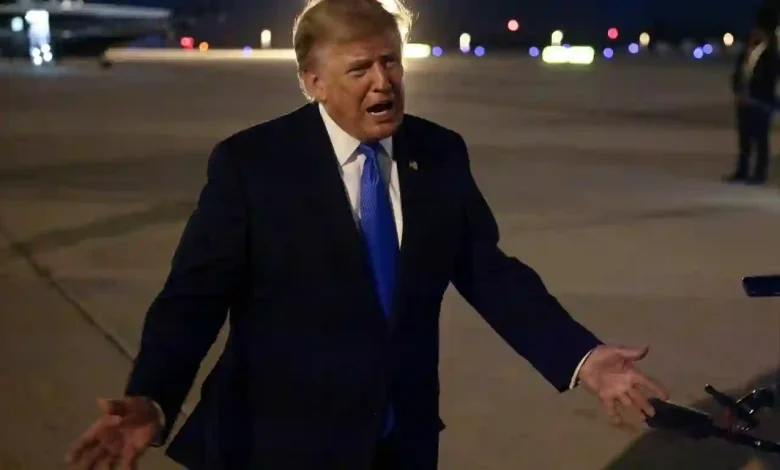
Table of Contents
Strikes on Iran are reportedly being planned by the United States military command as soon as this weekend, according to senior security officials in Washington. This planned offensive represents a critical, high-stakes juncture in the ongoing Iran war day 153, a conflict that has progressively threatened to engulf the entire Persian Gulf and Middle East region in a major multi-front conflagration. With the situation evolving at a rapid pace, intelligence services are working around the clock to refine targeting lists and analyze the strategic fallout of direct military confrontation. Although administration officials have heavily cautioned that these planned operations remain fluid and could still be altered, scaled back, or called off entirely depending on back-channel diplomatic communications, the massive deployment of naval and air assets indicates that a decisive strike window is active. This article provides a highly detailed, analytical exploration of the strategic, economic, and geopolitical factors driving this massive regional crisis.
Strikes :Deciphering the Impending US Military Action
The strategic calculations underlying the potential offensive represent a robust effort by the United States to re-establish military deterrence in the region. For months, asymmetrical attacks against commercial maritime transport and regional partners have occurred with relative impunity. According to military strategists, any upcoming kinetic operation is designed to disrupt the core operational capabilities of the Islamic Revolutionary Guard Corps (IRGC) without necessarily initiating a full ground invasion of the Iranian mainland. Analysts suggest that the target set will focus heavily on ballistic missile launching sites, drone command-and-control centers, radar warning installations, and select naval facilities along the southern coastline. However, conducting such precision airstrikes carries immense risk, as the potential for collateral damage or miscalculation remains incredibly high.
Strikes :Trump’s Rhetoric and Strategic Ambiguity
President Donald Trump signaled the advanced state of military readiness on Friday, delivering a stark and direct warning during a brief press conference. Speaking to reporters about the escalating situation, Trump stated, ‘we’ll be hitting them very hard,’ indicating that the administrative patience with Tehran has run thin. This rhetorical escalation followed an intensive Camp David cabinet meeting, where senior defense leaders, intelligence chiefs, and top diplomats gathered to debate the precise parameters of military intervention. As the logistics of maintaining a heightened military footprint in the Persian Gulf continue to strain the defense budget, the overall war with Iran costs have soared to historic levels, raising fiscal concerns in Washington. Economists and defense analysts argue that while military action may satisfy immediate political demands, the long-term financial and strategic commitments of a protracted war could severely strain national resources.
Strikes :Drone Strikes on Kuwait: A New Aggression?
The immediate catalyst for the current escalatory spiral occurred early Saturday morning local time when Kuwaiti military authorities reported intercepting a series of hostile aerial threats. Kuwaiti defense officials formally described the coordinated drone incursions as a direct act of ‘Iranian aggression’ aimed at destabilizing neutral Gulf nations. The state’s air defense networks successfully neutralized the majority of the incoming threats; however, debris and direct impacts from some of the systems struck a government facility and several civilian vehicles. Fortunately, local emergency services confirmed that no casualties were reported. This incident highlights the dangerous proliferation of unmanned systems across the region. The use of advanced Iranian drones deployed in regional strikes has significantly altered the defensive calculations for Gulf Cooperation Council (GCC) states, forcing them to rapidly re-evaluate their border security and integrated missile defense architectures.
Strikes :The Maritime Front: Tanker Hit Near the Strait of Hormuz
Simultaneously, the maritime corridors of the Middle East have experienced a severe surge in kinetic hostilities. The United Kingdom Maritime Trade Operations (UKMTO) agency received a critical report of a commercial vessel being struck by ‘an unknown projectile’ off the coast of Oman, near the highly strategic Strait of Hormuz. Although the strike damaged the tanker’s propulsion systems and structural integrity, the crew managed to maintain control of the vessel, and no casualties were reported in the immediate aftermath. No group has officially claimed responsibility for this maritime strike, leaving shipping companies in a state of high anxiety. This recent Strait of Hormuz tanker attack threatens to paralyze regional commerce. Historically, maritime disruptions in this narrow bottleneck have immediate global consequences, closely mirroring the commercial damage observed during the ongoing Red Sea shipping crisis. Shipping conglomerates are currently preparing to bypass the Persian Gulf entirely, leading to massive detours and skyrocketing operational expenses.
Regional Escalation and Retaliatory Dynamics
The geographic distribution of recent hostile acts confirms that the conflict has expanded far beyond localized borders. Over the past several weeks, security reports have documented a series of intense Iran attacks on US bases scattered throughout Jordan, Iraq, and Syria. These attacks, utilizing a mixture of precision-guided missiles and loitering munitions, represent a systematic effort by Iranian-aligned forces to degrade American logistical capabilities. In response to the threat of imminent US strikes, military leadership in Tehran has vowed to initiate a symmetric, comprehensive retaliatory campaign targeting both American military infrastructure and key commercial nodes of US-aligned nations. This cycle of strike and counter-strike creates an incredibly dangerous operational environment where the threshold for accidental all-out war is dramatically reduced.

Global Economic Fallout: Energy Markets on Edge
The macroeconomic consequences of this military escalation are already being felt in the international energy markets. Since the Strait of Hormuz serves as the primary artery for roughly twenty percent of global oil transit, even the mere threat of a prolonged conflict sent shockwaves through energy trading desks. Following the political and military developments on Friday, global oil prices projected to spike became a reality, with Brent crude immediately reacting to the rising geopolitical risk premium. Analysts warn that if active military strikes commence this weekend, oil prices could quickly climb past historic highs, unleashing a new wave of global inflation that would complicate the monetary policy goals of major central banks. Importing nations in Western Europe and East Asia are already drafting contingency plans to deal with potential energy shortages and high domestic fuel costs.
Comparison of Recent Hostile Incidents in the Gulf
To better understand the scale and scope of the current crisis, it is helpful to analyze the key maritime and terrestrial incidents that have transpired over the past few weeks. The table below details these major events, highlighting the targets, locations, and subsequent security impacts across the region.
| Incident Date | Location / Coordinates | Target / Asset Impacted | Key Details & Security Impact |
|---|---|---|---|
| Mid-July 2026 | Strait of Hormuz (Oman coast) | Kuwaiti-flagged tanker “The Kaifan” | Struck by a projectile, leading to crew evacuation and immediate rise in Brent crude oil prices. |
| August 1, 2026 | Kuwait (Government facility) | Government buildings & civilian vehicles | Multiple hostile drones intercepted by Kuwait air defense; officially declared as “Iranian aggression.” |
| August 1, 2026 | Gulf of Oman (Off Oman coast) | Commercial tanker (unknown origin) | Hit by an “unknown projectile” causing minor structural damage; no casualties reported by maritime agencies. |
| Late July 2026 | Jordan, Syria, and Bahrain | US military bases & logistical infrastructure | Repeated ballistic missile and drone attacks by IRGC forces targeting American personnel. |
Conclusion: Diplomatic Stalemate or All-Out War?
In conclusion, the situation in the Persian Gulf has reached a critical inflection point. The combination of imminent US military action, drone strikes on Kuwaiti infrastructure, and projectile attacks on maritime vessels near the Strait of Hormuz has created an unprecedented regional crisis. While the ultimate decision to initiate strikes remains in the hands of senior leadership in Washington, the geopolitical machinery is already in motion. The coming days will decide whether the region undergoes a devastating escalation into full-scale war, or if strategic deterrence can successfully compel both parties to pursue a diplomatic resolution. Until a clear path forward emerges, global markets and regional security forces remain in a state of maximum alert.