Hamas Agrees to Weapons Handover to New Gaza NCAG Administration 2026
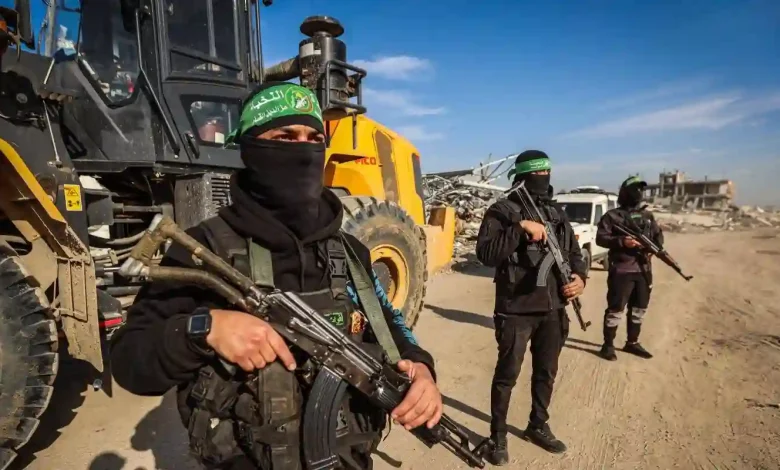
Table of Contents
Hamas has initiated a potentially historic shift in the geopolitical landscape of the Gaza Strip by declaring its willingness to hand over its entire arsenal to a newly formed Palestinian administrative body. This stunning development, delivered by senior Hamas negotiator Ghazi Hamad in a series of detailed statements to Reuters, represents a dramatic departure from the group’s long-standing policy of maintaining an independent armed wing. According to Hamad, the group is prepared to place its weapons under the direct authority of the National Committee for the Administration of Gaza (NCAG), a technocratic entity established under the auspices of the internationally mediated Board of Peace (BoP). However, this concession is far from absolute. It remains strictly contingent on the complete, verifiable withdrawal of Israeli forces from the Gaza Strip and the simultaneous dismantling of any Israeli-backed local militias. This announcement has sent shockwaves through regional diplomatic channels, occurring in the shadow of broader regional friction, including the high-stakes dynamics of Iran war day 151, which continue to dominate the security outlook of the Middle East.
Introduction to the Hamas Disarmament Proposal
The proposed framework for disarmament represents one of the most significant diplomatic maneuvers since the outbreak of the conflict. Hamas’s leadership, facing immense pressure from both local populations and international mediators, appears to be exploring alternative governing structures that could relieve the extreme humanitarian stress on the enclave. By signaling an intention to transition weapons control to a civilian-led administration, the group is attempting to shift the responsibility for postwar reconstruction and security to the international community. Ghazi Hamad stressed that this gesture is a painful but necessary concession aimed at saving the people of Gaza from continuous devastation. However, the proposal remains a hard sell for many regional actors who view the group’s weapons as their primary strategic leverage, and the path to actual implementation is fraught with deep-seated skepticism from both sides of the border.
The Role of the National Committee for the Administration of Gaza (NCAG)
The National Committee for the Administration of Gaza, or NCAG, is a transitional, technocratic, and apolitical body mandated by the United Nations under Security Council Resolution 2803. Formed in January 2026, the committee was designed to succeed the Hamas-run civilian administration and provide a neutral, professional governance structure capable of delivering essential public services to the war-weary population of Gaza. Under the leadership of its Chief Commissioner, former Palestinian official Ali Abdel Hamid Shaath, the 15-member committee is composed strictly of independent Palestinian professionals and experts who are unaffiliated with any political or militant faction. The NCAG’s mandate covers the day-to-day operations of the civil service, including critical areas such as healthcare, education, judicial systems, and infrastructure reconstruction. Despite having completed extensive preparations, the NCAG’s ability to assume de facto governance inside the Strip has been severely restricted. Israeli border controls and ongoing military maneuvers have kept committee members temporarily operating out of Cairo, Egypt. Even during periods when regional airstrikes paused temporarily to allow humanitarian relief convoys to enter the enclave, the political impasse has prevented a smooth transition of administrative power.
The Board of Peace and United Nations Resolution 2803
The structural backing for this transition is the Board of Peace (BoP), an ambitious international organization championed by US President Donald Trump and formally established during the World Economic Forum in Davos in January 2026. Backed by United Nations Security Council Resolution 2803, the Board of Peace is tasked with overseeing the comprehensive implementation of the Gaza peace plan, managing reconstruction funds, and deploying an International Stabilization Force (ISF) to maintain order. The board’s charter has been signed by over two dozen nations, each contributing to a multi-billion-dollar fund aimed at rebuilding Gaza’s shattered infrastructure on the condition of total demilitarization. The Board of Peace operates under the principle of ‘One Authority, One Law, One Weapon,’ a doctrine that demands the complete disarmament of all non-state actors in Gaza. The roadmap outlines a sequential process where Hamas’s heavy weapons, rocket depots, and underground production facilities are to be systematically decommissioned and stored by the NCAG. For international observers, this delicate balancing act is seen as a key litmus test for regional stability, especially as diplomatic efforts fluctuate and US-Iran hostilities ease in some sectors while intensifying in others.
Key Conditions: Israeli Withdrawal and Militia Dismantlement
Ghazi Hamad’s recent remarks underscore that Hamas views the disarmament process as a strictly bilateral and highly conditional agreement. Speaking to reporters, Hamad emphasized that the handover of offensive weapons will only commence once the Israel Defense Forces (IDF) begin a phased and verified withdrawal from the territory they currently occupy. Additionally, Hamas has demanded that the NCAG and the incoming International Stabilization Force actively dismantle any armed militias backed by Israel within the territory. Hamad made it clear that if Israel fails to endorse the Board of Peace’s roadmap or refuses to abide by its phased commitments, Hamas will immediately halt the disarmament process. This stance highlights the deep mistrust that continues to stall progress on the ground. The success of this sequencing depends heavily on broader diplomatic channels, particularly given how closely the conflict in Gaza is linked to the ebbs and flows of US-Iran diplomacy, which often dictates the actions of various proxy forces across the region.
Comparative Analysis of the Transition Roles and Timelines
To better understand how the proposed transition is structured, we can examine the specific divisions of authority proposed by the Board of Peace roadmap. The following table highlights the responsibilities of the key organizations involved in the transition process:
| Organization / Entity | Primary Mandate | Key Governance & Security Responsibilities | Operational Status & Challenges |
|---|---|---|---|
| National Committee for the Administration of Gaza (NCAG) | Transitional Palestinian Technocratic Governance | Overseeing civilian services (health, education, electricity), municipal administration, and storing decommissioned weapons. | Ready to deploy; currently delayed due to security blockades and ongoing negotiations over power transition. |
| Board of Peace (BoP) | International Peacebuilding & Reconstruction Oversight | Providing financial resources, managing the Gaza Peace Plan, and coordinating the deployment of peacekeeping forces. | Active; led by the United States and supported by a coalition of over 25 participating states. |
| International Stabilization Force (ISF) | Security Enforcement & Peacekeeping | Acting as a buffer between the IDF and NCAG-controlled zones; providing security for humanitarian aid delivery. | Pending deployment; contingent on formal agreements and verified ceasefires between both combatants. |
| International Verification Committee (IVC) | Compliance Monitoring & Certification | Verifying compliance of both Israeli troop withdrawals and Hamas’s weapons handovers at each phase. | To be established; composed of BoP representatives, guarantor states, and international observers. |
Geopolitical Impacts and the Broader Regional Conflict
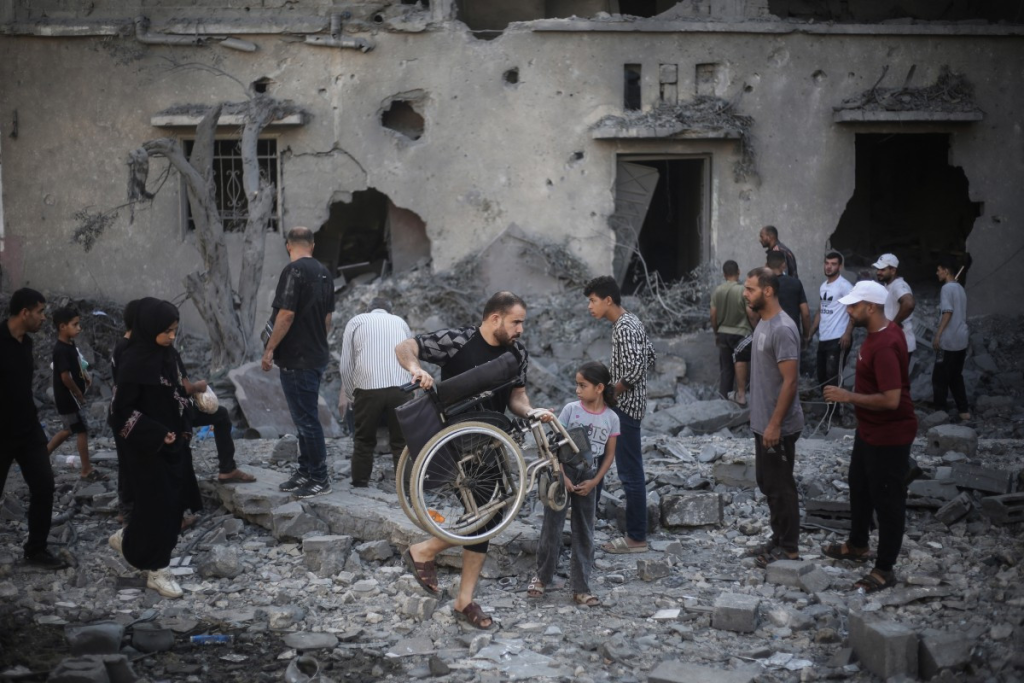
The proposed disarmament of Hamas does not take place in isolation; rather, it is deeply embedded in the wider Middle Eastern geopolitical landscape. For nearly two years, the region has been engulfed in intense security crises that have drawn in global superpowers and regional heavyweights alike. Diplomatic efforts to stabilize Gaza have frequently been delayed by broader conflicts, making a sustainable U.S.-Iran conflict pause highly desirable but notoriously difficult to maintain. The ongoing tensions have demonstrated that localized agreements in the Palestinian territories are heavily dependent on the strategic calculations of larger regional powers, who often use local proxy networks as leverage in their broader geopolitical chess matches.
The Influence of the Iran-US Tensions on Regional Ceasefire Efforts
The overarching Iran-US conflict remains the single most influential external factor shaping the Gaza peace process. Hamas, which has historically relied on financial, technical, and military support from Tehran, must navigate these negotiations with an eye toward its regional patron’s strategic objectives. In past negotiating rounds, when diplomatic breakdowns occurred and Iran rejects peace talks, local factions in Gaza have historically hardened their positions, leading to immediate stalemates. Conversely, when back-channel diplomacy between Washington and Tehran yields progress, a corresponding softening of positions can often be observed on the ground in Gaza, allowing transitional initiatives like the NCAG to gain temporary traction.
How Regional War Dynamics Shaped the Board of Peace Initiative
The sheer scale of the economic and humanitarian devastation across the region has forced international mediators to adopt highly unconventional diplomatic frameworks. The widespread Iran war fallout has sent shockwaves through global energy markets, disrupted shipping corridors in the Red Sea and the Strait of Hormuz, and placed massive financial burdens on neighboring states. This widespread economic strain is what ultimately drove the creation of the Board of Peace. By combining massive reconstruction funds with strict security demands, international mediators hope to present both Hamas and Israel with an exit strategy that addresses Israel’s security requirements while offering the Palestinian population a viable path toward economic recovery and eventual self-determination.
Challenges to Implementation: Israeli Rejection and Technical Hurdles
While the Board of Peace’s roadmap has been hailed as a breakthrough by some international diplomats, it faces immense hurdles on the ground. The Israeli government has expressed profound skepticism regarding Hamas’s willingness to undergo genuine disarmament. Israeli officials have repeatedly stated that the complete demilitarization of the Gaza Strip and the total destruction of Hamas’s military infrastructure are non-negotiable preconditions that must be fully realized before any withdrawal of IDF troops can begin. This stands in stark contrast to the phased, simultaneous sequencing proposed by the Board of Peace and accepted by Hamas. Additionally, there are major technical challenges involved in locating, cataloging, and neutralizing Hamas’s vast network of subterranean tunnels and hidden weapons caches. The newly proposed International Verification Committee (IVC) will face the monumental challenge of verifying compliance in an environment characterized by decades of deep-seated animosity and mutual distrust.
Future Outlook for Gaza’s Technocratic Governance
The success of this transition rests entirely on whether the involved parties can transition from military confrontation to structured administrative cooperation. The proposed ‘Tel Sultan pilot zone’ in Rafah, administered by the NCAG and secured by the ISF, represents an initial attempt to establish a ‘Hamas-free’ governance model within the Strip. If this pilot program proves successful, it could serve as a blueprint for the gradual expansion of technocratic administration throughout Gaza. However, if the sequencing of Israeli troop withdrawals and Hamas’s weapons handovers cannot be resolved, the NCAG risks remaining a government-in-exile, and the Board of Peace’s ambitious roadmap will join a long history of failed Middle Eastern peace initiatives. For the millions of civilians living in Gaza, the stakes could not be higher, as the failure of this transition would almost certainly signal a return to open conflict and further humanitarian distress.