Iran Attacks U.S. Bases in Kuwait and Ships in Egypt 2026
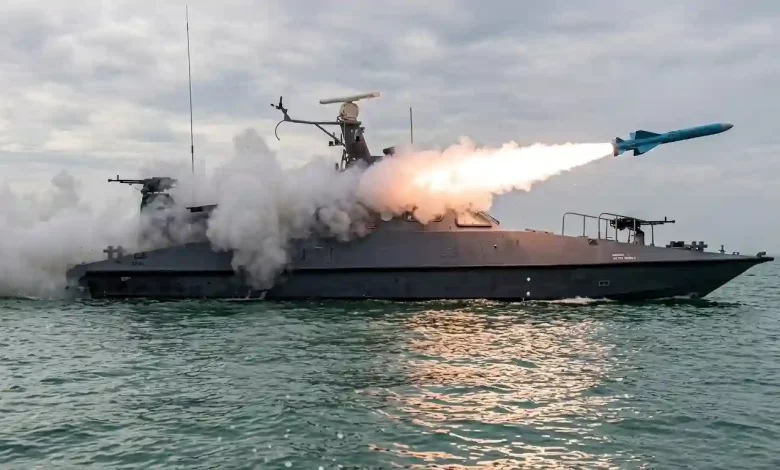
Table of Contents
Iran has launched a series of highly coordinated attacks targeting strategic U.S. military bases and assets in Kuwait and Bahrain, according to a formal declaration by the Iranian army. This sudden multi-directional offensive represents a dangerous progression in what has become a highly volatile geopolitical crisis. The attacks occur amid a continuous Strait of Hormuz maritime crisis, showing that the theater of operations has now breached the boundaries of the Persian Gulf and expanded deeply into neighboring waters. Simultaneously, the Egyptian government confirmed that an explosive drone hit two commercial shipping vessels docked at its busy Mediterranean port of Damietta. This shipping incident marks the first confirmed military attack on Egyptian soil since the devastating conflict between the United States and Iran erupted in late February, shatteringly altering regional security dynamics. Security experts believe this dual-theater escalation is designed to overwhelm Western defense networks, signaling a major turning point in the war.
Iran :The Unprecedented Strikes on Kuwait and Bahrain
The targeted strikes on U.S. positions in Kuwait and Bahrain strike directly at the core of the American forward-deployed defense network in the Gulf region. Bahrain houses the expansive Naval Support Activity Bahrain, which serves as the headquarters of the U.S. Naval Forces Central Command (NAVCENT) and the formidable United States Fifth Fleet. A barrage of medium-range ballistic missiles and advanced attack drones targeted these facilities, aiming to disrupt communications, command-and-control operations, and naval deployment pipelines.
At the same time, strategic U.S. assets inside Kuwait—most notably Camp Arifjan and Ali Al Salem Air Base—faced incoming salvos of precision-guided munitions. These installations are crucial logistical and operational transit hubs for thousands of American personnel and combat vehicles. By attacking these deep-theater nodes, Iranian military planners are actively attempting to isolate regional bases and challenge the security guarantees of Gulf Cooperation Council (GCC) states. These aggressive maneuvers highlight the soaring costs of the war, which are severely draining the defensive capabilities of regional powers and straining coalition budgets to unprecedented levels.
Iran :The Mediterranean Flashpoint: Drone Strikes at Damietta Port
While the strikes in the Gulf directly targeted military installations, the drone strike in Egypt’s Mediterranean port of Damietta targets global trade architecture. According to official reports from Cairo, two commercial shipping vessels were struck by long-range explosive unmanned aerial vehicles (UAVs) while docked at the busy container terminal. Damietta, located near the mouth of the Nile, is one of Egypt’s most critical trading ports, specializing in LNG, petrochemicals, and agricultural imports.
This bold assault marks the first time that hostilities have directly affected Egyptian territory since the war commenced. Up to this point, Egypt had successfully managed to maintain a precarious diplomatic neutrality, offering mediation while protecting its domestic infrastructure. The expansion of hostilities to the Mediterranean represents a significant escalation. It proves that Iranian proxy networks or long-range strike capabilities can bypass dense air defenses to strike deep into North Africa, threatening the integrity of the Suez Canal shipping lane. Analysts warn that these actions may be part of a broader regional offensive designed to force international shipping lines to abandon the Red Sea and Eastern Mediterranean transit routes completely.
Iran :Comparative Analysis of Regional Base Vulnerabilities
To fully comprehend the structural shift in regional security, it is necessary to examine the vulnerabilities of the facilities targeted in this multi-axis strike. The following table highlights the vital statistics, weaponry utilized, and strategic consequences of the attacks on these key installations:
| Target Facility / Location | Strategic Significance | Primary Assets Targeted | Weaponry & Tactics Used | Estimated Operational Impact |
|---|---|---|---|---|
| NSA Bahrain (Manama, Bahrain) | HQ of NAVCENT and the U.S. Fifth Fleet; coordinates maritime security in the Persian Gulf and Red Sea. | Command-and-control centers, military communications arrays, and deep-water docks. | Medium-range ballistic missiles combined with swarming attack UAVs. | Moderate; temporary communication disruptions and defensive posture upgrades. |
| Camp Arifjan & Ali Al Salem (Kuwait) | Crucial logistics, storage, and aerial transit hubs for forward-deployed U.S. forces in Iraq and the Gulf. | Supply depots, vehicle staging yards, and aircraft runways. | Precision-guided short-range ballistic missiles and tactical loitering munitions. | Low-to-moderate; structural damage to hangars and runway operations paused. |
| Damietta Port (Damietta, Egypt) | Critical Mediterranean hub for commercial cargo, LNG exports, and European-North African shipping lanes. | Commercial shipping vessels, cargo container terminals. | Long-range explosive suicide drones (UAVs). | High geopolitical impact; halts local shipping, spikes maritime insurance premiums. |
Iran :Strategic Aims of Tehran’s Multi-Front Campaign
Iran’s military actions are not isolated responses but are part of a meticulously coordinated doctrine of asymmetric warfare designed to overwhelm Western defense grids. By striking Kuwait, Bahrain, and the Egyptian coast simultaneously, Tehran is sending a clear message: no location in the Middle East is beyond its operational reach. The deployment of precision strike packages targeting both hardened military targets and vulnerable commercial maritime infrastructure forces Western coalition forces to disperse their expensive air defense systems over an extremely vast area.
Asymmetric Drone Swarms and Strategic Dispersion
The coordination of drone swarms alongside precision-guided ballistic missiles represents a significant advancement in asymmetric tactical execution. Tehran has successfully harnessed low-cost drone technology to probe and deplete extremely sophisticated Western defense grids. By leveraging these swarms to locate blind spots in regional radar coverage, the Iranian army can direct larger, more devastating payloads toward high-value military installations. This strategic dispersion forces U.S. forces to deploy extensive naval and aerial assets across multiple maritime choke points, reducing their offensive readiness. U.S. military commanders are now faced with the difficult task of deciding whether to prioritize the defense of high-value naval assets in the Gulf or commercial shipping channels in the Mediterranean. Furthermore, by bringing the war directly to Egypt’s doorstep, Tehran is putting pressure on regional Arab leaders, attempting to demonstrate that continuing to host American forces or offering tacit support to the U.S. military will yield severe domestic security consequences.
U.S. Military Response and Coalition Readiness
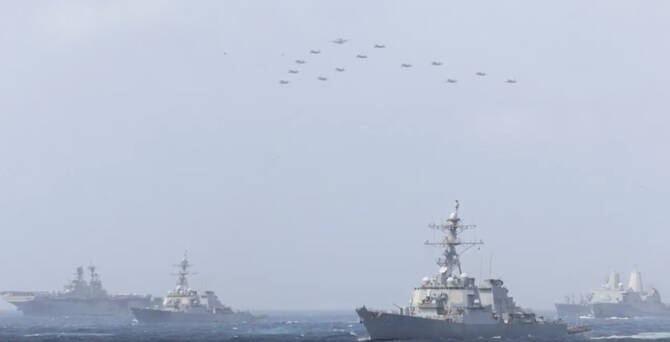
The response from the Pentagon and the White House has been swift and firm, marked by emergency national security meetings and immediate defense posture reviews. The strikes on the U.S. assets have triggered immediate counter-battery fire and defensive interceptions by regional missile shields. Strategic bombers and carrier strike groups have been put on high alert to carry out retaliatory operations, escalating the threat of direct, uncontained conflict
Air Defense Saturation and Interception Logistics
The operational reality of intercepting dozens of cheap loitering munitions with multi-million dollar interceptors poses a major threat to long-term coalition sustainability. Military defense analysts warn that the current interception ratios are economically unfavorable for Western forces. If the war continues to escalate, regional storage of air defense interceptors, such as those used by Patriot and Aegis combat systems, could face critical supply crunches. This logistical challenge forces commanders to make difficult decisions regarding which strategic installations to defend first. The continuous expansion of the war zone has triggered intense debates in Washington regarding defense resource allocation. There have already been massive regional deployments and continuous combat missions, similar to the intense naval standoffs in the Persian Gulf that have plagued international shipping lanes for months. Military analysts fear that without a significant bolster in troop numbers and missile defense systems, the current defensive architecture may struggle to withstand simultaneous, saturation-level drone and ballistic missile attacks.
Geopolitical Ramifications for Egypt and Regional Allies
The attack on Damietta is a profound security crisis for Egypt. For months, Cairo has attempted to shield its economy from the conflict, dealing with severe drops in Suez Canal revenues due to disruptions in the Bab el-Mandeb strait. This direct breach of Egyptian sovereignty forces President Abdel Fattah el-Sisi’s government into a complex strategic dilemma. Egypt must now choose between launching its own retaliatory measures, aligning more closely with the U.S.-led coalition, or seeking diplomatic avenues to de-escalate the situation before further domestic targets are hit.
These historic developments are leading to massive global geopolitical shifts, as traditional regional heavyweights are forced to rewrite their national security strategies in real-time. If Egypt decides to take a more active role in the anti-Iran coalition, it could shift the balance of power, but it also risks turning its mainland into a permanent target for proxy militias operating from Yemen, Iraq, and Syria.
Global Economic and Energy Consequences
The economic fallout of this multi-front strike was felt instantly across global markets. Oil benchmarks spiked, reflecting fears that the Persian Gulf and Mediterranean shipping lanes could be closed simultaneously. Insurance companies have already suspended coverage for several transit routes, while maritime logistics giants are routing container ships around the Cape of Good Hope, a costly detour that adds weeks to transit times.
This development introduces a severe threat of long-term, devastating economic fallout for a global economy already reeling from inflation and supply chain bottlenecks. While the international community has occasionally hoped for temporary diplomatic pauses, the scale of these coordinated strikes indicates that both sides are preparing for a long, grueling conflict with no clear end in sight. As the war enters this dangerous new phase, the global community must prepare for a prolonged period of high inflation, energy instability, and heightened geopolitical risk.