U.S. military commanders Advise Trump to Halt Iran Bombing 2026
Table of Contents
U.S. military commanders advised President Donald Trump that they were running out of targets in Iran after a highly intensive two-week bombing campaign, prompting a sudden halt in the active military offensive. The dramatic decision, which was finalized over the weekend, represents a major tactical turning point in the escalating Middle Eastern theater. The pause occurred shortly after the U.S.-Iran conflict escalated after the 13th night of continuous airstrikes, leaving both nations locked in a fragile stand-off. Senior defense officials, speaking on condition of anonymity, revealed that military leadership warned the White House that continuing the aerial bombardment would yield diminishing tactical returns while severely depleting the American arsenal of precision-guided munitions and critical defensive interceptors.
Strategic Impasse: Top Brass Warns of Depleting Target Inventories
According to extensive reports from inside the Pentagon, President Trump’s decision to suspend the military campaign was heavily influenced by recommendations from his top military brass. Commanders in the field argued that the primary strategic objectives—disrupting Iran’s ability to close off the Strait of Hormuz and punishing regional proxies—had reached the absolute limit of what aerial bombing could achieve. The chairman of the Joint Chiefs of Staff, General Dan Caine, reportedly expressed deep concern during a private meeting on Friday regarding the rate of munitions expenditure, particularly the sophisticated interceptors used by American air defense systems to protect regional U.S. assets.
Earlier in the month, as CENTCOM strikes on Iran entered their ninth consecutive day, military planners were already encountering a rapidly shrinking inventory of high-value targets. Striking empty warehouses or previously hit radar stations would not only fail to deter Tehran but would also expose multi-million-dollar coalition aircraft to lingering Iranian air defense networks. This strategic calculation prompted civilian and military aides alike to advocate for a temporary pause to re-evaluate the campaign’s overall goals and conserve critical ammunition reserves. Strategic analysts noted that this operation demonstrated how the regional conflict redefined the nature of modern asymmetric warfare.
The Human and Tactical Toll of the Two-Week Campaign
The intensity of the two-week bombardment resulted in a severe physical and human toll across the Persian Gulf. Hundreds of airstrikes targeting rocket launchers, underground drone storage depots, and command centers killed scores of military personnel and proxy fighters inside Iran. However, the U.S. military also suffered painful losses during this high-stakes confrontation. Four U.S. service members were killed, and multiple others were wounded in a series of retaliatory missile and loitering munition attacks launched by pro-Iranian groups targeting coalition bases in Iraq, Syria, and Jordan.
These casualties underscore the extreme volatility of the conflict. The Pentagon has been forced to constantly adapt its defensive posture as proxy forces utilized complex swarming tactics. The loss of American lives intensified pressure on the administration to either launch a massive, risky ground invasion or accept the advice of commanders to find a diplomatic off-ramp, ultimately leading to the current operational pause.
Tehran Asserts Unyielding Control Over the Strait of Hormuz
Despite the severe damage inflicted on its defensive infrastructure, Tehran has wasted no time in projecting strength and declaring that the U.S. air campaign failed to break its regional influence. On Monday morning, Iranian state media proudly claimed that its naval patrols had successfully turned back six “offending ships” that had attempted to transit the Strait of Hormuz without receiving permission from Iranian authorities. One of the turned-back vessels reportedly suffered a minor accident during the encounter, though details remain scarce.
By enforcing this strict maritime blockade, Iran aims to formalize its total control over the world’s most critical energy shipping channel. Even as Iran adapted its ballistic missiles to evade U.S. defenses, its naval forces maintained an active presence in the narrow waters. An official Iranian state media source warned that the traffic routes within the strait are strictly determined by Tehran, declaring all alternative routes promoted by Western forces to be “contaminated” and hazardous. This directly challenges the U.S. Navy’s efforts to establish secure commercial lanes along the coast of Oman, where Washington had previously advised civilian shipping companies to navigate to bypass Iranian territorial waters.
Drone Activity in Jordan and Iraq: Testing a Fragile Ceasefire
As the active bombing campaign paused, regional security agencies reported a sudden surge in drone activity over Jordan and Iraq. Military analysts believe these unmanned aerial vehicles represent a strategic effort by Iranian-backed proxies to test the parameters and stability of the unofficial ceasefire. By operating surveillance and potential attack drones in the airspace of key U.S. allies, proxy networks can assess coalition reaction times and map active radar positions without initiating a direct kinetic engagement.
This subtle, gray-zone probing stands in sharp contrast to the overt, massive airstrikes against Iran launched on Sunday during the absolute peak of the U.S. offensive. Security experts warn that these drone flights are highly provocative and could easily trigger accidental escalation if a drone is misidentified or successfully strikes a sensitive military installation in Jordan or Iraq, unraveling the weekend’s hard-won lull in hostilities.
Diplomatic Freeze: Iran Rejects Direct Resumption of Peace Talks
While Washington has attempted to frame the bombing pause as a diplomatic opportunity, Tehran has quickly dashed hopes of immediate peace negotiations. The U.S. Ambassador to the United Nations, Mike Waltz, stated publicly on Sunday that President Trump had paused the military strikes to allow “room for negotiations” and give diplomacy a chance to succeed. However, Iran’s Foreign Ministry spokesperson, Esmail Baghaei, firmly rejected this narrative during a televised press conference in Tehran on Monday.
Baghaei stated unequivocally that Iran has not requested, and is not currently seeking, a resumption of peace talks with the United States. He accused Washington of acting in bad faith and declared that Iran would not allow the U.S. or its regional allies to unilaterally dictate the terms of conflict resolution. With U.S. airstrikes against Iran entering a 13th night just prior to the halt, the diplomatic atmosphere remains deeply frozen, with both sides unwilling to make the first major concession.
Economic Shockwaves: Brent Crude Oil Responds to the Halt
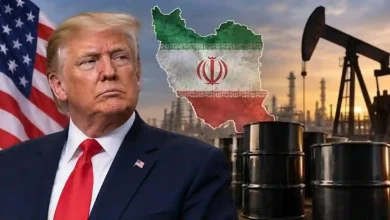
The suspension of active combat operations brought immediate, volatile reactions in global energy and financial markets. Throughout the two-week bombing campaign, oil prices had risen steadily as traders feared a major disruption to the global supply chain, particularly if the Strait of Hormuz were permanently closed. Last week, Brent crude oil spiked above $100 per barrel for the first time in months, sparking widespread economic anxieties in Western consumer nations.
The oil market experienced massive U.S. economic shockwaves as oil hit $100 per barrel, but prices fell dramatically by over 7.8% following the news of the weekend halt, sliding back to just under $90 per barrel. While the dip provides temporary relief, energy analysts warn that the underlying geopolitical risks remain unresolved. So long as Iran maintains its tight naval grip on the strait, any sudden maritime incident or resumption of strikes could send prices surging once again.
Behind Closed Doors: General Dan Caine’s Munitions Warning

The internal debate within the Trump administration highlighted the deep logistical challenges of maintaining a high-intensity, multi-week air campaign. Behind closed doors, General Dan Caine, the chairman of the Joint Chiefs of Staff, raised critical alarms regarding the rapid consumption rate of high-end Patriot air defense missiles and other interceptor stockpiles. These air defense assets are essential for safeguarding regional hubs, such as U.S. bases hosting thousands of American troops.
The urgency of Caine’s warnings became apparent when the conflict escalated after two U.S. troops were killed in a previous proxy strike, forcing air defense systems to operate at maximum capacity. Caine argued that exhausting these premium munitions in a prolonged bombing campaign with no clear political end-state would leave the U.S. vulnerable to larger global contingencies, ultimately convincing President Trump to halt the strikes.
Tactical and Geopolitical Summary of the Campaign
The table below summarizes the key operational, tactical, and diplomatic metrics of the two-week campaign, contrasting the actions and outcomes of both parties involved in this historic confrontation.
| Key Parameter | United States & Coalition Forces | Islamic Republic of Iran |
|---|---|---|
| Campaign Duration | 13 consecutive nights of active airstrikes | 13 nights of defensive & retaliatory proxy responses |
| Reported Casualties | 4 service members killed; multiple wounded | Scores of military personnel and proxy fighters killed |
| Naval Incidents | Promoted commercial route close to Oman’s coast | Turned back 6 “offending” ships in Strait of Hormuz |
| Munitions Concern | Depletion of high-end air defense interceptors | Depletion of radar installations & launch infrastructure |
| Diplomatic Stance | Paused campaign to give space for negotiations | Rejected peace talks; maintained absolute transit control |
The Path Forward: De-escalation or Temporary Lull?
As the guns fall silent, regional experts remain divided on whether this pause represents the beginning of genuine de-escalation or merely a brief operational lull. The fundamental drivers of the conflict—disputes over maritime transit rights, regional proxy warfare, and direct diplomatic communications—remain completely unaddressed. While the United States has demonstrated its capacity to project overwhelming airpower, Iran has shown an enduring ability to survive high-intensity strikes and maintain its strategic chokehold over global energy lanes.
The coming days will prove critical. If the drone probes in Jordan and Iraq escalate or if further commercial shipping is blocked in the Strait of Hormuz, President Trump will face immense domestic pressure to resume the bombing. Conversely, if backchannel communications through regional intermediaries like Oman can establish a more durable framework for transit rights, this military pause could transition into a lasting diplomatic resolution. Until then, the Middle East remains on a knife-edge, waiting to see which side will make the next critical move.