Iran’s warning to Britain 2026: IRGC Threatens UK and Gulf States
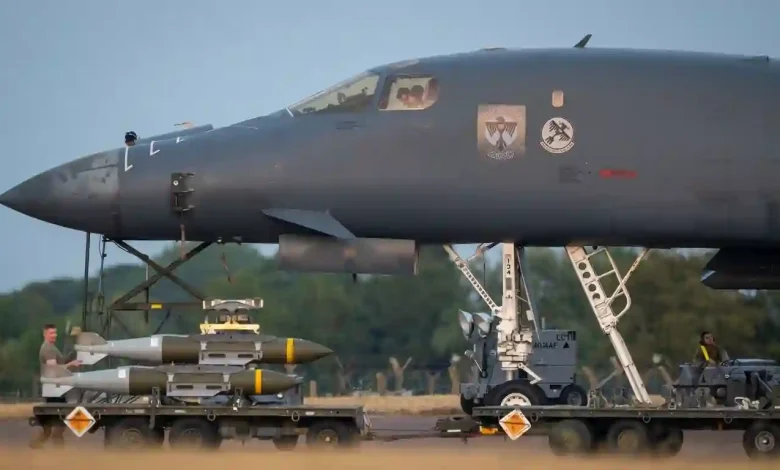
Table of Contents
Iran’s warning to Britain has sent shockwaves through international diplomatic and military circles, signaling a dangerous expansion of the ongoing Western-Iranian confrontation. Speaking on Saturday, a spokesperson for Iran’s Islamic Revolutionary Guard Corps (IRGC) explicitly declared that the United Kingdom would become a “definite and legitimate target” if it supported the United States in any military conflict against Tehran. The declaration, broadcasted by the state-run IRIB network, underscores how rapidly the geopolitical situation has deteriorated. This stark warning is not merely rhetorical; it is tied directly to the deployment of American offensive assets on British soil, raising the stakes for London as it navigates its security partnership with Washington.
The timing of this warning is critical, occurring just as U.S. airstrikes against Iran entered their thirteenth night, marking one of the most intense bombing campaigns in recent Middle Eastern history. As the exchange of fires continues to intensify, the risk of miscalculation escalates exponentially. The international community is witnessing an unprecedented escalation that could pull global superpowers and European nations into a direct, kinetic confrontation with the Islamic Republic.
The IRGC Declaration: Targets and Thresholds
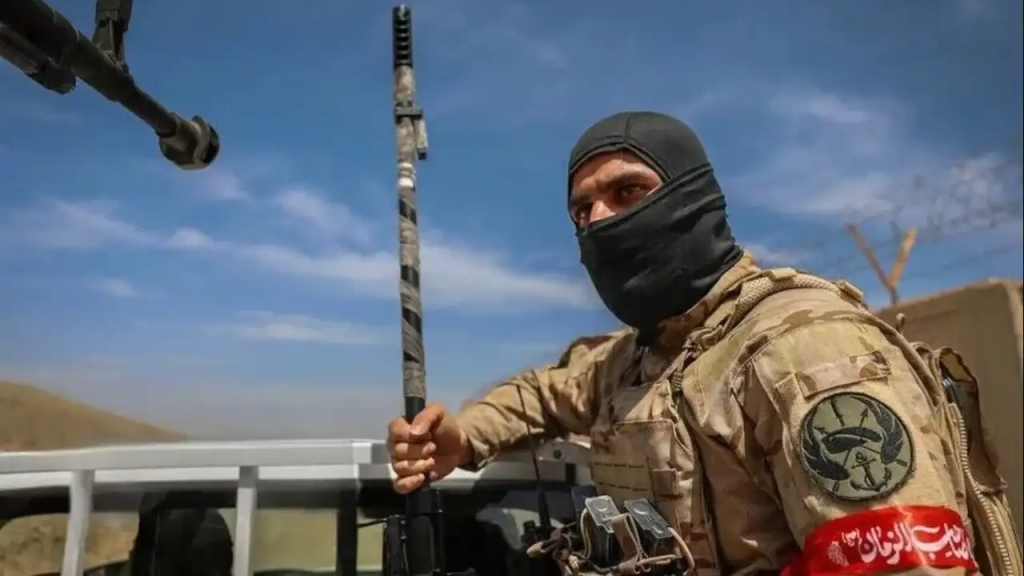
The IRGC’s statement marks a departure from localized conflicts to a broader threat matrix that explicitly targets European and regional partners of the United States. According to the IRIB broadcaster, the Iranian military leadership announced that any country facilitating or participating in American actions would face direct retaliation. This includes not only Western allies like the UK but also Persian Gulf nations hosting U.S. bases. The spokesperson made it clear that Iran will no longer distinguish between the primary aggressor and those who provide the logistical platform for such aggression.
With Trump weighing a massive attack to disable Iran’s nuclear and command-and-control facilities, the IRGC is attempting to construct a ring of deterrence. By threatening key foreign intermediaries, Tehran hopes to raise the political and security costs for any coalition that the U.S. tries to assemble. This strategic posture is designed to force sovereign nations to think twice before providing logistics, airspace, or intelligence support to American forces. Historically, Iran has relied on proxy networks to conduct asymmetric warfare, but this latest warning signals a readiness to employ state-on-state conventional assets, including ballistic missiles and long-range attack drones, directly against foreign military installations.
The Strategic Role of British Airfields and RAF Fairford
A central element of the IRGC’s warning is the physical involvement of British territory. The spokesperson claimed that U.S. strategic bombers had recently utilized British airfields—specifically highlighting RAF Fairford in Gloucestershire—to conduct offensive missions. RAF Fairford is a well-known forward-operating location for U.S. Air Force heavy bombers, including B-1 Lancer, B-52 Stratofortress, and B-2 Spirit stealth aircraft. Because these platforms require specialized maintenance and exceptionally long runways, RAF Fairford plays an indispensable role in projecting American air power into the Middle East and European theaters.
Iranian military planners assert that because these bases are utilized for operations that threaten Iranian sovereignty, they lose their sovereign protection and become active combat zones. In addition, the IRGC claimed that a recent U.S. naval blockade on Iranian ports has further escalated the need for Tehran to project power outward, justifying their preemptive warnings to foreign facilitators. The accusation that London is actively complicit in these strikes places the UK government under intense domestic and international scrutiny, as the public grapples with the potential of domestic infrastructure becoming targets of state-sponsored retaliation.
Regional Implications: Gulf States Under Fire
The warning extends far beyond Europe, heavily impacting the delicate security architecture of the Persian Gulf. Gulf states such as Qatar, Bahrain, the United Arab Emirates, and Saudi Arabia host extensive U.S. military infrastructure. Al-Udeid Air Base in Qatar, for instance, serves as the forward headquarters of U.S. Central Command (CENTCOM), while the U.S. Navy’s Fifth Fleet is stationed in Bahrain. The IRGC has warned these governments that their hosting of American hardware and personnel makes them active participants in any potential conflict. By lumping Gulf states into the same category as Britain, Iran is attempting to shatter the diplomatic neutrality these nations have tried to maintain.
This regional warning has added immense pressure on Gulf monarchies. While they depend on U.S. security guarantees, they are highly vulnerable to Iranian missile and drone barrages. As the potential for massive strikes looms, these countries are attempting to balance their alliances with the immediate necessity of protecting their vital infrastructure from asymmetric Iranian reprisal. Recent backchannel diplomatic efforts by Kuwait and Oman have sought to reassure Tehran that their airspace will not be used for offensive actions against Iran, but the IRGC’s broad-brush threats suggest that any active U.S. presence in the region could trigger a wide-ranging, regional response.
Comparative Assessment of Regional Military Capabilities
To understand the gravity of these threats, it is essential to examine the distribution of military assets and the strategic vulnerabilities of the primary actors involved in this brewing crisis. The potential theater of war spans thousands of miles, linking the airfields of Western Europe to the highly contested waters of the Persian Gulf and the Strait of Hormuz. Below is a comparative assessment of the primary military profiles and vulnerability indexes of the key entities involved:
| Nation/Entity | Primary Military Asset/Role | Vulnerability Profile | Official Stance in Conflict |
|---|---|---|---|
| United Kingdom | RAF Fairford (US Bombers), Sovereign Bases in Cyprus (RAF Akrotiri) | Medium (Cyprus assets vulnerable; mainland UK safe from conventional short-range missiles) | Defensive readiness; standby support for US operations under strict international law |
| Gulf States | Al-Udeid Air Base, Fifth Fleet Base, critical airspace transit | High (Directly within range of IRGC ballistic missiles, cruise missiles, and suicide drones) | Advocating for immediate de-escalation; seeking neutrality and restricting offensive launches |
| United States | Strategic bombers, carrier strike groups, regional CENTCOM installations | Medium to High (Troops in Iraq, Syria, and Jordan subject to asymmetric drone and rocket fire) | Active containment, deterrence, and high-intensity targeted strikes against IRGC targets |
| Iran (IRGC) | Ballistic missile arsenal, proxy networks, Strait of Hormuz blockade capacity | Critical (Subject to heavy aerial bombardment, economic blockades, and command infrastructure degradation) | Asymmetric deterrence, threatening regional strikes on hostile hosting bases |
The data highlights the asymmetric nature of the conflict. While the United States possesses overwhelming conventional air and naval superiority, Iran’s geographical proximity to key transit routes and its massive stockpile of short- and medium-range ballistic missiles allow it to hold regional allies hostage. This asymmetrical lever is precisely what the IRGC hopes to exploit to prevent a cohesive global coalition from forming against it.
Economic Disruptions and Energy Security in the Strait of Hormuz
A confrontation involving the UK, the U.S., and Iran would inevitably choke global trade networks, particularly through the Strait of Hormuz. Roughly a fifth of the world’s petroleum passes through this narrow waterway daily, making it the most critical maritime choke point in the world. The IRGC has repeatedly shown its willingness to target commercial shipping and oil tankers as a tool of asymmetric warfare. Since the conflict escalated rapidly, global oil markets have reacted with severe volatility, with traders bracing for a potential supply disruption.
Energy security analysts warn that if Iran executes its threats against the Gulf states or targets British maritime assets in the region, a severe inflation threatens the global economy, potentially causing oil prices to spike past historic highs. A prolonged disruption of energy supplies would compound the economic strain on European nations already struggling with fiscal deficits and high living costs. For the UK, which is highly reliant on global energy markets, any blockade or disruption in the Gulf would immediately translate to soaring energy bills and inflation at home, creating a powerful domestic incentive for diplomatic restraint.
The UK Government Response: Strategic Deterrence and Readiness
Following the public broadcast of the IRGC threats, the British government was quick to issue a stern rebuttal. A UK Ministry of Defence spokesperson affirmed that the nation’s armed forces are prepared 24/7 to defend national security and protect British interests worldwide. They condemned the IRGC’s statements as reckless and escalatory, emphasizing that British installations operate under strict international law. The UK’s new political leadership has reiterated its commitment to the transatlantic alliance while emphasizing the defensive nature of its military cooperation with the United States.
However, behind closed doors, British lawmakers are grappling with the reality of their exposure. While the mainland UK is largely out of range of Iran’s current ballistic missile arsenal, British installations in the Mediterranean (such as RAF Akrotiri in Cyprus) and Royal Navy vessels operating in the Red Sea and Persian Gulf are highly exposed. Since diplomatic dialogue remains frozen, the potential for miscalculation on either side remains dangerously elevated. Defense analysts argue that London must carefully calibrate its public support for Washington to avoid drawing retaliatory strikes on its forward-deployed forces.
The Path Forward: De-escalation or Open War?
The international community now watches with bated breath to see if cooler heads will prevail or if the cycle of threat and counter-threat will culminate in a full-scale regional war. Although there have been intermittent attempts at diplomatic backchanneling, the rhetoric coming out of both Washington and Tehran indicates a deep reluctance to back down. For the UK, the situation presents an acute foreign policy dilemma: maintaining its steadfast alliance with the U.S. while avoiding getting dragged into a highly destructive conflict in the Middle East. Strategic autonomy is difficult to maintain when foreign military assets are operated from sovereign British territory.
As an imminent attack threat looms, the diplomatic room for maneuver is rapidly shrinking. The coming days will prove decisive in determining whether the IRGC’s warning was a desperate attempt at deterrence or the opening salvo of a much larger global conflagration. The challenge remains to find a diplomatic off-ramp before the cycle of military retaliation becomes entirely irreversible, drawing multiple nations into a catastrophic war that no side truly desires.