U.S. airstrikes against Iran enter 13th consecutive night
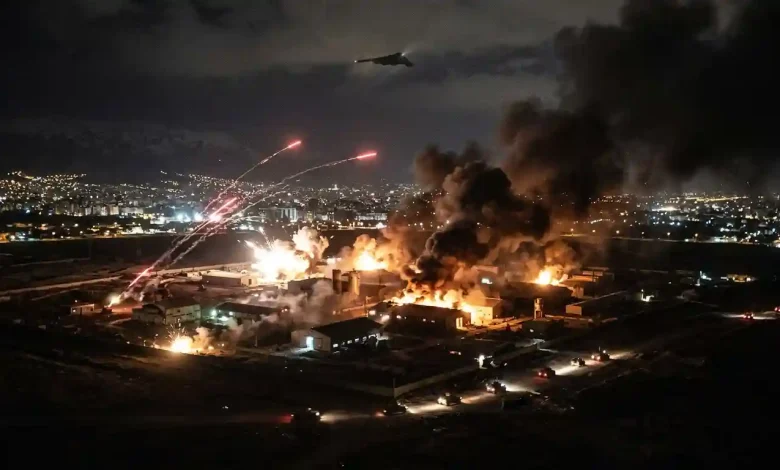
Table of Contents
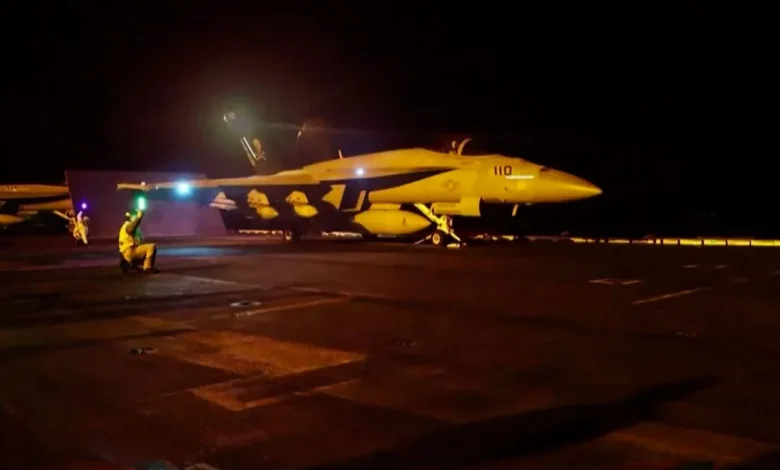
U.S. airstrikes against Iran have entered a historic thirteenth consecutive night of military intervention, as Central Command (CENTCOM) launches devastating barrages on command centers, drone storage facilities, and coastal surveillance sites. This relentless campaign represents a severe escalation in the ongoing regional conflict, designed to degrade the military capabilities of the Islamic Revolutionary Guard Corps (IRGC) and secure global shipping routes. Since the initial sixth night of U.S. attacks shook the region, the geopolitical stakes have magnified, drawing in major superpowers and putting the international energy market on edge.
The U.S. military recently confirmed that its latest wave of strikes lasted over two hours, targeting critical maritime infrastructure and communication networks. Concurrently, a strict naval blockade has been reimposed, restricting vessels entering and leaving Iranian ports. This intense pressure has severely bottlenecked the Strait of Hormuz, one of the world’s most critical transit chokepoints, triggering extreme volatility in global Brent crude benchmarks and pushing retail fuel prices in the United States to painful heights.
The 13th Night of Strikes: Operations and Strategic Targets
According to official statements from U.S. Central Command, the latest kinetic operations were executed with high precision to further diminish Iran’s offensive capacities. The strikes, which concluded in the early hours of Friday, focused on dismantling drone assembly and storage depots, radar installations, and coastal defense systems. As U.S. airstrikes escalate in the Middle East, defense analysts warn of a prolonged regional campaign that could redefine military balances in the Persian Gulf.
CENTCOM officials emphasized that these continuous operations are vital to protecting commercial mariners. Over 50,000 U.S. service members are currently deployed across the theater, prepared to defend international interests. Despite the intense bombardment, Iranian state media reported explosions in critical coastal hubs like Bandar Abbas and Qeshm Island, signaling that the strikes hit deep within Iran’s maritime military infrastructure. Local officials claimed that the continuous aerial assaults have caused notable disruption to regional communications, but vowed that the nation’s defensive readiness remains unimpaired.
The Strait of Hormuz Standoff and Naval Blockade
At the center of this geopolitical storm is the strategic waterway of the Strait of Hormuz. Reaching a critical bottleneck, the escalating Strait of Hormuz conflict has effectively halted commercial navigation, reducing daily transits to a mere crawl. Kpler ship-tracking data indicated that only one massive crude carrier exited the strait on Thursday—a stark contrast to the dozens of supertankers that typically navigate this vital conduit daily.
To enforce compliance, the U.S. Navy has tightened its maritime blockade on all Iranian coastal terminals. CENTCOM reported that naval forces have successfully redirected twelve commercial vessels and disabled another in the past nine days alone, preventing shipments of crude oil and military equipment from leaving or entering Iranian territory. In response, Tehran has attempted to bypass the blockade by routing limited trade through neighboring ports, such as Oman’s Khasab port and Iraq’s Umm Qasr. However, logistics experts confirm that these alternative routes lack the capacity, speed, and efficiency to offset the immense economic losses caused by the naval blockade.
Economic Fallout: Crude Oil Volatility and Rising Retail Gas Prices
The immediate consequence of this maritime chokehold has been felt acutely in international financial and energy markets. On Thursday, fears of a prolonged supply disruption pushed global benchmark Brent crude prices to over $100 per barrel—the highest level recorded since May. While prices subsequently fell below $92 a barrel on Friday due to speculative trading and potential diplomatic interventions, the baseline threat of an energy crisis remains extremely high.
For ordinary consumers, the crisis is manifesting directly at the pump. According to data provided by the American Automobile Association (AAA), the national average price for regular gasoline in the United States has climbed to $4.10 per gallon. This represents an increase of more than 17 cents within a single month, adding a substantial burden to American households. While some domestic policy observers compare the rapid crisis response to dealing with domestic natural crises, such as managing the grid failures caused by severe extreme weather patterns and heatwaves, the strategic leverage of petroleum remains a unique challenge that directly influences national security and consumer sentiment.
Diplomatic Standoff: Tehran’s Defiance and Alliances with Russia and China
On the diplomatic front, Iranian Foreign Minister Seyed Abbas Araghchi has remained fiercely defiant, asserting that his nation will not yield to external coercion. State media quoted Araghchi as saying that “Iran has shown that it will not bow to U.S. bullying and will under no circumstances respond to the language of force, pressure, and threats.” This strong stance is backed by intensive diplomatic maneuvers, as Araghchi confirmed he held detailed, high-level talks with the foreign ministers of Russia and China during his regional diplomatic tours.
Furthermore, Araghchi strongly condemned the U.S. administration’s proposal to use seized and frozen Iranian assets to compensate commercial shippers for damages incurred during the conflict. Labeling the proposal an “incendiary precedent,” Araghchi warned that once governments normalize the confiscation of sovereign assets, global financial stability will collapse, leading to an unpredictable economic chaos. The geopolitical alignment of Tehran with Beijing and Moscow presents a major challenge to Western containment strategies, potentially leading to a more polarized international coalition.
Conflict Dynamics: Summary of Key Developments
To better understand the multifaceted nature of this conflict, the following table summarizes the primary actions, economic indicators, and strategic developments shaping the U.S.-Iran standoff as of late July 2026.
| Conflict Dimension | U.S. / Allied Actions & Status | Iranian / Proxy Responses & Status | Economic & Market Impacts |
|---|---|---|---|
| Military Operations | Completed 13 consecutive nights of airstrikes; targeting drone depots and coastal radars. | Launched retaliatory drone strikes against U.S. installations in Bahrain and Jordan. | Deepening regional defense expenditure; over 50,000 U.S. troops deployed. |
| Maritime Control | Enforced strict naval blockade; redirected 12 ships and disabled 1. | Asserting control over the Strait of Hormuz; maritime traffic slowed to a crawl. | Only 1 major supertanker exited the Strait of Hormuz on Thursday. |
| Energy Market | Strategic reserves monitored; retail gasoline surged to $4.10 per gallon. | Attempted diversion of oil routes through Oman and Iraqi trade ports. | Brent crude spiked past $100/barrel, dropping to $92/barrel on Friday. |
| Diplomacy & Alliances | Proposed seizing frozen assets; demanding an end to threats against civilian mariners. | Detailed talks with Russia and China; rejecting ceasefire and warning of regional retaliation. | Increased risk of global financial polarization and sanctions circumvention. |
Regional Escalation: Houthi Actions in the Red Sea and Broader Threats
The maritime conflict is no longer confined strictly to the Persian Gulf. In a coordinated display of defiance, Yemen’s Iran-aligned Houthi rebels announced that they were imposing their own naval blockade in the Red Sea, targeting Saudi Arabian oil tankers. By attacking these vital vessels, the Houthis have successfully expanded the conflict to a second global shipping chokepoint, raising fears of a total maritime blockade across the Middle East. This development prompted a prompt worldwide caution issued by the State Department for American travelers and maritime personnel, warning of widespread asymmetric threats.
U.S. President Donald Trump responded to these proxy attacks with severe rhetoric, warning of “major military punishment” if the Houthi forces continue to threaten international shipping. However, the military reality on the ground indicates that both Iran and its proxy networks are deeply entrenched, utilizing subterranean drone bases, mobile missile launchers, and asymmetric naval tactics to withstand the superior firepower of the U.S. military coalition. This widening circle of confrontation has pushed United Nations Secretary-General António Guterres to warn that the region is teetering on “the edge of the unimaginable.”
Geopolitical Implications and Future Security Outlook
As the standoff deepens, the long-term geopolitical implications are becoming increasingly complex. Domestically, the current political climate demands unprecedented national unity amidst foreign crises, as the economic toll of rising fuel prices starts to affect public sentiment. This international tension is unfolding concurrently with domestic administrative transitions, including controversial political shifts in the federal administration, which could impact the strategic decision-making process in Washington.
Furthermore, the conflict has begun to heavily influence the political narratives surrounding the upcoming legislative races, even impacting the foreign policy debates in current congressional election campaigns. While the U.S. military continues to affirm that the Strait of Hormuz remains open under American naval protection, the reality of a nearly empty shipping channel suggests that commercial shipping companies are unwilling to risk their multi-million dollar assets in an active combat zone. Whether through direct military containment or a renewed multilateral diplomatic effort brokered by international powers, the coming weeks will be critical in determining whether the Persian Gulf remains a reliable conduit for global energy or becomes a permanent theater of war.