President’s House panels replaced overnight, sparking outrage 2026
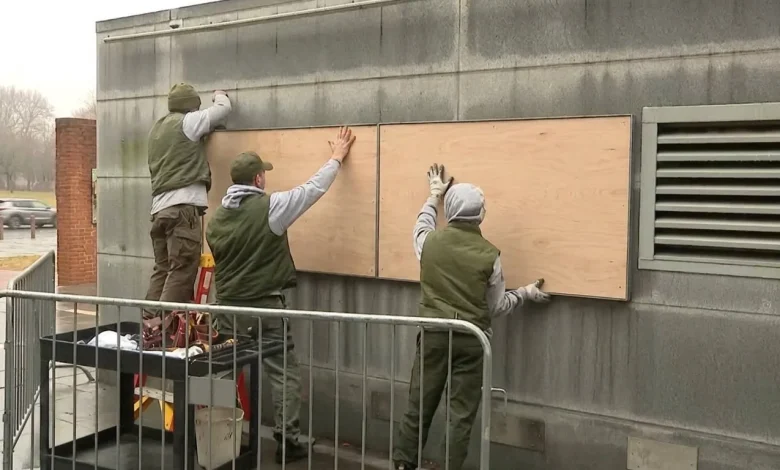
Table of Contents
President’s House panels in Philadelphia were removed overnight under the cover of darkness by the federal government, sparking immense backlash and reigniting a fierce national debate over the interpretation of early American history. This controversial move, carried out late Tuesday night and completed early Wednesday morning on July 15, 2026, targeted the historic President’s House site. Positioned just steps away from Independence Hall—the very area where the Declaration of Independence was adopted on July 4, 1776—the site serves as a profound physical representation of the complex, often painful intersection of early American liberty and human bondage. In a scathing public rebuke, Philadelphia Mayor Cherelle L. Parker condemned the late-night alteration, arguing that the federal government’s choice to execute the swap in secret was an admission of guilt. “Overnight, under the cover of darkness, the federal government removed panels at the President’s House that told a thorough history of Philadelphia,” Mayor Parker stated on Wednesday. “It was allowed to do this by the decision of the federal court, but that it did so at night shows it understands this action is shameful, that it violates community trust.”
House :Under Cover of Darkness: The Nighttime Operation
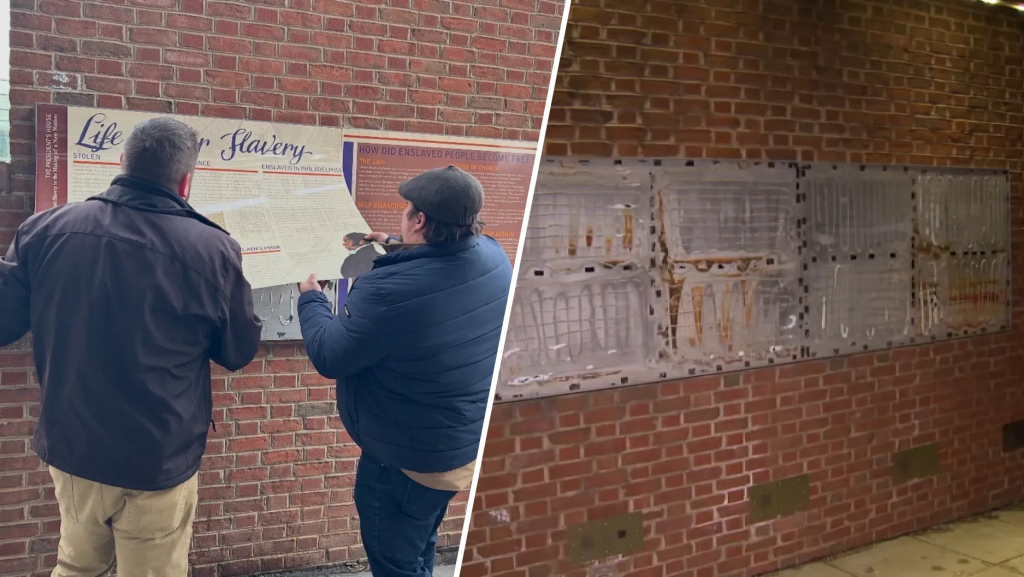
The sudden physical alteration of the landmark site shocked local residents, tourists, and historians who gathered at the corner of 6th and Market streets on Wednesday morning. Where extensive, unflinching texts on the realities of 18th-century slavery once stood, visitors were instead met with modified panels featuring sanitized narratives. United States Park Police officers maintained a heavy presence at the site throughout the day, guarding the newly installed displays. The original panels, which had been in place since the memorial’s opening in 2010, meticulously detailed how nine enslaved individuals lived and worked under George and Martha Washington during the 1790s, a period when Philadelphia served as the temporary capital of the nation. The nocturnal execution of the replacement drew fierce condemnation from local advocacy groups, specifically the Avenging the Ancestors Coalition (ATAC). Michael Coard, a prominent civil rights attorney and founding member of the coalition, voiced the community’s outrage, asserting that changing these historical truths represents a profound injustice to the descendants of those enslaved. These localized civil actions highlight the enduring friction surrounding representation in public spaces, drawing parallels to historical struggles like the landmark voting rights march on Washington, where citizens similarly mobilized to demand that their voices and history be fully recognized.
House :The Legal Battle for Historical Integrity
The overnight replacement of the panels represents the climax of a complex legal struggle that has played out in federal courts since January 2026. The conflict began when the federal government first announced plans to alter the site’s messaging to align with new federal interpretive guidelines. In response, the City of Philadelphia filed an emergency lawsuit against Interior Secretary Doug Burgum and acting National Park Service (NPS) Director Jessica Bowron, arguing that the federal government was unilaterally erasing a locally funded and hard-fought historical consensus. While a federal district judge initially sided with the city, granting an injunction that temporarily halted the removal, the administration quickly appealed. The legal tide turned on June 18, 2026, when a panel of the U.S. Court of Appeals for the Third Circuit ruled that the city lacked the legal standing to dictate interpretive content on federally owned parkland. The court noted that because Philadelphia had deeded the land to the National Park Service nearly two decades ago, the federal government held absolute authority over its displays. On July 3, 2026, the Third Circuit denied the city’s motion to delay the ruling, clearing the path for immediate action. This legal struggle occurred amid intense bureaucratic changes in Washington, where administrative policies frequently clash with local jurisdictions, a dynamic reminiscent of public friction following the sudden passing of Senator Lindsey Graham and subsequent adjustments to federal committee priorities.
House :The Executive Order and the Ideological Clash
At the heart of the federal government’s insistence on altering the Philadelphia panels is a sweeping ideological initiative spearheaded by the administration. Following a series of policy adjustments, executive directives aimed at reforming historical interpretation at all federally controlled properties and national parks were aggressively implemented. The directive explicitly mandates that federal historical sites must not showcase content that inappropriately disparages Americans past or living. Instead, park narratives are instructed to emphasize the greatness of the achievements and progress of the American people. Critics argue that this policy is designed to sanitize the dark chapters of American history, specifically the brutal realities of chattel slavery and the complicity of the nation’s founders. The administration’s efforts to dismantle diversity, equity, and inclusion (DEI) initiatives have met with robust political resistance. This domestic culture war mirrors the aggressive posture the administration has adopted globally, reflecting the same confrontational approach that has led to tensions inside international summits where traditional alliances and policies are routinely challenged.
House :Analyzing the Changes: Original vs. New Panels
To fully grasp why local historians and activists are outraged, it is essential to compare the specific texts of the original 2010 exhibit with the 2026 replacements. The original panels did not shy away from the horrific realities of slavery. For instance, a panel titled “The Dirty Business of Slavery” directly confronted the hypocrisy of the nation’s founders, stating: “The men who wrote the U.S. Constitution created a document based on the ideal of liberty, but liberty and enslavement were bitterly intertwined.” It further described how, despite the ban on the slave trade, the domestic slave population expanded through forced breeding and systemic sexual violence. The newly installed panels have completely replaced this text, shifting the theme to “Celebrating Independence Throughout the Years.” The new narrative emphasizes Washington’s private misgivings about slavery, referencing his role in drafting the 1774 Fairfax Resolves, which condemned the international slave trade. Additionally, the new displays describe the enslaved individuals who lived in the home as “dynamic participants in the daily life of the family and the city”—a framing that critics argue falsely implies a level of autonomy, consent, and agency that enslaved people simply did not possess.
| Exhibit Feature | Original Panels (Installed 2010) | Reworked Panels (Installed July 2026) |
|---|---|---|
| Primary Narrative Focus | Unflinching portrayal of the nine enslaved individuals held by George Washington; direct focus on the harsh realities and hypocrisies of slavery in early America. | Broadened focus on the history of the executive mansion, presidential administrative processes, and the growth of early government. |
| Core Slavery Panel | Titled “The Dirty Business of Slavery.” Addressed forced breeding, systemic sexual violence, and the direct contradiction of constitutional liberty. | Titled “Celebrating Independence Throughout the Years.” Focuses on the evolution of freedom and Washington’s private misgivings. |
| George Washington’s Portrayal | Depicted as a powerful enslaver who actively controlled the lives of over 300 enslaved individuals and navigated laws to keep them in bondage. | Highlighted as a leader who helped draft the 1774 Fairfax Resolves condemning the slave trade as “wicked” and “cruel.” |
| Terminology & Framing | Clearly identified the nine individuals as captives subjected to forced labor under threat of violence. | Frames the nine enslaved individuals as “dynamic participants in the daily life of the family and the city.” |
Local Outrage and Mayor Parker’s Vow
Mayor Cherelle Parker and the Philadelphia City Council have made it clear that they do not view this court-approved overnight operation as the end of the road. In her official statement, Mayor Parker highlighted the profound historical irony of the federal government’s actions. The removal occurred just as Philadelphia celebrated the semiquincentennial of the United States. “We celebrated the fact that 250 years ago imperfect humans came together to recognize the universal search for freedom and for dignity, while at the same time these same leaders perpetuated the heinous institution of slavery,” Parker noted. She emphasized that the 2010 exhibit was the result of a hard-won consensus among federal, state, and local officials, community advocates, and historical scholars who spent years negotiating a faithful representation of the site. For local activists, the fight over the President’s House is a battle for the soul of the city’s historical memory. They argue that minimizing the struggles of the nine enslaved people who lived at 6th and Market streets is an insult to the city’s diverse community.
The Broader National Debate Over Public History
The clash in Philadelphia is part of a much larger, coordinated effort by the federal government to reshape how American history is taught and memorialized. This struggle has also spilled over into legislative chambers, as seen during a high-profile Senate hearing scheduled for July 15, where administration nominees were grilled on their commitment to objective historical preservation versus political directives. Furthermore, the federal government’s tight grip on national park narratives has led to increased monitoring of federal grounds. The National Park Service has faced scrutiny not just for narrative changes, but also for its handling of security and public access, following highly publicized incidents at national monument sites across the country. Historians warn that by sanitizing the stories of marginalized groups, the federal government risks alienating the public and undermining the educational mission of the National Park System.
Next Legal Steps and Ongoing Appeals
Moving forward, the City of Philadelphia plans to seek a rehearing en banc before the full Third Circuit Court of Appeals. The city’s legal team argues that the three-judge panel’s June 18 decision raises dangerous precedents regarding how federal agencies can implement sweeping policy changes without local consultation or adherence to the Administrative Procedure Act (APA). Mayor Parker’s administration is challenging the federal assertion that these concrete interpretive changes are merely “non-final” actions exempt from judicial review. This legal strategy comes at a time when local governments are increasingly pushing back against overreaching federal mandates, whether they involve historical preservation or controversial Department of Justice warnings concerning local administrative rules. Just as states battle over localized legislative maps and partisan representation battles, Philadelphia’s fight for its historical narrative represents a critical stand against the centralized rewriting of American history.