Partisan Redistricting: Maryland Targets Sole GOP Seat
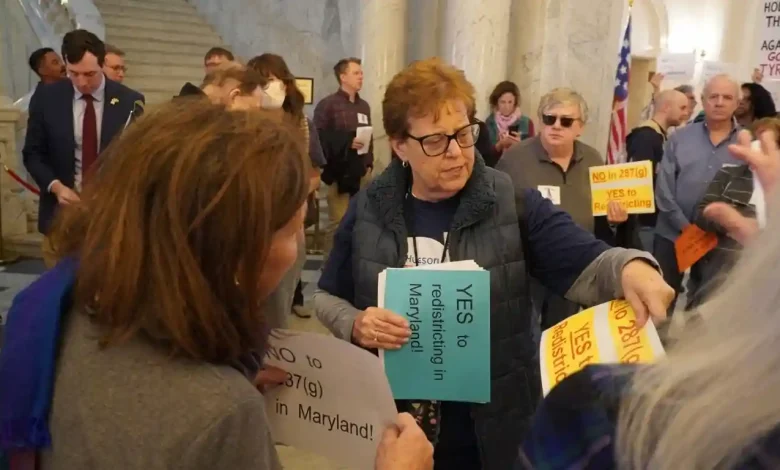
Table of Contents
Partisan redistricting in the United States has transitioned from a standard post-census bureaucratic chore into a high-stakes, multi-front constitutional war zone. State legislatures across the nation are increasingly utilizing map-making authorities to consolidate electoral power, dictate congressional majorities, and redefine representative democracy. The latest flashpoint in this national battle is Maryland, where the Democratic-led General Assembly has scheduled an urgent, high-profile special legislative session starting on August 3, 2026. The express purpose of this session is to lay the groundwork for a constitutional amendment that would empower lawmakers to restructure the state’s congressional boundaries ahead of upcoming election cycles.
Introduction: The Battle for Maryland’s Congressional Boundaries
Maryland has long been a key battleground for national redistricting strategists. Currently, Democrats command a dominant 7-1 supermajority within the state’s eight-seat delegation to the U.S. House of Representatives. The sole outlier is Representative Andy Harris, a conservative Republican who has held the state’s 1st Congressional District, which encompasses the Eastern Shore and parts of Harford and Cecil counties, for over a decade. For years, state Democrats have sought to redraw the electoral boundaries in a manner that would dilute the conservative base of the 1st District, transforming it into a competitive or safely Democratic territory, thereby securing an 8-0 clean sweep.
However, prior attempts to implement such maps were successfully blocked by state courts. Now, state leaders are attempting a bold constitutional end-run. By bypassing the judiciary and appealing directly to voters through a proposed state constitutional amendment, Maryland’s legislative leaders hope to establish a new legal paradigm that immunizes future maps against the judicial challenges that previously derailed their efforts.
The Catalyst: Inside the August Special Legislative Session
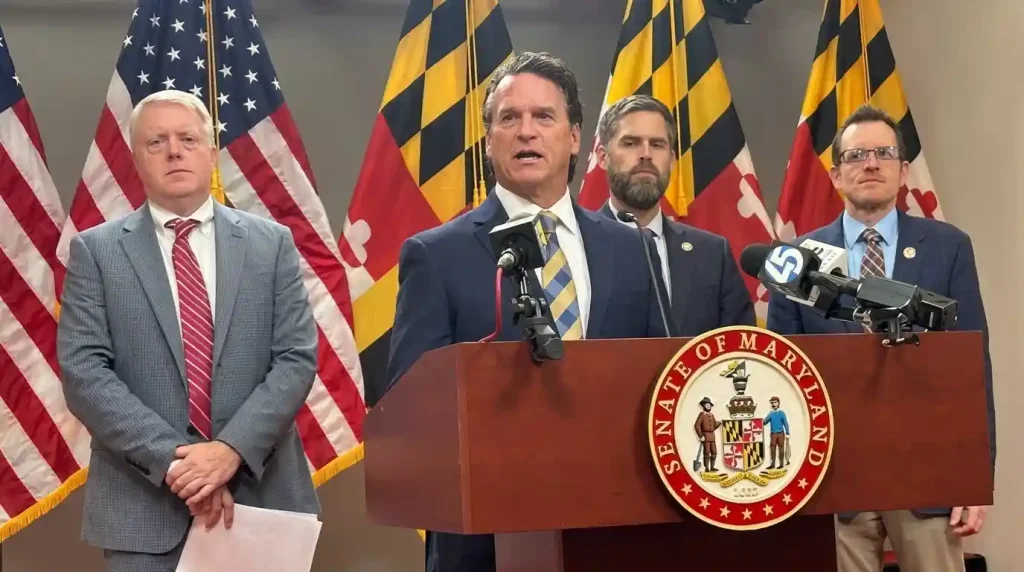
The call for the special session, set to run from August 3 to August 5, 2026, represents a sudden and highly calculated move by Maryland’s top legislative authorities. Senate President Bill Ferguson and House Speaker Joseline Peña-Melnyk announced the session following months of intense behind-the-scenes negotiation, pressure campaigns, and changing legal assessments. Governor Wes Moore has forcefully backed the effort, declaring that state-level inaction in the face of shifting national electoral maps is not an option.
Historically, Senate President Ferguson had expressed skepticism regarding the political and legal risks of forcing a new redistricting fight. He previously blocked map-redrafting proposals earlier in 2026, warning that a rushed map could be struck down and cause voter confusion. However, recent actions by federal courts, alongside a concerted pressure campaign by national party strategists, have altered the calculation. The special legislative session is explicitly designed to pass the constitutional amendment with the necessary three-fifths majority in both chambers. If successful, the amendment will bypass the governor’s desk and go straight to the general election ballot on November 3, 2026.
Decoding the 2022 Court Ruling and the Constitutional Loophole
To understand why a constitutional amendment is necessary, one must look back to the legal precedents established during the 2020 census redistricting cycle. In 2022, Senior Judge Lynne A. Battaglia of the Anne Arundel County Circuit Court struck down Maryland’s initial congressional map. The map, which had been passed over a gubernatorial veto, was ruled an unconstitutional partisan gerrymander that violated the state constitution’s requirements for compact districts and respect for natural and political boundaries.
Why a Constitutional Amendment?
The 2022 court ruling was a massive blow to Democratic leaders, forcing them to adopt a court-approved map that preserved the Republican-leaning nature of the Eastern Shore’s 1st District. Because the ruling relied heavily on interpretations of the Maryland Constitution’s clauses regarding free and fair elections, compactness, and contiguity, the legislature is severely restricted in how it can shape districts.
By initiating a constitutional amendment, the General Assembly seeks to “clarify”—or, as critics argue, redefine—the state constitution. If the constitution is altered to explicitly decouple congressional redistricting standards from the rigid constraints used by the court in 2022, lawmakers will have a blank canvas to draft an 8-0 map that can withstand any future state-level court challenges.
The Threat to Rep. Andy Harris and the 1st District
Representative Andy Harris remains the primary target of these systemic structural adjustments. Under the current, court-approved boundaries, Harris enjoys a relatively safe, conservative constituency on the Eastern Shore. However, previous proposals have sought to dilute this advantage by drawing parts of deeply liberal areas—such as parts of Annapolis, Baltimore County, or Anne Arundel County—across the Chesapeake Bay and into District 1. If the proposed constitutional amendment succeeds and a new map is drawn, the Eastern Shore’s voting power will likely be overwhelmed by these added suburban progressive hubs, rendering Harris’s reelection exceedingly difficult.
National Implications of the Redistricting Wars
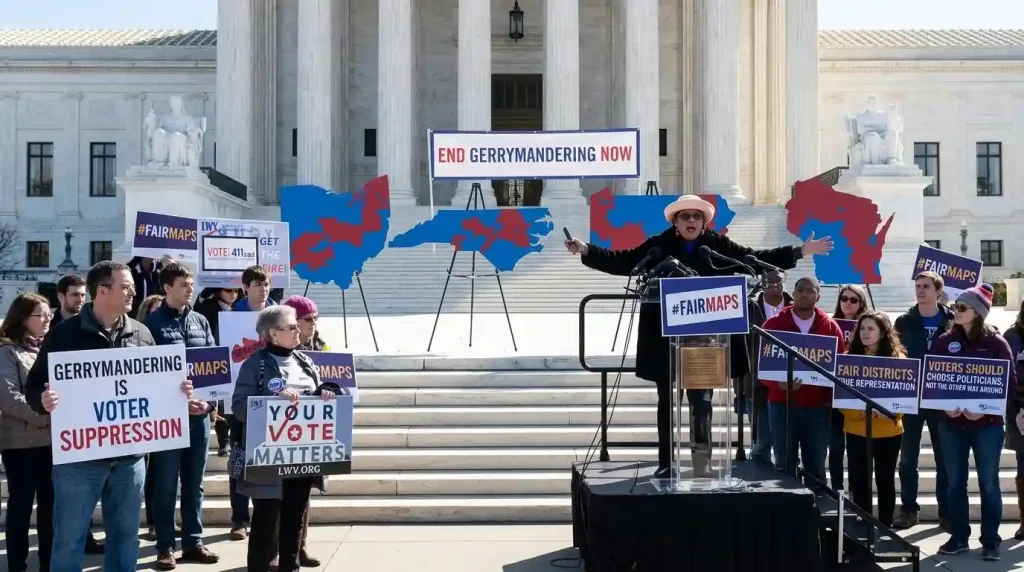
Maryland’s redistricting battle does not exist in a vacuum. It is part of an escalating, tit-for-tat national conflict over congressional boundaries. Following calls from national conservative leadership to aggressively redraw maps in Republican-controlled states, several red states have moved to maximize their congressional seat margins. As seen during the high-profile GOP midterm convention where Trump announces sweeping goals for party dominance, state-level map control has become the ultimate mechanism for cementing national congressional control.
In response, national Democratic organizations have pressured blue states, including Maryland and New York, to fight back with equal fervor. This cycle of partisan optimization has reshaped the U.S. House map ahead of the midterms and will undoubtedly carry major implications into the 2028 presidential and congressional election cycles. According to data tracked by the National Conference of State Legislatures, the national map remains incredibly fluid, with dozens of states actively litigating or redrawing their congressional districts.
Comparative Analysis: Maryland’s House Delegation and Redistricting Attempts
The structural composition of Maryland’s congressional map shows a highly polarized division. The table below outlines how the current districts are structured and the potential changes that could emerge if the state legislature obtains the constitutional authority to bypass the 2022 judicial guidelines.
| District | Current Representative | Party | Key Geographic Strongholds | Anticipated Redistricting Exposure |
|---|---|---|---|---|
| 1st District | Andy Harris | Republican | Eastern Shore, Cecil, Harford Counties | High: Expected dilution via liberal trans-bay expansion |
| 2nd District | Johnny Olszewski Jr. | Democratic | Baltimore County, Carroll County | Low: Minor border adjustments to secure progressive margins |
| 3rd District | Sarah Elfreth | Democratic | Anne Arundel, Howard Counties | Medium: Shift in trans-bay boundaries to assist in the 1st District split |
| 4th District | Glenn Ivey | Democratic | Prince George’s County | Low: Maintained as a safe, minority-majority voting stronghold |
| 5th District | Steny Hoyer | Democratic | Southern Maryland, Prince George’s | Low: Historic boundaries expected to remain relatively stable |
| 6th District | April McClain-Delaney | Democratic | Western Maryland, Montgomery County | Medium: Stabilization of Democratic registration margins |
| 7th District | Kweisi Mfume | Democratic | Baltimore City, Baltimore County | Low: Safe metropolitan seat expected to remain intact |
| 8th District | Jamie Raskin | Democratic | Montgomery County | Low: Deep-blue progressive bastion with minimal geographic changes |
The Political Stakes: Public Opinion and Republican Pushback
Unsurprisingly, the announcement of the special session has provoked fierce criticism from Maryland’s Republican lawmakers and conservative groups. They argue that convening a multi-day legislative session in August is a costly, taxpayer-funded exercise in political opportunism designed solely to disenfranchise hundreds of thousands of conservative voters on the Eastern Shore.
GOP Accusations of Taxpayer-Funded Power Grabs
State Senator Mary Beth Carozza, representing Worcester County, publicly condemned the special session, arguing that “Marylanders deserve better than an expensive, taxpayer-paid special session in August called for political gamesmanship!” Republicans contend that the Democratic supermajority is attempting to bypass the judicial system because they cannot win on the merits of fair, compact maps. They have vowed to launch a robust public campaign to defeat the constitutional amendment at the ballot box in November.
The Role of National Party Leadership
Within the Democratic Party, the pressure to optimize electoral maps is driven partly by grassroots mobilization and the changing primary election landscape. Over the past several election cycles, democratic primaries see insurgents defeat veteran candidates, signaling a broader progressive appetite for systemic, aggressive action to secure federal representation. National figures, including House Minority Leader Hakeem Jeffries, have closely watched the Maryland developments, knowing that even a single seat could decide which party holds the speaker’s gavel in Washington.
Future Horizons: Road to the 2026 Ballots and the 2028 Cycle
These deep-seated legal questions are not unique to Maryland; states across the nation are watching their state attorneys general defend or challenge new voting boundaries. In states like Colorado, officials such as Colorado Attorney General Phil Weiser wins praise for navigating complex voter protections and map-drawing processes, illustrating how critical state-level offices are in these administrative battles. If the Maryland amendment passes, it will represent a historic shift in how state constitutions define the limits of legislative power over federal elections.
If the General Assembly secures a three-fifths majority in both the House of Delegates and the Senate during the special session, the measure will proceed to the November 3, 2026, general election ballot. From there, a simple majority of Maryland voters will decide whether to ratify the constitutional change. If approved, the legislature would be legally cleared to draft a brand-new congressional map in a future legislative session, setting up an intense battle ahead of the 2028 presidential election cycle. The fallout from these redistricting conflicts has long-lasting echoes of historical elections, much like how Michigan’s Democratic Senate race 2020 echoes continue to influence Midwestern voting trends, proving that the lines drawn today will define the majorities of tomorrow.
Tactical Summary of the Redistricting Playbook
The strategy adopted by Maryland Democrats demonstrates a sophisticated understanding of state constitutional law. Rather than repeatedly litigation-testing highly gerrymandered maps in a court system bound by the existing text of the state constitution, they are changing the text of the constitution itself. This legislative playbook—altering the foundational rules of the game to bypass unfavorable judicial precedents—is likely to be studied and potentially replicated by both major political parties in states across the country where the legislative branch holds the power to initiate constitutional reforms.
Conclusion: The Unfolding Map of American Electoral Battles
Ultimately, the upcoming August special session in Annapolis represents a pivotal moment for Maryland and a microcosm of the larger national struggle over electoral boundaries. As both political parties recognize that control of the U.S. House of Representatives is won or lost at the state level, the distinction between state legislative affairs and federal power continues to dissolve. Whether Maryland’s voters will choose to grant their lawmakers the constitutional authority to reshape the state’s congressional map remains to be seen, but the outcome of the November vote will undeniably reverberate far beyond the shores of the Chesapeake Bay.