Clayton Hearing Set for July 15 After Trump Derailed Nomination: Critical Update Revealed
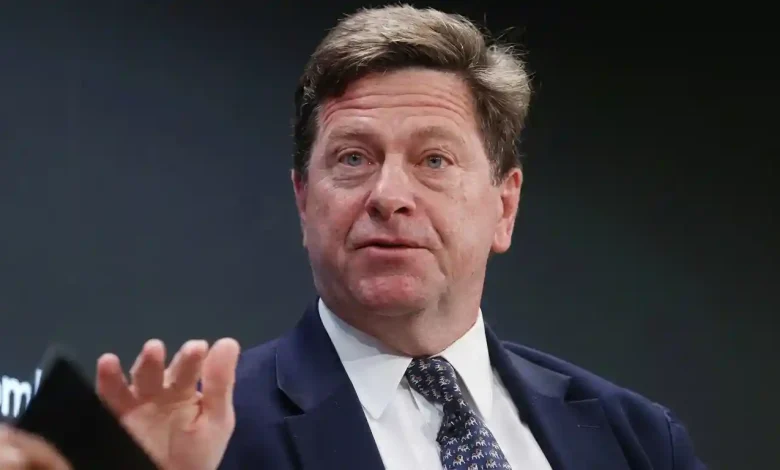
Table of Contents
Clayton is at the heart of an escalating political and institutional drama as the Senate Intelligence Committee reschedules his confirmation hearing to lead the Office of the Director of National Intelligence (ODNI) for July 15, 2026. This critical meeting comes nearly a month after a highly publicized confrontation between the White House and Capitol Hill led to the last-minute cancellation of his original June 17 hearing. The abrupt postponement, driven directly by President Donald Trump’s late-night social media directives, revealed deep-seated frictions within the Republican Party and highlighted the administration’s broader efforts to reshape key federal agencies. As lawmakers prepare for the mid-July hearing, the focus remains trained on a complex game of political leverage involving the Southern District of New York (SDNY), sensitive intelligence programs, and pending election integrity legislation.
The Rescheduled July 15 Confirmation Hearing
The Senate Intelligence Committee has officially scheduled July 15, 2026, as the new date for the confirmation of Jay Clayton. This decision was announced following weeks of behind-the-scenes negotiations and procedural adjustments. Under normal circumstances, a candidate with Clayton’s broad-based legal and regulatory credentials would move through the committee phase with relative ease. Clayton previously served with distinction as the Chairman of the U.S. Securities and Exchange Commission (SEC) during Trump’s first term, and his subsequent appointment to lead the SDNY in 2025 further consolidated his reputation as an elite legal mind capable of navigating highly complex regulatory landscapes. However, his transition to the role of Director of National Intelligence has been anything but smooth, illustrating the intense political theater that defines modern Washington appointments.
The rescheduling of the hearing represents an attempt by Senate Republican leadership to regain control of the confirmation timeline. Following the June 17 disruption, members of the committee, led by Chairman Tom Cotton (R-Ark.), found themselves in an awkward position, forced to balance loyalty to the president’s agenda with the operational necessity of filling a vital national security post. The ODNI, which oversees 18 distinct intelligence agencies, has faced prolonged leadership uncertainty, a situation that national security experts warn could leave the nation vulnerable during a period of heightened geopolitical tensions. The July 15 hearing is thus viewed as a crucial pressure point, testing whether the Senate can assert its Article I constitutional authority or if it will remain contingent on the president’s shifting tactical demands.
The June 17 Abrupt Postponement and Trump’s Demands
The initial plan to confirm Clayton was derailed on the morning of June 17, 2026, in a dramatic fashion that took both Republican and Democratic lawmakers by surprise. Just hours before Clayton was scheduled to appear before the Senate Select Committee on Intelligence, President Trump issued a series of directives demanding that the hearing be immediately abandoned. The sudden cancellation was not due to any newly discovered personal or professional controversy surrounding Clayton. Instead, it was a calculated move by the White House to use Clayton’s nomination as leverage over a variety of unresolved legislative disputes with Democrats and internal administrative maneuvers.
At the core of the disagreement was Trump’s insistence that Clayton’s departure from his current position as the U.S. Attorney for the Southern District of New York must not occur in a vacuum. Trump publicly stated that Clayton’s nomination to lead the ODNI should be entirely frozen until his hand-picked successor at the SDNY, James McDonald, was fully confirmed by the Senate to take over the Manhattan-based office. This condition created an immediate logical and procedural deadlock, as the White House had not even formally submitted McDonald’s nomination paperwork to the Senate at the time of the postponement. Senate leadership was essentially asked to halt a critical cabinet-level intelligence confirmation pending the resolution of a separate federal prosecutor appointment that had not yet officially begun.
The Southern District of New York (SDNY) Succession Dilemma
The battle over who will lead the SDNY is not merely a regional dispute; it is a high-stakes contest for control of the most powerful and independent federal prosecutor’s office in the United States. Historically referred to as the “Sovereign District,” the SDNY has long enjoyed a degree of autonomy from the main Department of Justice in Washington. Its jurisdiction covers Manhattan, giving it unmatched influence over cases involving Wall Street, global financial fraud, complex corporate corruption, international terrorism, and the rapidly growing sector of cryptocurrency prosecution. Who sits in the U.S. Attorney’s chair in Manhattan has massive implications for both corporate America and national political figures.
James McDonald’s Role and Background
President Trump’s chosen nominee to succeed Clayton at the SDNY is James M. McDonald, a highly accomplished attorney with deep ties to both the federal government and elite private practice. McDonald, currently a litigation partner at the prominent law firm Sullivan & Cromwell—the same firm where Clayton built his career before entering public service—has an extensive resume. He previously clerked for Supreme Court Chief Justice John Roberts and served as the Director of Enforcement at the Commodity Futures Trading Commission (CFTC) from 2017 to 2021, where he gained national recognition for creating a specialized task force focused on digital assets and cryptocurrency regulation.
Beyond his regulatory credentials, McDonald’s personal connection to Trump is a significant factor in his nomination. McDonald served on Trump’s criminal defense team, specifically involved in the complex litigation surrounding the 2024 New York trial. His selection fits a broader pattern of Trump nominating loyal members of his personal legal defense apparatus to critical justice and law enforcement positions across the federal government. This personal relationship has made his potential appointment a lightning rod for criticism from Senate Democrats, who argue that the SDNY must remain fiercely independent of the executive branch’s personal legal matters.
The Transition at the SDNY Office
To bypass the ongoing Senate logjam and ensure a smooth operational handover, Clayton took matters into his own hands in early July. On July 8, 2026, Clayton officially appointed McDonald as the Deputy U.S. Attorney for the Southern District of New York. This strategic appointment allows McDonald to return to the office in an administrative capacity immediately, managing day-to-day operations and overseeing a structured transition of leadership. While this move does not replace the requirement for a full Senate confirmation to the top U.S. Attorney post, it effectively inserts McDonald into the SDNY hierarchy, mitigating some of the administrative disruption caused by the political stalemate in Washington. This transition planning indicates that both Clayton and McDonald are preparing for an eventual handover, regardless of the tactical delays engineered by the White House.
Broader Political Undercurrents: FISA and the SAVE Act
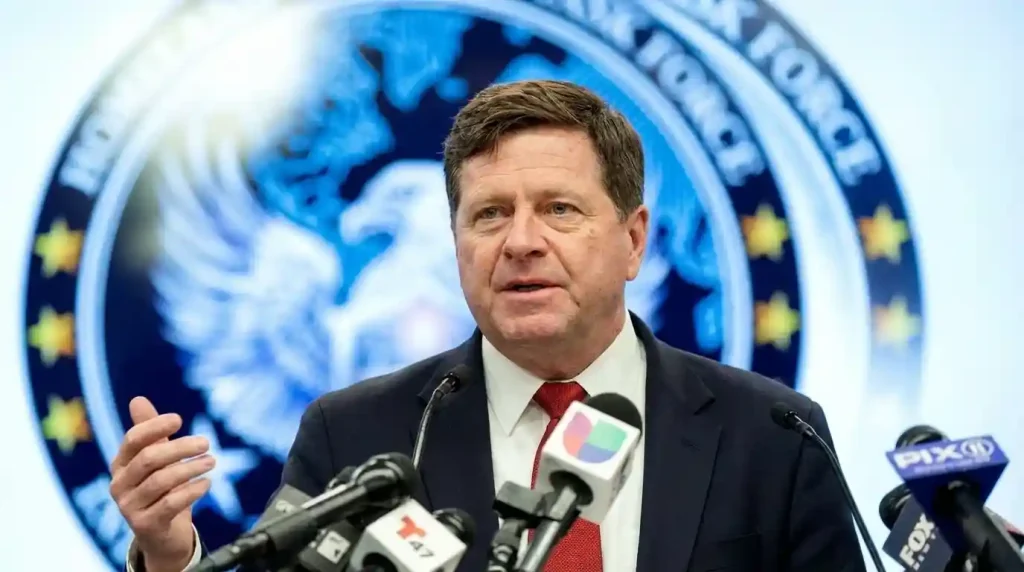
The delay in Clayton’s confirmation hearing was not solely about the personnel shifts at the SDNY. It was also tied to a broader and more contentious legislative struggle taking place on Capitol Hill. In his public statements surrounding the June 17 postponement, Trump linked the intelligence confirmation process to two separate, highly charged issues: the reauthorization of key federal surveillance powers and the passage of strict new voting regulations.
Specifically, Trump tied the progression of Clayton’s nomination to the ongoing debate over the Foreign Intelligence Surveillance Act (FISA) Section 702. The surveillance authority, which allows American spy agencies to collect electronic communications of foreign targets without a warrant, had recently expired, sparking intense debates over national security versus civil liberties. Trump insisted that he would not support any legislative efforts to renew or extend FISA authority unless Congress also passed the Safeguard American Voter Eligibility (SAVE) Act—a piece of legislation requiring individuals to provide documentary proof of U.S. citizenship to register to vote in federal elections. By linking these disparate issues, the White House effectively used Clayton’s DNI nomination as a bargaining chip in a high-stakes legislative hostage-taking strategy, forcing congressional Republicans to navigate an incredibly difficult political landscape.
Structural Ramifications for the Office of the Director of National Intelligence (ODNI)
The prolonged vacancy at the head of the ODNI has had serious operational consequences for the United States intelligence community. Following the resignation of Tulsi Gabbard in May 2026, Trump appointed Bill Pulte, the Director of the Federal Housing Finance Agency, as the acting DNI. Pulte’s appointment was immediately met with intense skepticism and outright opposition from both sides of the aisle. Critics pointed out that Pulte possessed absolutely no national security, military, or intelligence experience, raising deep concerns that his presence at the helm of the nation’s intelligence apparatus would lead to the politicization and weaponization of sensitive spy agencies against political rivals.
Reports emerged that during his brief tenure, Pulte launched several internal investigations into federal employees and intelligence officials, which further alarmed members of the Senate Intelligence Committee. The push to quickly confirm Jay Clayton—a highly respected figure with a track record of institutional stability—was widely seen as a bipartisan effort by congressional leaders to replace Pulte with a stable, conventional administrator. Trump’s decision to block his own nominee’s hearing essentially extended Pulte’s tenure as acting DNI, a development that frustrated key Senate allies who had worked diligently to secure an agreement with Democrats to transition leadership to Clayton.
Comparing Key Figures and Legislative Timelines
The complexity of the current political standoff is best understood by looking at the key figures involved, their institutional backgrounds, and the timeline of events that have led to the rescheduled July 15 hearing. The following table provides a comprehensive overview of this high-profile transition process:
| Key Figure / Event | Institutional Role | Key Dates & Timelines | Political / Legal Context |
|---|---|---|---|
| Jay Clayton | Nominee for DNI; Current SDNY U.S. Attorney | Nominated June 2026; June 17 hearing postponed; July 15 hearing scheduled | Former SEC Chair; seen as a stabilizing force to replace acting DNI Bill Pulte. |
| James McDonald | Proposed SDNY Successor; Current SDNY Deputy U.S. Attorney | Announced June 13, 2026; Appointed Deputy July 8, 2026 | Sullivan & Cromwell partner; former CFTC enforcement chief; served on Trump’s defense team. |
| Bill Pulte | Acting Director of National Intelligence (DNI) | Assumed role May 2026; remains in place pending Clayton’s confirmation | Lacks intelligence experience; appointment criticized by both parties; has run controversial internal probes. |
| FISA Section 702 & SAVE Act | Key Legislative Battlegrounds | FISA expired June 2026; SAVE Act pending in Senate | Trump linked these legislative items directly to Clayton’s confirmation timeline. |
Congressional Reactions and Democratic Support
Despite the highly partisan nature of the dispute, Jay Clayton himself has maintained a surprising level of bipartisan support on Capitol Hill. Democratic leaders on the intelligence committees have expressed a willingness to look past Clayton’s lack of traditional intelligence agency experience, focusing instead on his administrative competence and his demonstrated record of institutional preservation during his time leading the SEC. Senators like Mark Warner (D-Va.), the top Democrat on the Senate Intelligence Committee, and Representative Jim Himes (D-Conn.), the leading Democrat on the House Intelligence Committee, have both spoken favorably about Clayton’s public service and qualifications.
This bipartisan consensus has created a unique dynamic where congressional Democrats and mainstream Senate Republicans are essentially aligned in their desire to see Clayton confirmed as quickly as possible. The primary source of friction remains the White House itself, which has consistently prioritized tactical political victories—such as pushing the SAVE Act and securing McDonald’s immediate installation at the SDNY—over the swift stabilization of the ODNI leadership. This alignment of congressional interests suggests that if the July 15 hearing proceeds without further executive interference, Clayton’s path to confirmation could be remarkably swift and decisive.
The Path Forward: Will the July 15 Hearing Proceed?
As the July 15 date approaches, the critical question is whether President Trump will allow the confirmation process to move forward or if he will mount another last-minute intervention. The White House has not yet responded to requests for comment regarding the rescheduled hearing, and it remains unclear if the administration’s concerns regarding the SDNY succession have been fully resolved. While the appointment of James McDonald as Deputy U.S. Attorney on July 8 has temporarily eased the leadership transition in Manhattan, the formal nomination has still not been sent to the Senate, meaning the procedural deadlock persists.
The outcome of the July 15 hearing will have far-reaching implications for the balance of power between the executive and legislative branches. If the Senate successfully holds the hearing and moves Clayton toward confirmation, it will mark a significant assertion of congressional authority over a volatile appointment process. Conversely, if the hearing is postponed once again due to executive pressure, it will confirm that the administration is fully prepared to tolerate prolonged vacancies in critical national security positions to achieve its broader legislative and political goals. For now, Washington remains in a state of suspended animation, waiting to see if Clayton will finally take the helm of the nation’s intelligence community or if he will remain a pawn in a much larger constitutional chess match.