Lincoln Memorial Reflecting Pool: 3 Shocking Details About Sealant Theft Charges
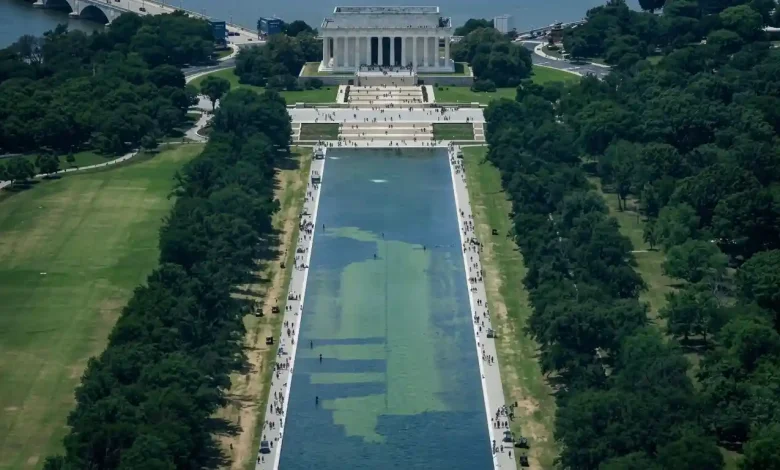
Table of Contents
Lincoln Memorial Reflecting Pool visitors and federal law enforcement officers in Washington D.C. have found themselves at the center of a growing national controversy involving allegations of vandalism, high-stakes political pressure, and structural engineering failures. According to official court documents recently released by the Superior Court for the District of Columbia, three people have been charged in connection with allegations that they either took or tried to take pieces of blue sealant from the Lincoln Memorial Reflecting Pool in Washington. This legal action, carried out under the watchful eye of the United States Park Police and federal prosecutors, has escalated what was once a localized maintenance issue into a highly public debate over historical preservation, government spending, and judicial overreach on the National Mall.
Introduction to the Lincoln Memorial Reflecting Pool Incident
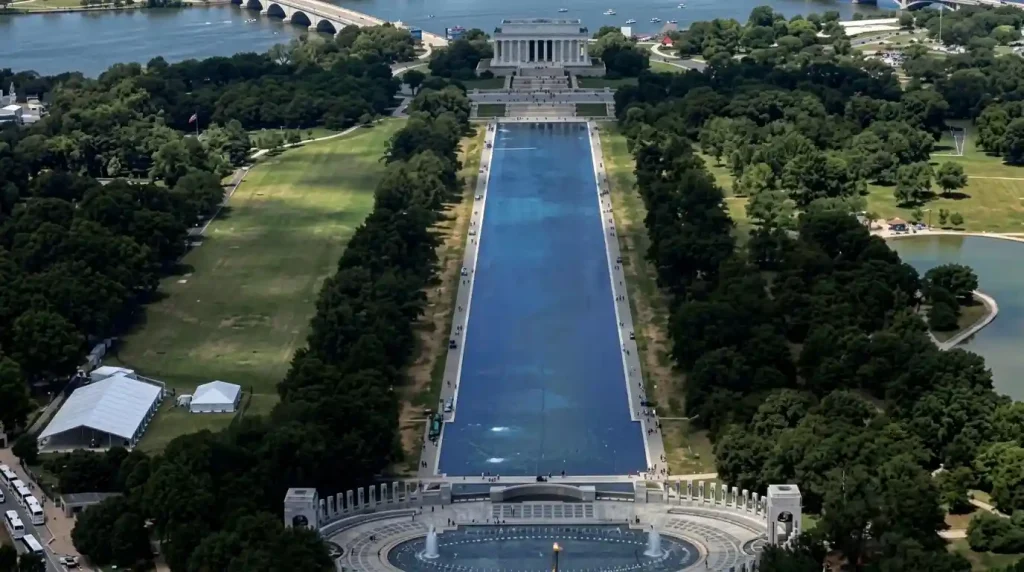
The controversy began unfolding in late spring when the newly restored reflecting pool, designed to showcase a brilliant “American Flag Blue” aesthetic, began to show visible signs of wear. Rather than a pristine reflective surface, visitors were greeted by peeling paint, floating chunks of blue lining, and a massive, fluorescent green algae bloom. While local preservationists and pool engineering experts pointed to systemic application failures, the federal administration quickly pivoted to a narrative of malicious destruction and vandalism.
As pressure mounted to deliver a flawless monument in time for the nation’s 250th anniversary celebrations, law enforcement took aggressive measures. Undercover and uniform officers from the United States Park Police began closely monitoring the site, culminating in multiple detentions. The charges filed against the three newest defendants represent the latest chapter in this ongoing struggle between federal authorities, who insist the pool is a victim of criminal activity, and defense attorneys, who argue the government is using ordinary citizens as scapegoats for a botched, multi-million dollar construction project.
Details of the Charges: Three Defendants Identified
The three individuals facing misdemeanor charges in connection with the Reflecting Pool damage are Justin Carreno, Sophie Dennison-Gibby, and Cameron Thiers. All three were detained on Saturday, June 20, 2026, during a brief window in the afternoon. According to the Department of Justice and the Superior Court of the District of Columbia, the defendants are accused of peeling off and removing pieces of the pool’s custom blue sealant. Each faces charges of destruction of property involving damage valued at less than $1,000. If convicted, they each face up to 180 days in jail and a fine of up to $1,000. All three have entered pleas of not guilty.
Justin Carreno: Observed Near the Blue Paint
According to the criminal complaint, United States Park Police officers observed 47-year-old Justin Carreno reaching into the shallow waters of the reflecting pool. An officer reported seeing Carreno actively peel blue paint from the bottom of the concrete structure and pull a piece of the coating out of the water. He was immediately detained and faces multiple charges, including destruction of public property, defacing property, and destroying government property.
Sophie Dennison-Gibby: Additional Material Found
The prosecution’s case against 49-year-old Sophie Dennison-Gibby involves similar allegations. Officers reported witnessing her peeling off a section of the pool’s lining. After she was taken into custody, a subsequent search of her personal belongings revealed an additional piece of the blue sealant inside her purse. Dennison-Gibby is currently facing charges of possessing or destroying cultural property, destruction of public property, and defacing property.
Cameron Thiers: Sealant Removal Witnessed
The youngest of the three, 26-year-old Cameron Thiers, was detained during the same timeframe on June 20. Officers stated they observed Thiers reach into the water, peel a piece of the blue sealant from the basin, and remove it. Court documents indicate that Thiers admitted to taking the piece and was still holding it in his hand when contacted by the police. He was arrested and issued a federal violation notice for possessing or damaging a structure or cultural resource.
The Former Olympian Connection: David Hearn’s Case
The misdemeanor cases against Carreno, Dennison-Gibby, and Thiers are legally separate from the high-profile felony case of David Hearn, a 67-year-old former Olympic canoeist who competed in three Summer Olympics. Hearn, a resident of Bethesda, Maryland, was indicted on a single felony count of property destruction after being accused of deliberately ripping up the newly installed sealant, allegedly causing more than $1,000 in damage. He appeared in D.C. Superior Court on July 9, 2026, and entered a plea of not guilty.
U.S. Attorney Jeanine Pirro, who is leading the prosecution, has characterized Hearn’s actions as a violent and deliberate act. She claimed Hearn used both hands to rip the bottom liner and behaved belligerently toward a park employee who told him to stop. Hearn’s defense attorneys, including prominent lawyer Norm Eisen, have dismissed these claims as an alarming abuse of prosecutorial power. They assert that Hearn was simply on a long-distance bicycle ride, noticed the peeling paint, and touched it out of scientific interest. Eisen argued that the administration is attempting to use ordinary citizens to divert public attention away from its own engineering failures. In complex political environments, public disputes often test the boundaries of the law; much like when a judge clears a candidate in high-stakes primary eligibility cases, the courts here must determine whether a genuine crime occurred or if political pressure is driving the prosecution.
Technical Controversy: Did the Paint Job Simply Fail?
At the center of the dispute is the material integrity of the pool’s new blue liner. Renovation experts have voiced concerns that the $14 million to $16 million project was fundamentally flawed from its inception. To curb the massive algae bloom that appeared shortly after the pool was refilled, the National Park Service was forced to deploy advanced “nanobubblers,” which infuse ozone into the water to kill bacteria. However, these treatments have done nothing to stop the physical peeling of the blue paint.
Swimming pool engineering specialists have noted that applying a dark color like “American Flag Blue” to a massive, shallow concrete structure exposed to intense summer heat is highly problematic. The dark surface absorbs solar radiation, elevating the water temperature and creating an ideal environment for rapid algae growth. Furthermore, if the concrete bottom was not properly cured or if there was water seeping beneath the surface—a phenomenon known as hydrostatic pressure—the sealant would naturally bubble, blister, and lift. Once the paint began to float to the surface in large chunks, it became an inevitable attraction for curious tourists, leading directly to the current wave of arrests.
The Political Backdrop of the “American Flag Blue” Restoration
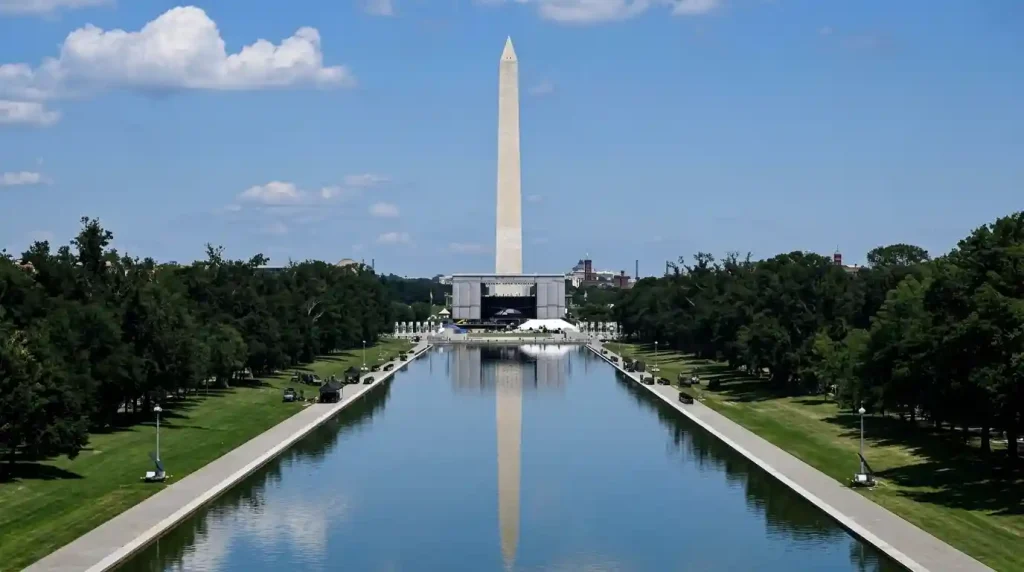
The restoration of the Lincoln Memorial Reflecting Pool was heavily championed by President Donald Trump, who aimed to beautify the National Mall ahead of the country’s 250th anniversary. The contract was awarded to a company that had previously worked on swimming pools at one of his private golf clubs. When the paint job began to blister and fail, the president publicly claimed that the damage was the result of deliberate vandalism. On social media, Trump asserted that a “350-foot gash” had been cut into the liner with a box cutter and that political opponents had dumped fertilizer into the pool to feed the green algae.
Interior Secretary Doug Burgum supported this narrative, confirming that while the pool would have to be drained for extensive repairs, the administration would continue to use the same contractor because they had done a “fantastic job”. However, critics have pointed out that despite extensive security cameras surrounding the monument, federal officials have yet to release any photographic or video evidence substantiating the claim that vandals cut the liner with blades.
Summary of Charges and Accused Parties
To provide a clear overview of the ongoing legal actions surrounding the Lincoln Memorial Reflecting Pool, the following table details the key individuals charged, the specific nature of their allegations, and the potential legal penalties they face under District of Columbia law.
| Defendant Name | Age | Charge Level | Specific Allegations / Actions Observed | Maximum Potential Penalties |
|---|---|---|---|---|
| David Hearn | 67 | Felony | Deliberately ripping up sealant; causing over $1,000 in property damage; acting belligerently. | Up to 10 years in federal prison and substantial fines. |
| Justin Carreno | 47 | Misdemeanor | Observed reaching into the pool and peeling a piece of blue coating from the bottom. | Up to 180 days in jail and a $1,000 fine. |
| Sophie Dennison-Gibby | 49 | Misdemeanor | Peeling blue sealant; additional piece of pool liner discovered in her purse during a search. | Up to 180 days in jail and a $1,000 fine. |
| Cameron Thiers | 26 | Misdemeanor | Reaching into water, peeling sealant, and admitting to holding a piece when approached. | Up to 180 days in jail and a $1,000 fine. |
Broader Legal and Political Implications in Washington
The aggressive prosecution of these individuals has sent shockwaves through the local community and legal circles in Washington D.C. Civil liberties advocates argue that using the full weight of federal law enforcement to prosecute tourists for picking up loose pieces of peeling paint is an unprecedented escalation. This level of scrutiny mirrors the severe prosecutions seen under the National Security Act sentencing of individuals who compromise state assets, highlighting how seriously the federal government is taking offenses related to national symbols.
This climate of intense federal oversight exists alongside Washington’s active social and political scene, where high-profile events often reflect the deep partisan divisions of the city. Just as elite-level gatherings like the prestigious Washington AI Honors Gala bring together tech leaders and policymakers to debate complex national regulations, the legal battles surrounding the National Mall have become a focal point for political commentators, defense lawyers, and federal officials debating the boundaries of executive influence on local justice.
As reported by Fox 5 DC, the three misdemeanor defendants have been released on the condition that they stay away from the Lincoln Memorial Reflecting Pool entirely while their cases make their way through the court system. This stay-away order underscores the government’s determination to isolate the site as it prepares for further construction and repair work.
The Challenges of Historic Monument Preservation
Preserving the National Mall’s historic monuments is an ongoing battle against both time and the elements. The Lincoln Memorial Reflecting Pool, which holds approximately 6.75 million gallons of water, is particularly difficult to maintain due to its massive surface area and shallow depth. Previous major renovations, such as the $34 million overhaul completed in 2012, focused primarily on replacing the pool’s dirt bottom with concrete, installing a modern water filtration system, and supply lines to prevent the water from becoming stagnant.
The decision to introduce a painted cosmetic lining to the bottom of the pool represents a departure from traditional preservation standards, which prioritize structural longevity and low maintenance over temporary aesthetic enhancements. Many historic preservationists argue that applying a painted sealant to a massive, outdoor, concrete water basin is inherently prone to failure. The combination of intense summer heat, chlorine treatments, ozone from nanobubblers, and constant exposure to UV radiation creates an incredibly hostile environment for any painted coating.
Conclusion: The Future of the National Mall
Ultimately, the legal resolution of these vandalism cases will depend on whether the court views the peeling sealant as the result of criminal intent or structural failure. If defense attorneys can demonstrate that the “American Flag Blue” liner was peeling of its own accord due to faulty application, the government’s case of deliberate property destruction may struggle to hold up under legal scrutiny. In the meantime, the Lincoln Memorial Reflecting Pool remains a stark symbol of how physical infrastructure, aesthetic ambitions, and intense political polarization can collide on the national stage.