Lai Faces Pressure from China and US Over Taiwan’s Future
Introduction
Lai, the current leader of Taiwan, finds himself at the center of a complex geopolitical struggle, facing mounting pressure from both China and the United States. China, which views Taiwan as a renegade province, insists on reunification, while the United States, traditionally Taiwan’s strongest ally, appears to be reconsidering its commitment to the island’s defense. This precarious situation demands a thorough examination of the dynamics at play and the potential ramifications for Taiwan’s future. The delicate balance of power in the region hinges on Lai’s ability to navigate these challenges effectively. The stakes are incredibly high, not only for Taiwan but also for international relations and the stability of the Indo-Pacific region. Understanding the nuances of this situation requires a deep dive into the historical context, current political climate, and the strategic interests of all parties involved.
China’s Stance on Taiwan
China’s position on Taiwan is rooted in its “One China” policy, which asserts that Taiwan is an integral part of China. This stance is non-negotiable for Beijing, and any perceived move towards independence by Taiwan is met with strong condemnation and threats of military action. China’s military modernization and increasing assertiveness in the region underscore its determination to eventually bring Taiwan under its control. China views Lai as a “separatist” leader, further complicating the already strained relationship. The Chinese government has consistently criticized Lai’s administration for its perceived pro-independence stance and has used various means, including economic pressure and military exercises, to exert influence over Taiwan. The relationship between China and Taiwan is not merely a political dispute but a deeply historical and cultural one, with roots stretching back to the Chinese Civil War in the mid-20th century. This historical context is crucial for understanding the current tensions and the unwavering commitment of the Chinese government to its reunification agenda.
U.S. Policy on Taiwan
The United States maintains a policy of “strategic ambiguity” regarding Taiwan, meaning that it does not explicitly state whether it would intervene militarily in the event of a Chinese attack. This ambiguity is designed to deter China from taking military action while also dissuading Taiwan from unilaterally declaring independence. However, the U.S. provides Taiwan with defensive arms and maintains a strong military presence in the region, signaling its commitment to Taiwan’s security. Recent statements from U.S. officials have suggested a possible shift towards a more explicit commitment to Taiwan’s defense, but the official policy remains unchanged. The U.S. approach to Taiwan is further complicated by its economic and strategic interests in the region. The United States seeks to balance its support for Taiwan with its desire to maintain stable relations with China, a major economic partner and global power. This balancing act requires careful diplomacy and a nuanced understanding of the complex dynamics between the three parties. The article Asim Munir Brokers US-Iran Truce discusses similar delicate diplomatic situations.
Trump’s Comments on Arms Sales
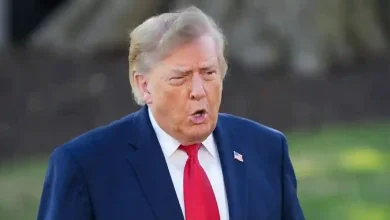
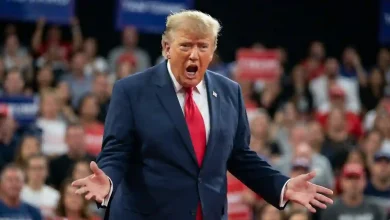
Former U.S. President Donald Trump’s remarks about using arms sales to Taiwan as a “negotiating chip” with China have raised concerns about the reliability of U.S. support for the island. These comments have introduced an element of uncertainty into the U.S.-Taiwan relationship and have been interpreted by some as a sign that the U.S. may be willing to prioritize its relationship with China over its commitment to Taiwan. Trump’s transactional approach to foreign policy has often been unpredictable, leaving allies questioning the extent of U.S. support. This situation creates additional challenges for Lai, who must navigate not only China’s pressure but also the uncertainty surrounding U.S. policy. The debate over arms sales to Taiwan is not new, but Trump’s comments brought it to the forefront, highlighting the potential for U.S. policy to be influenced by factors beyond Taiwan’s security. This situation underscores the importance of Taiwan diversifying its relationships and strengthening its own defense capabilities.
Implications for Taiwan
The combined pressure from China and the U.S. puts Taiwan in a difficult position. Lai must balance the need to maintain a strong defense and assert Taiwan’s sovereignty with the need to avoid provoking China or alienating the U.S. This requires a delicate balancing act and a comprehensive strategy that addresses both external and internal challenges. Taiwan’s economic dependence on China further complicates the situation, as any moves towards independence could have significant economic consequences. Lai’s leadership is being tested as he navigates these complex challenges and seeks to secure Taiwan’s future. The implications of this situation extend beyond Taiwan, impacting regional stability and the broader U.S.-China relationship. The article Petrodollar Crisis discusses the complexities of US relations with other nations. The ability of Taiwan to maintain its democratic values and economic prosperity in the face of these pressures will be a key factor in determining the future of the island.
Taiwan’s Response
In response to these pressures, Taiwan has sought to strengthen its defenses, diversify its economy, and deepen its relationships with other countries. Lai’s administration has emphasized the importance of self-reliance and has invested in developing Taiwan’s indigenous defense industry. Taiwan has also sought to expand its economic ties with countries in Southeast Asia and other regions to reduce its dependence on China. Furthermore, Taiwan has actively engaged in diplomacy to build support for its cause and to highlight the importance of maintaining peace and stability in the region. The Taiwanese government has also worked to strengthen its cybersecurity defenses in the face of increasing cyberattacks from China. Despite the challenges, Taiwan remains committed to upholding its democratic values and protecting its sovereignty. The government’s response reflects a determination to resist coercion and to safeguard the island’s future.
Regional Impact
The situation surrounding Taiwan has significant implications for the entire Indo-Pacific region. Any conflict in the Taiwan Strait would have devastating consequences for regional economies and could draw in other major powers, including the U.S., Japan, and Australia. The potential for miscalculation and escalation is high, making it crucial for all parties to exercise restraint and engage in dialogue. The security of sea lanes in the South China Sea is also at stake, as a conflict in the Taiwan Strait could disrupt trade and energy flows. The regional impact extends beyond security and economics, affecting the political landscape and the balance of power in the Indo-Pacific region. The article North Korea Enhances Border Artillery discusses similar regional security concerns. The Association of Southeast Asian Nations (ASEAN) has also expressed concerns about the situation in the Taiwan Strait and has called for peaceful resolution of disputes.
Expert Analysis
Experts on international relations and security studies offer varying perspectives on the situation surrounding Taiwan. Some argue that the U.S. should adopt a policy of “strategic clarity” and explicitly commit to defending Taiwan, while others maintain that “strategic ambiguity” is still the best approach. Some analysts believe that China’s military capabilities are rapidly increasing, making a military invasion of Taiwan more likely, while others argue that China would prefer to achieve reunification through peaceful means. Experts also debate the extent to which the U.S. is willing to risk a conflict with China over Taiwan. The range of expert opinions highlights the complexity and uncertainty surrounding the situation. Understanding these different perspectives is crucial for developing informed policy recommendations and for assessing the potential risks and opportunities facing Taiwan. The article Bufords Bar Shooting includes expert analysis on another complex issue.
Potential Scenarios
Several potential scenarios could unfold in the coming years. One scenario is that China could increase its military pressure on Taiwan, conducting more frequent military exercises and cyberattacks. Another scenario is that the U.S. could strengthen its military presence in the region and increase its arms sales to Taiwan. A third scenario is that China and Taiwan could resume dialogue and seek to find a peaceful resolution to their differences. A fourth, more concerning scenario, involves a full-scale military conflict across the Taiwan Strait. The likelihood of each scenario depends on a variety of factors, including the political climate in China, the U.S., and Taiwan, as well as the state of relations between the three parties. It is crucial to consider these different scenarios and to develop contingency plans for each. The article Iranian arms broker discusses the potential scenarios that could arise from that conflict.
Domestic Challenges for Lai
Lai also faces domestic challenges in Taiwan. Public opinion on the issue of independence versus unification is divided, and Lai must maintain the support of a broad coalition of voters. Economic inequality and social issues also pose challenges for his administration. Lai must also navigate the complex political landscape in Taiwan, where different political parties have different views on the island’s future. The domestic challenges facing Lai are intertwined with the external pressures from China and the U.S., making his job even more difficult. Maintaining social cohesion and addressing the concerns of different segments of the population are crucial for Lai’s ability to effectively respond to external threats and opportunities.
Historical Context
Understanding the historical context of the Taiwan issue is essential for grasping the current dynamics. Taiwan was ceded to Japan in 1895 after the First Sino-Japanese War and remained under Japanese control until the end of World War II. After the Chinese Civil War, the Kuomintang (KMT) government retreated to Taiwan in 1949, establishing a separate government from the communist regime in mainland China. Since then, Taiwan has developed into a vibrant democracy and a major economic power. The historical context shapes the perceptions and attitudes of both the Chinese and Taiwanese people, influencing their views on the island’s future. The legacy of colonialism, civil war, and political division continues to play a significant role in shaping the current relationship between China and Taiwan.
Future Outlook
The future of Taiwan remains uncertain. The relationship between China and the U.S. will be a key factor in determining Taiwan’s fate. The internal dynamics within Taiwan will also play a significant role. Lai’s leadership will be crucial in navigating the challenges and opportunities that lie ahead. The international community must remain engaged and committed to promoting peace and stability in the region. The future of Taiwan is not just a matter for the Chinese, Taiwanese, and American people; it is a matter of global concern. Maintaining the status quo, seeking a peaceful resolution, or facing a potential conflict are all possible paths that Taiwan might face. The article Iran Halts U.S. Talks discusses potential future outcomes based on current challenges. Regardless of the path, the next few years will be critical in shaping Taiwan’s destiny.
| Factor | China | United States | Taiwan |
|---|---|---|---|
| Goal | Reunification, prevent independence | Maintain regional stability, balance China | Preserve autonomy and democracy |
| Leverage | Military, economic pressure | Arms sales, diplomatic support | Economic strength, democratic values |
| Challenges | International condemnation, economic costs | Balancing act, credibility | Economic dependence, military vulnerability |
Conclusion
Lai faces a formidable challenge in navigating the complex pressures from China and the United States. His leadership will be crucial in determining Taiwan’s future. The international community must pay close attention to this situation and work to promote a peaceful and stable resolution. The stakes are high, not only for Taiwan but for the entire Indo-Pacific region and the global order. The delicate balance of power requires careful diplomacy, strategic thinking, and a commitment to peaceful resolution of disputes. The future of Taiwan will depend on the choices made by all parties involved in the coming years. The article Lebanon Talks in Washington discusses the need for careful diplomacy.