North Korea Enhances Border Artillery: Implications & Analysis
Introduction
North Korea is bolstering its military capabilities along its southern border, heightening tensions in the Korean Peninsula. Recent reports indicate a significant upgrade in artillery systems and a strategic shift away from reunification with South Korea, signaling a more assertive stance under Kim Jong Un’s leadership. This development coincides with Kim’s declarations to sever ties with South Korea and pursue a two-state system, fundamentally altering the long-standing dynamics between the two nations. The enhanced military presence, particularly the deployment of advanced artillery, poses an immediate and substantial threat to South Korea, especially its capital, Seoul.
Kim’s Inspection of Munitions Factory
Kim Jong Un’s recent visit to a munitions factory underscores the regime’s commitment to modernizing its armed forces. During his visit on Wednesday, Kim inspected the production of 155-mm self-propelled gun-howitzers, which are slated for deployment in an artillery unit stationed in the southern border region before the year’s end. The Korean Central News Agency (KCNA), North Korea’s official news outlet, reported on Kim’s inspection and his emphasis on the importance of these weapons systems. This inspection serves not only as a gauge of production capabilities but also as a public demonstration of North Korea’s military advancements. The focus on domestically produced artillery highlights a drive towards self-reliance in defense manufacturing, reducing dependence on foreign suppliers and reinforcing the nation’s defense industry.
Enhanced Artillery Capabilities
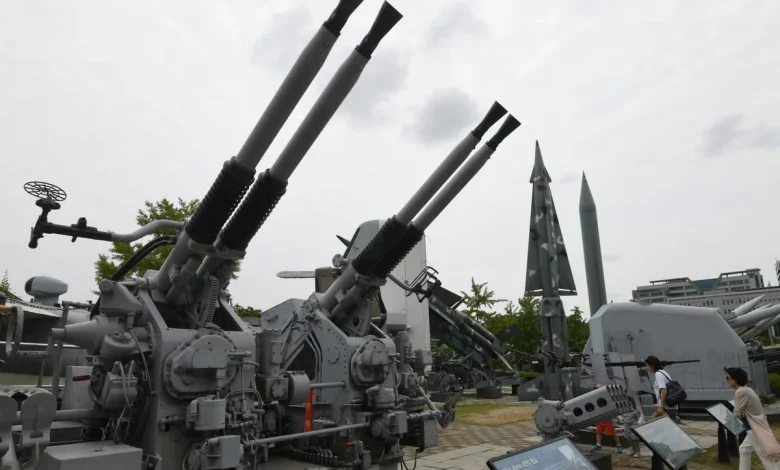
The 155-mm self-propelled gun-howitzers inspected by Kim Jong Un represent a significant enhancement in North Korea’s artillery capabilities. According to KCNA, these large-caliber rifled guns possess a striking range exceeding 37 miles (60 kilometers). Kim emphasized that the extended range and improved striking capability would provide a “great change and advantage” in land operations for the North Korean army. The deployment of these advanced artillery systems close to the border escalates the potential for rapid and devastating strikes against targets within South Korea. This upgrade is not limited to artillery; Kim mentioned plans to deploy various operational and tactical missile systems and powerful multiple rocket launcher systems along the border, further compounding the threat. The combined effect of these deployments aims to create a formidable deterrent and enhance North Korea’s offensive capabilities.
Strategic Implications of Artillery Deployment
The strategic implications of North Korea’s artillery deployment are far-reaching, impacting regional security dynamics and potentially altering military strategies on both sides of the border. The enhanced artillery capabilities provide North Korea with a potent means of projecting power and influencing the strategic landscape. The deployment aims to achieve several strategic objectives, including deterring potential aggression from South Korea and the United States, enhancing North Korea’s bargaining power in any future negotiations, and maintaining a credible threat to ensure regime survival. Furthermore, the shift towards advanced conventional weapons like artillery could be a calculated move to circumvent international sanctions primarily focused on ballistic missiles and nuclear programs. By investing in artillery, North Korea can modernize its military without directly violating UN Security Council resolutions, thereby maintaining its military edge while navigating international pressures.
Shift Towards a Two-State System
North Korea’s move away from the goal of Korean unification marks a significant ideological and political shift. The revised constitution, which removes all references to Korean unification, reflects Kim Jong Un’s intention to establish a two-state system on the Korean Peninsula. This decision breaks with decades of shared national identity and aspirations for a unified Korea, setting the stage for a potentially permanent division. The shift can be attributed to several factors, including Kim’s assessment that unification is no longer feasible under current conditions, a desire to consolidate his power and legitimize his regime, and a recognition of the deep-seated differences in political and economic systems between the North and South. By formally adopting a two-state system, North Korea signals its intention to engage with the international community as a separate, sovereign nation, potentially seeking greater diplomatic recognition and economic opportunities. This move also allows Kim to focus on domestic priorities, such as strengthening the economy and improving living standards, without the constraints of reunification efforts.
The Threat to Seoul
Seoul, the capital of South Korea, faces a direct and substantial threat from North Korea’s enhanced artillery deployment. With a population of approximately 10 million people, Seoul is located just 25 to 30 miles (40 to 48 kilometers) from the border, well within the striking range of North Korean artillery. The potential for a sudden and devastating attack on Seoul is a major concern for South Korean military planners and policymakers. The city’s proximity to the border means that it is vulnerable to both conventional artillery strikes and potential attacks using tactical missile systems and multiple rocket launchers. A North Korean artillery barrage could inflict significant casualties, damage critical infrastructure, and disrupt economic activity in Seoul, causing widespread chaos and instability. The threat to Seoul is a key factor in South Korea’s defense strategy and its alliance with the United States, which provides a security guarantee and maintains a significant military presence in the country.
Artillery vs. Ballistic Missiles
While North Korea’s ballistic missile program receives significant international attention, its artillery capabilities pose a more immediate and conventional threat. Ballistic missile launches are banned under UN Security Council resolutions, leading to sanctions and international condemnation. However, artillery deployments, while not subject to the same level of scrutiny, represent a significant military advantage for North Korea. Unlike ballistic missiles, artillery systems are readily deployable and can be used for both offensive and defensive purposes. They provide North Korea with a means of exerting pressure on South Korea without resorting to actions that would trigger immediate international sanctions. Furthermore, the sheer volume of artillery guns deployed near the border ensures that North Korea can inflict substantial damage in a short period, overwhelming South Korea’s defenses. The focus on artillery also allows North Korea to develop and refine its conventional military capabilities, complementing its ballistic missile program and enhancing its overall military posture.
Regional Dynamics and Alliances
The evolving security landscape on the Korean Peninsula impacts regional dynamics and alliances, particularly involving the United States, China, and Japan. The United States maintains a strong military alliance with South Korea, providing a security umbrella and deploying troops to deter North Korean aggression. The U.S. commitment to defending South Korea is unwavering, but the changing nature of the North Korean threat requires continuous adaptation and refinement of military strategies. China, North Korea’s closest ally, plays a crucial role in maintaining stability in the region. While China has expressed concerns about North Korea’s nuclear and missile programs, it also seeks to avoid instability that could lead to a refugee crisis or a U.S.-led military intervention. Japan, another key U.S. ally, is deeply concerned about North Korea’s military capabilities and has been increasing its defense spending and strengthening its security cooperation with the United States and South Korea. The interplay of these regional powers shapes the strategic environment and influences the options available to address the North Korean challenge. Tensions in the Strait of Hormuz, where France has deployed warships amidst rising tensions, further complicate the geopolitical landscape. These broader global tensions underscore the need for careful diplomacy and strategic planning to prevent escalation and maintain regional stability. Furthermore, the ongoing discussions between Pakistan and Iran, with potential US involvement, highlight the complex web of relationships influencing regional security.
South Korean Response
South Korea is taking comprehensive measures to counter North Korea’s enhanced military capabilities and evolving strategic posture. These measures include strengthening its own military defenses, enhancing its alliance with the United States, and pursuing diplomatic efforts to de-escalate tensions and promote dialogue. South Korea is investing heavily in modernizing its armed forces, acquiring advanced weapons systems, and improving its intelligence and surveillance capabilities. It is also conducting regular joint military exercises with the United States to enhance interoperability and readiness. The alliance with the United States remains the cornerstone of South Korea’s security strategy, providing a credible deterrent against North Korean aggression. South Korea also seeks to engage in diplomatic efforts to address the root causes of the conflict and build confidence with North Korea, but these efforts have been hampered by North Korea’s intransigence and its pursuit of nuclear weapons and ballistic missiles. Additionally, the potential implications of a conflict in the Panama Canal, influenced by Iranian actions, adds another layer of complexity to South Korea’s strategic considerations.
International Reactions
The international community has reacted with concern to North Korea’s military build-up and its shift away from Korean unification. The United Nations Security Council has imposed sanctions on North Korea in response to its nuclear and missile programs, but these sanctions have had limited success in curbing its military activities. The United States has called on North Korea to abandon its weapons programs and return to dialogue, but these calls have been largely ignored. China has urged restraint and advocated for a peaceful resolution of the conflict, but it has also resisted calls for stronger sanctions or pressure on North Korea. Other countries, including Japan and the European Union member states, have condemned North Korea’s actions and called for a renewed diplomatic effort to address the crisis. The international community is grappling with how to effectively deter North Korea from further provocations and prevent a potential conflict on the Korean Peninsula. The situation is further complicated by Russia’s defense of Iran’s actions in the Strait of Hormuz at the UN, underscoring the diverging geopolitical interests at play.
Future Outlook
The future of the Korean Peninsula remains uncertain, with the potential for both escalation and de-escalation. North Korea’s continued military build-up and its shift away from Korean unification could lead to increased tensions and a greater risk of conflict. However, there is also the possibility that North Korea could eventually return to dialogue and seek a peaceful resolution of the conflict, particularly if it calculates that its security and economic interests are better served through diplomacy. The actions of regional powers, such as the United States, China, and Japan, will play a crucial role in shaping the future of the Korean Peninsula. A coordinated and comprehensive approach, combining deterrence, diplomacy, and economic incentives, may be necessary to achieve a lasting peace and stability on the Korean Peninsula. The potential for US-Iran negotiations to break down, making a 2026 peace deal more challenging, further complicates the outlook for regional stability.
The following table summarizes the key aspects of the current situation:
| Aspect | Description |
|---|---|
| Military Buildup | North Korea is enhancing its artillery capabilities and deploying advanced weapons systems along the southern border. |
| Shift in Policy | North Korea is moving away from the goal of Korean unification and establishing a two-state system. |
| Threat to Seoul | Seoul, the capital of South Korea, is within striking range of North Korean artillery, posing a significant threat. |
| Regional Dynamics | The evolving security landscape impacts regional alliances and the roles of the United States, China, and Japan. |
| International Reactions | The international community is concerned about North Korea’s actions and is seeking ways to deter further provocations. |
| Future Outlook | The future of the Korean Peninsula remains uncertain, with the potential for both escalation and de-escalation. |
Conclusion
North Korea’s recent actions, including the enhancement of its artillery capabilities and the formal abandonment of Korean unification, represent a significant shift in the strategic landscape of the Korean Peninsula. The deployment of advanced artillery systems along the southern border poses a direct and immediate threat to South Korea, particularly its capital, Seoul. The international community must remain vigilant and pursue a coordinated approach to deter further provocations and promote a peaceful resolution of the conflict. The future of the Korean Peninsula hinges on the ability of all parties to engage in constructive dialogue and address the underlying causes of the conflict. The complexities of the situation require a multi-faceted strategy that combines military deterrence, diplomatic engagement, and economic incentives to create a stable and secure environment in the region. Recent events, such as the superyacht Nord navigating the Hormuz Strait amidst the Russian-Iran pact, serve as reminders of the broader geopolitical context influencing the Korean Peninsula. The need for careful and informed decision-making has never been greater. Similarly, the potential ripple effects of the Panama Canal crisis on global shipping costs highlight the interconnectedness of global events and their potential impact on regional stability. The United States has escalated military strikes in the Caribbean amid a growing drug war, showcasing the breadth of global challenges that demand attention. Furthermore, the discovery of lithium in the Appalachians, with an estimated 2.3 million tons found, could have long-term economic and strategic implications, influencing the balance of power and resource competition. All of these factors contribute to a complex and dynamic global environment in which the Korean Peninsula remains a critical focal point, see also Iran’s economy.