Wing of Zion Returns: Ceasefire Optimism Surges in Israel
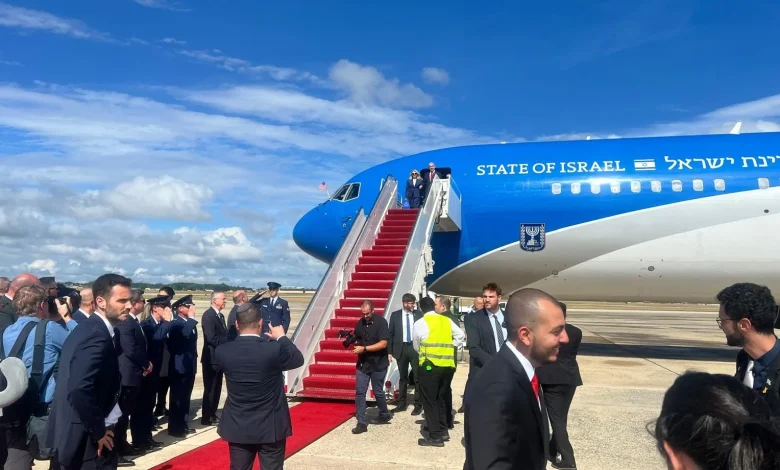
Wing of Zion Returning: A Shift in Middle East Geopolitics
The decision to recall the state aircraft is not merely a logistical maneuver; it is a highly visible strategic signal broadcasted to both allies and adversaries across the globe. For over a month and a half, the absence of the flagship jet from its designated hangar at Nevatim Airbase represented the palpable vulnerability of Israeli strategic assets to advanced Iranian ballistic missile strikes. By bringing the aircraft back into Israeli airspace, defense officials in Jerusalem are indirectly communicating a dramatic reduction in the imminent threat level. This operational shift aligns with recent diplomatic whispers suggesting that major hostilities may be transitioning into a phase of intense, closed-door negotiations. As military posturing slowly gives way to diplomatic engagements, the return of the aircraft symbolizes a pivot from a war-footing back to the complex realities of statecraft and international diplomacy.
The Timeline of the Aircraft’s Departure to Berlin
Understanding the gravity of the aircraft’s return requires a detailed examination of its sudden departure. Hours before the first wave of Iranian long-range projectiles illuminated the night sky, intelligence assessments triggered a sweeping continuity-of-government protocol. The prime minister’s plane was quietly scrambled and directed toward European airspace. Berlin was selected not only for its robust aerial defense infrastructure but also due to the deeply entrenched security cooperation between Germany and Israel. Throughout the subsequent six weeks, the jet remained grounded under a veil of strict operational secrecy. During this turbulent period, regional stability deteriorated rapidly, with secondary fronts erupting and international markets reacting violently to the threat of a widened war. The timeline of this deployment perfectly mirrors the trajectory of the conflict, from the initial shockwave of mobilization to the current, cautious de-escalation phase.
Assessing the Technical Capabilities of Israel’s Government Plane
The asset in question is far more than a standard VIP transport. A heavily modified Boeing 767-300ER, the aircraft is equipped with state-of-the-art avionics, secure satellite communications, and a sophisticated command-and-control suite designed to manage national crises from the stratosphere. More importantly, it features the advanced C-MUSIC (Multi-Spectral Infrared Countermeasure) system, which protects the airframe against shoulder-fired surface-to-air missiles. Despite these formidable onboard defenses, the sheer volume and payload capacity of Iran’s hypersonic and heavy ballistic missile arsenal meant that leaving the aircraft on a stationary tarmac in Israel posed an unacceptable risk. The decision to evacuate the asset highlighted a stark reality: stationary ground targets, no matter how well-defended by the Iron Dome or Arrow 3 systems, remain inherently vulnerable during a saturated, multi-directional missile barrage.
Why the Return Signals Optimism for an Israel-Iran Ceasefire
The repatriation of the government jet is widely interpreted as the strongest indicator yet that a cessation of hostilities is imminent. Military intelligence doctrines dictate that high-value strategic assets are only returned to active conflict zones when the probability of targeted destruction has been reduced to acceptable peacetime parameters. This suggests that backchannel communications, potentially facilitated by neutral regional actors or European mediators, have yielded concrete security guarantees. While public rhetoric from both Jerusalem and Tehran remains predictably combative, the physical movement of state assets tells a different, far more pragmatic story. The optimism is further bolstered by reports circulating among global geopolitical observers who note a significant decrease in the readiness posture of Iranian missile command units over the past forty-eight hours.
Tactical Shifts in Jerusalem’s Defense Posture
Simultaneous with the aircraft’s return, there have been noticeable adjustments in the operational deployment of the Israel Defense Forces (IDF). Reserve units called up during the initial panic are slowly being rotated back into civilian life, and emergency home-front directives have been quietly relaxed in several key municipalities. However, this does not imply a total stand-down. Defense officials are acutely aware of the historical precedent of tactical pauses being utilized by adversaries to rearm. This cautious environment is extensively detailed in recent analyses concerning the ongoing assessments of Iran’s missile rebuilding efforts during alleged diplomatic lulls. The strategy in Jerusalem appears to be one of armed optimism: preparing for the formalization of a ceasefire while maintaining a lethal retaliatory capability should negotiations falter at the eleventh hour.
| Asset / Event Phase | Duration | Location | Strategic Significance |
|---|---|---|---|
| Initial Evacuation | Hours 1-24 | En route to Europe | Asset preservation against incoming ballistic strikes |
| European Deployment | 6 Weeks | Berlin, Germany | Continuity of command preservation, secure communications |
| Return Journey | Current | En route to Israel | Indicator of de-escalation and ceasefire optimism |
Strategic Implications of the Aircraft’s Safe Haven in Germany
The choice of Berlin as the temporary safe haven for the Israeli state aircraft carries immense strategic and historical weight. Germany has consistently positioned itself as one of Israel’s most steadfast European allies, providing not only rhetorical support but tangible military and logistical assistance during crises. By hosting the aircraft, the German government demonstrated its willingness to actively participate in the safeguarding of Israeli state continuity. This arrangement required extensive logistical coordination, secure hangar facilities, and a localized airspace defense umbrella that only a premier NATO ally could seamlessly provide. The successful execution of this hosting arrangement strengthens the bilateral ties between the two nations and sets a fascinating precedent for allied asset-hosting during regional Middle Eastern wars.
The Role of European Allies in Middle East Conflicts
The temporary relocation of the prime ministerial plane underscores a broader geopolitical reality: Israel’s deep reliance on the Western security architecture. While the IDF operates with a high degree of tactical independence, the strategic depth required to weather a prolonged multi-front conflict necessitates international partnerships. European airspace and diplomatic cover provide critical safety valves when regional tensions boil over. This dynamic is especially pertinent given the complex web of alliances in the Middle East, where local actors often require the intervention of external superpowers to force diplomatic breakthroughs. The European theater serves not just as a physical refuge for strategic assets, but as the diplomatic staging ground for the complex negotiations required to end hostilities without either side losing face domestically.
Internal Israeli Reactions to the Aircraft’s Relocation
Domestically, the saga of the state aircraft has been fraught with intense political friction. Upon the discovery that the plane had been evacuated to Europe while millions of Israeli citizens were ordered into bomb shelters, public outrage swelled. Opposition leaders accused the current administration of prioritizing the safety of a heavily criticized, multi-million-shekel prestige project over the psychological resilience of the home front. The aircraft, which has long been a lightning rod for criticism regarding government excess and fiscal mismanagement, became a symbol of a perceived disconnect between the political elite and the civilian population bearing the brunt of the war. Now, as the plane returns, the administration faces the daunting task of reshaping the narrative, framing the evacuation not as an act of elite self-preservation, but as a necessary and calculated national security protocol.
Political Fallout and Public Sentiment in Jerusalem
The political fallout from the Berlin deployment will likely linger long after the ceasefire documents are signed. The prime minister’s office is currently engaged in a massive public relations campaign designed to emphasize the technical justifications for the evacuation. Allies of the administration argue that leaving the aircraft in Israel would have provided Iran with a highly symbolic, irresistible target, and that its destruction would have constituted a devastating propaganda victory for Tehran. Despite these strategic justifications, public sentiment remains largely cynical. The internal political landscape is further complicated by concurrent diplomatic struggles on the northern front, notably highlighted by Lebanon’s refusal to engage in direct talks regarding specific files, an issue that continues to test the administration’s foreign policy credibility.
Global Context: What This Means for Future Diplomatic Negotiations
As the aircraft touches down on Israeli soil, the focus of the international community will rapidly shift from military de-escalation to the arduous process of formalizing a lasting ceasefire framework. The previous six weeks of conflict have fundamentally altered the deterrence equations in the Middle East. Any upcoming negotiations will be heavily influenced by the lessons learned during this violent exchange. Western diplomats are working furiously behind the scenes to capitalize on the momentum generated by the cessation of strikes. However, the path forward is perilous, and historical precedents of diplomatic failures loom large over the proceedings. The current cautious optimism must be weighed against the reality of past diplomatic breakdowns, such as the widely documented instances where previous collapses in Iran negotiations led to rapid nuclear and military escalations.
The Broader Regional Repercussions in the Middle East
The ripple effects of this conflict and its impending resolution will be felt across the entire Middle Eastern geopolitical chessboard. Regional powers, including Saudi Arabia, the UAE, and Egypt, have closely monitored the effectiveness of both Iranian offensive capabilities and Israeli defensive doctrines. The successful brokering of a ceasefire will likely involve complex, multi-party guarantees and extensive backchannel diplomacy. Recent diplomatic maneuvers, including recent truces brokered between the U.S. and Iran, highlight the intricate web of international leverage required to bring Tehran and Jerusalem back from the brink of total war. Furthermore, the normalization of direct crisis communication, reflecting historic direct communications in the region, will be essential in preventing future tactical misunderstandings from spiraling into strategic catastrophes. Ultimately, the return of the state aircraft is a hopeful overture, a physical manifestation of a region stepping back from the abyss, yet keenly aware of the fragile and deeply volatile nature of the peace that follows.