Uranium Enrichment: Lavrov Backs Iran Against Trump Push
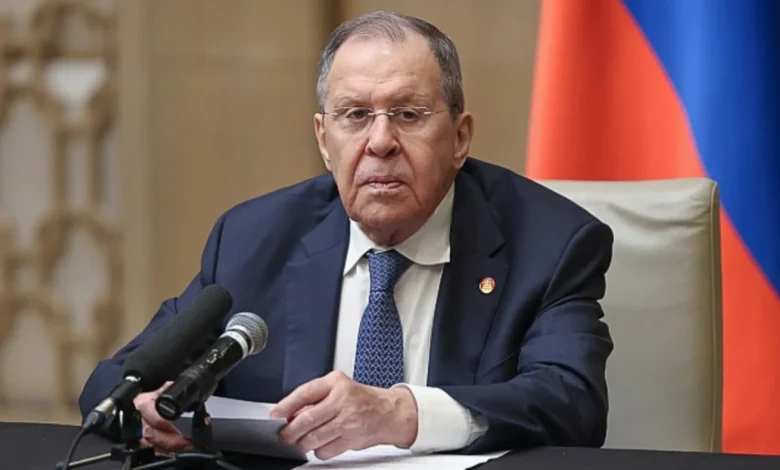
Uranium enrichment has re-emerged as the ultimate geopolitical battleground in an era defined by shifting superpowers, proxy negotiations, and a precarious global security architecture. The Cold War, once thought to be a relic of the twentieth century, is demonstrably heating up once again. In a move that sent shockwaves through international diplomatic circles, Russian Foreign Minister Sergei Lavrov recently took to a podium in Beijing to declare that Iran possesses an “inalienable right” to pursue its nuclear ambitions. This bold proclamation comes at a remarkably volatile moment, arriving exactly as the Trump administration is desperately attempting to negotiate a comprehensive 20-year freeze on Tehran’s nuclear capabilities. The juxtaposition of these events creates a complex matrix of international relations where the nation possessing the largest nuclear arsenal on Earth is publicly defending another nation’s right to develop the very same technology, ostensibly for “civilian purposes.” As global markets react and security analysts scramble to interpret the long-term implications, it is increasingly clear that the Middle East’s nuclear future is being decided not just in Washington and Tehran, but in the power corridors of Moscow and Beijing.
Uranium Enrichment: A New Cold War Front
The dialogue surrounding atomic capabilities has traditionally been tightly controlled by established nuclear powers, but recent developments have fractured this consensus. We are witnessing the crystallization of a new ideological divide, reminiscent of the mid-twentieth century but fraught with modern complexities. The diplomatic shielding provided by the Kremlin represents a calculated strategy to undermine Western hegemony in the Middle East. By vocalizing unconditional support for Iran’s technological pursuits, Russia is signaling a departure from decades of non-proliferation cooperation with the United States. This maneuvering is not merely rhetorical; it is a substantive policy shift designed to challenge the unipolar authority of Washington. The implications are profound, suggesting that future geopolitical conflicts will increasingly manifest as technological and regulatory disputes over sovereign rights.
Lavrov’s Beijing Declaration
Sergei Lavrov’s speech in the Chinese capital was a masterclass in diplomatic subversion. By deliberately using the phrase “inalienable right,” Lavrov invoked the foundational language of the Non-Proliferation Treaty (NPT), effectively weaponizing international law against the United States. He argued that preventing a sovereign nation from developing peaceful energy sources constitutes economic and technological imperialism. This narrative resonates deeply with nations in the Global South that have long felt marginalized by Western regulatory frameworks. Lavrov’s calculated rhetoric forces the Trump administration into a defensive posture, compelling Washington to justify why it seeks to deny a sovereign state a technology that is recognized as a fundamental right under international treaties. This framing masterfully obscures the underlying military concerns while rallying international sentiment against American overreach.
The Role of China as the Host
The geography of this declaration cannot be overstated. Delivering this message in Beijing was a highly symbolic act that underscored the deepening strategic partnership between Russia and China. By providing the platform for Lavrov’s remarks, China offered its tacit endorsement of the Russian position, further solidifying a formidable bloc that actively opposes American diplomatic objectives. This trilateral alignment—Moscow, Beijing, and Tehran—presents an unprecedented challenge to Western strategists. China’s growing reliance on Middle Eastern energy and its Belt and Road Initiative make it heavily invested in regional stability, yet it simultaneously benefits from a fractured US-led global order. The Beijing backdrop amplified Lavrov’s message, transforming a bilateral dispute into a multifaceted global confrontation.
Trump vs. Iran: The Timeline of Nuclear Negotiations
The current standoff is the culmination of years of erratic diplomacy, punctuated by aggressive rhetoric and high-stakes brinkmanship. The Trump administration has pursued a policy of maximum pressure, attempting to leverage economic sanctions to force systemic behavioral changes in Tehran. However, as the geopolitical landscape has shifted, so too have the parameters of negotiation. Understanding the current deadlock requires analyzing the competing proposals on the table, each representing wildly divergent visions for regional security.
The 20-Year Freeze Proposal
The cornerstone of the Trump administration’s strategy is a demand for a staggering 20-year freeze on all enrichment activities. This draconian measure is designed to definitively neutralize any potential pathway to a nuclear weapon, providing an absolute guarantee of regional security for US allies. American negotiators argue that such an extended timeline is necessary to rebuild trust and allow for comprehensive, intrusive inspections by international bodies like the International Atomic Energy Agency (IAEA). However, critics suggest that a 20-year freeze is an unrealistic demand that ignores the political realities within Iran, essentially asking a sovereign government to completely abdicate its technological autonomy for a generation. This aggressive posturing has created significant friction, notably forcing the US administration into a corner as Trump threatens a NATO exit over Iran war snubs, further isolating Washington from its traditional European allies who favor a more moderate diplomatic approach.
Iran’s 5-Year Counter-Offer
In response to the American demands, Tehran has proposed a much more modest 5-year freeze. From the Iranian perspective, this offer represents a significant concession and a demonstration of goodwill. The 5-year timeline is strategically calibrated to align with domestic political cycles and economic recovery plans. It allows the Iranian leadership to save face domestically, framing the freeze as a temporary pause rather than a permanent capitulation. This negotiation tactic is deeply intertwined with recent intelligence community revelations, aligning with geopolitical moves detailed in the Iran nuclear standoff and Mossad’s post-war strategy. Iran’s leadership understands that an extended freeze would permanently handicap their regional influence, and thus they remain steadfast in offering only short-term compliance in exchange for immediate sanctions relief.
Geopolitical Ramifications of Russia’s Stance
Russia’s intervention into the nuclear debate is fundamentally altering the balance of power in the Middle East. By acting as a diplomatic shield for Tehran, Moscow is not merely defending a principle; it is actively constructing a sphere of influence that challenges decades of American dominance. This calculated gamble is designed to position Russia as the indispensable power broker in the region, capable of arbitrating disputes that the United States can no longer manage.
Civilian Purposes vs. Military Ambitions
The crux of the international debate hinges on the dual-use nature of atomic technology. The Russian defense of Iran’s program relies heavily on the assertion that the technology is strictly for “civilian purposes,” a claim that is viewed with profound skepticism by Western intelligence agencies. The technical gap between producing fuel for a power reactor and generating fissile material for a weapon is dangerously narrow. By validating the civilian narrative, Russia provides diplomatic cover that significantly complicates international efforts to impose restrictive measures. The global community remains deeply divided on how to accurately verify these civilian claims, especially as Iran weighs abandoning its program for peace in exchange for massive economic incentives, a scenario that Moscow aims to actively shape and control.
The Largest Nuclear Arsenal Speaks
The irony of the situation is palpable. Russia, a nation possessing the largest stockpile of atomic weapons on the planet, is lecturing the international community on the universal right to develop nuclear technology. This massive asymmetry in power dynamics underscores the inherent hypocrisy often present in global diplomacy. The Kremlin’s stance is essentially a declaration that the rules governing international security are pliable and subject to the strategic interests of great powers. By throwing the weight of its immense military and diplomatic leverage behind Tehran, Russia has elevated the localized Middle Eastern dispute into a central issue of global security, demanding that any resolution must address Moscow’s broader geopolitical grievances with the West.
Global Economic and Security Impacts
The reverberations of this diplomatic deadlock extend far beyond the immediate sphere of nuclear negotiations. The uncertainty injected into the international system by the US-Russia-Iran standoff has profound implications for global energy markets, international law, and the foundational stability of the Middle Eastern security architecture.
Energy Markets and Sanctions Evasion
Global energy markets are highly sensitive to geopolitical instability, and the current nuclear crisis is no exception. As tensions escalate, the risk of supply disruptions in the critical maritime choke points of the Middle East rises exponentially. Interestingly, the strategic maneuvering has produced unintended economic consequences, bolstered by the fact that Russia’s oil revenues have doubled to $19B amid the Iran war fallout. By supporting Iran, Russia not only challenges American authority but also secures its own economic position by capitalizing on the volatility of global oil prices. This dynamic creates a perverse incentive structure where prolonged instability in the Middle East directly enriches the Kremlin, making a swift diplomatic resolution increasingly unlikely.
Comparing Global Nuclear Postures
To fully grasp the magnitude of the current crisis, it is essential to contextualize the negotiating positions of the major players involved. The table below outlines the core stances, strategic objectives, and proposed timelines of the primary geopolitical actors engaged in this high-stakes diplomacy.
| Geopolitical Actor | Core Stance on Enrichment | Strategic Objective | Proposed Timeline/Demand |
|---|---|---|---|
| United States (Trump Admin) | Zero tolerance without extreme oversight | Neutralize regional threat, protect allies | 20-Year Complete Freeze |
| Islamic Republic of Iran | Sovereign right under international law | Sanctions relief, maintain technological baseline | 5-Year Temporary Pause |
| Russian Federation | Defends “inalienable right” for civilian use | Counter Western hegemony, expand influence | Unconditional Support for Sovereignty |
| People’s Republic of China | Facilitator, supports diplomatic resolution | Ensure regional stability for energy security | Return to JCPOA Framework |
What This Means for Future Non-Proliferation Agreements
The public clash between Washington and Moscow over Tehran’s technological pursuits represents a watershed moment in the history of international diplomacy. The established frameworks that have governed nuclear proliferation for decades are fraying under the immense pressure of renewed great power competition. If the United States is unable to enforce its demands, and if Russia successfully normalizes Iran’s pursuit of advanced atomic technology under the guise of civilian use, the global non-proliferation regime may suffer irreversible damage. Future rogue states will look to this precedent, seeking out powerful sponsors like Russia or China to shield their own clandestine programs from international scrutiny. Ultimately, this crisis serves as a stark reminder that in the arena of global geopolitics, international law is frequently subordinate to raw power, and the ghosts of the Cold War are not only awake, but they are actively shaping the geopolitical realities of the twenty-first century. Navigating this treacherous landscape will require a level of diplomatic sophistication and strategic foresight that has yet to be demonstrated by the current global leadership.