Trillion Dollar Iran War: Harvard Expert Forecasts Huge Cost
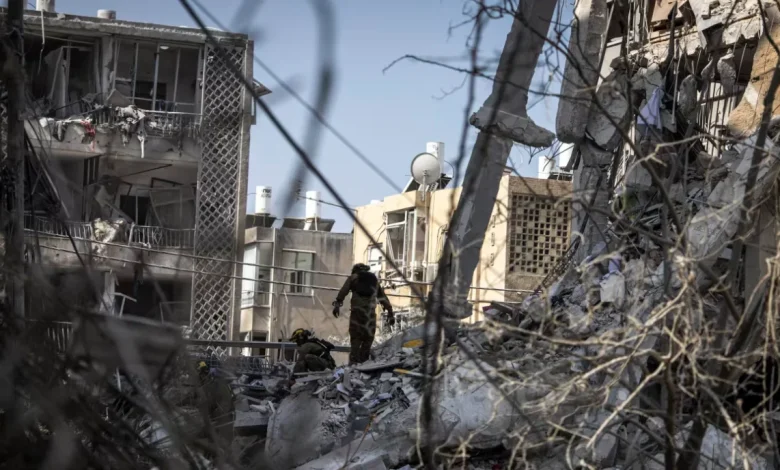
Trillion dollars. That is the staggering figure now projected as the foundational cost for the ongoing conflict with Iran. A top Harvard economic analyst recently shocked global financial markets by stating unequivocally: “I am certain we will reach $1 trillion for the Iran war.” This astronomical figure, accounting for more than 3% of America’s Gross Domestic Product (GDP) in 2025, sets a daunting fiscal stage. Strikingly, this projection rests on a deeply conservative assumption: that severe, uncontrolled escalation into a broader regional or nuclear conflict will not occur. In a global economy still highly sensitive to geopolitical fractures, analyzing the immense weight of a thirteen-figure war budget requires looking beyond the battlefield and deep into the mechanics of American economic policy.
The Trillion-Dollar Threshold: How Did We Get Here?
The journey to a projected $1 trillion expenditure is paved with the staggering costs of modern, high-tech warfare. Unlike the counter-insurgency operations of the past two decades, a conflict with a heavily armed, technologically capable nation like Iran demands the deployment of premium military assets. The burn rate for advanced munitions—such as Tomahawk cruise missiles, SM-6 interceptors, and precision-guided standoff weapons—is exceptionally high. Furthermore, the logistical challenge of maintaining multiple carrier strike groups, strategic bomber fleets, and advanced intelligence networks across the Middle East adds tens of billions to the defense budget monthly. Beyond hardware and immediate deployment costs, the initial stages of the conflict have exposed massive vulnerabilities in defense supply chains, necessitating immediate and costly capital injections into domestic defense manufacturing.
Breaking Down the 3% GDP Impact
To understand the sheer magnitude of this expenditure, one must contextualize it against the United States’ total economic output. In 2025, the U.S. GDP stood roughly at the $28.5 to $29 trillion mark. Diverting over 3% of this massive economic engine directly into sustained conflict operations presents immediate macroeconomic challenges. This 3% figure is not merely a theoretical percentage; it represents capital siphoned away from infrastructure, technological development, and social stability programs. This reallocation of resources acts as a powerful economic constraint, shifting the nation’s industrial base toward a wartime footing while simultaneously suppressing growth in non-defense sectors. Economic modeling suggests that an immediate 3% shift toward defense spending creates an inflationary lag, wherein the government pumps money into specialized industrial sectors, driving up costs without increasing the overall supply of consumer goods.
Analyzing the Harvard Economic Perspective on U.S. Defense Spending
The assertion by the Harvard economic analyst relies on a comprehensive “cradle-to-grave” cost analysis of military operations. Historically, official estimates provided by the Pentagon or congressional budget offices focus predominantly on immediate appropriations—what it costs to put ships in the water and planes in the air for a given fiscal year. However, top-tier economic analyses incorporate the extended lifecycle costs of warfare. This includes the replacement of expended munitions at inflation-adjusted prices, the massive surge in fuel expenditures, and the long-term logistical tail required to sustain forward-deployed forces over multiple years. Most significantly, it accounts for the eventual cost of veteran care and benefits, a historically underestimated factor that routinely accounts for up to 30% of a conflict’s total long-term financial burden.
Assumptions Behind the Non-Escalation Scenario
Perhaps the most chilling aspect of the $1 trillion prediction is its foundation on a “best-case” scenario. The Harvard model strictly assumes non-escalation. This means the model calculates the costs of a contained theater of operations where Iran’s military capabilities are systematically degraded without triggering a widespread, multi-front war involving neighboring powers or international superpowers. The projection operates under the premise that the homeland remains unattacked, that global shipping lanes are only temporarily disrupted rather than permanently closed, and that unconventional or nuclear weapons are not introduced into the conflict. If any of these assumptions fail, the economic models shatter, and the costs leap exponentially. Analysts point to the precarious standoff in the Strait of Hormuz as the most immediate risk vector that could invalidate the non-escalation assumption overnight.
Comparative Table: Iran War Costs vs. Historical Conflicts
| Conflict | Estimated Cost (USD) | Peak % of GDP | Economic Impact Type |
|---|---|---|---|
| World War II | $4.1 Trillion (Adj) | 37.5% | Total Mobilization |
| Vietnam War | $843 Billion (Adj) | 9.5% | High Inflationary |
| Global War on Terror (Iraq/Afg) | $8 Trillion (Total over 20 yrs) | 4.8% | Long-term Debt Accrual |
| Iran War (Harvard Projection) | $1.0+ Trillion (Initial) | 3.0%+ (2025 Baseline) | Acute Shock / Supply Constraint |
Economic Ripples: Inflation, Debt, and Global Markets
A sudden, unbudgeted expenditure of $1 trillion sends violent ripples through global financial architecture. For the United States, injecting a trillion dollars of deficit spending into the economy threatens to reignite an inflationary cycle that central banks have spent years attempting to cool. Government borrowing will need to increase sharply, leading to higher treasury yields and inevitably driving up interest rates across the entire economy. This increases the cost of borrowing for both businesses and consumers, resulting in an economic slowdown. Internationally, major financial institutions have issued stark advisories. Recent Bank of England warnings on market threats highlight the fragility of the current system, noting that a U.S. fiscal shock of this magnitude could precipitate a global liquidity crisis as investors rush toward safe-haven assets, draining capital from emerging markets.
The Role of the Strait of Hormuz and Global Trade
The baseline cost of the war cannot be separated from its impact on international trade, particularly energy commodities. While the direct military costs are staggering, the secondary economic damages caused by disrupted shipping lanes could rival the defense budget itself. Even within a “non-escalation” framework, the insurance premiums for maritime shipping through the Persian Gulf have skyrocketed. The resulting spike in energy costs acts as a regressive tax on the global economy. This phenomenon is currently driving widespread commodity shocks exposing economic cracks across both Western and Eastern manufacturing sectors. Furthermore, the volatility in crude markets is unmistakable, with recent surges in oil prices exposing a 20-year market gap that threatens to permanently alter global energy supply chains and accelerate structural inflation.
Strategic Realignments: How the U.S. Will Fund the War
Funding a trillion-dollar conflict presents the U.S. Treasury with a brutal set of choices. Historically, wars of this scale are financed through a combination of increased taxation, heavy deficit spending (borrowing), and occasionally, the monetization of debt. Given the current political climate, sweeping tax increases on the general population are highly unlikely, pushing the burden heavily onto the national debt. The issuance of specialized defense bonds and the expansion of the Treasury’s auction calendar are expected near-term strategies. However, as the debt-to-GDP ratio climbs further into unprecedented territory, the service costs on the national debt will consume an increasingly large portion of federal tax revenues, severely limiting the government’s ability to respond to future domestic or international crises.
The Potential Impact on Domestic Policy
The domestic ramifications of prioritizing a trillion-dollar war budget are profound. “Guns versus butter” is no longer a theoretical debate but an immediate legislative reality. Funding the war effort will undoubtedly require the reprioritization of federal budgets, leading to inevitable cuts or freezes in non-discretionary domestic spending. Large-scale infrastructure projects, green energy transition subsidies, and advanced domestic research initiatives are the most likely targets for budget sequestration. The long-term danger here is a structural degradation of domestic economic competitiveness. While the defense industrial base experiences a boom, the broader commercial and technological sectors may find themselves starved of federal investment and talent, ultimately slowing the nation’s long-term economic growth rate and impacting its standing alongside global competitors.
Future Prognostications: What If Severe Escalation Occurs?
If the foundational assumption of the Harvard model—non-escalation—collapses, the $1 trillion figure transforms from a final cost into a mere down payment. Severe escalation, characterized by a broader regional war drawing in allied and adversarial nations, massive asymmetrical attacks on critical Gulf infrastructure, or widespread cyber warfare degrading global financial networks, would thrust the cost into the multi-trillion-dollar realm. Independent analysts from organizations like the International Monetary Fund have simulated global conflict scenarios where a massive disruption in the Middle East triggers a global recession. In such an event, the U.S. would not only be funding a dramatically expanded military campaign but simultaneously bailing out devastated domestic industries, subsidizing skyrocketing civilian energy costs, and managing a rapidly ballooning welfare state. The resulting fiscal scenario would rival the economic conditions of the Second World War, demanding a complete restructuring of the modern American economy.
Conclusion: Preparing for an Unprecedented Fiscal Future
The projection of a $1 trillion minimum cost for the Iran war is a sobering economic reality check. It emphasizes that in the modern era, military supremacy comes with an exorbitant and inescapable financial burden. Surpassing 3% of the 2025 U.S. GDP, this conflict represents a profound redirection of national wealth and resources. As policymakers and military planners navigate the tactical complexities of the conflict, economic authorities must simultaneously wage a war to maintain fiscal stability. The assumptions of non-escalation hold the line at a trillion dollars, but should that line break, the United States, and indeed the global economy, must prepare for an era of unprecedented economic strain and structural transformation. The war’s ultimate legacy may be written as much in ledgers and debt ratios as it is in historical accounts of military engagements.