Decarbonization Accelerates As China Dominates Energy Order
Decarbonization has officially shifted from a climate imperative to an urgent matter of national security. The devastating conflict between the United States and Iran has accomplished a feat that decades of environmental summits, international treaties, and climate pledges could never manage: it has fundamentally convinced governments worldwide that relying on oil from the Middle East is an unacceptable vulnerability they can no longer afford. However, the solution to this monumental geopolitical crisis comes with a steep caveat that Western powers are only just beginning to comprehend. The problem is that every alternative path out of the fossil fuel era leads straight through Beijing.
The Unintended Consequence of the Middle East Conflict
For decades, the global economy has been precariously balanced on the continuous flow of oil through narrow, heavily contested maritime chokepoints in the Middle East. The recent outbreak of war has shattered the illusion that this system could be maintained through diplomatic maneuvering or sheer military presence. As energy supply lines were threatened, the realization dawned on policymakers from Berlin to Tokyo: true energy security cannot be imported by tanker.
How Oil Vulnerability Triggered a Global Awakening
The global awakening was swift and brutal. When the conflict escalated, international supply chains shuddered. The efforts to broker peace and negotiations that previously collapsed left nations staring down the barrel of an unprecedented energy deficit. Even with volatile oil markets plunging below expectations due to demand destruction and recessionary fears, the fundamental trust in the petro-economy was irrevocably broken.
Governments have now realized that maintaining a dependency on an energy corridor susceptible to sudden kinetic warfare is tantamount to economic suicide. Consequently, the mandate has changed. It is no longer merely about reducing carbon footprints to satisfy environmental advocates; it is about building self-sustaining, localized power grids that cannot be held hostage by foreign conflicts. Yet, in their desperate rush to untether themselves from Middle Eastern crude, Western nations have rushed headlong into a different, arguably more entrenched form of reliance.
Beijing’s Monopoly on the Future of Power
To replace oil, nations must electrify everything. This requires an astronomical deployment of solar arrays, wind turbines, massive grid-scale battery storage, and the complex software necessary to manage intermittent energy flows. It also requires thousands of miles of high-voltage transmission cables and advanced transformers to upgrade antiquated electrical grids. Chinese companies thoroughly dominate every single one of these manufacturing sectors.
Solar Panels and High-Voltage Infrastructure
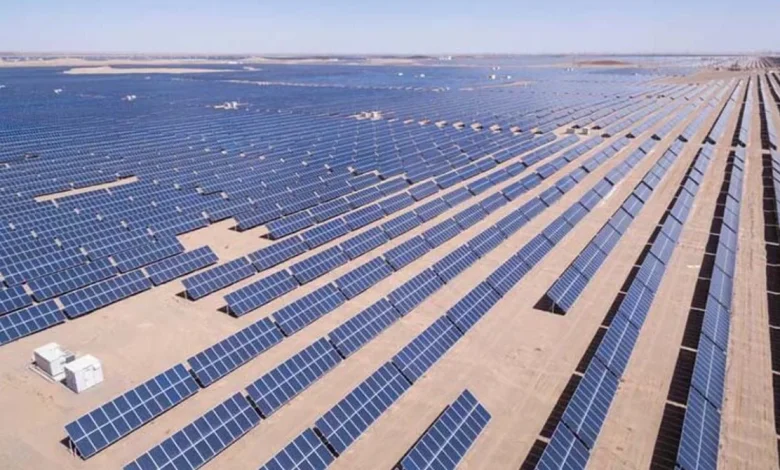
China’s dominance in the solar industry is absolute. From the refinement of polysilicon to the manufacturing of wafers, cells, and finished modules, Chinese entities control upwards of 80% of the global supply chain. If a European or North American nation wishes to rapidly deploy solar fields to offset natural gas or oil shortages, they are fundamentally reliant on Chinese imports. Domestic manufacturing initiatives in the West, such as those spurred by the US Inflation Reduction Act, remain decades behind in scale, cost-efficiency, and technological integration.
Furthermore, the physical infrastructure of the modern grid—high-voltage cables, smart inverters, and utility-scale transformers—is heavily concentrated in Chinese industrial hubs. The software that seamlessly routes energy from a wind farm in the north to a densely populated city in the south relies heavily on components, microchips, and network architectures pioneered by Chinese state-backed enterprises. Trying to build a green grid without Chinese hardware is akin to trying to build a modern computer without silicon.
The Rare Earth Metals Chokehold
The physical hardware is only one layer of the vulnerability. The raw materials required to build the future of energy present an even more daunting challenge. High-capacity grid batteries, electric vehicle motors, and wind turbine generators require a precise cocktail of critical minerals, particularly rare earth elements. Neodymium, dysprosium, lithium, cobalt, and nickel are the building blocks of the 21st-century economy.
While these minerals are distributed globally, the processing and refinement of these ores occur almost exclusively within China’s borders. According to extensive International Energy Agency data, China commands over 85% of the global processing capacity for rare earth elements. Even if a Western nation discovers a massive lithium deposit within its own borders, it typically must ship the raw ore to China to be refined into battery-grade material. A researcher at Trivium China encapsulated the grim reality for Western policymakers: “You’re not going to compete with China at this point.”
Comparing Global Energy Supply Chain Dominance
To truly grasp the disparity in the new energy world order, one must look at the raw data regarding the supply chain. The table below outlines the estimated global market share of essential green technologies and material refinement.
| Technology / Resource Sector | China Market Share | US Market Share | EU Market Share |
|---|---|---|---|
| Solar Panel Manufacturing (Polysilicon to Module) | 82% | 2% | 1% |
| Lithium-Ion Battery Cell Production | 75% | 7% | 8% |
| Rare Earth Element Refining | 87% | 5% | <1% |
| Wind Turbine Component Manufacturing | 60% | 12% | 15% |
This data illustrates a stark reality. While Western nations focus heavily on setting ambitious emissions targets and subsidizing end-consumer purchases of electric vehicles, China has spent the past two decades meticulously cornering the entire upstream and midstream supply chain required to make those products exist.
Washington’s Strategy Backfires
The profound irony of the current geopolitical landscape cannot be overstated. Washington’s grand strategy in the Middle East was ostensibly designed to weaken Iran, secure the free flow of commerce, and reassert American dominance over the world’s most critical energy corridor. Instead, the turbulence of the conflict triggered widespread panic. Amidst the warnings that the war threatens global markets, nations expedited their transition away from the very commodity Washington was fighting to control.
Losing the Energy Corridor to Renewables
By making the Persian Gulf an unpredictable warzone, the United States inadvertently destroyed the long-term viability of the petroleum-based world order it sought to dominate. The immediate victor of this colossal strategic miscalculation appears to be the nation that largely stayed out of the military fray, quietly building the infrastructure of tomorrow. While American military resources were bogged down in securing legacy energy routes, China was busy brokering strategic agreements across the region and locking up the global south’s mineral wealth through the Belt and Road Initiative.
America disrupted the old energy order through kinetic force, but China is firmly in the driver’s seat when it comes to the future of energy. Beijing does not need to send aircraft carriers to secure its energy dominance; its dominance is embedded in the circuit boards, battery cells, and high-voltage transmission lines that the rest of the world desperately needs to keep the lights on.
What This Means for Global Energy Security
This paradigm shift fundamentally alters how nations must approach national security. In the 20th century, security meant maintaining a strong navy to protect oil shipments from the Persian Gulf. In the 21st century, security means securing access to refined cobalt and high-efficiency solar inverters. The Iran war catalyzed this transition, accelerating timelines that were originally projected to take decades into mere months.
Shifting from Petro-States to Electro-States
We are witnessing the decline of traditional petro-states and the rise of electro-states. As Europe acts out of survival—pushing for remote work and aggressive renewable deployment to mitigate immediate energy shortages—they are implicitly accepting a new reliance on Chinese supply chains. Western governments are now caught in a precarious balancing act: they must transition rapidly to avoid the catastrophic economic fallout of Middle Eastern instability, but doing so binds their economic future to a rising superpower with whom they are locked in a strategic competition.
The profound realization echoing through defense departments and energy ministries worldwide is that escaping the grip of the Middle East does not equate to energy independence. It simply transfers the point of leverage. The world has traded its reliance on a volatile conglomerate of oil-producing nations for an absolute dependency on a highly organized, technologically advanced, and fiercely ambitious singular state. The war may have successfully broken the world’s addiction to Middle Eastern oil, but it has undeniably crowned China as the undisputed sovereign of the new global energy order.