IRGC Claims Recovery of Classified US LAIRCM from MC-130
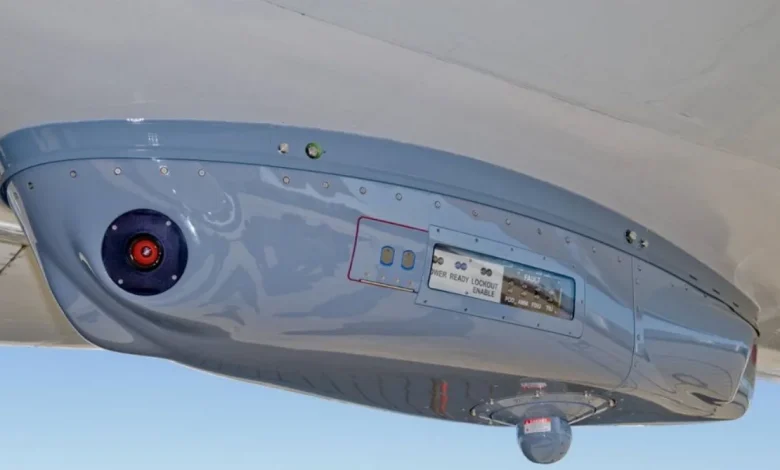
IRGC intelligence units and specialized engineering battalions have sent shockwaves through the global defense and intelligence communities by announcing the successful recovery of highly classified components from the Northrop Grumman AN/AAQ-24 Large Aircraft Infrared Countermeasure (LAIRCM) system. The announcement comes in the immediate aftermath of a highly secretive and ultimately aborted United States rescue mission near Isfahan, Iran. During this complex special operations infiltration, United States forces were compelled to deliberately destroy their disabled MC-130 transport aircraft to prevent sensitive military hardware from falling into adversarial hands. Despite these rigorous emergency scuttling protocols, Iranian state media and military spokespersons assert that critical elements of the laser-based missile defense system survived the thermite and explosive charges, presenting a monumental intelligence coup for Tehran.
IRGC Recovers Highly Classified US Missile Defense System
The Islamic Revolutionary Guard Corps released a comprehensive statement detailing their meticulous excavation of the crash site located in the austere desert terrain outside the heavily fortified city of Isfahan. According to the statements disseminated through state-aligned channels, the recovery operation yielded substantially intact optical sensor arrays, central processing units, and remnants of the directional laser turret that comprises the core of the AN/AAQ-24 LAIRCM architecture. This advanced defensive suite is universally recognized as the premier mechanism safeguarding America’s most critical transport aircraft, VIP fleets, and special operations mobility assets against the ubiquitous threat of heat-seeking, Man-Portable Air-Defense Systems (MANPADS).
Military analysts are currently assessing the validity of these claims, noting that while standard operating procedures dictate the absolute destruction of cryptographic and sensitive avionics platforms during an aircraft abandonment scenario, the chaotic nature of an under-fire extraction often leads to imperfect scuttling. If the retrieved components are as intact as advertised, it signifies a catastrophic breach of operational security, granting an adversarial nation direct physical access to top-tier American aerospace defense technology. The recovery of these sub-components places immense pressure on the United States Air Force Special Operations Command (AFSOC) to evaluate the extent of the technological compromise and adapt their defensive countermeasures accordingly.
The Strategic Context of the Isfahan Incident
The geographic location of this incident—Isfahan—is a focal point of supreme strategic importance. Isfahan houses critical nodes of Iran’s nuclear infrastructure, advanced ballistic missile research facilities, and sprawling military aviation bases. A covert rescue mission executed within this heavily monitored airspace indicates a high-stakes operational objective, likely involving the extraction of compromised intelligence assets or stranded high-value personnel. The deployment of MC-130 Commando II aircraft, designed for clandestine, low-visibility, single-ship or multi-ship infiltration into denied areas, underscores the mission’s severity. As seen in recent Iranian military escalations, the airspace over and around Iran remains exceptionally volatile, packed with sophisticated overlapping radar networks and rapid-reaction interceptor squadrons that make covert penetration exceptionally perilous.
Understanding the Northrop Grumman AN/AAQ-24 LAIRCM
The Northrop Grumman AN/AAQ-24 LAIRCM system represents a monumental leap in aviation survivability. Historically, large, lumbering transport aircraft relied heavily on standard flare dispensers to decoy incoming infrared-guided missiles. However, as MANPADS evolved with advanced focal plane array seekers capable of distinguishing between aircraft exhaust and magnesium flares, active countermeasures became an absolute necessity. The LAIRCM system was engineered to autonomously detect, track, and definitively defeat incoming infrared threats without requiring manual intervention from the flight crew.
The architecture of the AN/AAQ-24 is divided into several highly synchronized modules. It begins with the Missile Warning System (MWS), typically utilizing ultraviolet or dual-band infrared sensors strategically positioned around the aircraft fuselage to provide spherical, 360-degree coverage. When a launch flash is detected, the MWS instantly calculates the trajectory and time-to-impact, transferring this data to the central processor. The processor then commands the Pointer-Tracker Assembly (PTA)—a highly agile turret—to instantly slew toward the incoming threat. At this stage, a powerful, multi-band laser is fired directly into the seeker head of the incoming missile, blinding its guidance sensors and causing it to violently veer off course, ensuring the safety of the aircraft.
How Laser-Based Infrared Countermeasures Work
The sophisticated mechanics of Directional Infrared Counter Measures (DIRCM) hinge on the physics of optical jamming. Unlike older jamming pods that emitted broad-spectrum infrared energy to confuse early-generation missiles, modern DIRCM platforms employ precision-guided laser energy. By modulating the laser beam to match and overwhelmingly overpower the specific frequency of the missile’s reticle or focal plane array, the system injects false tracking data into the missile’s guidance computer. This forces the missile’s aerodynamic control fins to enact extreme, unrecoverable maneuvers, sending the projectile tumbling harmlessly into the ground. The precise algorithms dictating this laser modulation, alongside the miniaturized optical tracking mechanisms within the turret, constitute the highest levels of classified technology embedded within the LAIRCM framework.
Comparative Analysis of Global Transport Aircraft Defense Systems
To contextualize the severity of this technological capture, it is vital to understand how the United States AN/AAQ-24 system compares to counterpart defense systems deployed by other global military powers. The table below outlines the primary defensive suites utilized by leading nations to protect their heavy airlift and special operations aircraft.
| System Name | Country of Origin | Primary Threat Defeated | Countermeasure Mechanism | Operational Status |
|---|---|---|---|---|
| AN/AAQ-24 LAIRCM | United States | Advanced MANPADS | Multi-band Laser DIRCM | Active / Highly Classified |
| President-S (L370) | Russia | Infrared/Radar Missiles | Laser DIRCM & Electronic Jamming | Active Deployment |
| AMPS (Airborne Missile Protection) | European Union | Standard IR MANPADS | Flares & Opto-Electronic Jamming | Active Deployment |
| Direct-IRCM Type 900 | China | Advanced MANPADS | Laser DIRCM | In Development / Active |
The US MC-130 Aircraft Destruction Protocol
The necessity to destroy the MC-130 transport aircraft fundamentally illustrates the extreme distress of the operational environment. Special operations aviation units are governed by stringent ‘zeroize’ and scuttling protocols designed explicitly for forced abandonment scenarios. Upon the realization that an aircraft cannot be recovered and must be left behind in hostile territory, the crew initiates a multi-tiered destruction sequence. Initially, all cryptographic keys, communication architectures, and classified flight data are digitally wiped through emergency zeroize switches. Subsequently, physical destruction methods are employed.
Thermite grenades, capable of burning at temperatures exceeding 4,000 degrees Fahrenheit, are strategically placed atop sensitive computing banks, communication arrays, and countermeasure systems like the LAIRCM control processors. High-explosive charges are rigged to destroy the structural integrity of the airframe, rendering it beyond salvageable repair. The fact that any recognizable component of the AN/AAQ-24 survived this inferno suggests either a catastrophic failure in the scuttling execution—perhaps due to the crew taking intense enemy fire—or the robust, hardened nature of the optical turrets inadvertently shielding the internal components from the thermal blast.
Why the US Deliberately Sabotaged Its Own Aircraft
Deliberate sabotage of specialized military assets in denied territory is a deeply ingrained doctrine stemming from harsh historical lessons. The failure to adequately destroy abandoned equipment during Operation Eagle Claw in 1980 provided Iranian forces with operational RH-53D helicopters and classified documentation. Similarly, the 2011 Abbottabad raid that eliminated Osama bin Laden saw the deployment of thermite charges to obliterate a classified stealth Black Hawk helicopter, though the surviving tail rotor provided adversaries with critical insights into American radar-evading acoustic technology. The swift integration of next-generation defensive capabilities, echoing the Pentagon’s broader military technology integration into modern warfare, ensures that allowing such systems to be captured physically is an unacceptable operational risk.
Geopolitical Ramifications of Technology Capture
The geopolitical shockwaves resulting from the capture of LAIRCM hardware are profound and multifaceted. The immediate concern for the United States and its NATO allies is the direct transfer of this technology from Tehran to geopolitical rivals such as the Russian Federation and the People’s Republic of China. Both nations possess advanced indigenous military-industrial complexes capable of rapidly dissecting the recovered hardware to expose vulnerabilities. By understanding the specific laser modulation frequencies, optical tracking logic, and sensor blind spots of the AN/AAQ-24, these nations can reverse-engineer counter-countermeasures. This could lead to the development of next-generation MANPADS specifically designed to ignore or bypass the LAIRCM’s laser jamming, fundamentally endangering the lives of American aviators and special operators traversing contested global airspaces.
Potential Reverse Engineering by Iranian Scientists
Iran has cultivated a formidable reputation over the last two decades for its adeptness at reverse engineering captured American aerospace technology. The most prominent historical example is the downing and subsequent capture of the RQ-170 Sentinel stealth drone in 2011, which directly facilitated the development of Iran’s indigenous Shahed-171 and Saegheh stealth unmanned combat aerial vehicles. Iranian defense scientists possess the metallurgical, optical, and software engineering capabilities required to glean substantial intelligence from the burnt wreckage of the LAIRCM system. By analyzing the structural design of the pointer-tracker turret and the semiconductor materials used in the ultraviolet warning sensors, Iran can significantly accelerate the development of its own domestic directional infrared countermeasures, thereby dramatically enhancing the survivability of its own tactical airlift and combat helicopter fleets against hostile engagements.
Long-term Implications for US Special Operations
The strategic fallout from the Isfahan incident forces an immediate reckoning within the highest echelons of United States Special Operations Command and the Department of Defense. In the short term, operational planners must operate under the assumption that the defensive envelope provided by current LAIRCM iterations is partially compromised. This will undoubtedly necessitate emergency software patches, adjusted tactical flight profiles, and accelerated funding for the development of the next-generation DIRCM systems. Looking forward, the incident highlights the immense risks inherent in deploying heavily modified, technology-laden transport aircraft into sovereign airspace equipped with modernized, integrated air defense systems. Navigating the volatile geopolitical landscape involving Iran requires an unyielding commitment to technological supremacy and operational secrecy. If the defensive countermeasures that protect America’s global mobility forces are decoded by adversaries, the fundamental capability of the United States to project power and conduct covert rescue missions globally will face unprecedented and existential challenges.