Kuwait attack: Did Iranian Su-24 Bombers Kill US Troops?
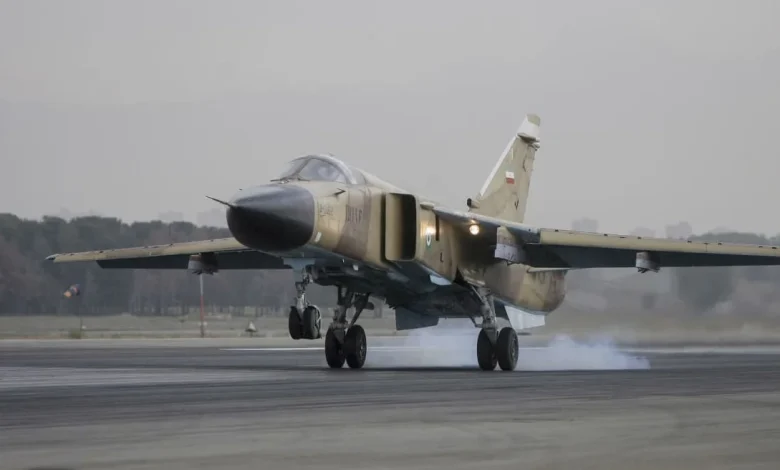
Kuwait attack: New Evidence Challenges Drone Strike Narrative
The initial fog of war often obscures the precise mechanics of a strike, but the Kuwait attack represents a particularly glaring intelligence gap. Early reports heavily favored the drone narrative, citing radar anomalies and the sudden, devastating impact on the American outpost. Yet, independent military analysts and defense insiders are now meticulously piecing together a different sequence of events—one that involves high-speed, low-altitude bombing runs rather than slow-moving loitering munitions.
The Initial Reports of Drone Activity
When the six American service members were killed early in the conflict, the United States Central Command (CENTCOM) tentatively attributed the devastating explosion to one-way attack drones. This assessment was grounded in the established pattern of proxy militia behavior across the Middle East. Iranian-backed groups have frequently utilized Shahed-series and other kamikaze drones to harass U.S. positions in Iraq, Syria, and the broader region. Consequently, the assumption that a heavy drone managed to penetrate Kuwaiti airspace and strike the base was the most logical preliminary conclusion. The signature of the blast, however, remained an anomaly that perplexed explosives experts from the outset.
Emergence of FAB-500 Ordnance Claims
The drone narrative began to fracture when images purporting to show an unexploded ordnance (UXO) near the blast site leaked to open-source intelligence (OSINT) networks. The imagery vividly depicts what appears to be a partially buried FAB-500 M-62, a Soviet-designed 500-kilogram general-purpose unguided bomb. The payload capacity of standard Iranian suicide drones falls far short of the 500kg threshold required to carry such a massive weapon. This distinct discrepancy heavily implies the involvement of a fixed-wing aircraft capable of carrying heavy ordnance hardpoints. The sheer kinetic force of a detonated FAB-500 explains the catastrophic damage to the fortified American barracks—a level of destruction rarely achieved by a single drone strike.
The Role of Iranian Su-24 Bombers in the Escalation
The Islamic Republic of Iran Air Force (IRIAF) operates a diverse fleet of aging yet heavily modified aircraft. Among these, the Sukhoi Su-24 tactical bomber, known by its NATO reporting name ‘Fencer’, serves as Iran’s primary deep-strike aviation asset. Designed for ultra-low-level penetration missions, the Su-24 is theoretically capable of flying beneath regional radar horizons to deliver devastating payloads like the FAB-500.
Unexploded Ordnance: Examining the FAB-500 Images
Military ordnance disposal experts who have reviewed the leaked photographs note the characteristic tail fins and fuse placement synonymous with the FAB-500 series. If the bomb in the imagery is verified as an Iranian-modified FAB-500, it completely refutes the drone hypothesis. The presence of a